
Setting the wrong speed on a drill press can quickly ruin both your material and your drill bits. Many beginners assume that running the press faster makes the job easier, but the opposite is true.
Too high a speed burns wood, overheats bits, and weakens accuracy, while too low a speed causes rough cuts and excessive strain on the motor.
According to Engineering Toolbox, large bits over 1 inch in steel require speeds as low as 600 RPM, while small wood bits can safely run between 2,500 and 3,000 RPM (source).
These numbers may seem small, but they make all the difference between a clean, safe cut and a damaged workpiece. Choosing the correct RPM ensures smoother holes, cooler operation, and longer tool life.
Improper speed adjustment isn’t just a technical mistake—it can also be dangerous. A LegalMatch report found that nearly 400,000 power-tool accidents occur each year in the U.S., many involving stationary tools like drill presses (source).
Failing to unplug the machine before changing belts, or setting the wrong spindle speed, can cause serious injury.
Mastering how to adjust drill press speed is the key to precise, controlled drilling across wood, metal, and plastic. This guide breaks down every step—from reading RPM charts and using the SFM formula to setting pulley positions and maintaining correct belt tension.
By the end, you’ll know exactly how to achieve perfect speed control for every material and bit size, ensuring accuracy, safety, and professional results.
Understanding Drill Press Speed and Its Importance
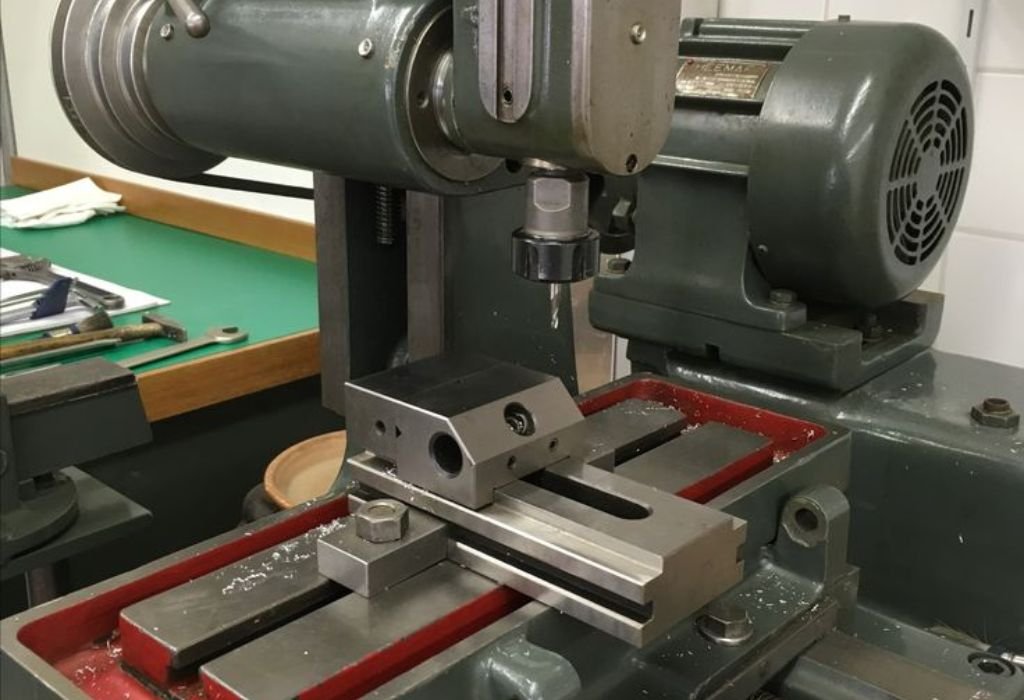
Drill press speed, measured in RPM (revolutions per minute), determines how fast the spindle and bit rotate. The faster the bit spins, the more heat and friction it produces, which can either help or harm depending on the material.
Another factor is SFM (surface feet per minute), which measures the actual speed of the bit’s cutting edge. It connects to RPM through the formula (RPM = \frac{SFM \times 3.82}{Bit Diameter}) (source). Larger bits must spin slower to maintain the same surface speed as smaller ones.
Too high an RPM causes burning or glazing, while too low an RPM leads to chattering and rough holes. The balance between these speeds is what separates clean, professional drilling from costly mistakes.
What does RPM stand for?
RPM means revolutions per minute—the rotation rate of the spindle.
What is SFM in drilling?
Surface feet per minute measures how fast the edge of the bit travels along the material surface.
Why does bit size change RPM requirements?
Larger bits cut a wider circle, so they must spin slower to prevent overheating.
Can too-slow speeds cause damage?
Yes, low RPM can make bits grab or stall, damaging the material.
How to know if RPM is too high?
Excessive heat, smoke, or burning marks signal an RPM that’s too fast.
Safety Precautions Before Changing Speed
Before adjusting drill press speed, always unplug the machine. Even when off, stored electrical energy or a bump to the power switch can start the spindle unexpectedly.
Make sure the bit is stopped, the belt guard is open, and the table is clear of debris. Always wear eye protection and avoid gloves that could catch on the bit. Workpieces must be clamped securely; never hold them by hand during drilling.
According to OSHA, many injuries occur when users leave machines running while accessing pulleys or fail to secure the material properly (source). Taking a minute for safety prevents hours of damage control later.
Why unplug before adjusting speed?
Because residual power can trigger an accidental startup.
Should the guard always stay closed?
Yes, pulley and chip guards prevent debris and belt exposure injuries.
Is it safe to wear gloves when drilling?
No, gloves can catch rotating bits; keep hands bare but cautious.
Why use a vise or clamp?
To stop the workpiece from spinning or lifting during drilling.
What PPE is essential?
Safety glasses and hearing protection are minimum requirements.
Types of Drill Press Speed Control Systems
Drill presses use three main speed systems: step-pulley, variable-speed mechanical, and VFD electronic controls. Each offers distinct accuracy and convenience.
The step-pulley type uses belts that move across stepped pulleys. Switching belt positions alters the gear ratio between the motor and spindle, changing speed. It’s reliable and budget-friendly but requires manual setup.
Variable-speed presses feature an adjustable pulley system with a lever or dial. They can change RPM while running and often display digital readings for precise control (source).
The most advanced system is the Variable Frequency Drive (VFD), which electronically modifies motor frequency for infinite speed range. VFDs provide steady torque and smoother transitions, ideal for precision metal or hardwood drilling (source).
Which system is best for beginners?
A step-pulley press is simplest, affordable, and easy to learn.
What advantage does variable speed have?
It lets you fine-tune RPM instantly without belt changes.
Why use a VFD retrofit?
It gives smooth electronic control with excellent torque at low speeds.
Can digital readouts be trusted?
Yes, but verify them occasionally with a handheld tachometer.
Do all presses have speed adjustment options?
Yes, every drill press includes at least one form of RPM control.
Step-by-Step Process to Adjust Drill Press Speed
Unplug the machine, open the belt cover, and loosen the motor bracket. Move the belt onto the desired pulley combination—larger motor pulley to smaller spindle pulley increases speed, while smaller motor pulley to larger spindle pulley slows it down.
Pull the motor back until the belt feels snug with about half an inch of deflection. Lock the motor bolts in place, close the cover, and power up the press. For variable-speed presses, simply turn the lever or dial to reach the required RPM.
Always test on scrap material before drilling your main workpiece. Verify with an RPM tachometer if available, since belt wear can slightly affect true spindle speed.
How tight should the belt be?
Tight enough to prevent slipping but loose enough for smooth flexing.
What if the belt won’t move easily?
Rotate the pulleys slowly by hand while easing the belt onto the next step.
How to confirm correct speed?
Check against the manufacturer’s RPM chart or use a digital tachometer.
Can you change speeds while running?
Only on variable-speed or VFD models—never on pulley systems.
How often should belt position be adjusted?
Whenever bit size or material changes significantly.
How to Read and Use RPM Charts
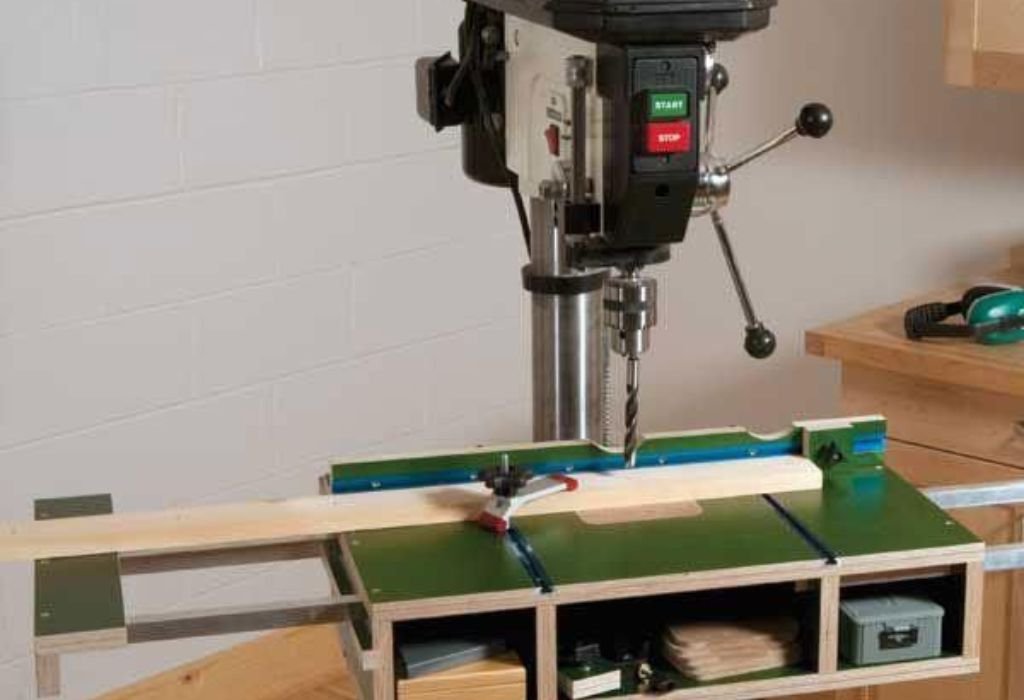
RPM charts simplify the process of selecting spindle speed based on bit diameter and material type. They show ideal ranges to avoid overheating, burning, or chatter.
For example, hardwood drilling might range from 500 RPM with large Forstner bits to 2,500 RPM for small twist bits. Steel requires much slower speeds—typically 300 to 800 RPM depending on diameter (source).
Keep a laminated RPM chart near your machine for quick reference. This small habit eliminates guesswork and ensures consistent drilling results every time.
Do all materials use the same chart?
No, wood, metal, and plastic each have separate recommended ranges.
What if the chart values differ by brand?
Choose the slower option to stay safe and avoid overheating.
Are printed charts accurate for older presses?
Yes, RPM values are universal regardless of press age.
Can I make my own chart?
Yes, customize one based on your bit set and materials used.
Why trust published charts?
They’re based on tested machining standards and proven field data.
Adjusting Speed for Wood
Wood is versatile but sensitive to heat. Softwoods like pine and spruce can handle higher speeds because they cut easily and resist burning. Hardwoods such as oak, maple, and walnut require slower RPMs to avoid scorch marks.
A ¼-inch twist bit in softwood performs best around 2,800 RPM, while a 1-inch Forstner bit in hardwood should spin closer to 600 RPM (source). Clear chips frequently, and avoid forcing the bit—steady pressure ensures clean, straight holes.
Always test speed on scrap wood first. If smoke or discoloration appears, reduce speed immediately. Correct RPM produces smooth, cool cuts with minimal vibration.
What causes burning when drilling wood?
Excessive RPM or dull bits increase friction and heat.
Can softwood use the same RPM as hardwood?
No, hardwoods require slower speeds to protect the surface.
How often should chips be cleared?
After every half-inch of depth to prevent clogging.
Does bit type affect speed?
Yes, Forstner and hole saw bits need slower RPM than twist bits.
Should wood be clamped before drilling?
Always—movement causes tear-out and uneven holes.
Adjusting Speed for Metal and Plastic
Metal drilling demands low RPM and strong feed pressure. Lubrication with cutting oil keeps bits cool and prevents edge damage. Mild steel typically drills between 600 and 1,000 RPM, aluminum up to 1,800 RPM, and stainless steel as low as 300 RPM (source).
Plastics like acrylic or PVC need moderate speeds and gentle pressure to avoid melting. Sharp bits and clean surfaces make all the difference in finish quality. Watch chip color—blue or black chips mean excessive heat.
Why use oil when drilling metal?
Oil reduces friction, heat, and tool wear.
What speed suits stainless steel?
Typically 300–600 RPM depending on bit size.
Can high RPM melt plastic?
Yes, plastics soften quickly, so moderate speeds work best.
Is aluminum easier to drill than steel?
Yes, it allows faster RPMs and requires less pressure.
How to tell if the speed is too high?
Discolored chips or smoke indicate overheating.
Troubleshooting Speed Problems
Common speed issues include burning, squealing belts, or rough hole edges. Burning signals excessive RPM, while chatter suggests insufficient speed or poor workpiece clamping.
If the belt slips or squeals, adjust tension or clean the pulleys. Replace belts showing cracks or glazing. Check pulley alignment—misaligned pulleys reduce efficiency and create vibration.
Keeping a maintenance schedule prevents recurring problems. Regular inspection ensures smooth performance across every material type.
Why does the belt squeal?
Because it’s slipping due to low tension or oil residue.
What causes burning?
Running the press too fast or using a dull bit.
Why does the bit chatter?
RPM too low or workpiece not firmly clamped.
How often to replace belts?
Every 12–18 months under regular use.
Can misalignment affect RPM accuracy?
Yes, it causes belt drag and inconsistent spindle speeds.
Upgrades and Add-Ons for Precise Speed Control
Adding a digital tachometer allows you to confirm real-time spindle speed for better precision. Link belts also reduce vibration and noise, making drilling smoother.
A VFD system offers complete electronic control, maintaining torque at low speeds and extending bit life (source). For frequent metalworkers or advanced hobbyists, these upgrades pay off quickly.
When shopping for a new drill press, check its minimum RPM specification. A model that goes down to 250 RPM handles large bits or hard materials safely without overheating.
Is a tachometer necessary?
Not mandatory but highly useful for precision work.
Do link belts really help?
Yes, they reduce vibration and improve energy transfer.
Can all presses use a VFD?
Only those with compatible three-phase motors.
Why choose a low-RPM model?
It ensures safe drilling for large bits and metals.
Do upgrades increase tool life?
Yes, smoother performance reduces wear on bits and bearings.
Maintenance Tips to Keep RPM Consistent
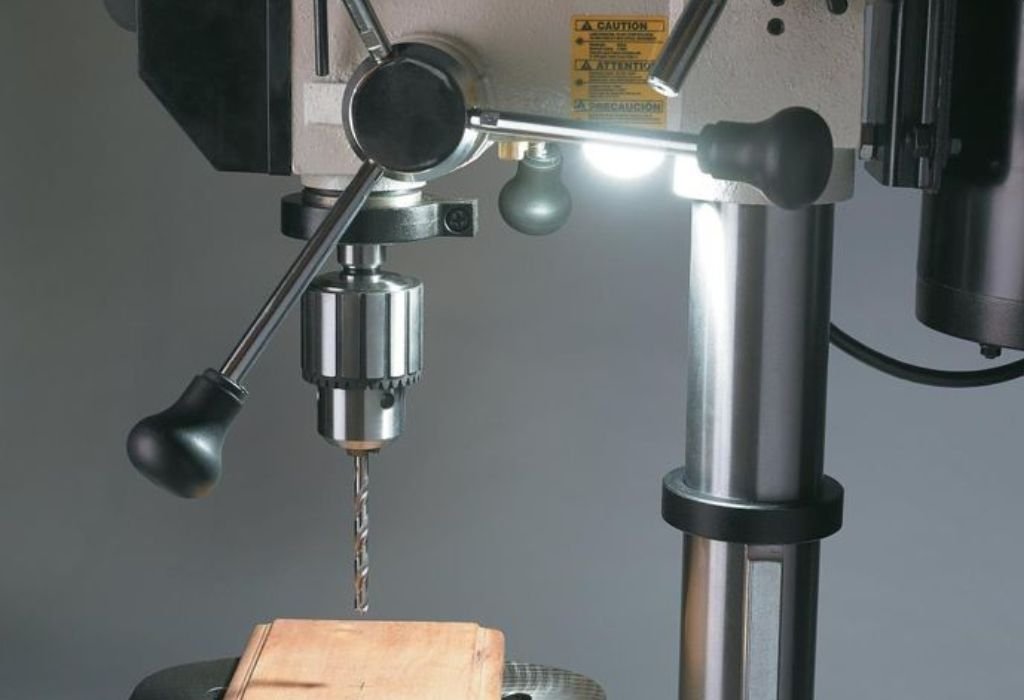
Consistent speed depends on proper maintenance. Dust, oil, or worn belts can alter pulley friction and cause RPM drift. Clean belts and pulleys regularly, and lubricate spindle bearings twice a year.
Check alignment and tension monthly, especially if the drill press runs daily. Use a handheld tachometer once a year to compare actual RPM with display readings. Preventive care saves time, improves safety, and maintains cutting precision.
How often should pulleys be cleaned?
Every few months or after heavy use.
Can oil on belts cause problems?
Yes, it reduces friction and causes slippage.
How to know bearings need oil?
If the spindle feels rough or noisy during rotation.
What to do if RPM fluctuates randomly?
Inspect belt wear, motor brushes, and pulley alignment.
Does dust affect speed accuracy?
Yes, fine dust buildup can make belts slip and slow RPM.
Conclusion
Mastering how to adjust drill press speed is one of the most valuable skills any craftsman, woodworker, or metalworker can develop.
The right RPM transforms an ordinary hole into a precise, professional cut. It’s not just about numbers on a chart—it’s about understanding how every variable, from material hardness to bit diameter, interacts inside the machine.
Every project demands balance. Wood needs a clean, fast cut to avoid tearing the grain, while metal requires slower speed and oil to control heat.
Plastics melt easily, so they call for careful, moderate RPM. Knowing when to slow down or speed up is what separates rushed work from refined craftsmanship.
Proper speed adjustment also protects your investment. Drill bits stay sharper longer, belts wear evenly, and motors run cooler.
A press that operates at the right speed delivers smoother power, steadier torque, and far fewer maintenance issues over time. These small habits not only save money but also build confidence in every drilling task.
Safety is equally important. The majority of power-tool accidents stem from inattention and poor setup. Taking a few seconds to unplug the drill, verify belt tension, and match RPM to material keeps every operation controlled and predictable. Precision begins long before the bit touches the workpiece—it starts with setup and awareness.
Ultimately, speed control defines mastery. Whether you’re boring clean holes in oak, shaping acrylic, or cutting through steel plate, knowing your drill press’s limits gives you total control over the outcome. Treat your machine like a precision instrument, not a brute-force tool.
When you find the perfect rhythm between power and precision, every project turns out cleaner, safer, and more professional than the last.

I’m John F. Nicholas, the founder, lead writer, and drill enthusiast behind 101drill.com. With years of hands-on experience in power tools and DIY projects, I created this platform to share practical knowledge, expert tips, and real-world insights to help others master the art of drilling.