
Precision is the backbone of every workshop or DIY project. One wrong move can turn a clean hole into a costly mistake.
Many beginners struggle with uneven holes and slipping drill bits. A drill press eliminates that problem by offering control, stability, and unmatched accuracy.
A drill press holds the drill bit perfectly vertical, allowing precise depth and straight holes. It provides the consistency that handheld drills often fail to deliver.
According to a Popular Mechanics report, a drill press increases drilling accuracy by over 65% compared to handheld tools. This makes it essential for woodworking, metal, and precision-based tasks.
Learning how to use a drill press properly not only improves results but also ensures safety. This complete guide explains setup, speed settings, and expert tips to get perfect holes every time.
Read More: how to remove chuck from drill press
What Is a Drill Press and Why Use It
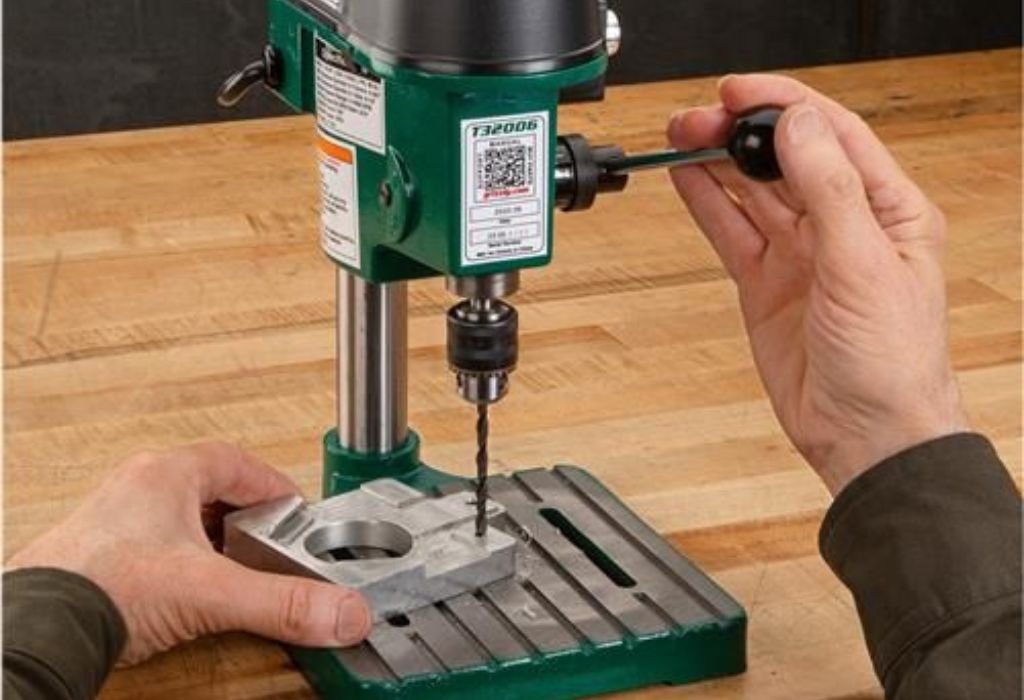
A drill press is a stationary power tool designed to make controlled and accurate holes. It consists of a motor, a rotating spindle, and a worktable that supports the material.
Unlike handheld drills, the drill press allows for a fixed drilling angle and depth. This makes it ideal for repetitive or precision work.
It also offers variable speeds to suit different materials. Wood, metal, and plastic each require unique RPM settings to avoid overheating or dulling the bit.
Most professionals and hobbyists use a drill press to improve consistency. It’s particularly useful for projects that require multiple identical holes.
What makes a drill press more accurate?
It holds the bit perfectly vertical, reducing wobble and ensuring clean cuts.
Why is it safer than a handheld drill?
It minimizes kickback and bit slippage during drilling.
Can beginners use a drill press?
Yes, with proper setup and safety steps, it’s beginner-friendly.
Is it worth buying a drill press?
If you drill regularly or work with metal or wood, it’s a valuable investment.
Read More: how to drill straight without a drill press
Setting Up Your Drill Press Correctly
Proper setup determines how accurate your drilling will be. Always start by securing the drill press on a stable workbench or floor stand.
Check that the table and spindle are properly aligned. Even a slight angle error can lead to off-center holes or bit breakage.
Select the correct drill bit for your material before turning on the press. Tighten it securely using the chuck key to avoid vibration.
Adjust the table height to match the length of the drill bit and the thickness of the material. The goal is to have enough clearance without forcing pressure.
How to adjust drill press height?
Unlock the table clamp, raise or lower it, then re-tighten the lever.
How to secure the drill bit?
Insert it into the chuck and tighten with the chuck key on all sides.
How to check alignment?
Lower the spindle and ensure the bit meets the mark precisely at the desired spot.
Should you clamp the workpiece?
Always. It prevents spinning or lifting during drilling.
Choosing the Right Speed and Bit
Speed and bit selection are critical for clean results. Hard materials require slower speeds, while soft materials can handle faster RPMs.
Check your drill press speed chart before each use. Most machines include guidelines for different bit sizes and materials.
Using the wrong speed can burn wood or dull the bit on metal. The right speed ensures longer bit life and cleaner holes.
Match your bit type to your material. Twist bits work for metal, spade bits for wood, and step bits for plastics.
What speed should I use for wood?
Between 1,500–3,000 RPM depending on hardness and bit size.
What speed for metal?
Between 300–1,000 RPM for steel and 1,000–1,500 RPM for aluminum.
Can I use any bit in a drill press?
No. Use bits specifically designed for the press and your material type.
What if the bit overheats?
Reduce speed and apply cutting oil for metal drilling.
How to Drill Perfect Holes Every Time
Mark the center of your hole before drilling. Use a center punch to guide the bit and prevent wandering.
Clamp your material securely to the table. Movement during drilling can cause uneven holes or bit damage.
Lower the spindle gently using consistent pressure. Let the bit do the work instead of forcing it through the material.
For deep holes, lift the bit periodically to clear debris. This prevents clogging and improves airflow for smoother cuts.
How to drill multiple holes evenly?
Use a fence or stop block system.
How to prevent splintering in wood?
Place a scrap board under the workpiece to support the exit point.
How to keep holes centered?
Use a punch mark or laser guide before drilling.
How to avoid overheating?
Drill at the correct speed and pause between passes.
Safety Tips for Using a Drill Press
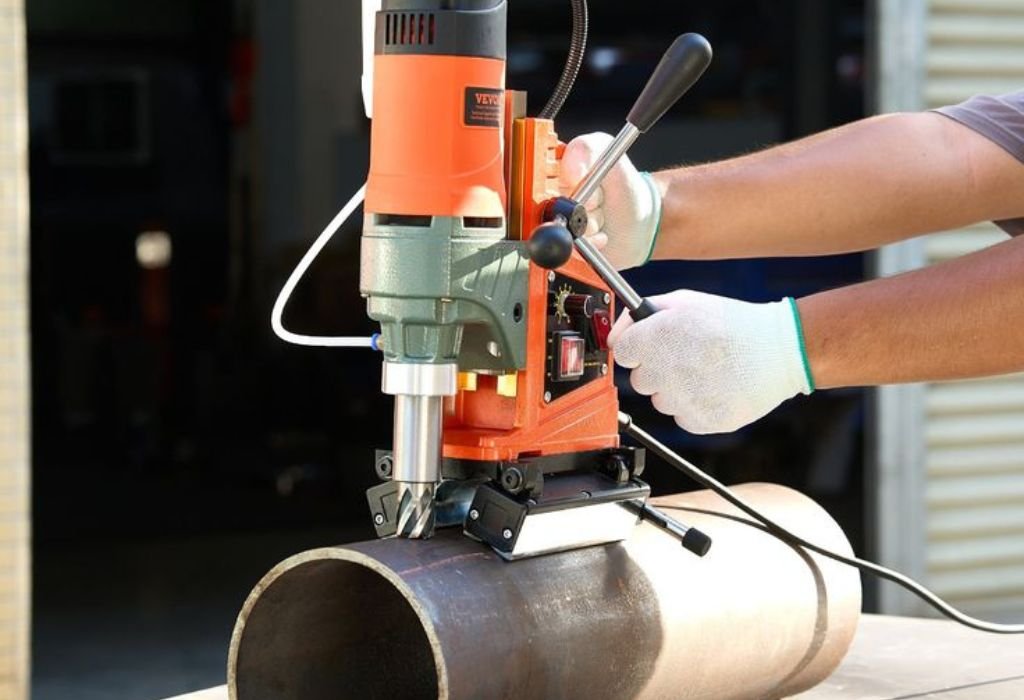
Safety is non-negotiable when operating power tools. Always wear safety glasses and remove loose clothing or jewelry.
Ensure the drill press is unplugged when changing bits. Accidental starts can lead to serious injury.
Keep hands away from the rotating bit and use clamps instead of fingers to hold materials.
Avoid distractions while drilling. Focus on the workpiece and stop immediately if you hear strange noises or vibrations.
Should I wear gloves while using a drill press?
No. Gloves can get caught in the spinning bit.
What safety gear is required?
Safety glasses, ear protection, and proper clothing.
Can a drill press cause kickback?
Yes, if material isn’t clamped securely.
Should the machine be grounded?
Yes, always use a properly grounded outlet.
Maintenance and Care for Long-Term Use
Regular maintenance keeps your drill press in top condition. Clean debris and dust from the table and base after each use.
Lubricate the spindle and moving parts to reduce wear. This ensures smoother motion and longer motor life.
Inspect belts and pulleys regularly for cracks or slack. Replace worn parts immediately to maintain consistent speed and torque.
Store drill bits properly in a case or holder. Keeping them sharp and rust-free ensures precise drilling for years.
How often should I lubricate?
Once every 25–30 hours of operation.
How to sharpen drill bits?
Use a drill bit sharpener or a fine grinding wheel.
How to clean the drill press table?
Wipe with a soft cloth and light oil to prevent rust.
How to extend motor life?
Avoid overloading and keep vents free from dust buildup.
Conclusion
A drill press is more than a tool—it’s a precision machine that transforms ordinary drilling into professional-grade results.
By learning proper setup, speed selection, and safety habits, you’ll achieve consistent, accurate holes in any material.
Maintenance and care ensure your drill press performs smoothly for years. Whether you’re woodworking or metalworking, mastery of this tool enhances every project.
Use these techniques, practice regularly, and you’ll soon drill like a pro—clean, fast, and perfectly straight every single time.

I’m John F. Nicholas, the founder, lead writer, and drill enthusiast behind 101drill.com. With years of hands-on experience in power tools and DIY projects, I created this platform to share practical knowledge, expert tips, and real-world insights to help others master the art of drilling.