
In every workshop, precision separates a professional project from a rough attempt. A single mistake in drilling can ruin a perfect piece of wood or metal.
This is why craftsmen rely on one tool that guarantees accuracy — the drill press.
Imagine trying to drill straight holes by hand while keeping consistent depth and alignment. Even with a steady grip, human error is inevitable. A drill press solves this problem by combining power, control, and stability, allowing users to create exact holes every time.
According to Wood Magazine, a properly set up drill press can improve drilling accuracy by up to 70% compared to handheld drills source.
This precision makes it a go-to tool for woodworkers, metal fabricators, and DIY enthusiasts alike.
Beyond accuracy, the drill press enhances safety and efficiency. It handles dense materials like steel and hardwood with less vibration, reducing fatigue and mistakes.
For professionals, it transforms tedious manual drilling into a fast, repeatable, and reliable process.
From furniture building to automotive fabrication, the versatility of a drill press extends far beyond simple hole-making.
It can sand, polish, and even act as a light milling tool with the right attachments. Understanding its uses can unlock new possibilities for every workshop setup.
This guide explores what a drill press is used for, how it works, and why it remains one of the most essential tools in woodworking and metalworking today.
Read More: how to use a drill press
What Is a Drill Press and How It Works
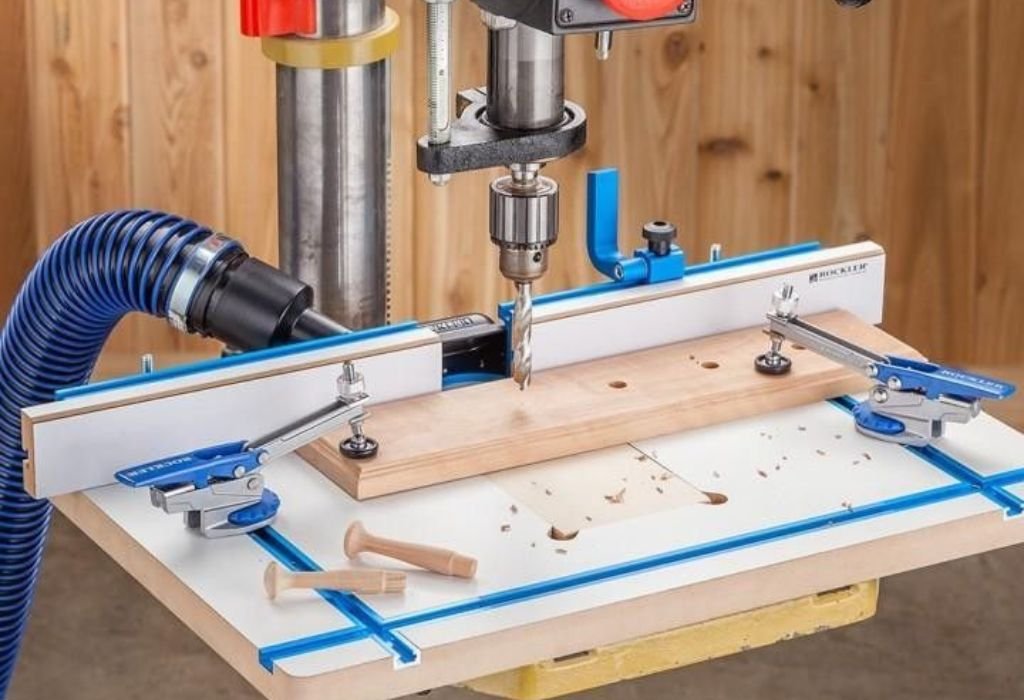
A drill press is a stationary power tool designed to drill precise and consistent holes in wood, metal, and plastic. Unlike handheld drills, it keeps the bit fixed in alignment, allowing the operator to control speed, pressure, and depth with exact accuracy.
The tool consists of a base, column, table, and spindle head. The motor powers the spindle, which holds the drill bit and moves vertically through a feed lever. This design ensures stability, reducing wobble and improving the accuracy of every hole.
The operator adjusts the table height and speed settings based on the material being drilled. For instance, hardwood or steel requires lower speed and higher torque, while softwood allows faster rotation. This adaptability makes the drill press a universal tool across many industries.
Read More: how to drill straight without a drill press
Key Components of a Drill Press
1. Base
The base provides support and stability, keeping the machine balanced during drilling.
2. Column
It connects the base to the head and ensures vertical alignment of the spindle.
3. Table
This adjustable platform supports the workpiece and can be tilted for angled drilling.
4. Spindle and Chuck
The spindle rotates the bit, while the chuck holds it firmly in place.
5. Feed Lever
The lever allows controlled downward motion, maintaining uniform hole depth.
Read More: how to remove chuck from drill press
How Does It Work?
A drill press operates using a motor that spins the spindle at variable speeds. The user lowers the feed lever to move the bit into the material, creating a precise, perpendicular hole.
How is a drill press different from a handheld drill?
A handheld drill relies on manual stability, while a drill press is mounted and guided mechanically for consistent results.
Can you adjust the speed on a drill press?
Yes. Most models feature adjustable pulleys or electronic controls to match the bit speed with the material hardness.
Why is depth control important?
Depth stops prevent over-drilling, ensuring uniform holes in multiple pieces.
What power options are available?
Drill presses come in both bench-top and floor-standing designs, powered by single or three-phase motors.
Is maintenance necessary?
Regular lubrication and cleaning ensure the spindle and bearings operate smoothly, extending the tool’s lifespan.
Main Uses of a Drill Press
A drill press is far more than a hole-making tool. Its design allows for diverse workshop operations that demand control, strength, and precision.
Drilling Precise Holes
The most common use of a drill press is creating accurate holes with exact diameter and depth. It can bore through wood, metal, and plastic with clean edges and minimal tear-out.
Why is precision drilling important?
Precision ensures proper fit for fasteners and joints in furniture, metal parts, and machinery.
Can it drill through steel?
Yes. With a high-speed steel (HSS) or cobalt bit and correct speed, a drill press can penetrate thick steel easily.
Does it prevent bit wandering?
The fixed spindle alignment prevents lateral movement, keeping holes perfectly centered.
How to ensure clean holes?
Use proper feed rate and sharp bits to minimize friction and burning.
Can it drill at angles?
The adjustable table allows angled holes for dowels, joinery, or complex fixtures.
Sanding and Polishing
With attachments, a drill press doubles as a sander or buffer, offering control for shaping and finishing.
Can you sand on a drill press?
Yes, by attaching a drum sander to the chuck for smooth contour sanding.
What about polishing metal?
Install a polishing wheel to buff aluminum, brass, or steel to a mirror finish.
Is it safe for sanding?
Keep the table steady and use proper dust collection to avoid buildup.
Can it replace a disc sander?
While not identical, a drill press offers similar control for light to medium sanding jobs.
Reaming, Tapping, and Countersinking
These operations refine or modify existing holes for bolts, threads, and fasteners.
What is reaming?
Reaming enlarges and smooths a hole to a precise diameter.
What is tapping?
Tapping creates internal threads for screws and bolts.
What is countersinking?
It forms a conical recess so screws sit flush with the surface.
Why use a drill press for these?
It keeps alignment perfect, avoiding thread misalignment or damage.
Can these be done manually?
Yes, but using a drill press ensures precision and repeatability.
Advantages of Using a Drill Press
Using a drill press brings measurable improvements to quality, speed, and safety in every project.
Why is it more accurate than a handheld drill?
The fixed position and depth control eliminate guesswork and wobble.
Does it improve safety?
The clamped workpiece and stable setup reduce chances of slips and injuries.
How does it enhance productivity?
It drills repetitive holes faster with consistent depth and spacing.
Is it suitable for beginners?
Yes. Even novice users achieve professional results with minimal training.
Does it save time?
For mass production or repetitive drilling, a drill press significantly cuts project time.
Types of Drill Presses
Each type of drill press is built for specific workshop needs and space availability.
1. Bench Drill Press
Compact and ideal for small workspaces, it mounts on a table for light to medium-duty tasks.
2. Floor Drill Press
Larger and more powerful, it handles heavy materials and industrial operations.
3. Magnetic Drill Press
It attaches to steel surfaces using a magnet, perfect for on-site metal fabrication.
4. Radial Drill Press
Offers flexible arm movement, allowing drilling at various angles and positions.
5. Portable Drill Press
Lightweight and versatile, designed for contractors or field workers needing mobility.
Which is best for woodworking?
A bench drill press suits most woodshops, offering control without taking up floor space.
Which type is ideal for steel fabrication?
A floor or magnetic drill press delivers power and precision for thick metals.
Safety Tips for Using a Drill Press
Safety is crucial when operating any power tool. Understanding proper setup and habits ensures long-term reliability and protection.
Should you wear safety gear?
Always wear goggles and avoid loose clothing that could catch the spindle.
How to secure the workpiece?
Use clamps or a vise to prevent rotation or movement during drilling.
Can you change bits while powered on?
Never. Always unplug the machine before changing bits or adjusting settings.
How to prevent overheating?
Apply cutting fluid for metal drilling and allow short breaks between long bores.
Is hearing protection needed?
Yes, especially in metal shops where continuous use can exceed safe noise levels.
Maintenance and Care
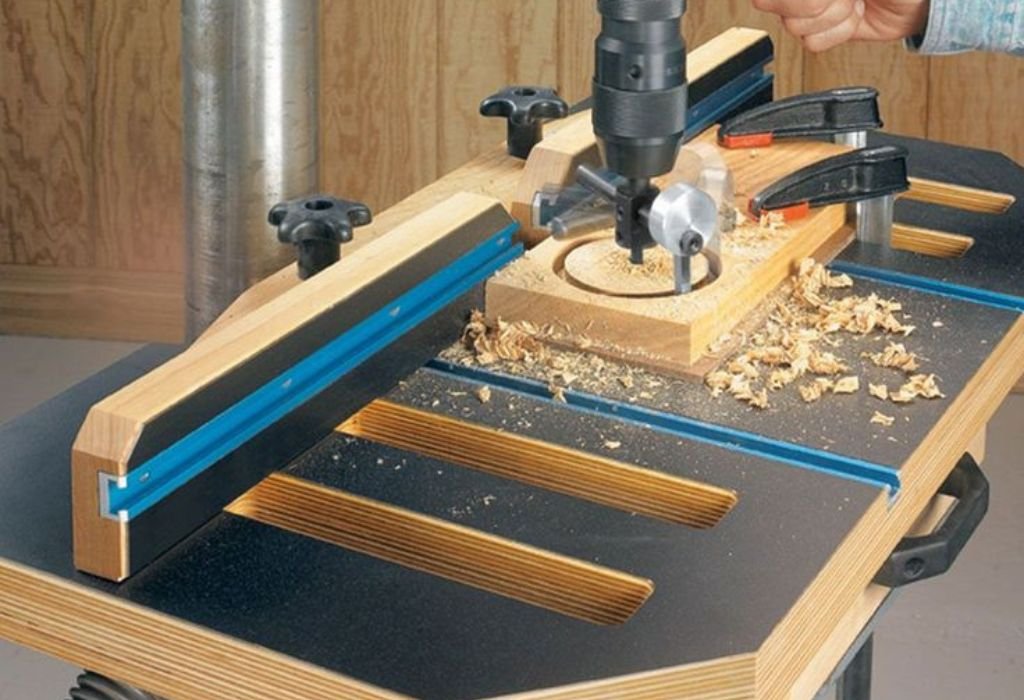
Proper maintenance extends the lifespan of the drill press and keeps accuracy consistent.
How often should you lubricate it?
Lubricate moving parts monthly or after heavy use to avoid friction wear.
Should you check alignment regularly?
Yes. Misalignment affects accuracy and increases wear on bits and bearings.
How to clean after use?
Remove dust and chips from the table, chuck, and base using a brush or air compressor.
Do belts and pulleys need inspection?
Check for cracks or slack every few months to maintain consistent spindle speed.
When to replace parts?
Worn bearings, belts, or chuck jaws should be replaced immediately to ensure safety.
Common Mistakes to Avoid
Even experienced users make errors that affect results and safety.
Using dull bits
Dull bits increase heat, slow performance, and can damage material surfaces.
Forgetting to clamp workpieces
Unsecured material can spin dangerously or cause inaccurate drilling.
Incorrect speed settings
Too high a speed burns wood or dulls metal bits quickly.
Neglecting maintenance
Lack of lubrication and cleaning leads to early tool failure.
Ignoring safety guards
Always keep guards in place to avoid accidents and debris contact.
Conclusion
A drill press is more than a precision tool — it’s the foundation of accuracy and efficiency in every workshop. Whether used for drilling, sanding, tapping, or polishing, it brings stability and control unmatched by handheld tools.
Woodworkers, metal fabricators, and DIYers alike depend on it for consistent results across countless materials. Understanding what a drill press is used for helps unlock its full potential and ensures every project achieves professional-grade quality.
For anyone serious about craftsmanship, a reliable drill press is not optional — it’s essential. Investing in one is investing in accuracy, safety, and productivity for years to come.

I’m John F. Nicholas, the founder, lead writer, and drill enthusiast behind 101drill.com. With years of hands-on experience in power tools and DIY projects, I created this platform to share practical knowledge, expert tips, and real-world insights to help others master the art of drilling.