
A beginner tightens a drill bit on a handheld drill, only to watch the hole wander off-center. Frustration builds as the surface splinters.
In workshops around the world, this is a familiar scene—and it’s the reason many people eventually ask, “What is a drill press?”
A drill press is more than a powerful tool; it’s the bridge between guesswork and precision. When used properly, it produces holes that are perfectly straight, smooth, and consistent.
In fact, studies show that stationary drills can improve hole accuracy by up to 80% compared to handheld drills.
For woodworkers, metal fabricators, or DIY hobbyists, understanding this tool opens the door to cleaner projects, higher productivity, and professional results.
This guide breaks down everything you need to know—how a drill press works, its components, types, uses, and safety rules.
Whether you’re outfitting a home workshop or learning industrial techniques, by the end you’ll know exactly why a drill press is essential for precision drilling.
Read More : what is a drill press used for
What Is a Drill Press?
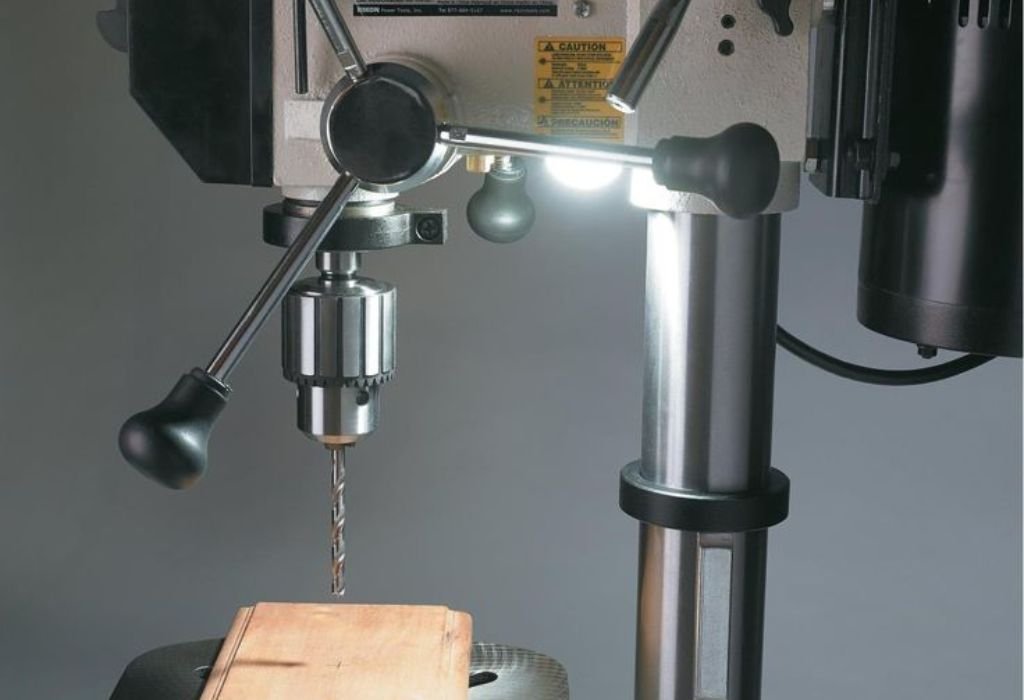
A drill press is a stationary power machine designed to drill accurate holes through various materials such as wood, metal, and plastic. Unlike a handheld drill, it mounts securely on a bench or stand, allowing the spindle and drill bit to move only vertically. This fixed alignment ensures consistent hole angles and depth with minimal vibration.
The tool consists of key elements—motor, spindle, chuck, table, and base—all arranged along a rigid column. Together they provide a stable, controlled drilling environment. Because the bit is lowered by a feed lever, the user applies uniform pressure every time, resulting in clean, repeatable holes ideal for professional production work.
How Does a Drill Press Work?
A drill press operates through a simple but precise mechanism. The motor transfers power to the spindle via a belt or gear system. When the operator engages the feed handle, the spindle lowers the rotating drill bit into the workpiece.
Speed settings are adjusted by repositioning the belt on pulleys or through a variable-speed control. Lower RPMs are used for metals, while higher speeds suit wood and plastics. Depth stops allow consistent drilling to a fixed measurement, eliminating over-penetration. The combination of steady feed and controlled speed is what gives a drill press its unmatched precision.
Read More: how to use a drill press
Main Parts of a Drill Press (and Their Functions)
Every part of a drill press plays a vital role in stability and accuracy:
- Base: A heavy platform that anchors the tool to the floor or bench, absorbing vibration.
- Column: The vertical pillar supporting the table and head assembly.
- Table: Adjustable for height and angle, allowing precise positioning of materials.
- Spindle: The rotating shaft that holds the chuck.
- Chuck: A clamping device that grips the drill bit securely.
- Motor: Provides rotational power to the spindle.
- Feed Handle: Controls the vertical movement of the bit.
- Depth Stop: Limits how deep the bit travels into the workpiece.
Together, these components deliver the rigidity and control that handheld drills cannot match.
Types of Drill Presses
Drill presses come in several styles tailored to different workloads and spaces:
- Bench Drill Press: Compact and ideal for small workshops or hobby use. It mounts on a workbench and suits light- to medium-duty tasks.
- Floor Drill Press: A full-height model for heavy materials and continuous operation, often found in industrial settings.
- Magnetic Drill Press: Portable and attaches magnetically to steel structures—perfect for on-site construction or welding jobs.
- Radial Drill Press: Features an adjustable arm for drilling large or irregular workpieces.
- CNC Drill Press: Computer-controlled for automated, high-precision production runs.
Choosing between these depends on your workspace, material type, and the accuracy required.
What Is a Drill Press Used For?
A drill press serves countless purposes beyond simple hole drilling. In woodworking, it’s used for boring dowel holes, mortising, and countersinking. In metalworking, it can tap threads, ream holes, and bore through hardened steel.
DIY enthusiasts use drill presses for plastics, ceramics, and even jewelry projects. Manufacturers rely on them for repetitive drilling tasks in assembly lines. The consistent torque and vertical feed make it indispensable for precision-critical jobs in fabrication and engineering environments.
Read More: how to drill straight without a drill press
Drill Press vs. Hand Drill
While both tools perform similar functions, their capabilities differ significantly. A hand drill is lightweight and portable but limited in depth control and stability. A drill press, on the other hand, is fixed and offers far greater precision.
With a drill press, you can set exact drilling depths, maintain perpendicular angles, and control speed precisely. This results in smoother finishes and longer tool life. The trade-off is portability and cost, but for serious craftsmanship, the drill press quickly proves its worth.
How to Use a Drill Press
Operating a drill press safely and efficiently requires setup and discipline:
- Install the Bit: Insert and tighten the correct bit in the chuck using a key.
- Adjust the Table: Set height and angle for your material thickness.
- Set Speed: Refer to the material’s speed chart; slower for metal, faster for wood.
- Clamp the Workpiece: Always secure it to prevent spinning or kickback.
- Drill the Hole: Lower the bit smoothly with steady pressure until reaching the depth stop.
- Retract and Power Down: Raise the bit and turn off the motor after each use.
Example: softwood typically drills best at 2,000–3,000 RPM, while steel requires about 500–1,000 RPM.
Safety Tips for Operating a Drill Press
Accidents in workshops often happen due to complacency. According to OSHA, over 60% of power-tool injuries stem from improper handling (OSHA.gov). To stay safe:
- Wear safety goggles and avoid loose clothing.
- Always clamp your workpiece—never hold it by hand.
- Remove the chuck key before starting the motor.
- Keep long hair tied back and sleeves secured.
- Inspect belts, cords, and moving parts regularly.
Good lighting and clear workspace organization also help prevent costly mistakes.
Maintenance and Care
Regular maintenance ensures accuracy and extends the life of your drill press. Wipe away dust and metal shavings after each session. Lubricate the spindle and feed mechanism monthly to reduce wear.
Check belt tension frequently and replace frayed drive belts immediately. Clean the chuck jaws with a soft brush to keep grip strength consistent. Once a year, verify spindle alignment with a test bar to prevent angled holes. Proper care can make a quality drill press last decades.
Advantages of Using a Drill Press
- Precision: Perfectly aligned holes at exact depths and angles.
- Consistency: Identical results across multiple pieces.
- Versatility: Handles a wide range of materials and accessories.
- Efficiency: Faster drilling for production work.
- Durability: Built for long-term industrial use.
For professionals and serious hobbyists, the gains in accuracy and time easily outweigh the investment.
Limitations of a Drill Press
Despite its strengths, the drill press has a few downsides. It occupies floor or bench space, making it less portable than hand tools. It’s also limited by its throat depth—the distance from the column to the bit—which restricts how far you can drill into large workpieces.
Higher-end models can be expensive, and setup takes time. However, for workshops prioritizing quality and repeatability, these are minor trade-offs.
Who Should Use a Drill Press?
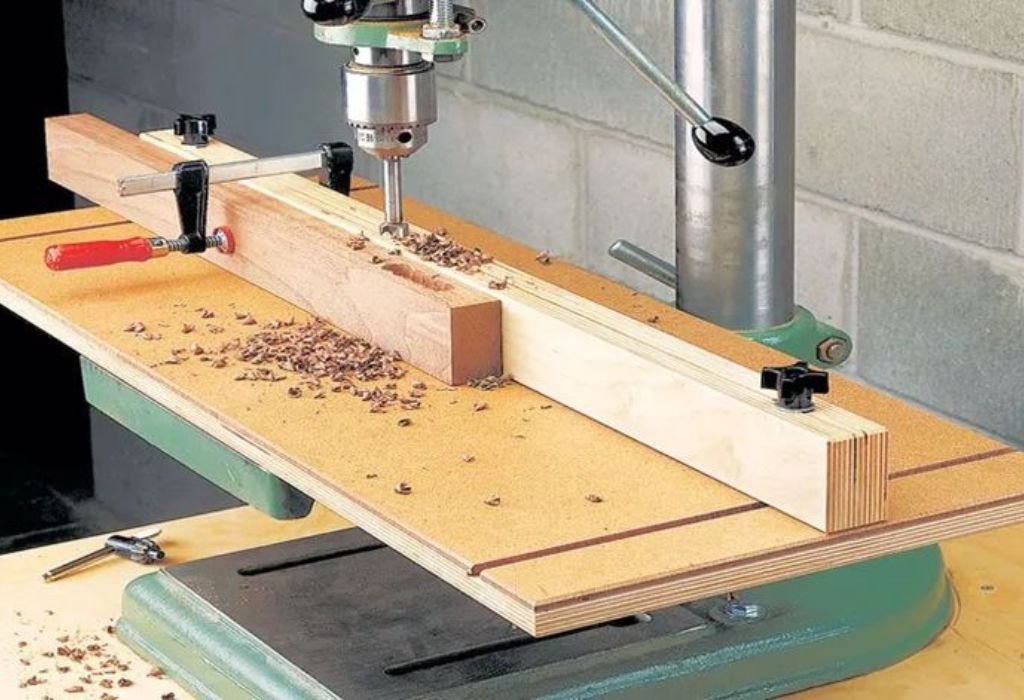
A drill press is ideal for:
- Woodworkers crafting furniture or cabinetry.
- Metal fabricators producing structural components.
- Machinists needing accuracy within thousandths of an inch.
- DIYers who frequently drill multiple holes in precise patterns.
- Schools or training centers teaching mechanical skills.
Whether you’re a professional craftsman or a weekend hobbyist, the tool’s consistency adds real value to your workflow.
Buying Guide: Choosing the Right Drill Press
When selecting a drill press, focus on:
- Power & Speed Range: 1/3 HP for light tasks; 3/4 HP or more for metal.
- Chuck Capacity: Choose 1/2 inch or larger for versatility.
- Table Adjustability: Tilting tables allow angled holes.
- Throat Depth: Determines the maximum width of workpieces.
- Build Quality: Cast-iron frames reduce vibration.
- Brand Reputation: Reliable names include WEN, JET, Delta, and Shop Fox.
Budget models suit beginners, while variable-speed floor presses are perfect for professionals managing multiple materials.
Conclusion: Why a Drill Press Is Worth It
A drill press transforms ordinary drilling into a precise, repeatable process. From furniture joinery to metal fabrication, its controlled power and accuracy make it a cornerstone of any serious workshop.
If you’ve ever struggled with uneven holes or misaligned parts, upgrading to a drill press can redefine your craftsmanship. Start with a quality bench model, learn its adjustments, and you’ll quickly see why professionals consider it an irreplaceable tool for accuracy and reliability.

I’m John F. Nicholas, the founder, lead writer, and drill enthusiast behind 101drill.com. With years of hands-on experience in power tools and DIY projects, I created this platform to share practical knowledge, expert tips, and real-world insights to help others master the art of drilling.