
Many DIYers and workshop professionals eventually ask the same question — can you use a hole saw on a drill press safely and effectively? The answer matters more than it seems because one small mistake can overheat your tool, warp your workpiece, or even jam the drill press spindle.
Imagine setting up your material perfectly, pressing the trigger, and within seconds the hole saw binds and starts smoking. This is one of the most common workshop mishaps when people use the wrong speed or forget to clamp their material properly. Understanding how a hole saw behaves under the controlled power of a drill press helps prevent these issues before they happen.
According to Starrett, one of the world’s largest hole saw manufacturers, hole saws are “most commonly used in manufacturing on drill presses, radial drills, and boring mills,” proving that the method is not only possible but widely accepted in industrial environments. (Starrett)
The main advantage of pairing a hole saw with a drill press lies in its accuracy and stability. The fixed spindle ensures a straight, controlled cut that’s nearly impossible to achieve with a handheld drill. But while precision is guaranteed, there are safety factors and mechanical limits to respect—especially regarding RPM, torque, and the material being drilled.
This article breaks down everything you need to know about using a hole saw on a drill press—from setup and safety to cutting techniques for wood, plastic, and metal. You’ll discover the do’s and don’ts that keep your tools sharp, your cuts clean, and your projects on track. By the end, you’ll not only know if you can use a hole saw on a drill press—but exactly how to do it right.
What Is a Hole Saw and What Is a Drill Press?
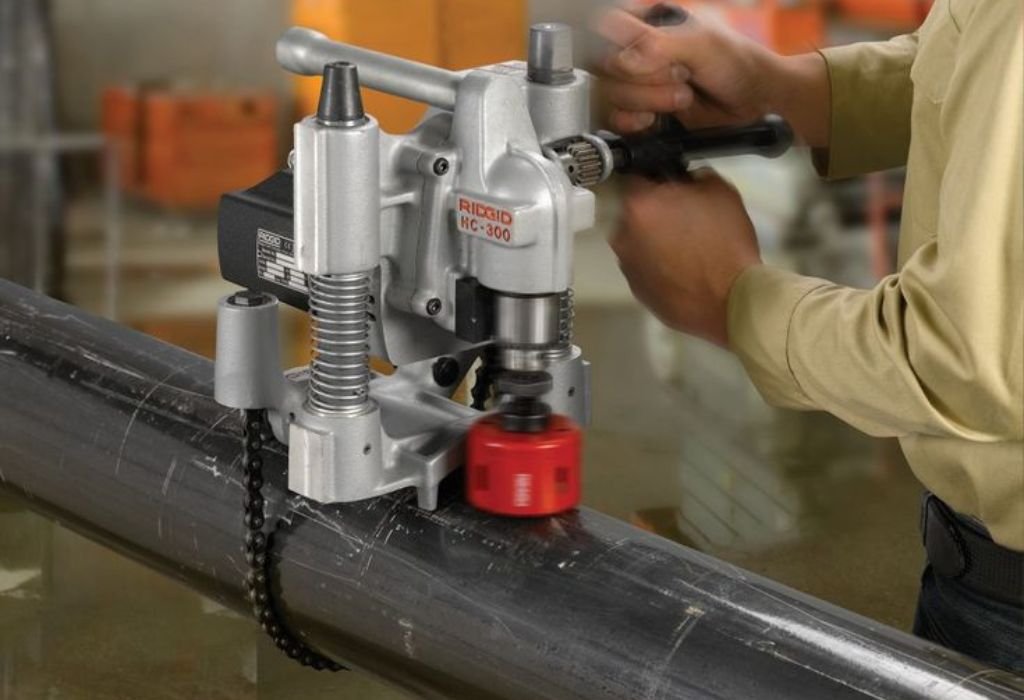
A hole saw is a circular cutting tool designed to drill large holes without removing the entire material inside. Unlike twist drill bits, it only cuts the perimeter, leaving a cylindrical core or plug in the center. This design makes it ideal for creating wide openings for pipes, wiring, or fittings while reducing the effort required compared to full-bore drilling.
A drill press, on the other hand, is a stationary power tool that provides vertical drilling motion with precision. Its motor drives a spindle that moves up and down at controlled speeds. The workpiece is secured on a flat table, allowing stable, repeatable cuts that are difficult to achieve with handheld drills.
When combined, the hole saw and drill press become a powerful pairing for accuracy and consistency. The press eliminates hand wobble, maintains perfect alignment, and allows precise feed control. However, this pairing also introduces unique challenges, such as torque buildup and chip removal, that need proper setup and awareness.
What is the main purpose of a hole saw?
To cut large, round holes efficiently while leaving the core intact for easy removal.
Why use a drill press instead of a handheld drill?
A drill press offers better stability, vertical accuracy, and consistent feed pressure, reducing the risk of tool wandering or rough cuts.
Can any hole saw fit on a drill press?
Most standard hole saws can fit if they use an arbor compatible with the drill press chuck, but heavy-duty or carbide-tipped types need proper arbors and torque control.
Does using a hole saw on a drill press make cleaner cuts?
Yes, because the tool remains steady and perpendicular, minimizing vibration and uneven entry angles that cause chatter.
What’s the key precaution before pairing them?
Always ensure the workpiece is securely clamped, as the torque from a hole saw can grab and spin loose material dangerously.
Can You Use a Hole Saw on a Drill Press?
Yes, you can use a hole saw on a drill press — but only under the right conditions. The drill press provides better control, accuracy, and pressure management than handheld drilling. However, its success depends on choosing the proper RPM, arbor, and cutting technique for the material at hand.
The hole saw’s large diameter demands lower spindle speeds. Using a high RPM can generate friction, heat, and burning, especially when cutting dense materials like steel or hardwood. A slow, steady feed is the secret to maintaining clean cuts and prolonging tool life.
Is it technically possible to use a hole saw on a drill press?
Yes. According to Starrett, hole saws are commonly used with drill presses and similar machines for accurate hole making.
Does it always make sense to use a hole saw on a drill press?
Not in every situation. Very large saws or thick materials might exceed the torque capacity of smaller bench-top presses.
When is it ideal to use a hole saw on a drill press?
When you need precision holes, consistent depth, and your drill press supports variable speed control and stable clamping.
When is it not recommended?
If the press lacks low-speed capability or rigidity, or if the material is too thick, use an alternative tool like an annular cutter.
Why do some users struggle when doing this?
Improper setup—too high RPM, lack of lubricant, or unclamped workpieces—causes most failures and safety issues.
Best Practices for Safe & Effective Use
Safety and setup are the foundation of successful hole-saw drilling on a press. Preparation prevents accidents and ensures clean results.
Begin by securely clamping the material. Never hold it by hand. Even a small piece can spin dangerously if the saw binds. Use a sacrificial backing board to reduce tear-out when drilling through wood or thin sheet metal.
Next, select the correct arbor and pilot bit. The arbor anchors the hole saw, and the pilot bit centers it. Ensure the assembly is tight and balanced before lowering the quill.
Always start at low speed. Larger diameters require slower RPMs to reduce heat and maintain smooth cutting. As a general rule, hole saws above 2 inches should operate under 400 RPM for wood and around 100 RPM for mild steel.
How should you prepare the workpiece and machine?
Clamp the workpiece firmly, level the table, and use a backing board to prevent exit damage.
What speed and feed settings are best?
Use low RPM and steady feed pressure—forcing the tool only increases friction and wear.
Which arbor setup works best?
Choose the proper arbor with a pilot bit suited to the saw size and chuck. Tighten it securely to avoid wobble.
How to handle chip evacuation?
Periodically lift the bit to clear chips and cool the cutting surface. For metals, apply cutting oil.
What are the essential safety steps?
Wear eye and ear protection, keep hands clear, and stop immediately if you sense binding or vibration.
Material-by-Material Considerations
Different materials respond uniquely when using a hole saw on a drill press. Each type requires a change in speed, pressure, and lubrication to achieve the best finish.
Wood: Softwoods cut easily, but hardwoods require slower RPM to avoid burning. Always use a backer board to prevent splintering.
Plastic: Too much heat melts plastic, so reduce speed and pressure. For acrylic, pause occasionally to cool the bit.
Metal: For mild steel or aluminum, use bi-metal or carbide-tipped saws and cutting oil. Maintain slow speed and steady feed to avoid dulling the teeth.
Thick or hardened steel: Use only heavy-duty drill presses with torque control. Sometimes an annular cutter or magnetic drill is more efficient.
How does using a hole saw on wood compare?
It’s smoother and faster, but can cause tear-out unless supported from beneath.
What about plastics?
Lower speed and coolant or air help avoid melting.
What about aluminum or mild steel?
Feasible with lubricant, sharp teeth, and slow RPM.
Can it handle stainless steel?
Possible with carbide saws, but requires strong machines and patience.
What should you avoid?
High speed, dry cutting, or unclamped pieces—these cause heat, chatter, and dull teeth.
Common Pitfalls & How to Avoid Them
Even experienced operators make mistakes that ruin both the hole saw and the project. Recognizing these pitfalls can save tools, materials, and fingers.
The first and most frequent problem is speed. Using the same high RPM for all diameters causes overheating, smoke, and dull blades. Always adjust the spindle speed to match the hole saw size and material.
Another issue is insufficient clamping. If the material moves during cutting, the hole saw can catch and spin the work violently. Use at least two clamps and ensure the surface is flat.
Chip buildup is a silent destroyer. If chips aren’t cleared, they compact inside the saw and lock it mid-cut. Raising the quill occasionally allows chips to fall free and cool the teeth.
What happens if the speed is too high?
The saw overheats, burns wood, and dulls or breaks teeth.
What if the material isn’t clamped properly?
It can spin uncontrollably, causing misalignment or injury.
What if chips aren’t cleared?
They clog the gullets, overheat the blade, and jam the tool.
What if torque exceeds machine capacity?
The drill press can stall or chatter; always match hole diameter to machine power.
How can these be avoided?
Control speed, clamp securely, clear chips frequently, and use lubricant when needed.
Alternatives to Using a Hole Saw on a Drill Press
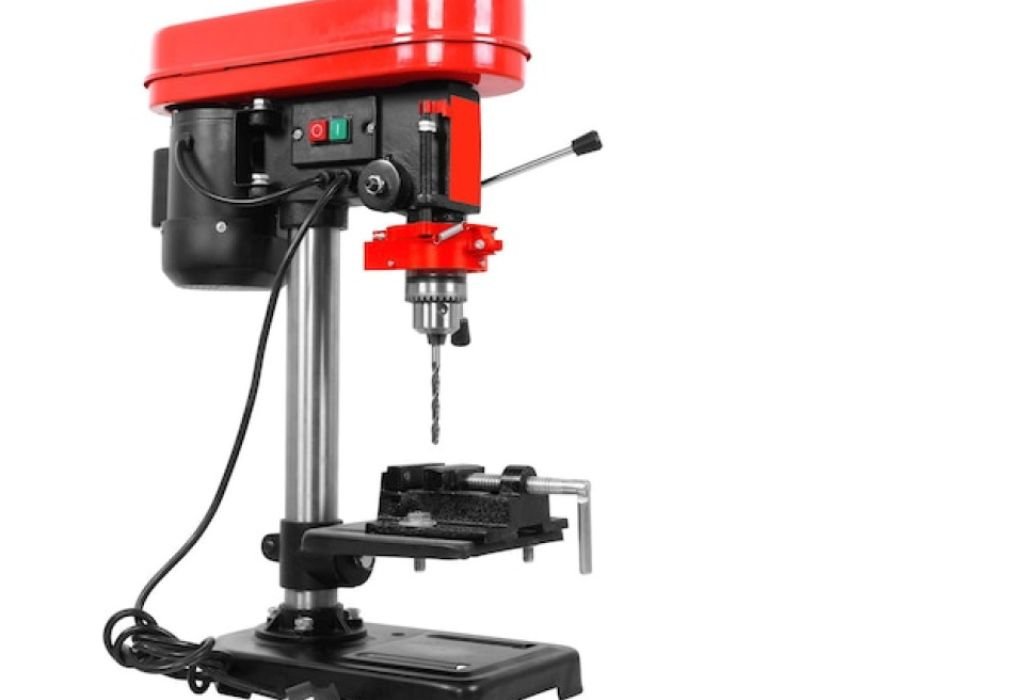
While using a hole saw on a drill press works in most cases, alternatives may be better depending on material or precision needs.
Forstner bits are ideal for woodworking projects requiring flat-bottom holes and clean edges. They work best for cabinetry or dowel holes where tear-out must be minimized.
Annular cutters excel in metal fabrication. They remove only a thin ring of material like hole saws but are made from high-speed steel or carbide, giving superior finish and durability.
Step bits are perfect for thin sheet metal, providing multiple hole sizes with one bit and reducing grabbing.
Routers or CNC machines can also substitute when accuracy and surface finish are paramount, though setup is more complex.
What is a better choice for wood?
Use a Forstner bit for clean, precise holes without splintering.
What about metal applications?
Annular cutters or magnetic drills deliver cleaner, faster cuts.
When is a handheld drill enough?
For small holes or portable jobs where precision isn’t critical.
When should a hole saw be avoided entirely?
When the material is too thick, the hole too large, or the equipment too weak for the torque.
Why consider alternatives?
They reduce wear on the press, cut faster, and sometimes offer smoother results.
Conclusion
So, can you use a hole saw on a drill press? Absolutely — as long as you respect the tool’s limits and set it up properly. A drill press offers unmatched precision and stability, but the key lies in controlling speed, using the right arbor, securing your material, and clearing chips regularly.
The technique becomes second nature once you understand how different materials respond to torque and friction. Whether you’re working on a woodworking project, cutting metal panels, or fabricating parts, a properly used hole saw on a drill press delivers professional-grade results.
Before your next project, double-check your setup, slow your speed, and secure your work firmly. Precision doesn’t come from luck—it comes from preparation.

I’m John F. Nicholas, the founder, lead writer, and drill enthusiast behind 101drill.com. With years of hands-on experience in power tools and DIY projects, I created this platform to share practical knowledge, expert tips, and real-world insights to help others master the art of drilling.