
When it comes to woodworking, choosing the right drill press size determines how smooth and accurate your holes will be.
The wrong size limits your reach, reduces precision, and makes working with large panels frustrating.
So, what size drill press for woodworking is best?
The answer depends on the size of your projects, the materials you use, and how much throat depth and spindle travel you need.
According to Wood Magazine, over 60% of woodworkers prefer a drill press between 10 and 15 inches for consistent accuracy and versatility.
This guide explains exactly which size is ideal for your shop, what features matter, and how to set up your drill press for perfect results.
Understanding Drill Press Sizes
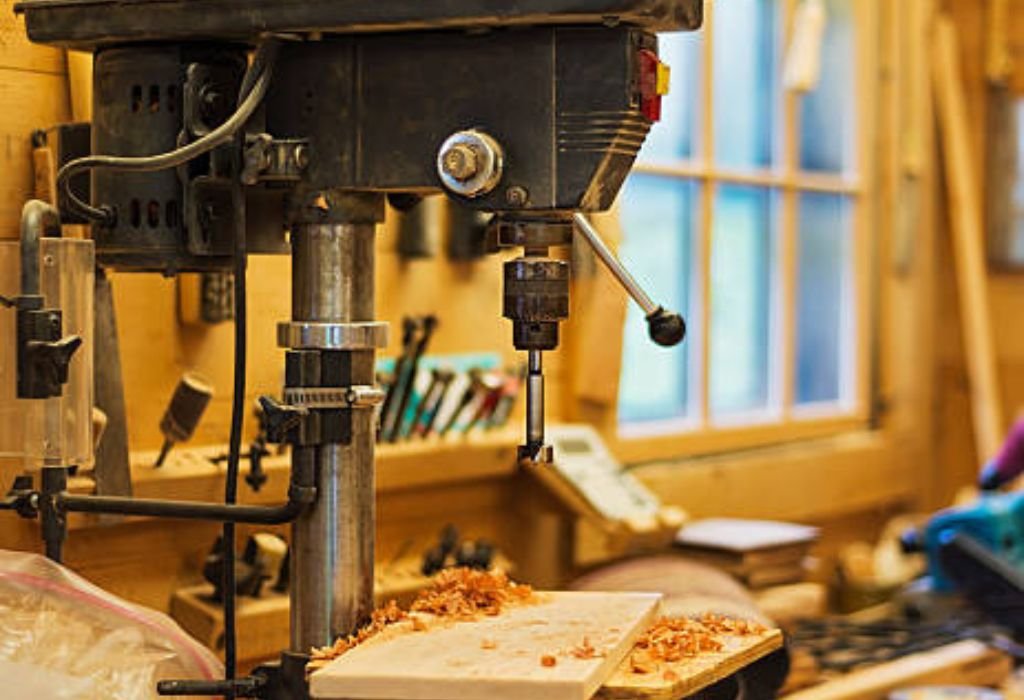
Drill presses are measured by the swing, which is twice the distance from the center of the spindle to the column.
A 12-inch drill press, for example, has a 6-inch throat depth — meaning it can drill a hole 6 inches from the edge of a board.
This measurement determines how large of a workpiece you can handle without repositioning.
For woodworking, that distance is crucial when drilling into wider boards or large panels.
The most common sizes for woodworkers are 8-inch, 10-inch, 12-inch, 15-inch, and 17-inch models.
Each offers a different balance of reach, stability, and spindle travel.
Why Size Matters in Woodworking
The drill press size affects everything from your reach to your precision.
A larger press provides more space for large boards, while a smaller one saves bench space but limits capacity.
If your projects involve furniture making or cabinetry, you’ll need more throat depth for drilling in wide frames.
For smaller tasks like toy parts or craftwork, a compact benchtop drill press will suffice.
The spindle travel — how far the chuck can move vertically — also depends on size.
A larger machine typically offers deeper travel, letting you bore through thick stock without adjusting your setup.
Recommended Drill Press Size for Woodworking
The ideal size drill press for most woodworking is 12 to 15 inches.
This range provides enough throat depth for medium and large boards without being too bulky for the average workshop.
A 12-inch model is perfect for hobbyists and small-shop users.
It offers about 6 inches of throat depth and enough power for most hardwoods.
A 15-inch drill press suits professional woodworkers who handle furniture or large panels.
It offers greater table space, a stronger motor, and better vibration control.
If you work on extremely large pieces, like tabletops or custom cabinetry, a 17-inch floor-standing model gives maximum reach and spindle travel.
However, for 90% of woodworking projects, a 12–15 inch drill press is the sweet spot.
Benchtop vs Floor Drill Press for Woodworking
A benchtop drill press is compact, affordable, and great for light to moderate woodworking.
It fits easily on a workbench and provides enough power for drilling through most woods.
A floor drill press, on the other hand, offers more stability and power.
It’s designed for long hours of use, larger bits, and thicker materials.
Here’s a quick comparison:
| Feature | Benchtop Drill Press | Floor Drill Press |
| Swing Size | 8–12 inches | 15–20 inches |
| Spindle Travel | 2–3 inches | 3–5 inches |
| Power | ⅓–½ HP | ¾–1 HP |
| Portability | High | Low |
| Ideal For | Hobby & small projects | Professional shops |
If space is limited, go with a 12-inch benchtop drill press.
If you build large furniture or hardwood pieces, a 15-inch or larger floor press is worth the investment.
Important Drill Press Features for Woodworking
1. Variable Speed Control
Wood types vary in hardness, and each needs a specific RPM range.
A variable-speed drill press lets you adjust the spindle speed for clean holes in both softwoods and hardwoods.
2. Depth Stop
A depth stop ensures you drill to the same depth every time.
This is essential for dowel joints, shelf pins, and mortise holes.
3. Table Tilt and Height Adjustment
A tilting table allows angled drilling for furniture components or decorative joints.
Make sure it tilts at least 45 degrees and locks securely.
4. Chuck Size
Most woodworking projects require bits up to ½ inch.
Choose a drill press with at least a ½-inch keyed chuck for versatility.
5. Laser or LED Guide
A laser crosshair or LED light helps align the bit perfectly.
It improves accuracy, especially when working on detailed wood pieces.
6. Dust Collection Port
Wood drilling produces fine dust that can clog the workspace.
A dust port keeps the area clean and reduces cleanup time.
Choosing the Right Drill Press Size by Project Type
Different woodworking tasks need different drill press capacities.
Here’s how to choose the right size based on what you make:
Small Craft Projects
Use an 8–10 inch benchtop press.
Perfect for small items like toys, boxes, or decorative wood pieces.
Cabinetry and Furniture
A 12–15 inch drill press gives the throat depth needed for wide frames and panels.
It provides consistent accuracy for repetitive drilling.
Large Tables and Doors
Opt for a 17-inch floor drill press.
It handles heavy pieces and offers long spindle travel for deep holes.
Professional Woodshops
Invest in a 15-inch floor model with variable speed and a heavy cast-iron base.
It combines reach, stability, and power for any project size.
Drill Bit Size and RPM Tips for Woodworking
Selecting the right drill bit size and speed ensures clean, tear-free holes.
Wood tends to burn or chip at high speeds, so control is crucial.
Here’s a quick guide:
| Bit Type | Bit Size | Ideal RPM (Softwood) | Ideal RPM (Hardwood) |
| Twist Bit | ⅛–¼ inch | 2500–3000 | 1500–2000 |
| Spade Bit | ½–1 inch | 1500–2000 | 1000–1500 |
| Forstner Bit | 1–2 inches | 800–1200 | 600–900 |
| Hole Saw | 1–3 inches | 600–900 | 400–600 |
Use slower speeds for larger bits and hardwoods.
Apply steady pressure and clear chips frequently to prevent overheating.
Setup Tips for Accurate Wood Drilling
Start by leveling the drill press table.
A tilted surface leads to uneven holes.
Use a wood clamp or fence to secure the workpiece firmly.
Never hold wood by hand while drilling — it can spin or lift.
Mark drill points clearly with a punch or awl before drilling.
This prevents the bit from wandering on smooth surfaces.
If drilling deep holes, back the bit out periodically to remove chips.
This prevents burning and ensures clean edges.
Keep bits sharp and lubricate lightly with beeswax for smoother cuts.
Always wear eye protection to block flying sawdust or chips.
Common Mistakes When Selecting a Drill Press

Many beginners buy the smallest press available to save space.
However, undersized models often lack the throat depth for large boards.
Another mistake is ignoring spindle travel.
Shallow travel means constant table adjustments, wasting time and precision.
Some woodworkers focus only on horsepower.
But accuracy, rigidity, and table quality matter more than raw power for woodworking.
Finally, avoid drill presses with excessive vibration.
It leads to rough holes and inconsistent dowel fits.
Recommended Drill Press Sizes and Models
While brand names vary, here are ideal size categories for woodworking:
- WEN 4214 (12-Inch Variable Speed) – Perfect balance of size, power, and price.
- JET JWDP-12 (12-Inch Benchtop) – High precision and smooth operation.
- Delta 18-900L (18-Inch Floor Model) – Professional-grade stability and reach.
- Shop Fox W1668 (13-Inch Benchtop) – Tilting table and excellent spindle travel.
Choose based on your workspace and project type.
Always prioritize swing size, throat depth, and build quality over appearance.
Safety Tips When Using a Drill Press for Woodworking
Always secure loose sleeves and hair before operation.
Rotating spindles can easily catch fabric or jewelry.
Keep both hands away from the spinning bit.
Use a clamp, fence, or jig for positioning the workpiece.
Don’t change speeds or bits while the motor is running.
Wait until the machine has come to a complete stop.
Clean sawdust regularly from the table and base.
A clean workspace reduces hazards and improves accuracy.
Final Answer: What Size Drill Press for Woodworking
The best drill press size for woodworking is between 12 and 15 inches.
It provides enough throat depth, spindle travel, and table area for most wood projects.
For small crafts, a 10-inch benchtop model works perfectly.
For furniture or cabinetry, a 15-inch floor model delivers the best precision and reach.
Choose a machine with variable speed, a tilting table, and a solid cast-iron base.
These features ensure consistent drilling accuracy and long-term durability.
Conclusion
Selecting the right drill press size for woodworking ensures clean holes, perfect joints, and smooth workflow.
A 12–15 inch press gives the best balance of size, performance, and cost for most users.
Whether you’re crafting small boxes or building full-sized furniture, the correct drill press makes every cut effortless and precise.
Invest in the right size once — and enjoy years of reliable, accurate woodworking.

I’m John F. Nicholas, the founder, lead writer, and drill enthusiast behind 101drill.com. With years of hands-on experience in power tools and DIY projects, I created this platform to share practical knowledge, expert tips, and real-world insights to help others master the art of drilling.