
Every craftsman dreams of drilling a hole that’s perfectly straight, clean, and uniform in depth. Yet even the best drill press can betray that dream if one tiny flaw sneaks in — run out.
When your drill bit spins slightly off-center, the result is wobble, vibration, and uneven holes. That imperfection might seem small, but in precision work, it’s the difference between professional accuracy and frustration.
So, what is run out on a drill press, and why should every woodworker, metalworker, and machinist care? Run out refers to the slight deviation in the rotation of the drill spindle or bit. Instead of spinning in a perfect circle, the bit travels in a tiny oval path.
According to FineWoodworking, even a 0.002-inch runout can cause visible error, damage bits faster, and leave rough hole edges. Over time, this misalignment can ruin precision equipment and waste materials.
Understanding What Run Out Means
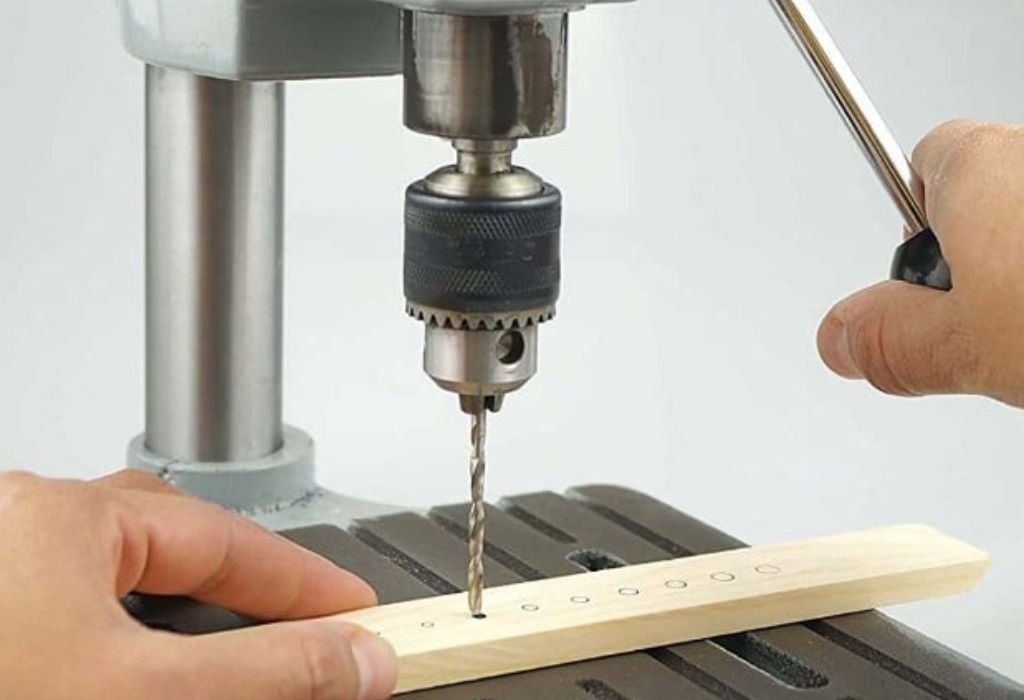
To understand what is run out on a drill press, imagine your drill bit spinning slightly off its true centerline. Instead of rotating in one perfect circle, it wobbles — shifting a few thousandths of an inch outward with every turn.
This movement may look invisible to the naked eye, but its effects appear quickly. You’ll notice vibration, uneven hole diameters, and sometimes even a rhythmic noise as the bit cuts more on one side than the other.
Run out can occur in the spindle, the chuck, or even the drill bit itself. When these parts are misaligned or worn, the rotation center shifts. That offset means the bit doesn’t cut symmetrically, creating holes that are slightly oversized or irregular in shape.
There are two primary types of run out — axial and radial. Axial run out happens when the bit wobbles forward and back, while radial run out means the bit deviates sideways. Both can cause performance loss, but radial run out is more common in drill presses.
The smaller the run out, the smoother and more accurate your work. High-quality drill presses keep this error minimal through precision bearings and well-machined spindles. Recognizing it early can save both your tools and your projects.
What exactly is run out on a drill press?
It’s the tiny wobble in the drill’s rotation that causes the bit to move off-center while spinning.
Is run out normal?
A very small amount is normal, but anything above 0.003 inches can affect precision drilling.
How can I see run out?
Watch the bit tip closely while spinning slowly — visible wobble means misalignment.
Does every drill press have run out?
Yes, all machines have minor tolerance levels, but good maintenance keeps it minimal.
Why does it cause larger holes?
Because the bit cuts slightly wider as it orbits around its center path instead of spinning truly straight.
Can it harm the drill press?
Over time, excessive run out increases bearing wear and shortens spindle life.
Common Causes of Run Out
Run out can result from multiple factors — mechanical wear, misalignment, poor installation, or even cheap tooling. Understanding its sources helps in preventing and correcting it effectively.
One of the most frequent culprits is a worn spindle bearing. Bearings keep the spindle running true, but as they wear down, the spindle develops play that transfers directly to the bit. Even a tiny gap here can translate into significant wobble at the tip.
Another major cause is a damaged or poorly-seated chuck. If the chuck isn’t mounted properly or if dirt gets between the tapers, the entire assembly sits slightly off-axis. Similarly, low-quality chucks often have uneven jaws that grip bits loosely.
Bent drill bits are another hidden reason for run out. A bit that’s been dropped or overheated during cutting can lose its straightness. The result is the illusion of spindle error when the tool itself is bent.
Finally, excessive pressure while drilling, or over-tightening the chuck key, can distort parts over time. Proper handling, quality components, and regular inspection are your best defense against run out in any drill press.
Can run out come from the drill bit itself?
Yes, bent or low-quality bits are often the main cause of visible wobble.
How do worn bearings affect run out?
They introduce side play, letting the spindle drift slightly during rotation.
Does chuck alignment matter?
Absolutely — a misaligned or dirty chuck will magnify run out dramatically.
Can over-tightening cause problems?
Yes, it can deform the chuck jaws or damage taper connections.
How can I identify bearing wear?
If you hear grinding or feel vibration even at low speed, bearings may be worn.
Will changing the chuck reduce run out?
Yes, upgrading to a precision chuck can cut wobble by more than half.
How Run Out Affects Drilling Performance
Run out might look insignificant, but its effect on accuracy and finish quality is huge. Each revolution of an off-center bit removes material unevenly, producing holes that are rough, oversized, or not perfectly round.
When drilling metal, this imperfection shows up immediately. The bit chatters, the hole’s entry edge frays, and the final diameter ends up larger than intended. Woodworkers face similar issues — tear-out and wandering holes caused by a vibrating bit.
High run out also increases tool wear. Because one side of the bit cuts more aggressively, it heats faster and dulls prematurely. This uneven loading transfers stress to the spindle, bearings, and motor, leading to premature wear and energy loss.
The most overlooked consequence, however, is user fatigue. A wobbling drill press produces extra vibration through the handles and work surface, forcing the operator to apply inconsistent pressure. That tension not only tires your arms but also risks inaccuracy.
Controlling run out isn’t just about technical precision — it’s about working smarter and safer. A smooth-spinning bit feels effortless, extends tool life, and produces holes that fit perfectly every time.
How much run out is acceptable for good drilling?
Around 0.001 to 0.003 inches is acceptable; anything higher reduces accuracy.
Why does run out make holes bigger?
Because the bit cuts a circular path that’s slightly offset, enlarging the hole diameter.
Can run out cause burning?
Yes, uneven pressure makes one side of the bit overheat and scorch material.
Does run out affect cutting speed?
Yes, inconsistent contact changes chip removal, requiring slower feed rates.
Can excessive vibration damage bits?
Definitely — it leads to micro-fractures and dulls cutting edges faster.
Will fixing run out improve finish quality?
Absolutely; smoother rotation ensures clean, professional-looking holes.
How to Test and Measure Run Out
Measuring run out accurately helps identify whether your drill press or the tool itself is at fault. You don’t need advanced equipment — just patience and precision.
Start by unplugging the machine and inserting a straight, high-quality bit or a steel rod into the chuck. Spin it slowly by hand and watch the tip closely. If you see visible wobble, you have run out. For exact measurement, use a dial indicator mounted on the drill table.
Position the dial tip against the side of the bit and rotate the spindle gently. The dial will show the total variation in thousandths of an inch. A reading below 0.003 inches is acceptable for most woodworking and metal projects.
If you notice higher numbers, test again with a different bit and then without the chuck to isolate the cause. Sometimes the problem lies in the chuck taper or bearings rather than the spindle.
Testing regularly ensures early detection. Fixing small misalignments early prevents bigger issues later, saving time, tools, and frustration in your workshop.
What’s the easiest way to check run out?
Spin the bit by hand and visually inspect for wobble at the tip.
Do I need a dial indicator?
It’s optional but provides precise numerical readings of spindle accuracy.
What run out reading is acceptable?
Anything below 0.003 inches is considered good performance.
How often should I test?
Every few months or whenever you notice irregular holes or vibration.
Can I measure run out without power?
Yes, the machine should always be off for manual inspection.
What if run out changes suddenly?
Check for a loose chuck or bent bit before assuming a spindle issue.
Fixing and Preventing Run Out

Fixing run out starts with identifying its source. Begin by cleaning all mating surfaces — the spindle taper, chuck interior, and bit shank. Dust or oil between these parts can cause tiny misalignments.
If the chuck is old or cheap, replacing it often brings immediate improvement. Precision keyless chucks are machined to tighter tolerances, significantly reducing run out. Likewise, replacing worn spindle bearings restores rotational accuracy.
Use only high-quality drill bits and store them properly. Bent or dull bits exaggerate wobble and make run out appear worse than it is. When tightening the chuck, apply firm, even pressure using all keyholes to ensure balanced grip.
To prevent future issues, avoid over-feeding or forcing the drill. Let the bit do the work while maintaining a steady speed. Periodically check the spindle for play and keep bearings lubricated. These small habits ensure long-term stability and precision.
Can I fix run out myself?
Yes, if it’s due to dirt, loose parts, or worn bits — deeper spindle issues need servicing.
Will changing the chuck fix everything?
Often yes, since most run out originates from misaligned or worn chuck jaws.
Is lubrication important?
Proper lubrication minimizes friction, keeping bearings aligned and smooth.
Does drill speed affect run out?
Not directly, but high speed amplifies visible wobble from existing errors.
Should I always use new bits?
Not always, but ensure they’re straight, sharp, and free of bends before drilling.
Can magnetic base drills have run out too?
Yes, every rotary drill type can experience it if components aren’t perfectly aligned.
Conclusion
Precision isn’t just a feature of a drill press — it’s the very reason this tool exists. But even the most advanced machine can lose its accuracy if one small issue goes unchecked. That issue is run out, the subtle wobble that turns perfect circles into imperfect holes.
Understanding what is run out on a drill press is therefore essential for anyone who values clean cuts, smooth finishes, and professional results.
Run out may seem minor, but its impact runs deep. It affects hole accuracy, tool wear, vibration, and even the lifespan of your drill press. A spindle that spins off-center puts uneven pressure on bits and bearings, leading to faster dulling and mechanical strain.
Over time, this robs the drill press of its true potential — transforming what should be a precise machine into one that struggles to stay consistent.
The good news is that run out can be controlled and minimized with the right care. Regular inspection, proper cleaning, and using precision components make a remarkable difference.
Checking for wobble, upgrading to a higher-quality chuck, or replacing worn bearings are simple steps that restore perfect alignment. Even basic habits like applying even pressure and using straight, sharp bits prevent unnecessary vibration.
A drill press running true feels different — smoother, quieter, and more controlled. Each hole lines up perfectly, each cut feels effortless, and every project reflects a level of craftsmanship that only precision can deliver.
When you understand and manage run out, you don’t just improve your machine; you elevate your entire standard of work.
So, treat your drill press like the precision instrument it’s meant to be. Keep it clean, test it regularly, and never ignore the signs of wobble or vibration.
Because the real secret to perfect drilling isn’t just about power or speed — it’s about harmony between every moving part. And that harmony begins with mastering run out.

I’m John F. Nicholas, the founder, lead writer, and drill enthusiast behind 101drill.com. With years of hands-on experience in power tools and DIY projects, I created this platform to share practical knowledge, expert tips, and real-world insights to help others master the art of drilling.