
Precision in drilling isn’t determined solely by motor power or chuck size — it’s defined by how accurately and deeply a drill press can penetrate material. One of the most overlooked factors behind that precision is quill travel.
Understanding what is quill travel on a drill press is crucial for anyone working with wood, metal, or composites. Quill travel refers to the total vertical distance the spindle — and therefore the drill bit — can move downward in one continuous feed.
Whether you’re drilling pilot holes in hardwood or deep bores in steel plates, knowing the quill travel capacity helps you plan depth control, speed adjustment, and bit selection effectively.
Understanding What Quill Travel Means

The quill is the hollow cylindrical sleeve inside the drill press head that guides the spindle as it moves vertically. The quill travel — sometimes called spindle travel — measures how far the quill and spindle assembly can move downward before reaching their limit.
In simpler terms, it determines the maximum depth a drill bit can penetrate in one pass without repositioning the workpiece. Most benchtop drill presses offer 2 to 3 inches of quill travel, while larger industrial models extend to 4, 5, or even 6 inches for deep-hole drilling.
The quill’s smooth, linear motion is made possible by precision bearings inside the headstock. As you pull the feed handles, the quill slides down within these bearings, keeping the spindle perfectly aligned. When released, a return spring retracts it smoothly upward to its starting position.
Greater quill travel provides more versatility. It allows operators to drill through thicker materials, countersink in one motion, or use longer bits without constant readjustment. Conversely, limited quill travel restricts the size of materials that can be drilled efficiently.
In essence, quill travel defines the operational range of your drill press. Knowing this measurement ensures you select the right machine for your specific production requirements.
How Quill Travel Affects Drilling Performance
The length of quill travel directly influences drilling precision, efficiency, and workpiece finish quality. It determines how deep the bit can cut before needing to reposition or reset, which in turn impacts productivity and alignment accuracy.
A longer quill travel allows uninterrupted drilling in thicker stock, reducing time spent resetting the table height or moving clamps. This is particularly beneficial in metal fabrication and deep-bore woodworking applications where maintaining alignment between multiple passes is critical.
From a mechanical standpoint, quill travel also affects spindle rigidity. Shorter quills tend to flex less, offering tighter tolerances and less runout. However, advanced drill presses balance this tradeoff through reinforced bearings and larger quill diameters, maintaining rigidity even at longer travels.
In precision drilling, repeatability matters as much as reach. Machines with adjustable depth stops enable the operator to control exactly how far the quill descends, ensuring uniform depth across multiple holes.
Excessive travel, however, without proper control, can lead to increased vibration or reduced feed stability. That’s why professional-grade presses include fine-feed controls and quill locks to stabilize downward motion.
Ultimately, understanding your drill’s quill travel range helps you choose appropriate drill bits, control cutting pressure, and maintain consistent accuracy — all key elements in professional workshop operations.
Measuring Quill Travel on a Drill Press
Determining the quill travel of your drill press is simple yet essential for precise planning. Manufacturers typically list it in the specifications, but it’s good practice to measure it manually for accuracy, especially on older machines.
To measure quill travel, lower the quill completely using the feed lever and note the position of the depth scale or pointer. Then, raise it to its original position and record the difference between both readings — that’s the total quill travel distance.
If your machine lacks a depth scale, use a ruler or caliper to measure the spindle’s exposed movement from top to bottom. Always ensure the drill press is unplugged before performing any manual measurements for safety.
Benchtop models usually feature 2½ to 3 inches of quill travel, while floor-standing units range from 4 to 6 inches. Specialized production presses can exceed 8 inches, designed for deep-hole drilling in thick materials.
Understanding this measurement helps when selecting drill bits, planning hole depths, or calculating feed rates. For instance, if you need to drill a 4-inch hole but your quill travel is only 2½ inches, you’ll need to reposition the table midway through.
Accurate measurement ensures you maximize your drill’s efficiency while avoiding tool strain and misalignment.
Relationship Between Quill Travel and Depth Stop
The depth stop mechanism works hand in hand with quill travel to deliver repeatable precision. While quill travel determines the maximum downward range, the depth stop limits how far within that range the quill can move during drilling.
This mechanism is vital for consistent hole depths — especially when producing multiple identical parts. It typically consists of an adjustable threaded rod and locking nuts that physically block the quill’s motion at a preset depth.
For example, if your drill press has 3 inches of quill travel but you only need a 1¼-inch hole, setting the depth stop prevents over-drilling and ensures uniform results across all pieces.
Professional machinists often fine-tune this setting for precision tapping, counterboring, and recess drilling. Some advanced presses include digital depth indicators that display exact quill travel readings in real time.
Maintaining accurate coordination between quill travel and depth stop adjustment is key to producing high-quality work. It eliminates guesswork, reduces scrap material, and ensures every hole meets its intended specification — a critical aspect in both woodworking and metalworking environments.
Quill Travel in Benchtop vs. Floor Drill Presses
The difference between benchtop and floor-standing drill presses extends beyond size and power — their quill travel range reflects their intended purpose and precision capability.
Benchtop drill presses are compact, designed for light-duty operations. They usually feature 2 to 3 inches of quill travel, suitable for thin materials, small projects, and hobby applications. Their shorter range keeps the machine stable while maintaining tight spindle alignment.
Floor drill presses, by contrast, cater to industrial environments. They offer 4 to 6 inches of quill travel, enabling deeper drilling in thicker workpieces such as steel beams or hardwood blocks. This extended reach reduces the need for frequent table adjustments, saving time in production runs.
However, with greater quill travel comes the need for increased rigidity. Floor presses incorporate wider columns, stronger quill bearings, and precision-ground spindles to prevent flex or vibration at full stroke.
When choosing between the two, consider both workpiece size and desired accuracy. For precision drilling in smaller materials, a benchtop model suffices. For deeper or repetitive cuts requiring high torque and longer feed, a floor drill press with extended quill travel is the superior choice.
In workshop terms, quill travel defines not only depth capability but also the overall efficiency of your machine selection.
Optimizing Drilling Depth Using Quill Travel
Proper use of quill travel ensures efficiency and accuracy in every drilling operation. The key is to control downward feed and depth stop settings for consistent results.
Start by identifying the required hole depth and comparing it with your machine’s quill travel capacity. If the hole exceeds the available range, plan to drill in two stages — halfway, then readjust the table for the remaining depth.
When drilling through hard materials, use shorter travel increments to maintain torque and minimize deflection. This helps preserve spindle bearings and cutting edges. Setting the depth stop before beginning repetitive drilling prevents overcutting and tool stress.
In sanding or countersinking tasks, partial quill movement is preferred. It allows greater control over the finish while maintaining a smooth downward feed. Always ensure the quill lock is engaged during tool changes or setup adjustments to prevent accidental drops.
For precision-critical projects like jig making or metal fabrication, measuring quill movement during operation can help refine feed consistency. Many professionals use dial indicators mounted to the quill housing for exact depth verification.
By optimizing quill travel, you not only improve dimensional accuracy but also extend the life of your bits and bearings — two core principles of workshop efficiency.
Maintenance Tips for Smooth Quill Movement
Maintaining a clean and well-lubricated quill mechanism is essential for consistent drilling accuracy. Over time, dust, debris, and metal filings can accumulate around the quill sleeve and bearings, leading to rough or uneven travel.
Begin by unplugging the drill press and lowering the quill fully. Use a soft cloth or compressed air to remove debris from exposed surfaces. Apply a thin layer of light machine oil or lithium grease to the quill exterior and bearings. Avoid over-lubrication, which can attract dust and cause buildup.
Inspect the return spring tension regularly. A weak spring may not retract the quill completely, while excessive tension can strain the feed handles and spindle bearings. Adjust according to manufacturer specifications.
For older machines, check for play or looseness in the quill assembly by extending it fully and moving it laterally. Any noticeable side movement indicates worn bearings or bushings that should be replaced.
Smooth quill travel is critical not only for precision but also for safety. Sticking or jerky motion during operation increases the risk of bit breakage or material damage.
Routine maintenance ensures long-lasting performance and maintains the integrity of your drill press for years of reliable service.
Troubleshooting Common Quill Travel Issues
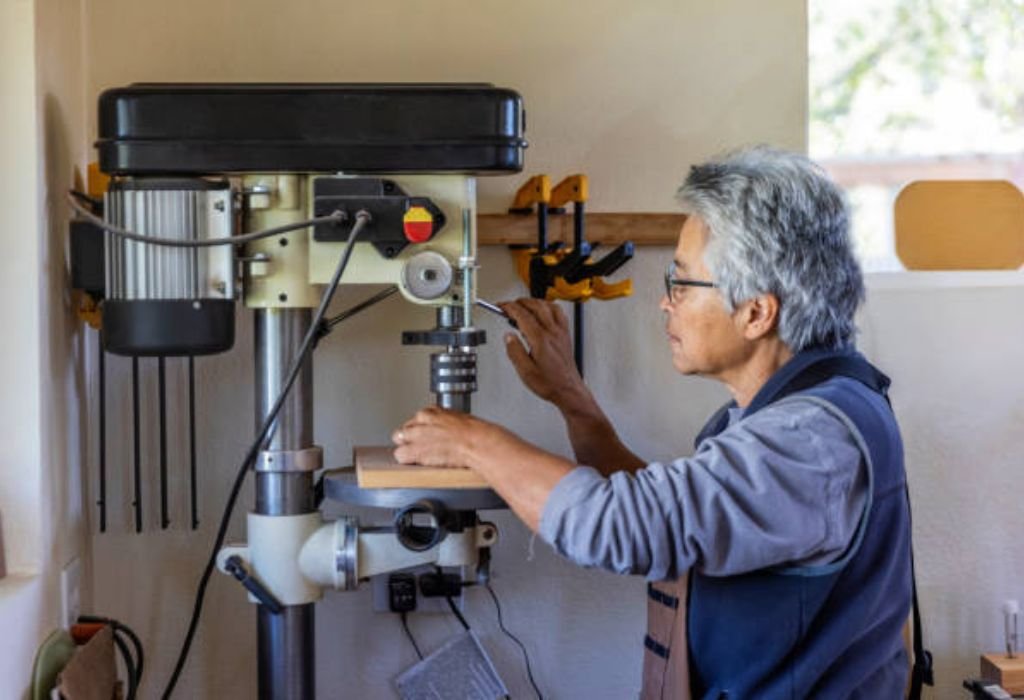
Even with proper care, quill travel issues can develop due to wear, misalignment, or contamination. Recognizing the symptoms early helps restore smooth operation before damage worsens.
If the quill feels stiff or resists downward movement, accumulated debris or dried lubricant may be the cause. Cleaning and re-lubricating the assembly usually resolves this. Grinding noises or rough motion suggest worn bearings that require replacement.
A quill that drops suddenly when released may have a weakened or broken return spring. Re-tensioning or replacing the spring restores normal function. Conversely, a quill that doesn’t descend smoothly under feed pressure might indicate internal corrosion or dirt buildup.
Excessive side play or wobble during drilling points to worn bushings or misaligned bearings. Continued operation under such conditions increases runout and damages bit alignment.
For severe mechanical issues, disassembly and recalibration may be required. Always follow the manufacturer’s service guide or consult a qualified technician.
By addressing quill travel issues promptly, operators ensure smoother feed motion, reduced vibration, and improved drilling precision — key for maintaining workshop efficiency.
Frequently Asked Questions About Quill Travel on a Drill Press
What is quill travel on a drill press?
Quill travel is the total vertical distance the drill press spindle can move downward during drilling. It determines how deep you can drill in one continuous pass without repositioning the workpiece.
Why is quill travel important?
It directly affects drilling depth, precision, and efficiency. Machines with greater quill travel allow deeper holes, fewer adjustments, and more consistent accuracy in workshop operations.
How much quill travel does a typical drill press have?
Benchtop drill presses usually feature 2–3 inches of quill travel, while floor models offer 4–6 inches. Heavy industrial presses can exceed 8 inches for deep-hole drilling.
Does quill travel affect drilling accuracy?
Yes. Limited quill travel may require repositioning the workpiece, increasing the chance of misalignment. Longer quill travel ensures stable, uninterrupted drilling for better accuracy.
How do I measure quill travel on my drill press?
Lower the quill completely using the feed lever, note the position, then return it to the top and measure the vertical distance traveled. This reading gives you the total quill travel.
Can I increase quill travel on my drill press?
No, quill travel is fixed by design. However, you can upgrade to a larger model or adjust table height to accommodate deeper drilling requirements.
What’s the difference between quill travel and spindle travel?
They are essentially the same concept. Both refer to the downward motion range of the spindle or quill assembly during operation.
Why does the quill sometimes feel sticky when moving?
Sticky quill motion often results from dust buildup, rust, or lack of lubrication. Cleaning and oiling the quill sleeve usually restores smooth operation.
Does quill travel affect drilling speed?
Indirectly, yes. Longer travel can require slower feed rates to maintain stability and accuracy, especially when drilling deep or hard materials.
How can I maintain smooth quill travel?
Keep the quill clean, lubricate it periodically, and check for bearing wear. Regular maintenance ensures precise vertical movement and extends the life of your drill press.
Conclusion
Understanding what is quill travel on a drill press gives professionals deeper control over their machine’s precision and performance. It defines how far the spindle can move, how deep the bit can cut, and how efficiently each project runs.
Longer quill travel enhances drilling capacity, allowing smooth penetration through thick materials. Meanwhile, proper depth stop adjustments ensure repeatability and uniformity across multiple holes. Maintaining a balance between reach, rigidity, and feed control is vital for optimal results.
By measuring, maintaining, and mastering quill travel, workshop operators can achieve consistent accuracy, reduce rework, and extend equipment life. It transforms drilling from a basic operation into a fine-tuned, professional process.
Whether you’re fabricating metal parts, building cabinetry, or assembling prototypes, knowing how to manage quill travel means working smarter — not harder. Precision begins where motion meets control, and on a drill press, that balance starts with the quill.

I’m John F. Nicholas, the founder, lead writer, and drill enthusiast behind 101drill.com. With years of hands-on experience in power tools and DIY projects, I created this platform to share practical knowledge, expert tips, and real-world insights to help others master the art of drilling.