
At first glance, a heat gun may look like a simple handheld tool that blows hot air, but its real power becomes clear the moment it transforms stubborn paint into curling strips, softens rigid plastic into perfect curves, or revives frozen pipes in the middle of winter.
This unassuming tool quietly plays a critical role in workshops, garages, art studios, construction sites, and industrial facilities around the world.
From restoring old furniture and repairing electronics to wrapping vehicles and sealing electrical connections, the heat gun has evolved into one of the most versatile thermal tools available today.
Professionals rely on its precision, while DIY users appreciate its ability to solve multiple problems with a single device. Unlike open flames or chemical solutions, controlled hot air offers safer and more targeted heating for sensitive materials.
Understanding what a heat gun is used for is not just about learning a list of tasks. It is about knowing how heat interacts with different surfaces, how materials respond at specific temperatures, and how one compact tool can replace multiple conventional methods.
Whether used for repair, crafting, automotive work, flooring, or industrial fabrication, the heat gun continues to prove that controlled heat is one of the most valuable forces in modern hands-on work.
Heat Gun for Paint Removal and Surface Stripping
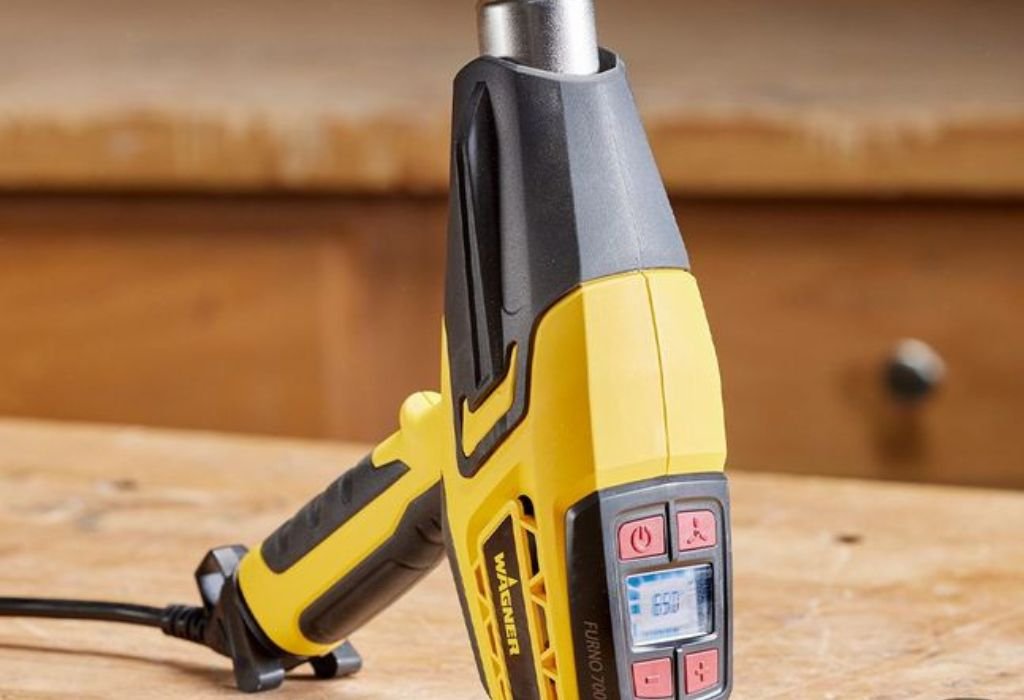
A heat gun is widely used for removing old paint, varnish, and coatings from wood, metal, and masonry surfaces.
Instead of using harsh chemicals or aggressive sanding, controlled hot air softens the paint layer so it can be scraped off smoothly. This makes restoration work cleaner, faster, and kinder to the base material.
When hot air is directed onto painted surfaces, the paint begins to bubble and lose adhesion. This process allows users to remove multiple layers of old paint without damaging doors, windows, trim, or furniture.
Heat guns are especially useful for delicate antique restoration where preserving the material integrity is critical.
Using a heat gun for paint removal also reduces airborne dust compared to sanding. This is especially beneficial when dealing with lead based paint in older buildings. While proper safety precautions are still required, heat removal significantly lowers inhalation risks.
Different temperature settings help users control stubborn paint layers. Lower temperatures can handle thin coatings, while higher heat is reserved for thick exterior paints. This flexibility allows professionals to adjust performance based on surface sensitivity.
Heat guns also assist in removing adhesives, vinyl stickers, and wallpaper residues. By softening the bonding agents, surfaces become easier to clean without aggressive scraping that could cause damage.
For DIY home renovations, heat guns save time, labor, and material costs. Instead of replacing old wooden trim or metal fixtures, users can restore them efficiently using controlled heat.
Heat Gun for Plastic Bending and Shaping
Heat guns are essential tools for bending, molding, and reshaping plastic materials without cracking or snapping.
When plastic reaches its softening temperature, it becomes flexible enough to reshape into curves, joints, and custom angles. This feature is widely used in plumbing, electronics, automotive trim, and craft projects.
PVC pipes are commonly reshaped using a heat gun for custom piping runs and tight installations. Instead of relying on factory molded fittings, installers can precisely bend pipes to fit around obstacles. This improves efficiency and reduces the need for extra connectors.
Acrylic sheets and thermoplastics can also be shaped using heat guns. Sign makers, hobbyists, and fabricators depend on this method to create smooth curves without stress fractures. The heat is applied evenly across the surface to prevent weak points.
Heat guns allow controlled softening rather than melting. This ensures that the plastic retains its strength after cooling. A properly heated and shaped plastic piece will hold its new form permanently.
In automotive customization, heat guns are frequently used to adjust bumper clips, interior trim parts, and headlight housings. This allows precise fitting when replacing or modifying factory components.
Electronics housing repairs often depend on heat shaping as well. Plastic enclosures can be gently softened and realigned to correct warps caused by impact or manufacturing defects. This extends product life without full replacement.
For artistic applications, heat guns are used to shape resin art pieces, polymer clay, and thermoplastic beads. Artists rely on controlled heat to refine textures and achieve dimensional effects safely.
Heat Gun for Shrink Wrapping and Electrical Insulation
One of the most technical and essential uses of a heat gun is heat shrink tubing. Electricians rely on this process to insulate, protect, and seal electrical connections. When heated, shrink tubing contracts tightly around wires, forming a durable and moisture resistant barrier.
Heat shrink tubing prevents short circuits by covering exposed conductive joints. It also blocks dust, chemicals, and water from entering the connection point. This increases electrical system durability in vehicles, appliances, and industrial machines.
Unlike electrical tape, shrink tubing does not loosen over time. It forms a firm, uniform seal that resists vibration, movement, and temperature fluctuations. This makes it ideal for automotive wiring harnesses and marine electronics.
Heat guns also activate adhesive lined shrink tubing. These specialized sleeves melt internal glue during heating, creating a waterproof bond around wires. This is critical for outdoor and underground electrical systems.
Beyond wiring, heat guns are used for packaging shrink wrap. Plastic wrap tightens around products when heated, creating secure and tamper resistant packaging. This is commonly used for retail bundling and storage protection.
In manufacturing environments, heat shrink packaging is used for tool kits, electronics sets, and multipack items. A heat gun allows quick activation without the need for large shrink tunnels.
For hobbyists and home users, heat shrink tubing improves safety and appearance. Clean insulated joints look professional and prevent accidental electrical failures over time.
Heat Gun for Thawing Frozen Pipes and Components
Heat guns offer a safe and controlled way to thaw frozen water pipes during cold weather. When pipes freeze, expanding ice restricts flow and increases burst risk. Gentle hot air applied gradually restores water movement without shocking the metal.
Unlike open flames or blowtorches, a heat gun distributes heat evenly. This reduces the risk of pipe cracking or structural weakening. Plastic and copper pipes both respond safely to controlled warm airflow.
Heat guns are also used to unfreeze locks, car door seals, fuel lines, and mechanical linkages. Applying steady heat loosens ice without damaging seals or internal components.
In industrial settings, frozen valves and hydraulic lines often require careful thermal restoration. Heat guns allow technicians to restore system flow without dismantling equipment or applying hazardous heating methods.
Using a heat gun for thawing also helps detect weak points in plumbing systems. Ice buildup often highlights areas with poor insulation or airflow exposure, enabling corrective improvements.
Heat guns can be combined with pipe insulation work after thawing. Once water flow is restored, heat wrap and insulation can be installed immediately to prevent future freezing.
This application is especially valuable for emergency winter repairs where time is critical. Heat guns provide fast response without introducing combustion hazards into confined spaces.
Heat Gun for Loosening Rusted Bolts and Mechanical Fasteners
Heat guns play a valuable role in automotive and mechanical repairs where rusted or seized fasteners prevent proper disassembly. Applying controlled heat causes metal expansion, breaking corrosion bonds and loosening tight bolts.
When metal heats up, it expands at a predictable rate. This expansion disrupts the tight bond between rusted threads, allowing hand tools to apply turning force safely. This technique reduces snapped bolts and stripped threads.
Heat guns provide more precision than torches. Instead of extreme flame temperatures, a heat gun delivers concentrated hot air without burning surrounding hoses, wiring, or seals. This makes it ideal for tight engine bays and interior mechanical work.
Suspension components, exhaust clamps, brake hardware, and mounting brackets all respond well to gentle thermal loosening. Professional mechanics often use heat guns where flame tools would be unsafe.
Heat application also improves the effectiveness of penetrating oils. When heat expands the metal, lubricating oil flows deeper into thread gaps. Once cooled, the contraction draws the oil inward even further.
Plastic surrounding parts remain protected when using heat guns rather than torches. This prevents costly collateral damage during repair procedures.
For home mechanics, this method provides professional-grade results with reduced risk. Loosening stubborn fasteners becomes safer, cleaner, and more controlled.
Heat Gun for Crafting, Art, and Creative Projects
Heat guns are widely embraced in crafts, DIY art, and decorative projects. Artists use controlled heat to manipulate resin, emboss powders, plastic sheets, foam materials, and specialty paints.
In resin art, heat guns remove air bubbles trapped during curing. Gentle heat forces bubbles to rise and pop without disturbing color flow or surface finish. This produces a professional glossy appearance.
Embossing techniques rely on heat guns to melt powdered inks over stamped designs. The heat activates bonding agents that create raised textures used in scrapbooking, greeting cards, and custom art prints.
Foam shaping in cosplay and costume design depends heavily on heat guns. EVA foam becomes pliable under heat and holds new shapes after cooling. This allows builders to form armor curves, prop details, and costume structures.
Heat guns also activate specialty paints and finishes. Crackle paint, texture coatings, and thermochromic finishes all respond to controlled heat settings.
Polymer clay artists use heat guns for quick surface curing and detail refinement. Unlike ovens, heat guns allow targeted adjustments without reheating entire models.
For home crafters, heat guns unlock professional techniques at low cost. This makes creative projects more durable, customizable, and visually impressive.
Heat Gun for Electronics Repair and Component Removal
Heat guns are widely used in electronics repair for desoldering components, reflowing solder joints, and repairing surface-mounted devices. Unlike traditional soldering irons that apply heat at a single point, heat guns distribute warm air across a wider area.
This makes them ideal for delicate circuit board work where multiple solder joints must be heated simultaneously.
Technicians often use heat guns to remove integrated circuits from damaged motherboards and control modules. When solder softens evenly, components lift without ripping delicate copper traces underneath. This approach protects the structural integrity of circuit boards during repair.
Heat guns are also used to fix cold solder joints. Over time, vibration and temperature changes can cause micro-cracks in solder connections. Applying controlled heat allows the solder to reflow and reconnect properly.
Mobile phone and laptop repairs also benefit from heat gun usage. Adhesive bonded components like batteries, screens, and flex cables release safely when warmed. This allows disassembly without cracking panels or damaging seals.
In LED strip lighting and electronic displays, heat guns help reactivate bonding adhesives. This makes replacement or repositioning much easier without using solvents or force.
Professional electronics workshops use precision heat guns with digital temperature control. These ensure exact thermal output for sensitive electronic materials.
Heat Gun for Floor Installation and Vinyl Wrapping
Heat guns are essential in vinyl flooring installation and shrink fitting processes. Vinyl planks and sheets become flexible under heat, allowing installers to shape them tightly around corners, edges, and uneven surfaces.
During vinyl wrapping, heat guns activate the stretch properties of wrap films. Car wraps, furniture wraps, and wall covers depend on heat to conform smoothly over curves and recesses. The heat allows material memory to reset and lock into place once cooled.
In laminate flooring installation, edge trimming and seam installation often require heat treatment. This prevents cracking during tight fitting operations.
Heat guns also soften adhesives beneath old floor coverings. This allows safe and clean tile removal without excessive mechanical force that could damage subfloors.
In commercial flooring, heat guns help seal seams using hot air welding rods. This produces strong waterproof joints in hospitals, kitchens, and industrial buildings.
Controlled heating during flooring work prevents shrinkage defects. Materials expand during fitting and contract during cooling, ensuring long-term dimensional stability.
Heat Gun for Automotive Detailing and Custom Work
Heat guns play a major role in automotive detailing, paint correction, dent repair, and customization. Auto technicians often use them to remove decals, badges, pinstripes, and vinyl graphics without damaging paint.
When gentle heat is applied to dented plastic panels, internal memory of the plastic allows it to return to its original shape. This method is widely used for bumper cover repairs.
Window tint installation also relies heavily on heat guns. The heat shrinks the film and removes moisture trapped during application. This ensures smooth bubble-free finishes.
Headlight restoration procedures use heat guns to separate factory sealed housings. Opening lights safely allows lens polishing, LED upgrades, and internal repairs.
Paintless dent repair professionals often combine heat with vacuum pulling tools. Controlled warming improves metal flexibility during reshaping.
Interior trim reshaping also benefits from heat guns. Warped dashboards, door panels, and clips can be reshaped for perfect fitment without replacement.
In auto wrapping and detailing studios, heat guns provide professional-grade finishes with long-term durability.
Heat Gun for Industrial Manufacturing and Fabrication
In industrial manufacturing, heat guns are used for pipe welding, material activation, composite molding, and chemical curing. Production facilities rely on controlled hot air for precision processing without combustion risks.
Shrink fitting metal sleeves and bearings is another important industrial application. Heating expands metal parts enough to slip into position before cooling tightly locks them in place.
Industrial adhesives often require thermal activation. Heat guns ensure uniform curing across bonding surfaces for structural strength.
In packaging industries, shrink film activation using heat guns creates tight protective seals around products. This enhances theft protection and storage safety.
Plastic welding operations use heat guns with welding nozzles. This technique repairs cracked plastic tanks, bins, bumpers, and containers using melting and bonding principles.
In aerospace and automotive composite fabrication, heat guns assist in resin setting and fiber layer bonding. Controlled heat prevents bubbles and structural voids.
Industrial grade heat guns feature overheat protection, digital displays, and airflow regulation for precise manufacturing control.
Heat Gun for Removing Adhesives, Stickers, and Labels
Heat guns are ideal for removing stubborn adhesives without surface damage. Stickers, tapes, price labels, and protective films become soft and easy to peel when heated.
Retail shelves, windows, vehicle panels, and electronics all accumulate adhesive residue over time. Heat breaks the chemical bond, making cleanup fast and residue free.
Automotive badge removal benefits from heat treatment. Heated adhesive releases cleanly without paint lifting or scratching.
Wallpaper removal also becomes easier when glue softens under heat. This prevents tearing and surface gouging during removal.
Heat guns also remove silicone sealants used in construction and bathrooms. Once softened, sealants scrape off cleanly.
This application saves time and prevents harsh chemical exposure in both residential and commercial environments.
Heat Gun Safety Practices and Risk Prevention
Heat guns generate extremely high temperatures that can cause burns, fires, and material damage if misused. Safe operation begins with proper protective equipment such as heat resistant gloves, eye protection, and long sleeves.
Never direct hot air toward flammable materials like gasoline vapors, solvents, fabrics, or paper. Always keep a fire extinguisher nearby when working in enclosed spaces.
Correct temperature selection is critical. Overheating plastic can release toxic fumes and cause material deformation. Always match temperature settings to the material being heated.
Never block air intake vents. Restricted airflow can cause internal overheating and permanent motor damage.
Always allow the nozzle and heating chamber to cool completely before storage. Placing a hot gun on work surfaces can start fires.
Children and pets should always be kept away from active heat gun operations. The nozzle remains dangerously hot even after power is turned off.
Using the correct attachments improves directional control and prevents thermal injury in precision applications.
Heat Gun Temperature Control and Output Range Explained
Most heat guns operate between 200°F to 1200°F depending on model type. Lower settings are ideal for drying paint and thawing pipes. Higher ranges are used for paint stripping, shrink tubing, and plastic shaping.
Dual temperature models offer simple switching between low and high outputs. Advanced digital models allow precise selection in single degree increments.
Airflow control determines heat distribution. Low airflow focuses heat on narrow targets while high airflow spreads heat over wide areas.
Understanding temperature behavior prevents material failure. Excess heat may melt plastic while insufficient heat fails to activate bonding agents.
Professional trades rely on consistent thermal output for repeatable results. This is why industrial heat guns focus heavily on temperature regulation.
Heat Gun vs Similar Tools Explained
A heat gun differs from hair dryers in temperature intensity and airflow concentration. Hair dryers are designed for moisture evaporation while heat guns focus on thermal material transformation.
Heat guns also differ from propane torches. Torches use open flame which creates combustion hazards. Heat guns provide flame-free heating for indoor safety.
Infrared heaters spread radiant heat while heat guns deliver forced hot air. Each serves different shrink and curing applications.
Soldering stations focus localized contact heat while heat guns distribute area heat. Both tools often complement each other in electronics repair.
How to Choose the Right Heat Gun for Your Needs
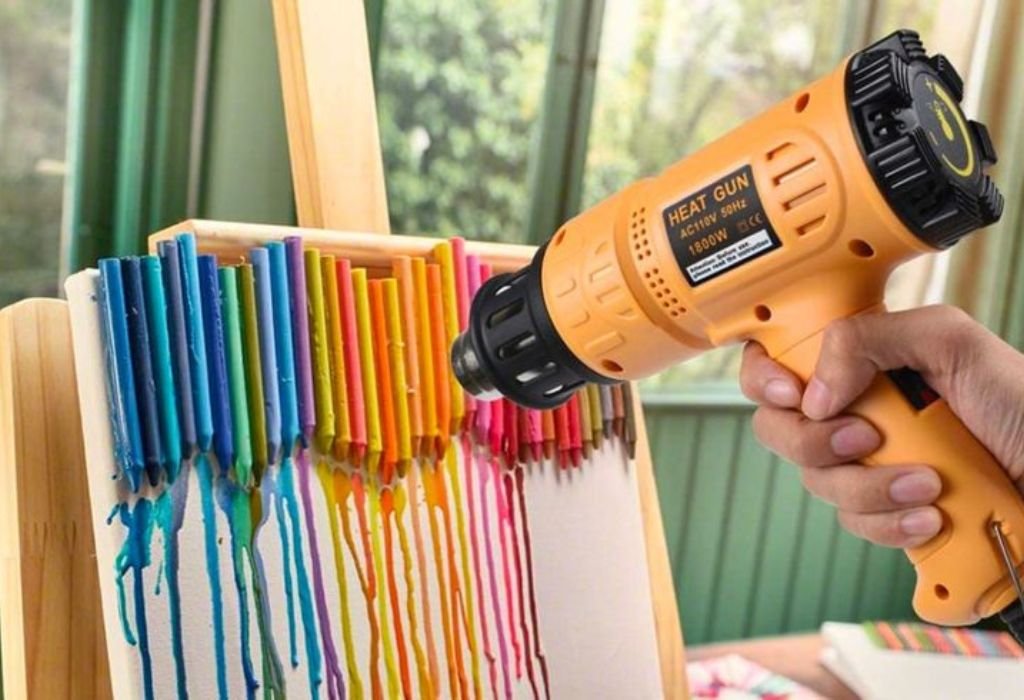
Choosing the right heat gun depends on application type, temperature requirements, duty cycle, and accessory compatibility. DIY workers benefit from dual temperature compact models.
Professional contractors require digital control, high airflow output, and continuous operation ratings. Industrial users often require ESD protection and thermal sensors.
Corded models deliver constant power while cordless models offer portability. Battery heat guns are best for light repairs and vinyl wrapping.
Nozzle attachments expand functionality. Reflector nozzles, reducer nozzles, and spreader tips customize airflow direction for specialized tasks.
Ergonomic grip design improves comfort during long work sessions. Proper balance reduces fatigue and improves accuracy.
Frequently Asked Questions About Heat Guns
What is a heat gun mainly used for?
A heat gun is mainly used for paint removal, plastic shaping, shrink tubing, electronics repair, thawing frozen pipes, and removing adhesives.
Can a heat gun remove paint safely?
Yes, a heat gun removes paint safely by softening layers for easy scraping without heavy sanding or chemical use.
Is a heat gun safe for electronics repair?
A heat gun is safe for electronics only when used with controlled temperature and proper distance to avoid board damage.
Can a heat gun melt plastic?
Yes, if the temperature is too high, a heat gun can melt plastic instead of softening it for shaping.
What temperature does a heat gun reach?
Most heat guns reach between 200°F and 1200°F depending on model and settings.
Can I use a heat gun to thaw frozen pipes?
Yes, heat guns are commonly used to safely thaw frozen pipes without using open flames.
Is a heat gun better than a hair dryer?
A heat gun is much stronger than a hair dryer and is designed for material heating, not drying hair.
Can a heat gun start a fire?
Yes, misuse near flammable materials can start a fire, which is why safety precautions are essential.
What materials should never be heated with a heat gun?
Flammable liquids, explosive gases, delicate fabrics, and soft foam should never be heated with a heat gun.
Do beginners need a digital heat gun?
Beginners can use dual temperature heat guns, while digital models are better for precision work.
Conclusion
A heat gun is far more than a simple hot air blower. It is a versatile thermal power tool used across home repair, automotive detailing, electrical insulation, crafting, electronics repair, plumbing, flooring installation, industrial manufacturing, and creative fabrication.
From stripping paint to shrinking wire insulation, from reshaping plastic to repairing circuit boards, its practical applications continue to grow every year.
Understanding what a heat gun is used for allows users to perform tasks faster, safer, and with greater professional quality. With proper temperature control, safety awareness, and correct attachment usage, heat guns become indispensable in both DIY and commercial environments.
Whether restoring furniture, repairing electronics, wrapping vehicles, or fabricating industrial components, a heat gun delivers unmatched thermal flexibility and precision.

I’m John F. Nicholas, the founder, lead writer, and drill enthusiast behind 101drill.com. With years of hands-on experience in power tools and DIY projects, I created this platform to share practical knowledge, expert tips, and real-world insights to help others master the art of drilling.