
Drilling large, heavy workpieces often forces machinists to reposition components multiple times. Each movement adds setup error, wastes time, and risks misalignment. What if one machine could sweep its drill head across the full surface, eliminating constant repositioning?
Enter the radial drill press — a versatile workhorse designed to swing, slide, and reach holes across expansive components.
But what is a radial drill press, and how does it deliver such flexibility? Before answering, consider this: the global drill press market was valued at USD 1.5 billion in 2024 and is projected to reach USD 2.3 billion by 2033, growing at about 5 % CAGR (Verified Market Reports).
Many workshops struggle with drilling long beams, thick plates, or awkward shapes because standard drill presses lack reach. That problem alone costs productivity and precision.
The radial drill press solves this by combining a sliding radial arm, a swiveling head, and adjustable column movement — allowing the spindle to access any point within its sweep.
Its rigidity, feed control, and adaptability make it a favored choice in metalworking, structural fabrication, and industrial maintenance.
This article defines what is a radial drill press, explores its components, types, benefits, use cases, buying tips, and maintenance practices, while highlighting new innovations shaping its future.
What Is a Radial Drill Press? (Definition & Basics)
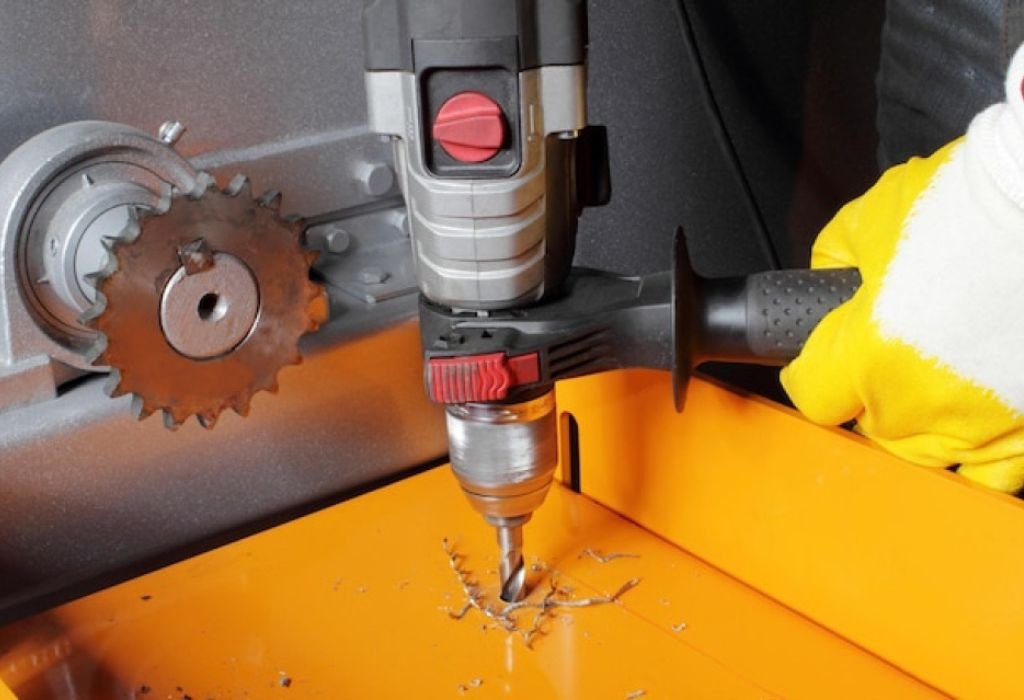
A radial drill press is a machine tool designed for drilling, tapping, and reaming large or heavy workpieces that cannot be easily moved. Its unique radial arm allows the drill head to move horizontally and pivot around a vertical column, enabling drilling at multiple positions without repositioning the material.
The radial arm can swing in an arc, slide in or out, and adjust vertically. That flexibility means the drill bit can access any point within its circular reach — a significant advantage in heavy-duty production and maintenance tasks.
Because the column supports the arm and the arm supports the spindle, the structure provides both strength and mobility. Operators can clamp a heavy part once and complete all holes from different angles efficiently.
What is a radial drill press?
A machine with a rotating, sliding arm that lets the drill head reach various positions over a large workpiece.
How does it differ from a standard drill press?
A standard press has a fixed head, while a radial model moves radially and vertically, increasing its working area.
What are the main components?
Base, column, radial arm, drill head, spindle, and worktable.
What materials can it handle?
Metals, plastics, and composites — especially steel, aluminum, and cast iron.
What is the ‘swing’ or ‘throat’?
The maximum distance from spindle center to column, defining the largest radius it can cover.
Key Parts and Mechanism (How It Works)
A radial drill press operates through coordinated motion of its column, arm, and spindle. The vertical column holds the radial arm, which can be raised or lowered for height adjustments. The drill head slides along the arm, allowing horizontal movement.
The radial arm can swing around the column, giving full radial coverage over the table. Once positioned, it locks securely to maintain rigidity during drilling.
The spindle, powered by an electric motor, rotates the drill bit. Feed mechanisms—manual or power-driven—control downward movement to ensure smooth, precise cutting.
What is the radial arm?
A horizontal beam that moves and rotates to position the drill head.
How does the spindle move along the arm?
It slides on guides for horizontal positioning before drilling.
Can the drill head tilt or swivel?
Yes, many models allow angular drilling by tilting the head.
How is power transferred to the spindle?
Through a motor-driven belt or gear system connected to the spindle shaft.
How is feed control achieved?
Via mechanical levers or power feeds that regulate downward cutting speed.
Types and Variants of Radial Drill Presses
Different designs exist to suit diverse industrial needs. The plain radial drill press offers basic radial motion and is ideal for general drilling. The semi-universal type adds limited tilting capability for angled holes. The universal radial drill press includes a fully tilting arm and swiveling head for maximum flexibility.
Some models use geared heads for greater torque, while smaller benchtop versions provide compact options for workshops with limited space.
What is a plain radial drill press?
A simple machine where the arm moves radially but doesn’t tilt.
What is a universal radial drill press?
A design with a tilting arm and swiveling head for angular drilling.
What is a geared radial drill press?
A heavy-duty version with gears to transmit power for deep drilling.
Are there benchtop radial drill presses?
Yes, smaller models exist for light fabrication or educational use.
Which type is best for heavy industry?
Geared or universal models with large swing and high horsepower.
Advantages and Limitations
The biggest advantage of a radial drill press is its reach and flexibility. Operators can drill multiple holes at varying positions without unclamping the workpiece. This reduces setup time and improves alignment accuracy.
Its rigid column and strong base support heavy workpieces, while power feed options enhance speed consistency. Radial drill presses excel in fabrication, shipbuilding, and repair shops where large components are common.
However, they require more floor space and are costlier than conventional presses. Excessive arm extension can reduce rigidity, causing slight deflection if not properly locked.
What are the advantages?
High versatility, wide working area, and reduced setup time.
What are the limitations?
Higher cost, larger size, and potential rigidity issues at full arm extension.
Is rigidity an issue?
Only if the arm isn’t firmly locked or the column is under-maintained.
Does it require more maintenance?
Yes, moving arms and gear systems need regular lubrication and inspection.
Are there precision challenges?
Minor, but can be avoided with proper alignment and clamping techniques.
Applications and Use Cases
Radial drill presses are indispensable in metalworking, shipbuilding, bridge construction, and heavy equipment manufacturing. They excel in operations that demand large hole diameters, such as drilling flanges, beams, or heavy plates.
Because the head moves instead of the workpiece, these machines are ideal for components that are bulky or welded in place.
Where are they used?
In fabrication shops, industrial plants, and repair workshops.
Can they handle large workpieces?
Yes, they can drill and tap massive components up to several feet wide.
Are they used in structural fabrication?
Yes, for drilling I-beams, columns, and frames.
Can they perform tapping or reaming?
Absolutely — many models include reversible motors for these tasks.
Are they suitable for woodworking?
Generally no; they are optimized for metal and industrial materials.
Choosing the Right Radial Drill Press (Buying Guide)
Selecting the right model depends on your workload, material type, and workspace. Key factors include swing capacity, spindle travel, motor power, and table size.
Industrial shops should prioritize high-rigidity designs, power feed systems, and larger swing arms. For smaller operations, a medium-duty radial press offers a balance of cost and capability.
What swing size should you choose?
Match the swing to the maximum workpiece radius you’ll drill.
How much horsepower is needed?
2–5 HP for medium work; above 7 HP for industrial use.
Should you choose power feed or manual feed?
Power feed ensures consistent depth and speed for repetitive jobs.
Which brands are reliable?
JET, Grizzly, Baileigh, and Champion are recognized in the market.
What features should be avoided?
Lightweight frames or excessive play in arm movement reduce accuracy.
Operation and Best Practices
Proper setup and maintenance are critical for safety and precision. Always secure the workpiece firmly before drilling. Select spindle speed according to material hardness and drill size.
Lubricate the column, gears, and feed mechanisms regularly. Avoid extending the arm beyond necessary range to maintain rigidity.
How to align the radial drill press?
Level the table and use a dial indicator to check spindle perpendicularity.
What safety practices are essential?
Wear protective gear and never adjust the arm while the motor runs.
How to choose drill speed and feed?
Use lower speed for large holes and hard metals; higher for small bits.
How to minimize deflection?
Lock the arm and head firmly before starting each hole.
What maintenance tasks are critical?
Clean chips, lubricate gears, and inspect belts or bearings monthly.
Trends, Innovations and Future of Radial Drilling
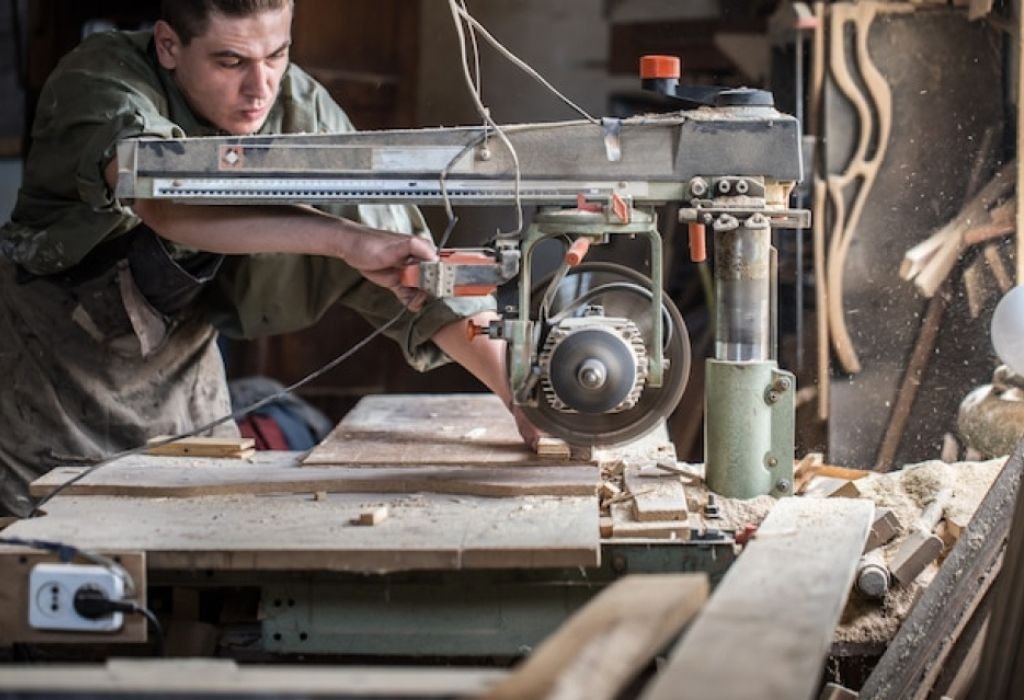
Modern engineering is integrating digital controls into traditional machines. CNC-enabled radial drills can automate drilling sequences, reducing operator effort. Smart sensors monitor torque, feed pressure, and vibration for precision feedback.
Industry 4.0 is pushing manufacturers to modernize radial drilling systems with IoT connectivity and real-time monitoring.
Is CNC radial drilling common today?
Yes, especially in automotive and aerospace manufacturing.
Are smart sensors being used?
Advanced models track vibration and spindle load for predictive maintenance.
Will radial drills be replaced?
Not soon — they remain irreplaceable for large manual fabrication.
What innovations improve accuracy?
Servo-controlled feeds and precision linear guides enhance rigidity.
What is the future role of radial drilling?
It will continue as a niche tool for custom, large-scale machining tasks.
Common Questions and Troubleshooting
Even robust machines face issues from wear or misalignment. Regular inspection keeps performance stable.
Why does the drilled hole wander?
The workpiece may be loose or the spindle worn; re-align and tighten clamps.
What causes chatter or vibration?
Incorrect speed, worn bearings, or improper feed settings.
How to correct spindle runout?
Check bearing fit and replace worn bushings immediately.
What if the arm sags over time?
Re-adjust the arm lift screw and verify column clearance.
How to re-align the machine?
Use dial gauges to check verticality and parallelism of spindle and table.
Conclusion
The radial drill press stands as one of the most versatile and efficient drilling machines ever built. Its adjustable arm and rotating head give it unmatched flexibility for large, heavy, or complex workpieces.
By understanding what is a radial drill press, how it works, and how to maintain it, fabricators can significantly improve productivity and precision. Whether you run a workshop or industrial plant, this machine remains a powerful ally for drilling tasks that standard presses simply cannot handle.

I’m John F. Nicholas, the founder, lead writer, and drill enthusiast behind 101drill.com. With years of hands-on experience in power tools and DIY projects, I created this platform to share practical knowledge, expert tips, and real-world insights to help others master the art of drilling.