
The showroom tags say 10 inch and 17 inch, yet none of them look ten or seventeen inches tall. The mystery clears fast once the sizing system is decoded.
This guide explains how are drill presses measured in plain language so the right machine is picked the first time.
The sections translate catalog terms into reach, depth, accuracy, and workflow.
Manufacturers rate size by swing, which is twice the distance from the spindle center to the column. That single number determines whether the bit can reach the center of a wide panel (Grizzly swing definition).
Most benchtop drill presses cluster around 10 to 12 inches of swing while common floor models run 15 to 20 inches and beyond. Those ranges reflect practical shop space and typical furniture and metal projects (WEN spec examples).
Accuracy depends on more than swing. Spindle travel, spindle to table clearance, and table rigidity decide how deep, how tall, and how steady a setup can be.
A clear buying checklist prevents surprises during the first fixture or fence build. Small numbers like runout in thousandths matter as much as large numbers like swing.
Safety lives in the details. Proper clamping, correct speed, and a sensible reach reduce bit grab and wandering during deep holes (OSHA machine guarding).
Each section ends with quick Q&A items for scanning during research. The goal is confidence when a spec sheet is opened and a project is measured.
By the end, the labels on the column and the limits at the table will make perfect sense. The right combination of reach, clearance, and accuracy will match the work instead of guessing.
What “Size” Means: How Are Drill Presses Measured by Swing and Throat Depth

Drill presses are sized by swing, not height or motor power. Swing equals two times the throat depth, which is the distance from the spindle centerline to the column.
A 10 inch drill press therefore has about 5 inches of throat depth and can reach the center of a 10 inch wide board. That is why the same bit reaches farther on a larger swing machine even if horsepower is identical.
What is swing in one line?
The maximum workpiece diameter the bit can reach to center, calculated as 2 × throat depth.
Does a bigger swing mean more power?
No, swing measures reach while motor and pulley system determine torque and speed.
Is throat depth the same as swing?
Throat depth is half the swing measured from spindle center to column.
What does “10 inch” on a tag actually describe?
It describes swing, not machine height, table size, or stroke.
Why does swing matter in real projects?
It decides whether the bit reaches the center of wide panels, gables, or plates.
Vertical Capacity: Spindle Travel and Height Clearances
Spindle or quill travel is the vertical stroke created by the feed handle. More travel allows deeper holes in one pass and fewer resets.
Two clearances limit tall workpieces, spindle to table and spindle to base. These numbers determine whether long bits, vises, or sanding drums will fit.
What is quill travel?
The distance the spindle moves down from fully retracted to fully extended.
Why does more travel help?
It reduces the need to raise the table between pecking cycles.
What is spindle to table distance?
The vertical space from the spindle nose to the table surface at maximum spread.
What is spindle to base distance?
The clearance available after removing or dropping the table.
Is a depth stop part of capacity?
It does not add travel but it controls repeatable depth for production drilling.
Accuracy Specs: Runout, Column, and Stops
Runout or TIR is the tiny radial wobble measured in thousandths of an inch. Lower TIR means cleaner holes and less chatter with small bits.
Column diameter and table stiffness influence accuracy under load. A solid rack and pinion lift keeps the table set where you want it.
What is runout measured with?
A dial indicator against a test pin held in the chuck or arbor.
What TIR is common on hobby presses?
A few thousandths is typical, with premium machines showing less.
Does a better chuck reduce wobble?
Quality chucks and clean tapers can lower indicated runout.
Why does table stiffness matter?
Flex during drilling tilts the bit and enlarges the hole.
Do depth stops affect precision?
A positive stop improves repeatable depths in series work.
Spindle Tapers and Chuck Capacity
Spindles and chucks connect with standardized tapers. Common drill press combinations are Morse taper MT2 on the spindle and Jacobs taper JT on the chuck arbor.
Chuck capacity indicates the largest shank the jaws can hold. It does not change swing or travel.
What is MT2?
A Morse taper size used on many small and mid drill presses.
What is a Jacobs taper?
A short self holding taper that mates the arbor to the chuck body.
Can chucks be swapped easily?
Yes if the arbor and tapers match the new chuck.
Does a 1/2 inch chuck imply a big press?
No, it only describes maximum shank diameter.
Do tapers impact accuracy?
Clean, undamaged tapers seat true and reduce runout.
Table Geometry and Working Envelope
Table size defines clamping space for vises and jigs. Tilt adds angled drilling without shims, most tables tilt to 45 degrees.
T slots or holes allow bolting fixtures in repeatable positions. A square table provides more usable edges than a round table.
Does a larger table change swing?
No, swing is reach from spindle to column only.
Why add a fence or auxiliary top?
They speed positioning and protect the cast iron.
How important are T slots?
They secure vises and stop blocks for safe work.
Is table tilt a must have?
It is valuable for angled holes and countersinks.
Does a rack lift matter?
Smooth rack movement speeds height adjustments without losing alignment.
Speed System and Motor Ratings

Speed is not part of how are drill presses measured, yet it defines material capability. Small bits want high RPM while large bits need slow speeds for safe chips.
Pulley step systems offer discrete speeds with belt changes. Mechanical or electronic variable speed systems allow dial adjustments without opening the cover.
Does horsepower affect size rating?
No, it affects torque delivery at the bit.
Is a wider RPM range better?
Yes, it covers tiny twist drills through large Forstners or hole saws.
Are digital tachometers useful?
They show exact RPM for consistent results.
Does speed change hole quality?
Correct speed reduces burning and wandering.
Is variable speed worth the price?
It saves setup time when changing materials often.
Bench vs Floor Models and Typical Ranges
Benchtop presses usually list 10 to 12 inch swing with modest quill travel. Floor models commonly start around 15 to 20 inch swing and offer more height and travel.
Heavier frames reduce vibration and improve surface finish. Choose format by workpiece size and available space.
Do floor models always drill deeper?
Often yes, because of longer travel and greater clearances.
Is a 10 to 12 inch benchtop enough for cabinets?
Yes for most centered holes and hinge work within reach.
When is a 17 to 20 inch swing needed?
For wide panels, fixtures, and fence drilling far from edges.
Does weight improve accuracy?
Mass dampens vibration and chatter.
Is portability a factor?
Benchtops move easier but limit reach on large projects.
How to Read a Spec Sheet Without Guessing
Start with swing for reach and quill travel for depth. Check spindle to table and spindle to base distances for height clearance with your vise or jig.
Record chuck capacity, taper types, RPM range, and table size. Finally look for runout claims and depth stop details.
Which three specs decide fit first?
Swing, spindle travel, and spindle to table distance.
How to compare two 12 inch presses fairly?
Look at travel, clearance, runout, and table geometry.
Do lights and lasers change sizing?
No, they help aiming and setup.
What if one 12 inch press feels bigger?
It likely has more travel and vertical clearance.
Why list spindle to base?
It enables very tall work after removing the table.
Measuring Your Existing Press at Home
Measure throat depth from the spindle center to the column. Multiply by two to confirm swing.
Mark zero on the quill and measure the drop for spindle travel. Measure spindle to table and spindle to base with a tape at maximum clearance.
How to check runout quickly?
Place a straight pin or rod in the chuck and read with a dial indicator.
How to log results for upgrades?
Keep a card with swing, travel, clearances, and TIR.
Where to find taper sizes?
Look in the manual or inspect the arbor markings.
How to check table tilt range?
Read the scale and verify with a square.
What improves measurement accuracy?
Lock the quill and table before reading numbers.
Safety and Setup That Intersect with Sizing
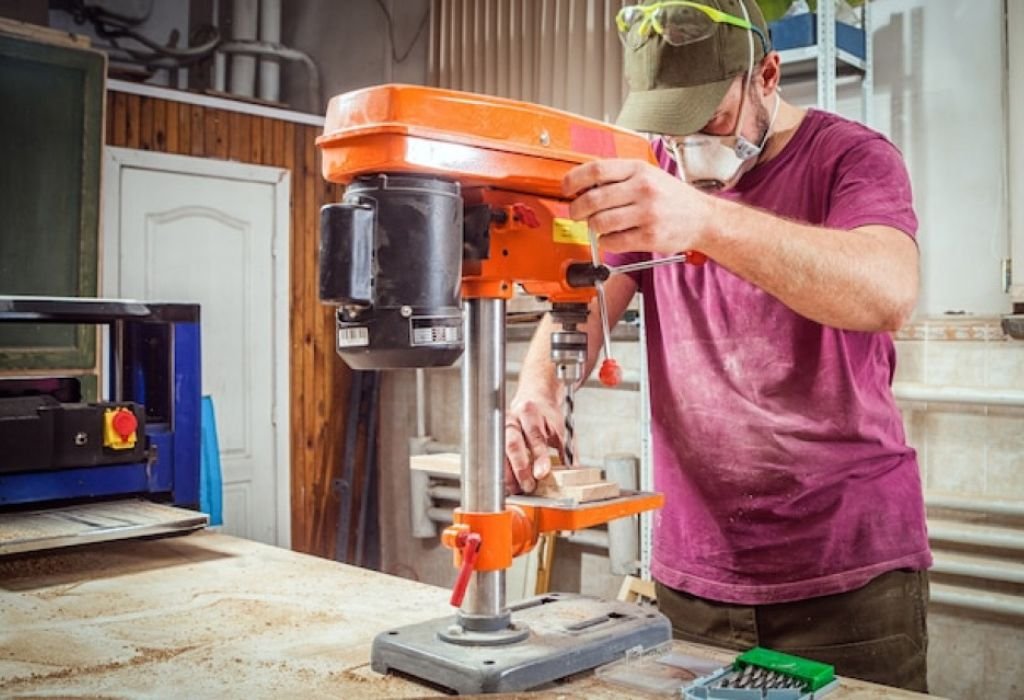
More reach and travel invite bigger workpieces that demand secure clamping. The safest grip is a bolted vise or T slot stops, not hands.
Correct speed and sharp bits reduce grabbing and kick. Guards and sensible feed pressure lower injury risk in every shop (OSHA machine guarding).
Are gloves safe on a drill press?
Avoid loose gloves near rotating tools.
Is a vise necessary for metal?
Clamping is required for safe holes and clean exits.
Can a long bit vibrate at speed?
Slow down and support the work to prevent whip.
Should the table be waxed?
A light wax helps sliding jigs without rust.
What about dust collection?
Vacuum helps when sanding drums are used on the press.
Future Trends That Do Not Change Sizing Rules
Digital readouts and variable speed improve usability. Laser crosshairs and quick depth stops shorten setup time.
Heavier columns and precision chucks are appearing in mid price presses. The core measurement remains swing with travel and clearances as key companions.
Will sizing move away from swing?
No, swing and throat depth define reach and will remain standard.
Are brushless motors coming to presses?
Electronic drives are more common in variable speed designs.
Will laser guides replace marking?
They help, yet layout lines and center punches still matter.
Are quick release tables useful?
They speed fence and vise changes for batch work.
Any change to taper standards soon?
MT and JT formats continue as the norm across brands.
Conclusion
Now the label makes sense. The answer to how are drill presses measured is the swing, which equals two times the throat depth, supported by spindle travel, spindle to table or base clearances, taper and chuck capacity, and accuracy data like runout.
Measure upcoming projects, then match swing for reach and travel for depth. Read the spec sheet like a checklist, verify safety features, and pick the format that fits both your parts and your space.

I’m John F. Nicholas, the founder, lead writer, and drill enthusiast behind 101drill.com. With years of hands-on experience in power tools and DIY projects, I created this platform to share practical knowledge, expert tips, and real-world insights to help others master the art of drilling.