
A drill press is built to deliver precise, consistent power — but applying too much pressure can damage both the bit and the machine. Understanding the right amount of pressure helps you drill cleaner holes, prevent motor strain, and extend tool life.
Many beginners assume that pushing harder means drilling faster, but that’s a costly mistake. The key is knowing how much downward force the drill press can safely handle for your specific material and bit size.
According to the Machine Shop Operations Handbook, the average safe pressure range on a drill press is between 100 and 300 pounds of downward force, depending on bit size, material hardness, and spindle power.
In this detailed guide, you’ll learn how to measure and apply proper drill press pressure, how material type affects force requirements, and how to avoid common drilling mistakes.
Why Drill Press Pressure Matters
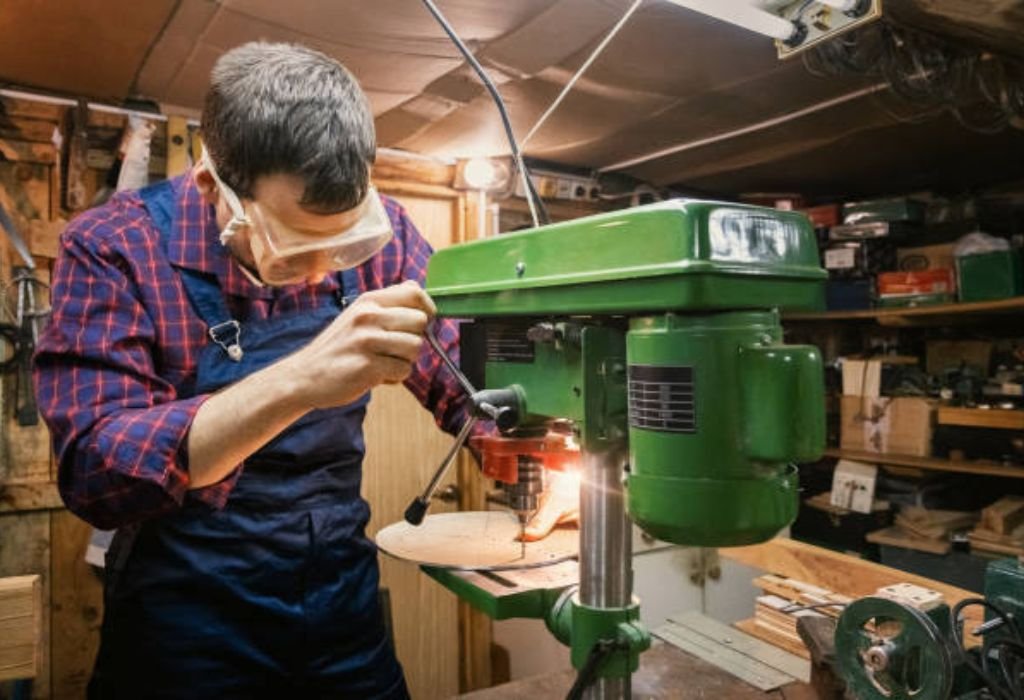
Drill press pressure directly affects cutting speed, hole accuracy, and tool life. Too much pressure overheats the bit, dulls the cutting edge, and strains the spindle bearings.
Too little pressure, on the other hand, causes the bit to rub instead of cut. This leads to friction, heat buildup, and rough hole surfaces.
Applying the correct pressure keeps your bit cutting efficiently, removes chips smoothly, and maintains the motor’s steady torque output.
Understanding Drill Press Force
The pressure applied during drilling is called feed force. It’s the amount of downward force you apply through the quill handle to make the bit cut into the material.
Feed force varies by material, drill bit diameter, and speed (RPM). Harder materials like steel require more pressure, while soft woods or plastics need much less.
Most mid-size benchtop drill presses can handle around 200 to 250 pounds of total feed force safely without overloading the spindle or motor.
Factors That Affect How Much Pressure You Can Apply
1. Material Hardness
The harder the material, the more pressure required.
- Softwood: 50–80 lbs
- Hardwood: 100–150 lbs
- Aluminum: 120–200 lbs
- Mild Steel: 200–300 lbs
- Stainless Steel: 250–350 lbs
Always combine proper pressure with correct RPM and cutting fluid for the best performance.
2. Drill Bit Size
Larger bits require more pressure to penetrate the surface. A ⅛-inch bit might need only 60 lbs, while a ¾-inch bit may need over 250 lbs.
However, increasing pressure also increases friction, so speed should be reduced accordingly. Balancing feed rate and RPM is key.
3. Drill Press Power
A drill press with a ½ HP motor can manage about 150–200 lbs of feed pressure efficiently. A 1 HP motor can handle up to 300 lbs safely.
Overloading a low-powered press may cause stalling or belt slipping, especially on harder materials.
4. Feed Rate
Feed rate measures how quickly the bit advances through the material. Too fast causes binding or chatter. Too slow causes excessive rubbing and dulling.
Maintain a steady feed rate where chips form continuously without squealing or smoking.
How to Know You’re Using the Right Pressure
You’re applying the right pressure if the bit cuts smoothly and produces even, curled chips. The motor should run without slowing down or squealing.
If you see smoke, hear high-pitched noises, or smell burning metal or wood, reduce pressure immediately.
Vibration or chatter indicates either too much pressure or incorrect spindle speed.
Watch the chips — shiny, consistent curls mean perfect pressure; dust-like shavings mean too little.
Ideal Pressure by Material Type
| Material | Drill Bit Size | Feed Pressure | Recommended Speed (RPM) |
| Softwood | ¼ inch | 50–70 lbs | 2000–2500 |
| Hardwood | ¼ inch | 100–150 lbs | 1500–2000 |
| Aluminum | ⅜ inch | 120–180 lbs | 1000–1500 |
| Mild Steel | ⅜ inch | 200–250 lbs | 600–900 |
| Stainless Steel | ½ inch | 250–350 lbs | 300–600 |
These are general ranges. Always start at the lower end and increase gradually until the bit cuts efficiently without resistance.
Dangers of Applying Too Much Pressure
Too much downward force puts stress on the quill bearings and spindle assembly. It can also bend smaller drill bits or break their cutting edges.
When you force the bit through material, heat builds up rapidly. This softens the bit tip, reducing hardness and cutting ability.
Long-term overpressure can also misalign the chuck or damage the motor belt. Always aim for smooth, controlled feeding instead of brute force.
Techniques to Maintain Proper Drill Pressure
- Use a Steady Grip: Keep both hands on the quill handle for controlled downward pressure.
- Let the Bit Do the Work: Don’t push beyond what the motor can handle smoothly.
- Use Lubricant: Apply cutting oil for metal or beeswax for wood to reduce friction.
- Check Chip Formation: Continuous chips indicate correct pressure. Fine powdery dust means you need slightly more feed.
- Adjust Feed with RPM: As bit size increases, lower your speed and apply slightly more pressure.
Practicing on scrap material helps you develop a feel for the correct pressure balance.
When to Use Light vs Heavy Pressure
Use light pressure for thin materials or small bits. This prevents breakthrough tearing and keeps holes clean.
Use heavier pressure for thicker or harder materials to maintain chip flow. Always reduce RPM proportionally when applying heavier force.
If drilling deep holes, alternate between pressure and release to clear chips and cool the bit.
Measuring Drill Press Pressure (Optional for Pros)
Professionals sometimes use a feed force gauge to measure downward pressure accurately.
These gauges attach to the quill handle and display applied pounds of force.
While not essential for hobby use, they’re useful in machining environments where precision and repeatability are required.
You can also estimate pressure by monitoring motor load. If you notice slowing or belt slip, you’ve exceeded optimal pressure.
Common Mistakes When Applying Drill Press Pressure

- Pushing too hard at high RPM, causing overheating.
- Using dull or damaged bits that require excessive pressure.
- Skipping lubrication on metal surfaces.
- Drilling without clamping the workpiece securely.
- Ignoring feed rate adjustments for larger bit sizes.
Avoid these mistakes to maintain both performance and tool longevity.
How to Reduce Pressure Without Losing Cutting Power
If you find yourself applying too much pressure, lower your RPM and use a sharper bit.
A sharp bit cuts cleanly with less force, especially in metal or hardwood.
Apply lubricant to minimize resistance and improve chip removal.
Also, verify the bit angle and tip geometry match the material type you’re drilling.
FAQs About Drill Press Pressure
1. How much pressure can a drill press handle?
Most benchtop drill presses handle around 150–250 pounds safely. Larger industrial presses can tolerate up to 350 pounds, depending on motor power and spindle design.
2. Can too much pressure damage the drill press?
Yes. Excessive force can wear spindle bearings, overheat the motor, and bend the chuck arbor. Always use steady, moderate pressure matched to bit size.
3. How do I know if I’m pressing too hard?
If the motor slows, the bit squeals, or smoke appears, you’re using too much pressure. Reduce force until chips form smoothly and the motor runs consistently.
4. Do I need more pressure for metal than wood?
Yes. Metal requires higher feed force because it’s denser and harder to cut. Always lower your drill speed when increasing pressure.
5. Can I use lubricant to reduce needed pressure?
Absolutely. Cutting oil or wax minimizes friction, helping the bit glide through the material with less effort and heat.
6. Should I push fast or slow when drilling?
Maintain a controlled, steady feed rate. Fast pushing can break bits or overheat the motor. The best feed rate feels smooth and consistent without jerking.
Final Answer: How Much Pressure Can You Put on a Drill Press
The amount of pressure you can put on a drill press depends on the machine’s size, motor, and the material you’re working with.
Most standard presses safely handle 100 to 300 pounds of downward force, with smaller models suited to lighter pressure and larger floor models tolerating more.
Always combine proper pressure with the right speed, sharp bits, and lubrication for the cleanest and most accurate drilling results.

I’m John F. Nicholas, the founder, lead writer, and drill enthusiast behind 101drill.com. With years of hands-on experience in power tools and DIY projects, I created this platform to share practical knowledge, expert tips, and real-world insights to help others master the art of drilling.