
A drill press is built for precision — steady, vertical drilling with clean, accurate holes every time. But speed can be its biggest enemy. When the spindle spins too fast, bits overheat, burn wood, glaze metal, and even snap under pressure.
The solution isn’t brute force; it’s control. Knowing how to slow down a drill press separates rough work from true craftsmanship. Whether you’re drilling metal, hardwood, or acrylic, each material demands a specific spindle speed to cut efficiently and safely.
Many beginners assume the factory speed is ideal for every task. Yet, too much RPM can dull bits fast, create smoke, and reduce torque.
The good news? You don’t need to buy new equipment. With a few adjustments and a proper understanding of your press’s drive system, you can fine-tune speed for any job.
Understanding Drill Press Speed and Torque
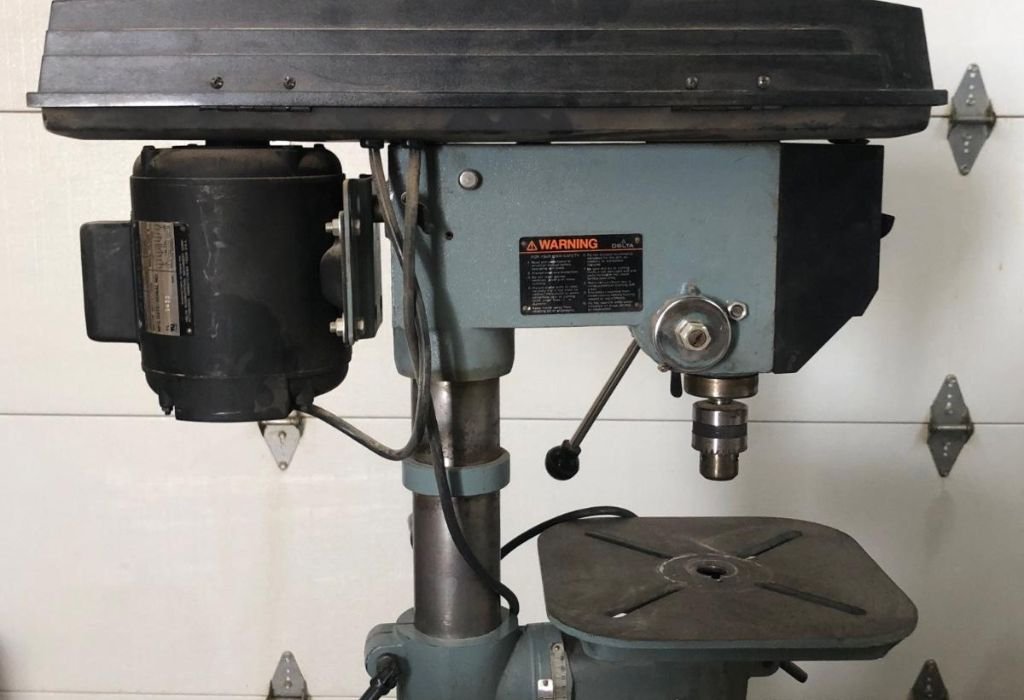
Speed and torque are two sides of the same coin. As spindle speed increases, torque decreases. Slowing down your drill press increases torque — which is essential when cutting metal or thick hardwood.
Most drill presses use a belt and pulley system to control speed. The belt transfers motion from the motor pulley to the spindle pulley. By changing the belt position across these pulleys, you adjust the spindle’s RPM. A smaller pulley on the motor and a larger pulley on the spindle produce lower speed but greater torque.
Understanding this ratio is key to maintaining control. Too much speed leads to overheating and excessive vibration, while too little speed may stall the bit. The goal is finding balance — efficient cutting without friction or chatter.
The Spruce Crafts explains that optimal RPM depends on both drill-bit diameter and material hardness. A ¼-inch bit in softwood may run at 2500 RPM, while a ½-inch bit in steel should spin closer to 600 RPM.
Proper speed adjustment also extends tool life. Overheated bits lose temper and dull rapidly, while slower, steady cutting preserves edge sharpness and surface finish.
What happens if a drill press runs too fast?
It causes overheating, dull bits, and poor cutting accuracy.
Does lower speed increase torque?
Yes. Reducing RPM provides more torque for heavy-duty drilling.
Why is belt size important in speed control?
Because pulley diameter determines how fast the spindle rotates.
Is a variable-speed drill press better?
Yes, it allows quick adjustment without manual belt changes.
What RPM range suits metal drilling?
Generally between 300 – 800 RPM, depending on bit size and hardness.
Signs Your Drill Press Is Running Too Fast
The most obvious sign is heat. When the bit or workpiece becomes hot to touch, the spindle speed is excessive for the material.
You may also notice smoke, burning smell, or discolored holes. In metal, this appears as blue or black edges; in wood, it appears as scorch marks.
Another clue is vibration or chatter. When the press spins too fast, the bit loses contact stability, bouncing slightly and leaving uneven holes.
If chips come out as fine dust instead of clean spirals, it’s another indication of high speed. The material isn’t being cut — it’s being abraded.
Long-term, excessive RPM wears out bearings and belts faster. Machines begin to hum louder or shake slightly as imbalance increases.
Understanding these early signs helps prevent tool damage and ensures your drill press lasts years longer.
Why does my drill press make a burning smell?
Friction from high RPM overheats both bit and material.
Why do holes look ragged at the edges?
Because high speed causes chatter, which tears instead of cutting.
Can fast speeds damage bearings?
Yes, they generate heat and shorten bearing life.
Why do bits slip in the chuck?
Excessive vibration from high RPM loosens the grip.
What causes metal to turn blue while drilling?
It’s a sign of overheating and bit temper loss.
How to Slow Down a Drill Press Using the Pulley System
Most bench and floor drill presses use a simple mechanical pulley setup to control spindle speed. Understanding how to adjust it correctly is the foundation of speed control.
Start by unplugging the drill press completely. Open the top cover to expose the belt and pulleys. You’ll see two main pulleys — one on the motor and one on the spindle.
When the belt sits on a large motor pulley and small spindle pulley, the spindle spins faster. To slow it down, move the belt onto a smaller motor pulley and a larger spindle pulley. This increases torque while reducing RPM.
After repositioning the belt, ensure it’s properly tensioned — firm but not overly tight. Over-tight belts strain bearings, while loose belts slip during drilling.
According to Popular Mechanics, always check the manufacturer’s speed chart printed inside the cover or manual. It lists recommended pulley positions for different RPM ranges.
Once adjusted, close the cover securely and perform a short test run. Listen for smooth operation and consistent rotation before starting your project.
Why must the drill press be unplugged first?
It prevents accidental start-up and serious injury.
How tight should the belt be?
It should deflect about ½ inch with firm pressure at midpoint.
Can I lubricate the belt to reduce wear?
No, lubrication causes slippage — belts must remain dry.
What if the belt squeals after changing speeds?
It’s either too loose or slightly misaligned on the pulley.
Is it okay to change speed while running?
Never — always stop and unplug before moving the belt.
Using Variable-Speed or Electronic Control Models
Some modern drill presses come with variable-speed dials or electronic controllers, allowing instant speed adjustment without opening the top cover.
These systems use a mechanical Reeves drive or a DC inverter controller to change spindle speed by varying motor pulley diameter or electrical frequency. Turning a knob changes RPM smoothly while maintaining power.
This is especially useful for projects involving multiple materials. You can shift from drilling steel to wood in seconds without stopping to move belts.
However, these systems still have limits. Over-slowing an electronic drill press below its torque threshold can cause stalling. Always maintain a moderate RPM when working with large bits.
Variable-speed drives need occasional maintenance. Keep pulleys clean, avoid dust accumulation, and inspect electronic wiring annually for safety.
More about these mechanisms can be found in Wood Magazine’s drill press maintenance guide.
Do variable-speed presses cost more?
Yes, but they save time and provide consistent results.
Is torque constant across all speeds?
Not always — torque drops slightly at very low RPMs.
Can I retrofit my drill press with a speed controller?
Yes, with a compatible DC or VFD motor system.
How do I know my electronic speed control works properly?
The speed should change smoothly without sudden jumps or noise.
Does electronic control replace belt systems completely?
It supplements them but may still rely on a single belt path.
Choosing the Right Speed for Different Materials
Each material has its own ideal cutting speed. Matching drill-bit diameter with correct RPM is essential for both performance and safety.
For softwood, speeds between 1500–2500 RPM are suitable for small bits under ½ inch. Larger bits (1 inch or more) should slow down to 500–800 RPM.
Hardwood requires lower speeds — around 800–1200 RPM depending on density. For metals, the rule is simple: the harder the material, the slower the speed. Mild steel prefers 500–700 RPM, while stainless steel should run at 300–500 RPM.
Plastics and acrylics demand extra care. Too much friction melts the material instead of cutting it. Keep speeds low and feed pressure light.
Engineer’s Edge provides detailed charts showing recommended RPM for each bit size and material type. Using these charts ensures smoother drilling and longer tool life.
Why can’t I use one speed for all materials?
Different hardness levels require different friction rates to cut efficiently.
What happens if I drill aluminum too fast?
Chips melt, clogging the flutes and scarring the hole.
Is it better to drill wood faster than metal?
Yes, softwood handles higher speeds, while metal requires slower RPM.
Can I rely on sound to gauge correct speed?
Experienced users can, but beginners should follow charts for accuracy.
Do larger bits always need lower speed?
Yes, because they remove more material per revolution.
Maintenance Tips to Keep Speed Control Accurate
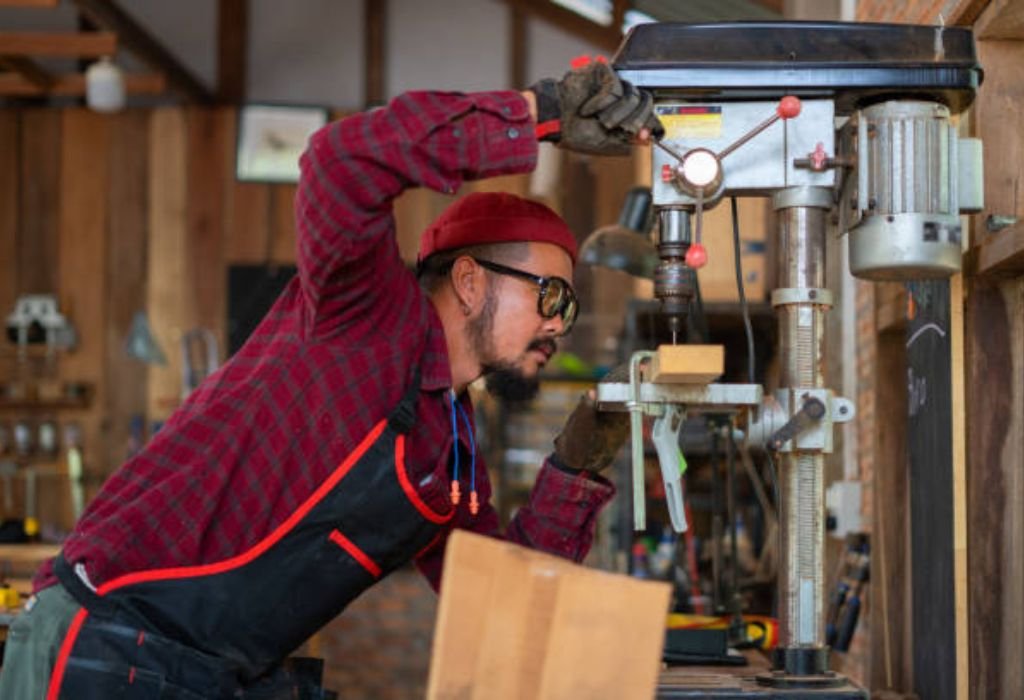
Proper maintenance keeps your drill press smooth, quiet, and accurate for decades. Speed adjustments rely heavily on belt integrity, pulley alignment, and motor performance.
Inspect belts monthly. Cracks, glazing, or fraying edges reduce friction and affect speed accuracy. Replace worn belts immediately to prevent slippage.
Clean the pulley grooves using a soft cloth. Dirt or oil residue causes micro-slips that distort RPM readings. Never use solvents that degrade rubber.
Lubricate quill and spindle bearings every six months using machine oil. Worn bearings increase vibration, which throws off alignment and affects the effectiveness of slow speeds.
Keep the motor’s air vents clear. Overheating shortens motor life and weakens speed consistency.
Finally, periodically check that your table and column remain square. Misalignment multiplies cutting error even at correct speeds. For professional maintenance schedules, see Grainger’s preventive maintenance checklist.
How often should I replace drill press belts?
Every 1–2 years, depending on use frequency.
Why does my press slow down during drilling?
Possible belt slippage or motor overload.
Can dirty pulleys affect speed accuracy?
Yes, grime changes belt friction and causes fluctuating RPM.
Should I oil the belt?
No, belts must remain clean and dry.
Is vibration a sign of poor maintenance?
Yes, it indicates loose bearings or misaligned pulleys.
Conclusion
Mastering how to slow down a drill press isn’t just about speed — it’s about precision, control, and tool longevity. Each material, bit size, and project demands specific spindle speeds for ideal performance.
By understanding pulley ratios, torque dynamics, and correct RPM ranges, you gain full control over your work. Small adjustments lead to big improvements — smoother holes, cooler bits, and less wear on your machine.
Slower speeds not only improve safety but also protect the motor and bearings. With proper maintenance, your drill press will operate like new for years, whether it’s an entry-level benchtop model or a heavy-duty floor press.
If you’re using a variable-speed press, remember to test at different settings and record what works best for each material. Keep belts clean, bearings oiled, and alignment checked regularly.
Precision woodworking and metal drilling start with understanding speed. So next time your bit smokes or wobbles, take a moment to adjust, listen, and feel the rhythm of your machine.
The best craftsmen aren’t the fastest — they’re the most consistent. And consistency begins with mastering the art of slowing things down.

I’m John F. Nicholas, the founder, lead writer, and drill enthusiast behind 101drill.com. With years of hands-on experience in power tools and DIY projects, I created this platform to share practical knowledge, expert tips, and real-world insights to help others master the art of drilling.