
Learning how to cut angles with a circular saw is something many people want to learn when they begin woodworking. It might seem tricky at first because you need to get the blade at the right angle and make sure your cut is straight. Don’t worry, it’s totally achievable, even if you’re just starting out! This post will break down the steps clearly, making it easy to create those angled cuts you need for your projects. We’ll explore everything you need to know, from the essential tools to the techniques that will give you professional-looking results. Let’s get started!
Key Takeaways
- Proper setup and safety are essential before beginning any angled cut.
- Understanding the bevel and miter settings on your saw is important for success.
- Accurate measurement and marking are key to precise angle cuts.
- Using a good quality blade makes a big difference in the cut quality.
- Support your workpiece correctly to avoid mistakes and accidents.
- Practice and patience will help you get the best results.
Getting Started: Your Essential Toolkit
Before you even think about pushing the button on your circular saw, you need to gather your tools and get ready. Being prepared means you’ll have a smoother, safer, and more enjoyable experience. Plus, having the right equipment will help you make accurate cuts that look great. Think of it like assembling ingredients before you start cooking; it just makes the whole process easier.
Safety First: Protect Yourself
Safety is the most important part of any woodworking task, including learning how to cut angles with a circular saw. Always wear safety glasses to shield your eyes from flying debris. Hearing protection, like earplugs or earmuffs, is a good idea to protect your ears from the loud noise the saw produces. Sturdy work gloves give you a better grip on the wood, and closed-toe shoes are a must in the workshop to protect your feet. Also, make sure your work area is clear and well-lit. Finally, read and completely understand your saw’s manual before you begin.
- Safety Glasses: Protect your eyes from wood chips and dust.
- Hearing Protection: Reduce the risk of hearing damage.
- Work Gloves: Improve grip and protect your hands.
- Closed-Toe Shoes: Protect your feet.
- Dust Mask/Respirator: Avoid inhaling sawdust.
The Must-Have Tools
You’ll need more than just the saw itself. A measuring tape is key for getting the right dimensions. A pencil is the basic tool for marking your cut lines. A speed square or combination square helps you make precise marks and set angles accurately. Clamps will keep your wood secure while you cut, preventing slips and errors. Different blades for your saw will help you achieve the cleanest cuts for different materials. Also, a straight edge like a level or a longer piece of wood is really helpful when you want a straight cut. Finally, sandpaper will help you finish your wood by smoothing out rough edges.
- Circular Saw: Your main cutting tool.
- Measuring Tape: To measure wood accurately.
- Pencil: For marking cut lines.
- Speed Square or Combination Square: To measure and mark angles.
- Clamps: To hold wood securely.
- Saw Blades: Different blades are needed for different cuts.
Understanding Your Circular Saw
The circular saw is the workhorse of your shop. Getting to know its parts is fundamental to your success. The blade guard is a metal cover that protects you from the spinning blade. The base plate is the flat part that rests on the wood and guides the saw. The bevel adjustment lets you tilt the blade to create angled cuts. The miter gauge guides the wood to make sure the cuts are straight. Your saw will also have a depth adjustment to control how deep the blade cuts into the wood. The power switch starts the motor, and the cord keeps the saw working. Knowing how all these parts work will help you make cuts with control and accuracy.
- Blade Guard: Protects the blade when not in use.
- Base Plate: Provides a flat surface for the saw to rest on.
- Bevel Adjustment: Tilts the blade for angled cuts.
- Depth Adjustment: Sets how deep the blade cuts into the material.
- Power Switch: Turns the saw on and off.
Setting Up for Angled Cuts: Precision Matters
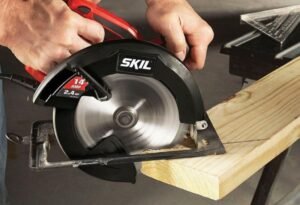
Now that you have your tools and know the parts of your saw, it’s time to set up for angled cuts. The most important thing here is accuracy. If you measure, mark, and set up your saw precisely, you’ll be well on your way to making cuts that fit your project perfectly. It might take a little practice, but getting the setup right is half the battle when you’re figuring out how to cut angles with a circular saw. This is where your measuring tools become your best friends.
Measuring and Marking: Accuracy Is Key
Precise measurement and marking prevent mistakes. Always double-check your measurements. Use your measuring tape to measure the length and angle you need on your wood. Then, use a pencil to mark the cut lines clearly. Use a speed square or combination square to make sure your marks are straight and at the right angle. Make sure your lines are easy to see and that you are cutting on the correct side of the line. The more accurate your marks, the better your final result will be.
- Measure your wood and determine the desired angle.
- Use a measuring tape and pencil to mark the cut line.
- Use a speed square to get precise angles on your marked line.
- Double-check measurements before cutting.
Setting the Bevel and Miter Angles
Your saw has two adjustments that help you make angle cuts: the bevel and miter adjustments. The bevel adjustment tilts the blade, letting you cut angles on the side of your wood. The miter adjustment allows you to cut angles from the end. For bevel cuts, loosen the bevel adjustment knob, then use the angle indicator to set the angle you need. For miter cuts, place the wood against the fence or angle guide. Make certain the saw blade and wood are secure before turning on the saw.
- Bevel: Tilts the saw blade for angle cuts on the wood’s side.
- Miter: Used for angled cuts from the end of the wood.
- Loosen Knobs: Make sure to loosen adjustment knobs before setting angles.
- Angle Indicator: Use this to set the exact angle on your saw.
Supporting Your Workpiece
Supporting your wood is very important for making safe and accurate cuts. Make sure your workpiece is flat and steady on a work surface, like a workbench or sawhorse. If your piece is long, use extra support to stop it from sagging. Clamps can keep the wood from moving while you are cutting. Good support ensures clean cuts and keeps you safe by stopping the wood from shifting during the cut. Safety is always important when you’re figuring out how to cut angles with a circular saw.
Making the Cut: Techniques and Tips
Now that you’ve prepped your materials, it’s time to make your angled cuts. This is where you put everything you’ve learned into practice. It’s a combination of setting up your saw, positioning your wood, and making a controlled, steady cut. With practice, you’ll feel more confident, and your cuts will become more precise. Remember, take your time, go slowly, and always prioritize safety.
Cutting Techniques: Smooth and Steady
Begin by turning on your circular saw and letting the blade reach full speed. Line up the blade with your marked cut line and hold the saw firmly. Slowly and steadily feed the saw through the wood, maintaining a consistent pace. Do not force the saw; let the blade do the work. Keep the base plate flat on the wood. Once the cut is complete, turn off the saw and wait for the blade to come to a full stop before lifting it off the wood.
- Full Speed: Wait for the blade to reach full speed before cutting.
- Line Up: Align the blade with the marked line.
- Steady Feed: Push the saw through the wood at a consistent speed.
- Base Plate: Make certain the base plate is always flat on the wood.
Blade Types and Their Impact
The type of blade you use makes a big difference in the quality of your cuts. Use a blade designed for the material you are cutting. For example, a blade with many small teeth is best for smooth cuts in wood. Coarse-toothed blades are good for quickly cutting wood. Using the right blade will give you cleaner cuts with less splintering and tear-out. It will also help your saw to operate better. Blades with carbide teeth are more durable and last longer.
- Wood Blades: These are ideal for the majority of projects.
- Multi-Purpose Blades: Suitable for a variety of materials.
- Metal-Cutting Blades: Blades for cutting metal.
- Carbide-Tipped Blades: These are longer-lasting blades.
Troubleshooting Common Issues
Even skilled woodworkers sometimes run into problems. If the cut is rough, your blade might be dull, or you might be cutting too fast. If the cut is not straight, check your settings, the alignment of your saw, and the straightness of your wood. Blade binding is a common issue when the wood pinches the blade; this can often be prevented by using clamps or a saw guide. By knowing these common problems, you can fix them more easily.
- Rough Cuts: Dull blade or cutting too quickly.
- Not Straight: Review settings and wood alignment.
- Blade Binding: Use clamps and control your pace.
- Splintering: Use a blade that has many teeth.
Advanced Tips and Tricks
Once you are comfortable with the basics, you can try some advanced techniques to improve your cuts. These will help you achieve more complex shapes and make your work more professional-looking. This section will help you take your woodworking skills to the next level when you’re considering how to cut angles with a circular saw.
Using a Miter Gauge
A miter gauge is a helpful tool for making accurate angle cuts, especially when cutting the ends of boards. You attach your board to the miter gauge, then slide the gauge along the table of your saw. The miter gauge has adjustable settings, so you can easily cut specific angles. Using a miter gauge helps ensure cuts are square and consistent. This technique is often used for making picture frames, where accuracy is important.
- Attach the Board: Secure the wood to the miter gauge.
- Slide Along the Table: The gauge slides along the saw table.
- Adjust the Settings: Set the angle on the miter gauge.
Making Bevel Cuts
Bevel cuts are cuts made at an angle across the width of the wood. Making bevel cuts demands precise adjustments to your saw. Carefully set the bevel angle on your saw, making sure to secure all of the adjustment knobs. When cutting, make sure your wood is supported and that the blade clears the edge. Bevel cuts are common for making decorative trim and architectural details. Double-checking your settings before you make the cut helps avoid costly mistakes.
- Set the Angle: Adjust the bevel angle on the saw.
- Secure the Wood: Make sure the wood is stable.
- Check Clearance: Make sure the blade clears the material.
Using a Saw Guide
A saw guide can help you achieve straight and accurate cuts. A saw guide is a long, straight edge that you clamp onto your wood, serving as a guide for your saw. The saw rides along the edge, making sure your cuts are straight. This is especially helpful for long cuts or when cutting thinner pieces of wood. You can make your own saw guide using a straight board, or you can buy a commercial guide.
Real-World Examples: Applying Your Knowledge
Let’s look at some real-life projects where you’ll use what you’ve learned about how to cut angles with a circular saw. These examples show how cutting angles is important for different projects and give you an idea of the types of projects you can create.
Building a Picture Frame
Picture frames are a classic project that uses angled cuts. To build a picture frame, you need to cut the corners of the wood at 45-degree angles. Use your circular saw and miter gauge to cut each corner accurately. Ensure your measurements are correct and that the angles line up perfectly to create a neat, square frame. The accuracy of your cuts is what will determine the final result.
- Measure and mark the wood pieces for the frame.
- Use a miter saw or miter gauge and circular saw to cut 45-degree angles.
- Dry-fit the frame to ensure the corners meet.
- Assemble the frame using glue and clamps.
Creating a Simple Box with Angled Sides
A simple box is another project where angled cuts are key. To make the box, you’ll need to cut angles on the sides of the wood, which can be done using the bevel adjustment on your circular saw. Accurate angle cuts will help you put the sides of the box together to make a clean, solid box. This project lets you practice bevel cuts and apply the knowledge you’ve gained.
- Decide on the box’s size and angles.
- Set the bevel angle on the circular saw.
- Cut the wood pieces for the box sides.
- Assemble the box using glue and fasteners.
Constructing a Shelf with Angled Supports
Shelves with angled supports not only look nice but also add stability. For this, you need to cut angles on the support pieces. Using your circular saw and the correct angle settings, cut the supports with precision. The supports will add a professional look to your project, showing off your ability to master angled cuts.
Frequently Asked Questions
Question: What’s the difference between a bevel and a miter cut?
Answer: A bevel cut is made by tilting the saw blade to cut an angle on the side of the wood. A miter cut is made by angling the wood itself, using a miter gauge or similar tool, to cut an angle on the end of the wood.
Question: How can I prevent splintering when making angled cuts?
Answer: Use a sharp blade with many teeth, go slowly and steadily through the wood, and support the wood correctly. Some woodworkers use painter’s tape along the cut line to stop splintering.
Question: What do I do if my blade is binding?
Answer: Stop the saw immediately and turn it off. Check that your wood is not pinching the blade. You might need to adjust your setup or replace the blade.
Question: What should I do if my angled cuts are not accurate?
Answer: Review your measurements and settings. Make sure your wood is secure and that your blade is aligned correctly. Practice is key; don’t give up!
Question: Can I use a circular saw for all types of angled cuts?
Answer: A circular saw is ideal for making most angled cuts. However, a miter saw or a table saw with a miter gauge may be more accurate or easier to use for some projects involving many repetitive or complex angles.
Final Thoughts
You’ve now explored the essentials of how to cut angles with a circular saw, from basic setup to advanced techniques. You’ve discovered the importance of tools, safety, and precise measurements. Remember the different types of blades and when to use them. You’ve also learned helpful techniques for tackling common problems, like making sure your cuts are smooth and straight. The key to making angle cuts is to measure carefully, set up your saw accurately, and take your time. With practice and patience, you’ll feel confident in making all kinds of angled cuts. So, grab your saw and some wood, and start creating! You are well on your way to making impressive woodworking projects.

I’m John F. Nicholas, the founder, lead writer, and drill enthusiast behind 101drill.com. With years of hands-on experience in power tools and DIY projects, I created this platform to share practical knowledge, expert tips, and real-world insights to help others master the art of drilling.