
Imagine trying to drill a perfect hole through a thick steel beam using an ordinary hand drill. The bit slips, the vibration shakes your arms, and accuracy becomes impossible. That’s when professionals reach for one of the most efficient metalworking tools ever designed — the magnetic drill, often called a mag drill.
A magnetic drill is not your average drilling machine. It’s a precision powerhouse built for stability and strength. Instead of relying on clamps or vices, it uses a powerful magnetic base that locks the drill firmly onto any ferrous metal surface. Once activated, the base holds the drill in place like glue, allowing you to cut clean, accurate holes even on vertical or overhead steel plates.
This unique design makes magnetic drills essential in industries like construction, fabrication, shipbuilding, and maintenance, where workers need to drill large steel structures safely and quickly. Whether on bridges, beams, or heavy machinery, the mag drill provides unmatched accuracy with minimal setup.
But what actually happens inside this machine? How does a magnet create such stability that even a heavy drill doesn’t move a millimeter during operation? In this guide, you’ll learn exactly how a magnetic drill works, what components make it function, and why it has become a go-to tool for metalworkers worldwide.
By the end, you’ll understand the mechanics, the science behind its magnetic grip, and the right way to use it for professional-level drilling precision — whether you’re in a workshop or high above the ground on a steel framework.
What Is a Magnetic Drill?
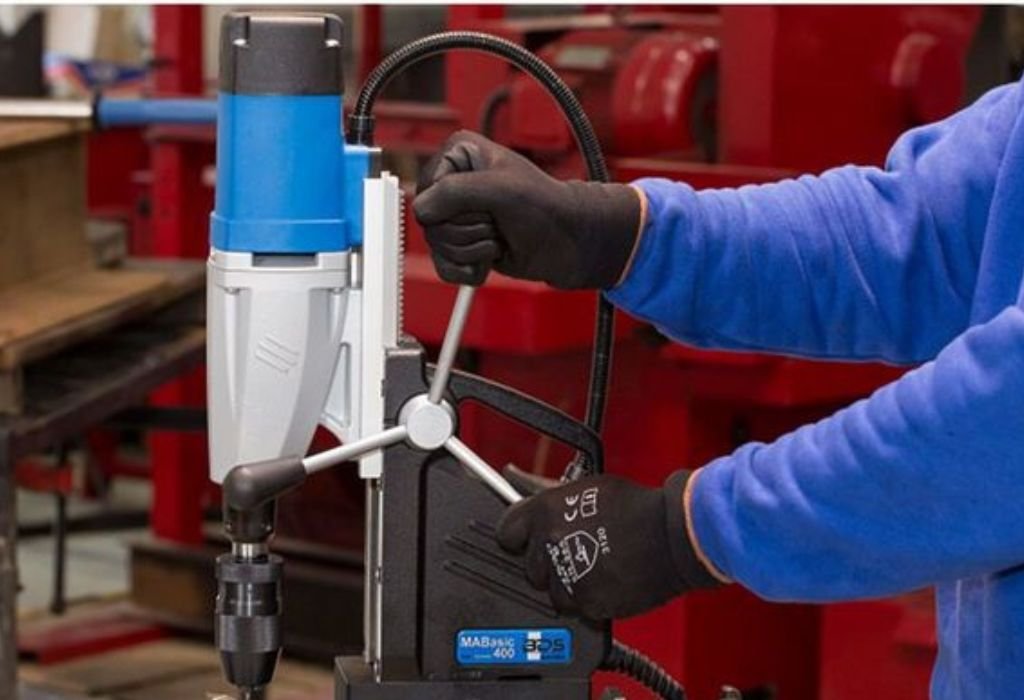
A magnetic drill, often called a mag drill or mag base drill, is a portable power tool specifically engineered for drilling precise holes in metal surfaces. Unlike conventional hand drills or stationary drill presses, a magnetic drill features a magnetic base that firmly anchors the unit to steel or other ferrous materials. This strong magnetic hold eliminates movement and vibration, resulting in cleaner, more accurate holes.
The magnetic base can generate an incredible amount of holding force, sometimes over 1,000 kilograms, depending on the size and model. Once activated, it grips the metal surface securely, allowing the operator to drill horizontally, vertically, or even upside down without worrying about slippage or misalignment. This magnetic stability is what makes the tool ideal for heavy-duty industrial environments where precision and safety are critical.
Mag drills are widely used across multiple industries — from construction and bridge fabrication to mining, shipbuilding, and maintenance work. They are particularly valuable for drilling in locations where it’s impossible to bring large workpieces to a fixed drill press. Instead, the magnetic drill goes to the job, attaching directly to the structure itself.
At its core, a magnetic drill combines portability, power, and precision. The magnet secures the base, the motor drives the cutter, and the feed handle gives you full control over cutting speed and depth. The result is a tool that delivers exceptional drilling accuracy, even in challenging positions and environments.
Main Components of a Magnetic Drill
A magnetic drill might look compact from the outside, but it’s built with a combination of powerful and precisely engineered parts that work together to create stability, control, and cutting accuracy. Understanding these components helps you operate the tool more effectively and maintain it for long-term use.
At the heart of the machine is the magnetic base. This base is what gives the tool its name and unique functionality. When activated, it generates a strong magnetic field that locks the drill onto any steel surface, acting as a temporary anchor. This solid foundation prevents movement and vibration, ensuring every hole is drilled exactly where it’s needed.
Above the base sits the motor housing, which powers the cutting tool. Most magnetic drills come with high-torque electric motors capable of driving through thick metal plates. Some models include adjustable speed settings to handle different materials and hole sizes.
Connected to the motor is the arbor and chuck assembly, which holds the cutting tool in place. While standard twist drill bits can be used, most professionals prefer annular cutters because they remove a clean cylindrical slug instead of grinding away the entire hole area. This design makes drilling faster and reduces wear on the tool.
The feed handle or gear system controls the downward pressure during drilling. It allows you to apply steady, even force, improving both accuracy and safety. High-end mag drills also include a coolant system that delivers lubrication directly to the cutting area, keeping temperatures low and extending bit life.
Finally, the control panel and power switches allow you to operate both the magnetic base and motor independently. This ensures that the magnet can be activated first, securing the drill before rotation begins.
Each of these components plays a crucial role in achieving the precision and strength that magnetic drills are known for.
How the Magnetic Base Works
The secret behind a magnetic drill’s stability lies in its base. This base contains either an electromagnet or a permanent magnet, which creates a strong magnetic field that securely attaches the drill to steel surfaces. Once engaged, the magnetic base provides enough holding force to keep the drill from moving, even when operating vertically or upside down.
In an electromagnetic base, the magnetic field is generated when electric current flows through coils inside the base. When you turn on the power, the magnet becomes active and locks the drill tightly to the work surface. Turning off the power disables the magnetic field, allowing the tool to be repositioned easily. This design offers flexibility and is widely used in industrial environments where electricity is readily available.
A permanent magnet base, on the other hand, doesn’t rely on electricity. It uses rare-earth magnets like neodymium to maintain a constant magnetic force. Some models feature a simple mechanical switch to activate or deactivate the magnet. Permanent magnetic bases are ideal for fieldwork, maintenance, or construction sites where power supply might be limited.
The strength of the magnetic base is a critical safety feature. High-quality drills can produce holding forces exceeding 1,000 kilograms (2,200 pounds). This immense grip ensures that even when the motor is applying torque, the drill remains completely stable.
For precision drilling on metal surfaces, this magnetic anchoring system is what makes the tool so effective. It eliminates vibration, prevents bit wandering, and allows for perfectly aligned holes even on uneven or angled steel structures.
How a Magnetic Drill Performs the Drilling Process
Operating a magnetic drill is a carefully balanced process of stability, power, and precision. Every stage of drilling — from positioning the tool to removing the finished core — depends on coordination between the magnet, the motor, and the cutting system.
The first step begins with positioning the magnetic drill on a clean, flat steel surface. Any rust, dirt, or metal shavings between the magnet and the surface can reduce holding strength, so preparation is essential. Once aligned, the user activates the magnetic base, which instantly locks the drill in place with thousands of pounds of magnetic force.
Next, the appropriate cutter or drill bit is installed in the arbor. While traditional twist drill bits can be used, most operators prefer annular cutters because they remove only the outer edge of the hole, leaving behind a smooth circular slug. This method is faster, cleaner, and produces less friction.
Once the cutter is in place, cutting fluid or coolant is applied to the contact area. This prevents overheating, reduces tool wear, and ensures a smooth finish. The motor is then switched on, and the feed handle is gently turned to lower the cutter into the metal. The key is steady, consistent pressure — too much force can damage the cutter, while too little slows the process.
As the hole forms, the drill continues downward until the annular cutter breaks through the surface and removes a solid steel slug. The motor is stopped, the feed handle retracted, and the magnetic base turned off once drilling is complete.
This precise process allows magnetic drills to deliver accurate, repeatable holes even on vertical or overhead steel beams — something nearly impossible to achieve with conventional handheld drills.
With the basic drilling operation understood, it’s time to look at the different types of magnetic drills and how each one suits specific job requirements.
Types of Magnetic Drills
Magnetic drills come in several configurations, each designed for specific working environments and materials. While the core principle remains the same — a magnetic base securing the tool to metal — the power source, portability, and application can vary significantly between models.
The most common type is the electromagnetic drill. It operates using electric current to power both the motor and the magnet simultaneously. These drills are ideal for workshops and industrial settings where a stable power supply is available. They offer consistent performance and high holding strength, making them the preferred choice for precision fabrication and production work.
Next are permanent magnet drills, which use built-in rare-earth magnets instead of electricity to create their holding force. These are perfect for fieldwork, outdoor construction, or maintenance sites where electrical power might not be accessible. They are also safer in damp environments since they don’t rely on live current for the magnetic base.
In industries that deal with hazardous or explosive environments, pneumatic magnetic drills are often used. These drills run on compressed air instead of electricity, eliminating the risk of sparks. They’re a popular choice in the oil, gas, and shipbuilding sectors.
Another growing category is cordless or battery-powered mag drills. Equipped with high-capacity lithium-ion batteries, these portable models allow complete freedom of movement without depending on power cords or air lines. They are especially useful for quick jobs or tight spaces where setup time needs to be minimal.
Each type of magnetic drill offers a unique combination of power, convenience, and safety. Selecting the right one depends on where you work, the material thickness, and the precision required. Understanding these options ensures you can choose the most efficient tool for your specific drilling task.
Now that you know the variations, let’s explore how magnetic drills are used across different industries and why they’ve become a staple for professionals working with metal.
Applications and Advantages of Magnetic Drills
Magnetic drills are used anywhere precision drilling on metal is required. Their unique combination of power, stability, and portability makes them indispensable in heavy industries and professional workshops alike. From skyscraper construction to bridge repair, the mag drill has earned its reputation as one of the most versatile tools in the metalworking world.
In construction and steel fabrication, magnetic drills are essential for drilling holes into beams, girders, and structural frames. Workers can position the drill directly on the steel surface, activate the magnet, and achieve perfect alignment without bulky fixtures or clamps. This capability saves hours of setup time and allows drilling in positions that would be impossible with standard equipment.
The shipbuilding and marine industries rely heavily on mag drills for working on hulls, decks, and steel supports. The magnetic base holds firmly even on curved or vertical surfaces, enabling precise work in challenging environments. Likewise, bridge maintenance and railway projects benefit from their portability, allowing crews to drill on-site without disassembling large steel sections.
Another key application is in industrial maintenance and repair. Engineers use magnetic drills to modify existing metal frameworks, repair equipment, or install new components on large steel machines. Because the magnetic base keeps the drill stable, it ensures accuracy even on worn or uneven surfaces.
Beyond their industrial uses, magnetic drills are prized for their accuracy and safety advantages. They minimize vibration, reduce operator fatigue, and produce cleaner holes with less effort. The use of annular cutters makes the process faster and more energy-efficient than conventional twist drilling.
Ultimately, magnetic drills offer professionals the freedom to perform high-precision metal drilling anywhere, whether on the ground, overhead, or along a vertical beam. Their blend of power, mobility, and precision continues to make them a core tool in modern metalworking and fabrication.
Safety Practices and Maintenance Tips
A magnetic drill is a powerful and reliable tool, but its performance and safety depend on how well it’s handled and maintained. Because it combines high torque, strong magnetic force, and sharp cutting tools, using it incorrectly can lead to accidents, damage, or poor-quality results. Following a few simple precautions can keep both the operator and the equipment safe.
Before every use, inspect the drill and surface. Make sure the metal surface is flat, clean, and free of rust, paint, or oil. Even a thin layer of debris can reduce the magnet’s holding power. Always activate the magnet before starting the motor — this ensures the drill stays locked in position during operation.
When working on vertical or overhead surfaces, always use a safety chain or strap to secure the drill in case the magnet loses contact. This extra precaution prevents falls that could cause serious damage or injury. Never rely solely on the magnet when working in awkward positions or unstable environments.
The cutting tools must also be kept in top condition. Dull or damaged cutters require more pressure, generate more heat, and increase the risk of breakage. Regular sharpening or replacement keeps the drilling process smooth and reduces stress on the motor. Using cutting fluid or coolant during operation is equally important to prevent overheating and prolong tool life.
Electrical components, including cables and switches, should be checked regularly for wear. A damaged cable or weak electrical connection can reduce magnetic strength or motor performance. After each use, clean the drill thoroughly and store it in a dry, dust-free place to avoid corrosion and buildup on the magnetic base.
Routine maintenance ensures that your magnetic drill remains reliable, safe, and accurate over time. When properly cared for, it can handle thousands of holes across countless metal surfaces without losing precision or power.
Choosing the Right Magnetic Drill
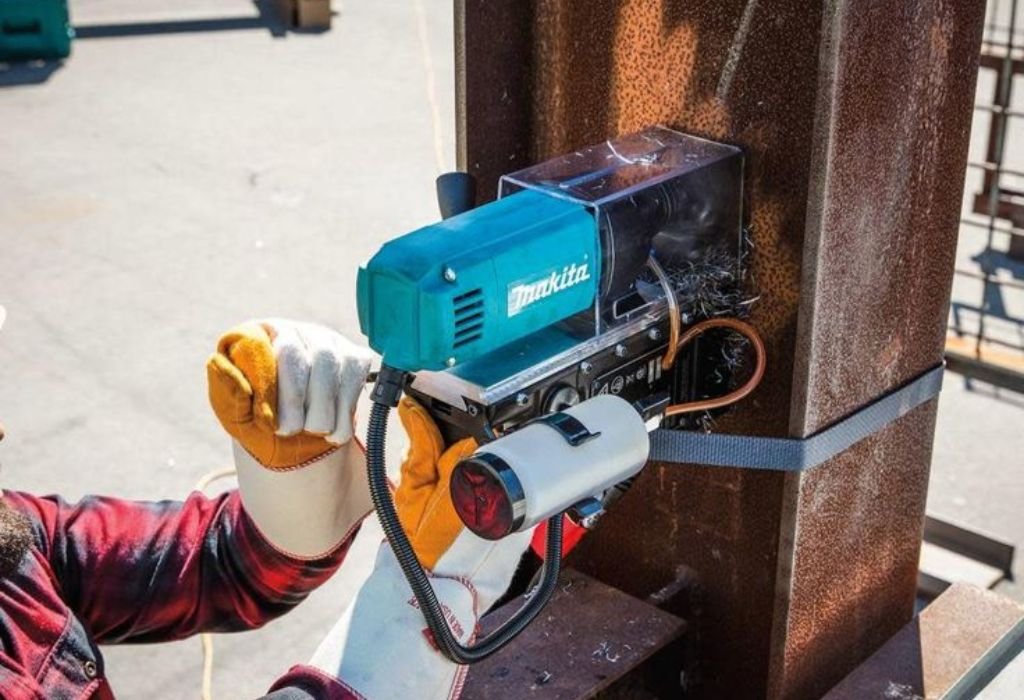
Selecting the right magnetic drill depends on the type of work you do, the materials you handle, and the level of precision required. Not all mag drills are built the same, and choosing wisely can make a big difference in efficiency, accuracy, and long-term durability.
The first thing to consider is material thickness and hole size. For thinner steel plates and smaller holes, a lightweight, low-power magnetic drill will usually suffice. However, for heavy-duty tasks like drilling large holes through thick beams or industrial steel structures, a high-torque model with greater magnetic pull strength is essential. This ensures the drill remains stable under heavy load and vibration.
Next, decide on the power source. If you work primarily in a workshop or have easy access to electricity, a corded electromagnetic drill provides consistent performance. For fieldwork, battery-powered or permanent magnet drills offer greater mobility and freedom from power cables. Professionals who operate in hazardous environments, such as oil or gas facilities, may prefer pneumatic models, which run on compressed air and are spark-free.
The type of cutter or bit also matters. Magnetic drills are most effective with annular cutters, which remove only the edge of the hole, leaving a clean core. However, if you frequently need smaller holes, a twist drill attachment might be more practical. Make sure your chosen drill supports both options.
Additional features can improve usability, such as variable speed controls, reversible motors, built-in coolant systems, and automatic feed mechanisms. For those who prioritize portability, consider a compact mag drill that’s easier to carry and position on job sites.
Finally, look for trusted brands and build quality. Companies like FEIN, Hougen, DEWALT, and Evolution are known for producing reliable, precision-engineered mag drills that stand up to heavy use.
By assessing your project needs, power availability, and working conditions, you can choose a magnetic drill that perfectly balances power, precision, and portability.
FAQs About Magnetic Drills
1. What is a magnetic drill used for?
A magnetic drill is used to drill precise holes in steel or other ferrous metals. It’s especially useful in construction, fabrication, and industrial maintenance where portability and accuracy are needed.
2. How does a magnetic drill stay in place?
It stays in place using a powerful magnetic base that anchors the drill to a metal surface. Once activated, the magnet holds the drill firmly, preventing vibration and movement during operation.
3. Can a magnetic drill be used on non-metal surfaces?
No. Magnetic drills require a ferrous metal surface to create a magnetic connection. They will not hold on materials like aluminum, wood, or stainless steel unless a magnetic plate is used underneath.
4. What type of drill bits are used with a magnetic drill?
Most operators use annular cutters, which remove only the edge of a hole and leave a clean circular core. Twist drill bits, countersinks, and reamers can also be used with compatible arbors and adapters.
5. What power sources do magnetic drills use?
They can be powered by electricity, batteries, or compressed air. Corded models are most common, while pneumatic and cordless versions are used in fieldwork or hazardous environments.
6. Can a magnetic drill be used upside down or vertically?
Yes. That’s one of its biggest advantages. The magnetic base allows the drill to operate vertically, horizontally, or even upside down without slipping when used on clean, flat metal.
7. How strong is the magnetic base?
Depending on the model, magnetic drills can produce a holding force between 1,000 and 3,000 kilograms (2,200–6,600 pounds). This strength ensures complete stability even during heavy drilling.
8. Why do magnetic drills need cutting fluid?
Cutting fluid helps cool the cutter and work surface, reducing friction and preventing overheating. It also extends the lifespan of both the tool and the drill bit while improving cut quality.
9. What safety precautions should be taken while using a magnetic drill?
Always ensure the magnet is fully engaged before starting the motor. Use a safety chain for overhead drilling, wear protective gear, and keep the surface free of dust, oil, or rust.
10. How do I maintain a magnetic drill for long-term use?
Clean the base and cutters after each use, check electrical cables for damage, lubricate moving parts, and store the tool in a dry area. Regular inspection keeps the magnet strong and the motor efficient.
11. Can magnetic drills cut large holes?
Yes. With annular cutters, magnetic drills can create holes up to 2 inches (50 mm) in diameter and several inches deep, depending on the machine’s power and size.
12. What are the most trusted magnetic drill brands?
Popular and reliable brands include FEIN, Hougen, Evolution, DEWALT, and Rotabroach. These manufacturers are known for producing durable, high-precision magnetic drills for both industrial and workshop use.
Conclusion
A magnetic drill is a perfect example of how smart engineering turns a simple concept into an incredibly powerful tool. By combining magnetic force with mechanical precision, it allows metalworkers to drill clean, accurate holes in places where ordinary drills would struggle. Whether mounted on a vertical beam, a steel plate, or an overhead structure, the mag drill holds firm and performs with unmatched stability.
Its working principle is straightforward yet ingenious — a magnetic base locks the machine to a metal surface while a high-torque motor drives an annular cutter or drill bit through the material. This partnership between magnetism and motion makes the tool both safe and efficient. The result is smoother holes, faster work, and less fatigue for the operator.
From construction and shipbuilding to maintenance and fabrication, magnetic drills have become essential equipment for professionals who need both portability and precision. They reduce setup time, improve accuracy, and make it possible to perform heavy drilling tasks directly on-site.
Choosing the right model, maintaining it properly, and following safety practices ensure that your magnetic drill remains a reliable companion for years. When used correctly, it transforms demanding metalworking jobs into efficient, precise, and controlled operations.

I’m John F. Nicholas, the founder, lead writer, and drill enthusiast behind 101drill.com. With years of hands-on experience in power tools and DIY projects, I created this platform to share practical knowledge, expert tips, and real-world insights to help others master the art of drilling.