
In many old workshops and home toolboxes, there is a curious drill that looks like a bicycle crank with a small chuck at the front. Some people call it a hand drill.
Others call it an eggbeater drill. Beginners often assume these are two completely different tools. Even experienced DIY users sometimes get confused by the names.
A person searching online might type hand drill and see both simple straight drills and crank-style drills in the results. Another person may search eggbeater drill and find the same tool shown under different names.
This confusion leads to wrong purchases, incorrect usage, and misunderstandings about what the tool can actually do.
The truth is that the term hand drill is a broad category. The eggbeater drill is a specific mechanical design that falls under that category.
Without clear explanation, these two terms continue to be mixed and misunderstood in workshops, online stores, and hobby tool collections.
This guide clearly explains the real meaning of hand drill vs eggbeater drill. It covers what each one is, how they work, how they differ in design and performance, where each one performs best, and which tool is the better choice for different types of DIY and workshop tasks.
What Is a Hand Drill and How It Works
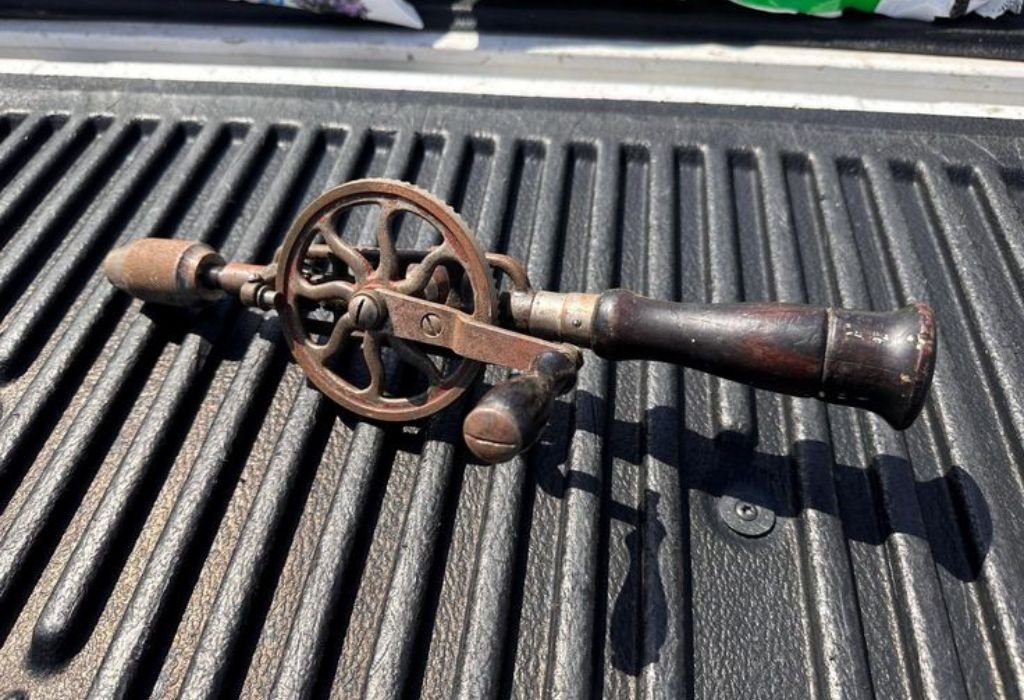
A hand drill is any drill that operates without electricity and relies entirely on human power for rotation. It is one of the oldest drilling tools in human history and existed long before electric drills were invented.
The basic purpose of a hand drill is simple. It rotates a cutting bit so that holes can be made in wood, plastic, soft metal, leather, and similar materials.
There are multiple types of hand drills. Some use a straight push-and-turn mechanism where the user twists the body to rotate the bit.
Others use a side crank handle that multiplies rotation speed. Some traditional hand drills use a breast plate that presses into the chest while the user turns a handle to apply both pressure and rotation.
All hand drills operate on mechanical rotation. When the user applies force to the handle, the internal chuck rotates the drill bit. The speed and torque depend entirely on how fast and how strongly the user turns the mechanism.
Because hand drills do not rely on electricity, they are extremely portable. They can be used anywhere without power supply, batteries, or charging cables. They also provide excellent control because the user directly regulates speed and pressure through hand movement.
Hand drills are commonly used for light drilling tasks, pilot holes, precision work, and situations where electric power is unavailable or unsafe.
What Is an Eggbeater Drill and How It Works
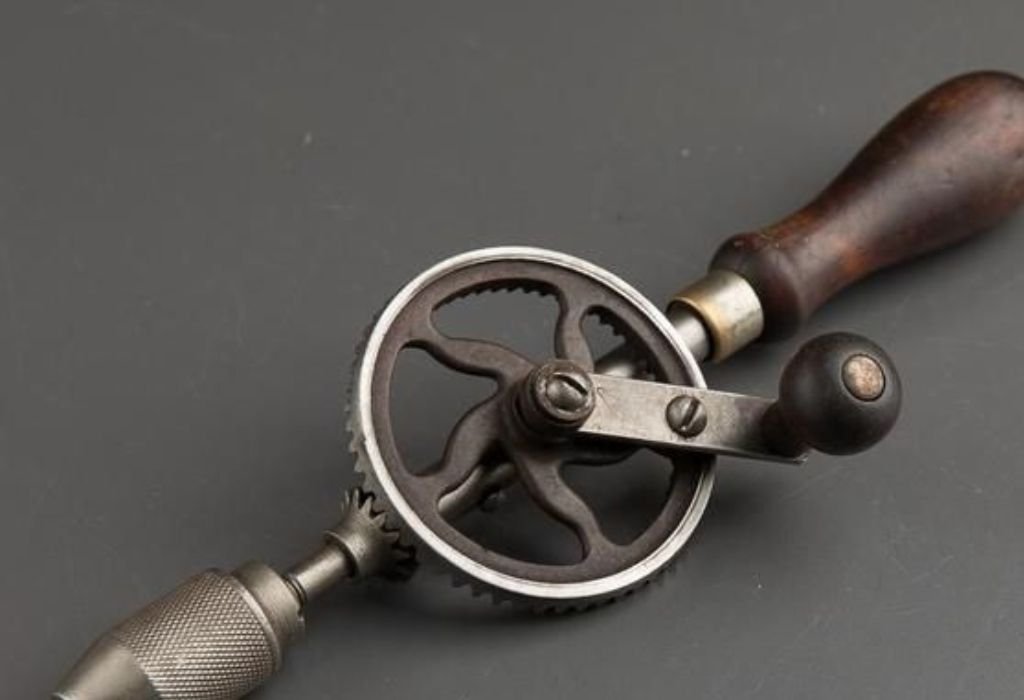
An eggbeater drill is a specific type of hand drill that uses a geared crank mechanism to spin the drill bit. It gets its name because the side crank and gear motion closely resemble the motion of an old kitchen eggbeater.
In an eggbeater drill, the user turns a side-mounted handle. This handle rotates a large primary gear. That gear engages a smaller pinion gear connected directly to the drill chuck. This gear ratio multiplies the rotational speed of the chuck compared to the speed of the handle.
This gear-driven system allows eggbeater drills to spin much faster than basic straight hand drills. With minimal effort, the user can achieve high rotational speed suitable for drilling clean holes in wood, plastic, and thin metal.
The chuck on an eggbeater drill is usually a three-jaw chuck similar in design to modern drill chucks. It can hold round shank drill bits, small sanding drums, wire brushes, and polishing attachments.
Eggbeater drills also include a top-mounted pressure cap. The user presses down on this cap with the palm of the hand while turning the crank. This applies steady drilling pressure while maintaining smooth rotation.
Because of their speed multiplication and smooth mechanical action, eggbeater drills are among the most efficient and popular types of traditional hand drills.
Hand Drill vs Eggbeater Drill Meaning Explained Simply
The simplest way to understand the meaning is this. A hand drill is the general category. An eggbeater drill is a specific type of hand drill with a geared crank design.
Every eggbeater drill is a hand drill because it operates using human power and does not require electricity. However, not every hand drill is an eggbeater drill. Some hand drills use push-to-spin mechanisms. Others use breast drills with large flywheels. Some use piston-style rotation.
When people say hand drill, they could be referring to any manual drilling tool. When they say eggbeater drill, they are referring specifically to the side-crank, gear-driven hand drill.
The confusion happens because many tool sellers and users casually call eggbeater drills simply hand drills. Over time, the specific name gets overlooked and both terms start being used interchangeably.
Once the category relationship is understood, the meaning becomes clear. Hand drill refers to the entire group of manually powered drills. Eggbeater drill refers to one of the most iconic and commonly used designs within that group.
Design and Mechanical Structure Differences
The design difference between a basic hand drill and an eggbeater drill lies mainly in the gearing and rotation mechanism.
Simple hand drills often consist of a straight body with a rotating handle or twisting grip. There are usually no internal gears. The speed of the drill bit is equal to the speed of the user’s hand motion. This results in slow but high-torque drilling.
Eggbeater drills contain an internal gear system. The side crank turns a large gear that drives a smaller pinion gear attached to the chuck. This creates speed multiplication. A slow turn of the handle produces a faster spin of the drill bit.
Basic hand drills have fewer moving parts and simpler construction. Eggbeater drills contain gears, shafts, bushings, and bearings that require occasional maintenance.
Eggbeater drills are usually bulkier and heavier than straight hand drills due to the gear assembly. However, they also allow smoother operation and more consistent drilling speed.
The mechanical complexity of eggbeater drills is what gives them superior speed performance compared to basic hand drills.
Power Source and Torque Control Comparison
Both hand drills and eggbeater drills use the same power source. Human muscle power. However, the way that power is translated into torque and speed is very different.
In a straight hand drill, torque is applied directly. When the user twists the handle, that twisting force acts directly on the chuck. This results in high torque but very low speed. This setup is excellent for tough materials where slow, controlled drilling is required.
In an eggbeater drill, human power is converted through gears. The gearing reduces torque slightly but greatly increases speed. This makes it ideal for clean, fast drilling in softer materials.
Torque control in a hand drill is very immediate. The user feels resistance directly and can adjust pressure instantly. In an eggbeater drill, torque feedback is slightly softened by the gears but still provides good tactile control.
For heavy-duty slow drilling, simple hand drills provide better torque leverage. For lighter, faster drilling, eggbeater drills offer smoother and quicker performance.
Drilling Speed and Accuracy Differences
Drilling speed is one of the most noticeable differences between a basic hand drill and an eggbeater drill. A straight hand drill rotates only as fast as the user can twist the handle.
This usually results in slow rotation but very controlled movement. Because of this, basic hand drills are excellent for precision work where speed is not important but accuracy is critical.
Eggbeater drills, on the other hand, use a gear system that multiplies the rotational speed of the chuck. Even a moderate turn of the crank produces a high bit speed. This makes eggbeater drills much faster for repetitive drilling tasks and soft material work.
In terms of accuracy, both tools perform well when used correctly. The slower speed of a standard hand drill gives excellent control for starting holes exactly where intended. This makes it ideal for pilot holes, delicate drilling, and working near edges.
Eggbeater drills offer good accuracy as well, but their higher speed requires slightly more skill to prevent bit wandering. The pressure cap on top helps stabilize the tool and maintain vertical alignment.
For fine, slow, and delicate drilling, the hand drill offers superior precision. For clean and fast drilling in softer materials, the eggbeater drill delivers better efficiency.
Best Uses of a Hand Drill
Hand drills are best suited for tasks that require high control, slow speed, and strong torque. They are commonly used for making pilot holes before inserting screws. This is especially helpful in hardwood where sudden high-speed drilling could split the material.
Hand drills are also excellent for drilling in thin metal sheets where slow, controlled pressure prevents the bit from slipping or grabbing dangerously. Leather workers also rely heavily on hand drills for punching precise holes at consistent spacing.
In woodworking, hand drills are perfect for dowel holes, hinge pilot holes, and furniture assembly tasks where accuracy matters more than speed.
Hand drills are also ideal for field repairs and outdoor work where electricity is unavailable. Their silent operation makes them useful for indoor work where noise control is important.
Educational workshops and beginner tool training environments often prefer basic hand drills because they teach proper drilling technique without the risk of high-speed accidents.
Best Uses of an Eggbeater Drill
Eggbeater drills are best suited for tasks that require faster drilling with smoother rotation. They excel in woodworking, especially when drilling multiple holes in softwood or plywood.
Craft workers often use eggbeater drills for jewelry making, model building, and creative fabrication because they combine speed with excellent control. The ability to use sanding drums and polishing attachments also makes them versatile for finishing work.
Eggbeater drills are especially useful for continuous drilling where speed improves productivity. Cabinet makers and furniture restorers commonly favor them for historical authenticity and quiet operation.
Because eggbeater drills do not spark or generate electrical heat, they are safer than power drills when working around flammable materials.
Their speed makes them unsuitable for very hard metals, but they perform exceptionally well in plastic, acrylic, brass, aluminum, and wood.
Hand Drill vs Eggbeater Drill for Woodworking
In woodworking, both tools play important roles depending on the type of work. A hand drill works best when slow, controlled pressure is required. It is commonly used for pilot holes, hinge placement, and precise dowel work.
Eggbeater drills are preferred for repetitive drilling in softwood and plywood. Their higher speed produces cleaner holes with less tear-out when used with sharp bits.
For angled drilling, eggbeater drills offer good balance and stability due to their pressure cap. However, hand drills provide more tactile feedback and better control at very slow speeds for tricky placements.
Hardwood drilling favors hand drills because the higher torque allows gradual penetration without overheating the bit. Softwood drilling favors eggbeater drills for speed and efficiency.
In professional woodworking shops that prioritize quiet tools and classic craftsmanship, eggbeater drills remain a popular choice.
Hand Drill vs Eggbeater Drill for Metal Drilling
Metal drilling places much higher demand on torque and control. In this category, simple hand drills usually perform better than eggbeater drills.
Thin sheet metal can be drilled with either tool, but slow rotation is critical to avoid bit grabbing and tearing. The hand drill provides safer low-speed control.
Eggbeater drills can drill thin aluminum and brass, but they struggle with thicker steel because their torque is reduced by gear speed multiplication.
When drilling into steel, the slow steady force of a basic hand drill reduces heat buildup and preserves bit sharpness.
Lubrication is especially important when drilling metal with either tool. Oil reduces friction and prevents bit overheating.
For consistent metal work, the hand drill is generally the safer and more effective choice.
Maintenance and Lubrication Needs Compared
Basic hand drills require minimal maintenance due to their simple construction. Occasional chuck lubrication and shaft cleaning are usually sufficient.
Eggbeater drills require more frequent maintenance because they contain gear assemblies. These gears must be lubricated periodically to prevent noise, wear, and speed loss.
Dust and metal shavings can enter the gear housing of eggbeater drills more easily. This makes regular cleaning important for smooth operation.
Rust prevention is essential for both tools, especially when stored in humid environments. Oil wiping on exposed metal surfaces helps prevent corrosion.
Hand drills are more tolerant of neglect due to fewer moving parts. Eggbeater drills offer better performance but demand more consistent lubrication.
Safety Differences Between Hand Drill and Eggbeater Drill
Basic hand drills are safer for beginners because they operate slowly and generate minimal stored kinetic energy. If a bit binds, the tool usually stops without sudden force.
Eggbeater drills operate at higher speeds. If a bit suddenly catches, it may cause a brief jerk before the gears slow down. This requires better grip control.
Both tools require firm two-hand operation for best safety. One hand guides the direction while the other powers rotation.
Eye protection is important for both tools because wood chips and metal shavings are always produced.
Eggbeater drills pose slightly higher risk due to rotational speed, but both tools are significantly safer than electric drills when used properly.
Which One Is Better for Home, DIY, and Workshop Use
For home DIY users who need occasional drilling for repairs, furniture assembly, and light woodworking, a basic hand drill is often sufficient, reliable, and easier to maintain.
For hobbyists, craftsmen, and vintage tool enthusiasts, the eggbeater drill provides excellent speed, style, and versatility without electricity.
For workshops that focus on metal drilling, the hand drill is the better choice due to torque advantage and speed control.
For creative craft studios and woodworking shops where quiet, fast drilling is important, the eggbeater drill is the more productive tool.
The best tool depends entirely on the type of work, material hardness, frequency of use, and personal working style.
Hand Drill vs Eggbeater Drill Meaning FAQs Explained
Is an eggbeater drill the same as a hand drill?
An eggbeater drill is a type of hand drill, but not all hand drills are eggbeater drills.
Why is it called an eggbeater drill?
It is called an eggbeater drill because its side crank and gear motion look like a traditional kitchen eggbeater.
Which is older, the hand drill or the eggbeater drill?
Basic hand drills existed first, and eggbeater drills were later developed as a more efficient gear-driven version.
Which drill is better for beginners, hand drill or eggbeater drill?
A basic hand drill is usually better for beginners because it is slower and easier to control.
Can an eggbeater drill drill metal?
Yes, it can drill thin metal like aluminum and brass, but it struggles with thick steel.
Which drill provides more torque, hand drill or eggbeater drill?
A basic hand drill provides more direct torque because it does not rely on gear speed multiplication.
Is an eggbeater drill faster than a hand drill?
Yes, an eggbeater drill is much faster because its internal gears increase bit rotation speed.
Do both drills need lubrication?
Yes, both require lubrication, but eggbeater drills need it more often because of their gear system.
Which drill is better for woodworking?
Eggbeater drills are usually better for fast drilling in softwood, while hand drills are better for precision work.
Are hand drills still useful in modern DIY work?
Yes, hand drills are still very useful for precise, quiet, and electricity-free drilling tasks.
Conclusion
The meaning of hand drill vs eggbeater drill becomes simple once the category relationship is understood. A hand drill is the general class of manually powered drills. An eggbeater drill is a specific gear-driven design within that class.
Every eggbeater drill is a hand drill, but not every hand drill is an eggbeater drill. The difference lies mainly in mechanical design, speed multiplication, and application focus.
Hand drills offer maximum torque, slow speed, and superior control for difficult materials and precision work. Eggbeater drills deliver higher speed, smoother rotation, and greater efficiency for soft materials and repetitive drilling.
Both tools remain valuable in modern DIY, woodworking, metalworking, repair, and craft environments. They offer silent operation, excellent control, and independence from electrical power.
Understanding these differences allows users to choose the correct tool, work more safely, improve drilling accuracy, and appreciate the craftsmanship behind these timeless manual drilling tools.

I’m John F. Nicholas, the founder, lead writer, and drill enthusiast behind 101drill.com. With years of hands-on experience in power tools and DIY projects, I created this platform to share practical knowledge, expert tips, and real-world insights to help others master the art of drilling.