
A craftsman in a stone hut presses a sharpened stick between both palms and rubs his hands rapidly to bore a hole in bone. Thousands of years later, a modern hobbyist turns the crank of a metal hand drill in a quiet workshop.
Both moments are linked by a simple idea that shaped human innovation, the desire to drill a precise hole.
Hand drills are among the oldest mechanical tools created by humans. Long before electricity and motors existed, people depended on rotational force created by their hands. This simple motion allowed humans to shape wood, stone, bone, and metal with growing precision.
Understanding hand drill historical usage info reveals how deeply this tool shaped craftsmanship, construction, warfare, art, and industry.
From prehistoric survival tools to refined mechanical instruments, the hand drill has evolved alongside civilization itself. This guide traces that long journey step by step through human history.
What a Hand Drill Is and Why It Was Revolutionary
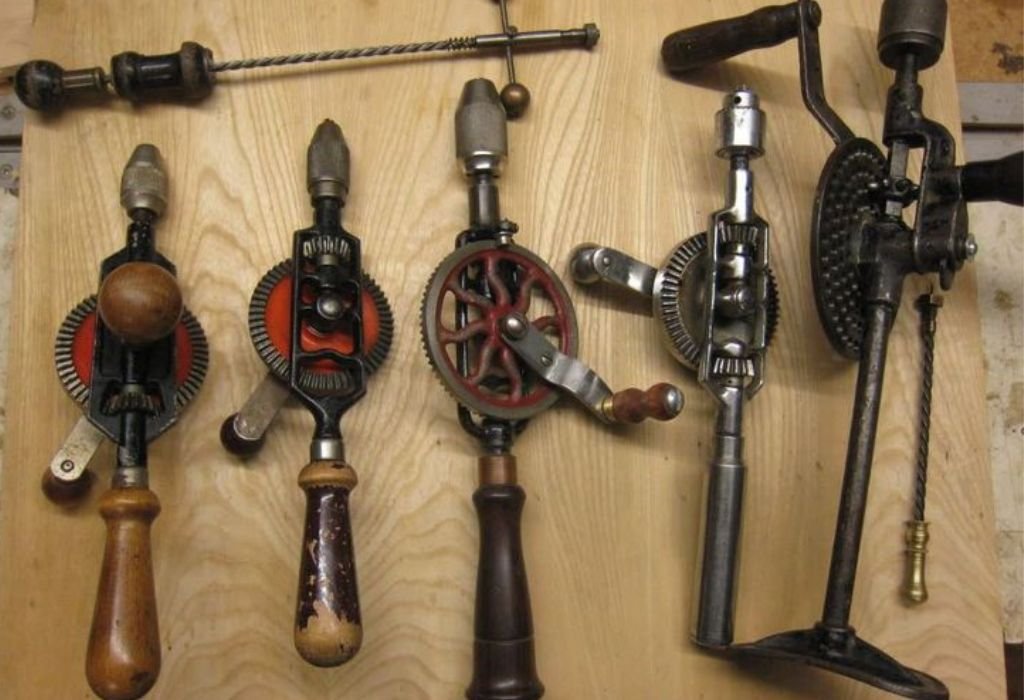
A hand drill is a manually operated tool used to create holes in various materials through rotational force. It converts human hand motion into cutting energy at the drill bit. This simple mechanical transformation made controlled hole-making possible.
Before hand drills existed, boring holes was slow and imprecise. Early humans relied on scraping and pounding methods. These techniques required extreme effort and offered poor accuracy.
The invention of rotational drilling changed how materials could be shaped and joined. Holes allowed the use of pegs, fasteners, and joinery techniques. This unlocked stronger structures and tools.
Hand drills introduced repeatable mechanical motion through simple gear systems and cranks. Even early models provided consistent rotation compared to freehand twisting tools. This improved accuracy and speed.
By enabling precise hole placement, hand drills supported early construction of shelters, tools, and vehicles. They allowed separate parts to be fastened securely. This greatly expanded material engineering possibilities.
The hand drill was revolutionary because it solved a basic mechanical challenge efficiently. It allowed humans to control drilling force and direction precisely. That control changed the scale of what could be built by hand.
Early Hand Drill Usage in Prehistoric Times
The earliest hand drilling tools date back to prehistoric survival periods. Primitive bow drills and pump drills were used for fire-making and boring holes. These tools relied entirely on cord tension and hand rotation.
Bow drills used a flexible bow string wrapped around a spindle. Rapid back-and-forth motion spun the spindle quickly. This created enough friction to bore holes or generate fire.
Pump drills introduced a flywheel and vertical shaft. A pumping motion created continuous rotational energy. This allowed greater control over drilling depth and speed.
These early drills were made from wood, bone, and stone. Cutting tips were often sharpened flints or metal fragments. Despite their simplicity, they were highly effective.
Prehistoric craftsmen used these drills to make holes in beads, tools, and weapon handles. Precise holes allowed stronger bindings using sinew and rope. This significantly improved tool durability.
Early hand drill usage laid the foundation for all later drilling technology. The principles of rotational motion and controlled cutting were already established. Those same principles still govern drilling today.
Hand Drills in Ancient Civilizations
Ancient civilizations refined hand drill technology significantly. Egyptians used bow drills extensively in woodworking and stone carving. Their ability to drill into hard stone shows remarkable engineering skill.
In Mesopotamia, hand drills were used for metalworking and jewelry creation. Small precision holes allowed intricate ornamentation. Drilling became essential in decorative crafts.
Ancient Chinese craftsmen developed advanced manual drilling tools using bamboo shafts and cast metal tips. These drills supported masonry, carpentry, and mechanical devices. Precision drilling became a standard craft skill.
Roman builders used hand drills for construction and military equipment. Drilled holes allowed wooden frames and metal fittings to interlock securely. This strengthened bridges, ships, and siege engines.
Greek artisans used hand drills in sculpture and tool making. Drilling enabled accurate shaping of marble statues. Precision holes allowed complex assembly techniques.
Across ancient civilizations, hand drills became universal tools for building, crafting, and engineering. Their usage spread across continents and cultures. This shared tool shaped early global technology development.
Did prehistoric humans really use hand drills?
Yes, bow drills and pump drills were common in early toolmaking and fire-starting.
Were ancient Egyptians skilled with hand drills?
Yes, they drilled stone and wood with impressive precision.
Did Romans use hand drills for construction?
Yes, hand drills were essential in Roman engineering and military tools.
What materials were early hand drills made from?
They were made from wood, bone, stone, and later metal.
Were hand drills used for jewelry in ancient times?
Yes, tiny drill holes allowed detailed ornament creation.
Medieval Hand Drill Usage and Craft Expansion
During the medieval period, hand drills became essential tools for skilled craftsmen. Blacksmiths, carpenters, and armorers depended on manual drilling for daily production. Tools became more specialized as trades expanded.
Brace and bit drills became common during this era. These tools used a curved handle to apply greater torque. This allowed deeper holes in hardwood and metal.
Castle construction relied on drilled wooden joints for support beams. Peg holes allowed massive structures to hold together without nails. Structural strength improved through accurate drilling.
Weapon manufacturing also relied heavily on hand drills. Holes for rivets, handles, and armor joints were drilled manually. Precision determined weapon reliability in battle.
Church construction required fine drilling in stone and wood. Decorative panels, furniture, and frameworks relied on drilled joinery. Art and engineering became closely linked.
Medieval hand drill usage transformed crafts into structured industries. Drilling accuracy became a valued professional skill. This period strengthened the role of the hand drill in society.
Hand Drills During the Industrial Revolution
The Industrial Revolution marked a major turning point in hand drill design and usage. Mass production increased demand for faster and more consistent drilling tools. Hand drills evolved with improved metal construction.
Gear driven hand drills replaced simple crank forms. These gears multiplied rotational force for easier drilling. Workers could drill harder materials with less effort.
Factory workers depended on hand drills for equipment assembly. Machines required precise holes for bolts and fasteners. Manual drilling still dominated early industrial production.
Railway construction relied on hand drilling for metal plates. Workers drilled thousands of rivet holes by hand. This formed the backbone of early transportation infrastructure.
Precision manufacturing increased demand for consistent hole sizes. Drill bits became standardized for interchangeable parts. Accuracy became essential for mechanical compatibility.
The Industrial Revolution pushed hand drills toward higher performance. Stronger materials and better gear systems improved reliability. This era bridged handmade tools and machine production.
Did hand drills remain important during the Industrial Revolution?
Yes, they were widely used even as machines emerged.
Were medieval hand drills made of metal?
Yes, many included iron components for durability.
Did factories depend on hand drills before power tools?
Yes, early factories relied heavily on manual drilling.
Were gears used in early industrial hand drills?
Yes, geared systems improved torque and speed.
Did standard drill bit sizes start during this period?
Yes, standardization began to support mass production.
Evolution of Hand Drill Design and Materials
Early hand drills were made from wood and stone components. These materials limited durability and torque capacity. However, they served well for soft materials.
Metalworking advancements introduced steel drill shafts and gears. This transformed drilling efficiency dramatically. Steel allowed sharper and longer lasting cutting edges.
Handle designs also evolved for comfort and leverage. Curved grips reduced wrist strain during extended use. Ergonomic control improved drilling accuracy.
Chuck systems improved bit holding reliability. Early crude clamps were replaced with mechanical chucks. This allowed faster bit changes and better alignment.
Surface finishing improved resistance to rust and corrosion. Protective coatings extended tool lifespan. Maintenance became easier.
The evolution of hand drill materials reflects broader material science progress. Each new material improved strength and precision. Tool quality rose alongside industrial knowledge.
Transition From Manual to Powered Drills
The invention of electric motors transformed drilling technology completely. Power drills replaced manual rotation with continuous motor driven torque. Productivity increased rapidly.
Early electric drills were large and wired to fixed stations. Portability came later with lighter motors and batteries. Hand drills slowly shifted into specialized uses.
Manual hand drills remained important during early electrification. Rural and developing regions still relied on hands powered tools. Electricity access was not universal.
Workshops used both power and manual drills together. Manual drills handled delicate work requiring controlled pressure. Power drills handled heavy drilling tasks.
Maintenance and repair of early machines still depended on hand drills. Precision adjustments often required slow drilling. Manual tools remained essential.
This transitional period created a dual tool ecosystem. Hand drills did not disappear but adapted. Their role shifted from primary production to precision support.
Did electric drills replace hand drills immediately?
No, both coexisted for many decades.
Why were early electric drills not portable?
They were heavy and depended on wired power.
Did rural areas continue using hand drills longer?
Yes, due to limited electricity access.
Are hand drills still used today despite power tools?
Yes, for precision and light duty work.
Do professionals still rely on hand drills?
Yes, especially for controlled drilling tasks.
Hand Drill Usage in Modern DIY and Trades
Modern DIY users still rely on hand drills for small projects. Furniture assembly, hobby crafting, and model building require precise control. Hand drills offer silent and vibration free drilling.
Woodworkers use hand drills for pilot holes and fine joinery. Controlled pressure prevents wood splitting. Precision remains superior in delicate materials.
Electricians use hand drills for plastic boxes and light materials. Manual control avoids damaging thin surfaces. Power tools risk cracking fragile components.
Metalworkers use hand drills for tapping and threading. Slow drilling allows clean thread formation. Accuracy remains critical in fabrication processes.
Educational workshops introduce beginners to hand drills before power tools. Fundamental drilling techniques are taught safely. This builds mechanical understanding early.
In modern trades, hand drills serve as secondary but essential tools. They complement power drills rather than replace them. Precision remains their core advantage.
Cultural and Educational Impact of Hand Drills
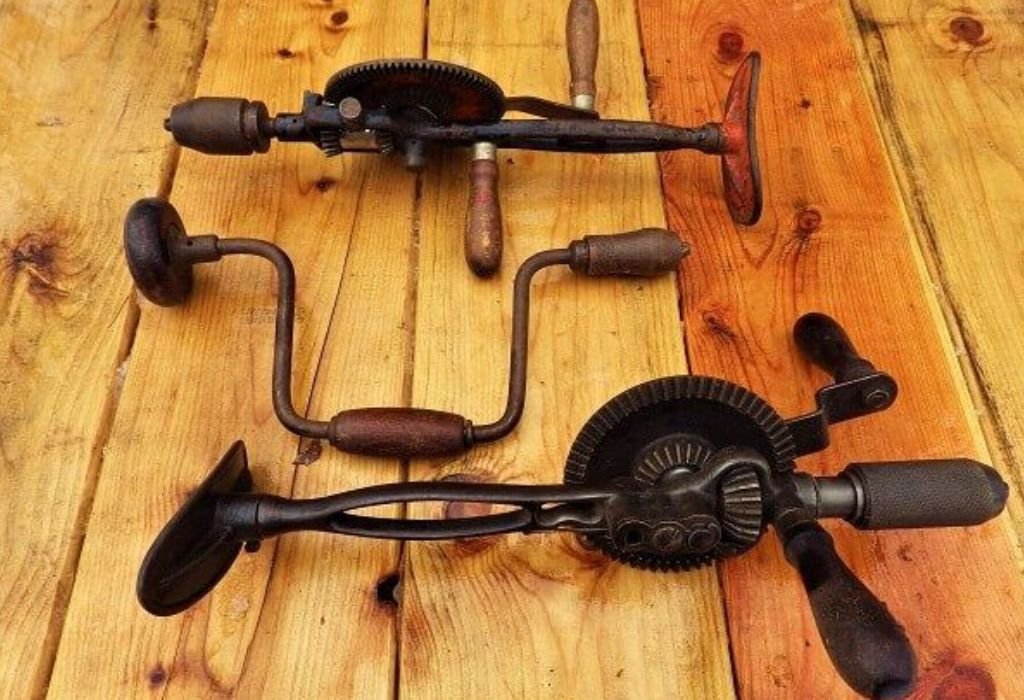
Hand drills appear in museums as symbols of human mechanical progress. They represent early machine thinking and tool evolution. Historical displays show their long development path.
Educational institutions use hand drills to teach mechanical principles. Students learn torque, rotation, and cutting dynamics through hands on use. Understanding becomes deeper through physical interaction.
Cultural craft traditions preserve hand drill usage. Jewelry makers and wood artisans still prefer manual control. Artistic precision remains unmatched by power tools.
Survival training teaches bow drill techniques for fire starting. These methods connect modern learners to ancient technology. Primitive skills training keeps historical knowledge alive.
Hand drills also appear in cultural storytelling and art. They symbolize craftsmanship and self reliance. Manual tools remain part of cultural identity.
The cultural impact of hand drills extends beyond utility. They represent human creativity and mechanical intelligence. Their educational value continues across generations.
Are hand drills still taught in schools?
Yes, especially in basic mechanical and woodworking training.
Do artisans still prefer hand drills?
Yes, for precision and delicate control.
Are bow drills still used today?
Yes, in survival training and historical education.
Do museums preserve ancient hand drills?
Yes, many are displayed as critical technological artifacts.
Do hand drills appear in cultural art?
Yes, often as symbols of craftsmanship and labor.
The Global Spread of Hand Drill Technology
Hand drill technology spread across continents through trade and migration. Traders carried drilling tools along ancient routes. Knowledge traveled with materials and craftsmen.
Asian and European drill designs influenced each other through exchange. Hybrid tools emerged from shared engineering ideas. Cultural blending improved tool performance.
Colonial expansion spread hand drills to new territories. Construction, shipbuilding, and repair relied on manual drilling tools. Global infrastructure development followed.
African, Middle Eastern, and South Asian regions adapted hand drills to local materials. Unique wooden and metal construction methods evolved. Regional customization improved tool suitability.
Industrial manufacturing eventually standardized global drill design. Modern hand drills share nearly identical geometry worldwide. This reflects international tool development.
The worldwide adoption of hand drills confirms their mechanical importance. They became universal tools of progress. Their spread shaped construction and craft in every culture.
Conclusion
Hand drills represent one of the most important mechanical tools in human history. Their roots extend back to prehistoric fire making and simple boring tools. The same rotational principles remain active in modern designs.
Ancient civilizations refined hand drill usage for construction, art, and engineering. Egyptians, Romans, Greeks, and Chinese craftsmen all depended on manual drilling. Precision became a shared global skill.
Medieval and industrial eras transformed hand drills into professional production tools. Gear systems, stronger metals, and standardized bits improved efficiency. Hand drills supported early manufacturing infrastructure.
The transition to powered drills reduced heavy manual labor but did not eliminate hand drills. Instead, their role shifted toward precision control and education. Manual drilling remains unmatched for delicate work.
Modern trades and DIY communities continue to use hand drills for accuracy and quiet operation. Educational and cultural traditions preserve early drilling knowledge. Hand drills remain symbols of mechanical ingenuity.
Understanding hand drill historical usage info reveals how one simple tool supported civilization across thousands of years. From survival tool to precision instrument, the hand drill shaped modern craftsmanship. Its legacy remains deeply embedded in human progress.

I’m John F. Nicholas, the founder, lead writer, and drill enthusiast behind 101drill.com. With years of hands-on experience in power tools and DIY projects, I created this platform to share practical knowledge, expert tips, and real-world insights to help others master the art of drilling.