
Every woodworker eventually faces the same challenge — trying to drill a perfectly straight hole only to end up with something slightly off-angle.
The result might look minor at first, but that small misalignment can ruin an entire project.
Handheld drills are convenient, quick, and cheap.
But when it comes to precision, consistency, and control, many woodworkers start to wonder if a drill press is truly necessary for woodworking.
A drill press promises accuracy, repeatability, and smooth control over speed and depth.
Still, it takes up valuable space and costs more than a cordless drill, leaving many DIYers unsure whether it’s worth it.
This guide breaks down exactly what a drill press does, what makes it useful in woodworking, and whether you genuinely need one for your type of projects.
What Is a Drill Press and How It Differs from a Handheld Drill
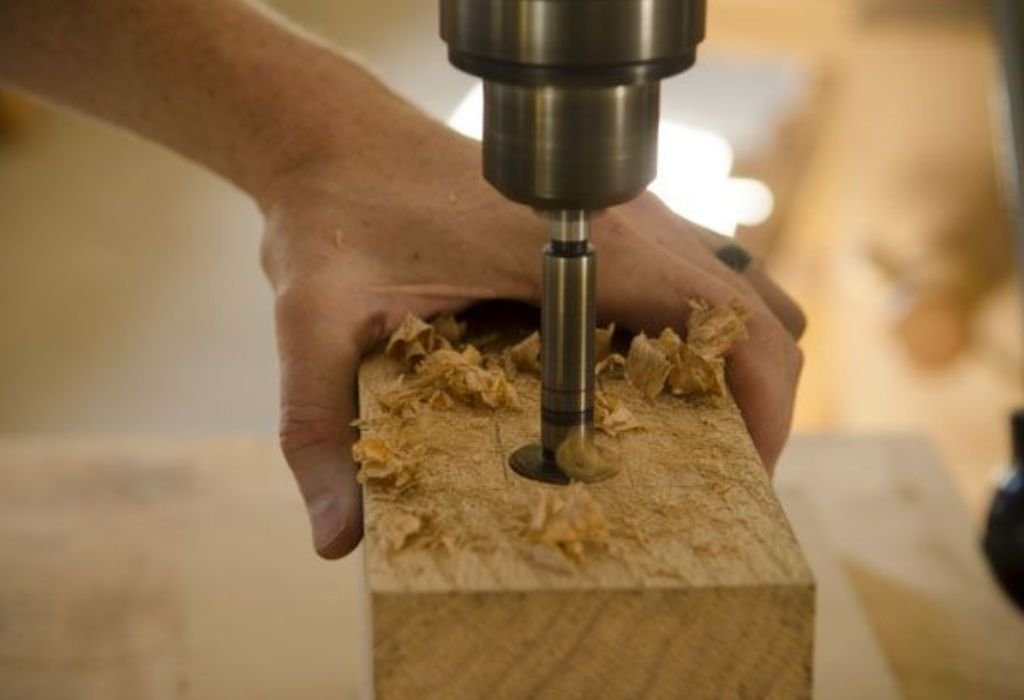
A drill press is a stationary power tool that holds a drill bit in a vertical spindle, allowing for consistent, accurate drilling with adjustable depth and speed.
Unlike handheld drills, the press uses a rigid column, table, and feed handle to ensure each hole is straight, square, and repeatable.
The main difference lies in precision and stability.
Handheld drills depend entirely on the user’s control, while a drill press eliminates human error by locking the bit’s angle and depth mechanically.
What exactly is a drill press?
It’s a fixed-position machine that allows controlled vertical drilling using a motor-driven spindle and adjustable table height.
How is a drill press different from a handheld drill?
It offers accuracy, depth control, and repeatability that a handheld tool cannot match.
What types of drill presses are used in woodworking?
Benchtop models suit smaller shops, while floor-standing presses handle thicker materials and larger projects.
Can a handheld drill perform the same tasks?
It can manage light drilling, but lacks the alignment and stability required for complex joinery or repetitive work.
Why does precision matter in woodworking?
A hole just a few degrees off can cause poor joint alignment, wobbly legs, or uneven fittings in finished furniture.
The Key Benefits of Using a Drill Press for Woodworking
The biggest reason woodworkers love a drill press is accuracy.
It guarantees consistent results every time, regardless of how many holes are drilled.
A drill press also adds safety and efficiency to daily work.
The fixed table holds the material securely, minimizing kickback and reducing bit wandering.
Does a drill press improve alignment and accuracy?
Yes — its fixed spindle keeps holes perfectly vertical, eliminating the drift often seen in handheld drilling.
Can it save time in repetitive tasks?
Absolutely. Depth stops, fences, and jigs let you drill identical holes quickly without constant measuring.
Does it improve joinery strength?
Accurate pilot and dowel holes produce tighter joints that align perfectly during glue-ups.
Is it safer for large or tough materials?
Yes — the workpiece can be clamped firmly on the table, preventing slips and reducing injury risk.
Can a drill press extend tool life?
Yes — precise alignment reduces bit stress and overheating, helping bits stay sharper for longer.
When You Might Not Need a Drill Press for Woodworking
Not every workshop requires a drill press.
For hobbyists who build smaller projects or drill occasionally, a quality handheld drill can often do the job well.
If your shop space is limited or your budget tight, a portable drill guide or jig can provide similar accuracy.
Modern guides allow near-perfect perpendicular drilling at a fraction of the cost.
Can a beginner skip the drill press entirely?
Yes — for occasional work, a well-built cordless drill and guide can be accurate enough.
When does a drill press become more useful?
Once projects require repetitive or deep drilling, or involve hardwood joinery, precision becomes vital.
Is space a concern in small workshops?
Yes — benchtop models take less space but still require a stable work surface.
Are there alternatives to a drill press?
Yes — portable drill stands, cross-slide jigs, or custom blocks can mimic many of the same benefits.
Does skipping the drill press affect project quality?
It can, especially when alignment or depth control determines the fit and finish of your joints.
What Size, Features, and Specifications Matter Most
Choosing the right drill press depends on your woodworking goals.
Features like spindle travel, swing distance, and speed range all influence performance and versatility.
What is swing size and why does it matter?
The swing determines the maximum distance between the spindle and column, dictating how large a workpiece fits beneath the bit.
What spindle travel should you look for?
A longer quill stroke allows deeper holes, ideal for thick hardwood or layered assemblies.
Does variable speed matter?
Yes — slower speeds prevent tear-out in hardwoods and enable larger Forstner bits to cut smoothly.
Is table size important?
A wide, tilt-adjustable table supports larger boards and allows precise angled drilling for furniture joints.
Does weight and rigidity influence performance?
Absolutely. Heavier, cast-iron machines reduce vibration, leading to cleaner holes and more control.
Practical Woodworking Tasks That Benefit Most from a Drill Press
A drill press shines in projects where accuracy and repeatability matter.
From furniture joinery to cabinetry and hardware installation, its precision saves both time and material.
Is a drill press good for dowel and mortise drilling?
Yes — it keeps hole alignment straight, ensuring joints fit perfectly without wobble or gaps.
Does it help with Forstner bit work?
Yes — the steady pressure and slow speed prevent overheating and tearing in large-diameter holes.
Can it be used for hardware installation?
Definitely — hinge cups, knobs, and handles align accurately, avoiding crooked fittings.
Is it helpful in jig-based drilling?
Yes — repeatable depth and consistent spacing make it ideal for drilling through templates and jigs.
What about plug cutting or sanding operations?
A drill press can drive plug cutters or sanding drums safely and evenly, making it a versatile multi-purpose tool.
Cost vs Return: Is a Drill Press Worth the Investment?
A quality drill press costs more than a cordless drill, but its long-term value often outweighs the price.
It saves time, reduces errors, and adds precision that manual tools rarely match.
What does a good woodworking drill press cost?
Benchtop models usually start around $200–$400, while larger floor units can exceed $700.
Is it a good investment for hobbyists?
Yes — if projects involve repeated drilling, doweling, or joinery, the accuracy quickly pays off.
Can a beginner start with a cheaper model?
Yes — entry-level presses offer sufficient precision for small furniture and DIY tasks.
Are used drill presses worth buying?
Often yes. Many older models are built sturdily and can last decades with minimal maintenance.
Does owning a drill press lower material waste?
Yes — consistent hole placement reduces mistakes that waste costly hardwood or panels.
Common Issues and Solutions When Using a Drill Press
Even a reliable drill press can cause issues if misused.
Understanding and preventing these problems ensures accuracy and extends tool life.
Why do holes tear out or splinter?
Feed pressure is too high or backing support is missing beneath the wood.
Why does the bit wander or walk?
The table or workpiece isn’t clamped securely, allowing slight shifts during drilling.
Why are holes slightly angled?
The table may not be square to the bit. Adjust and verify using a machinist’s square.
Why is there excessive vibration?
Loose pulleys or belts cause imbalance — tightening or replacing them resolves the issue.
How to prevent overheating with Forstner bits?
Use slower RPMs and apply light pressure with consistent feed to allow chip evacuation.
When to Upgrade or Add Accessories
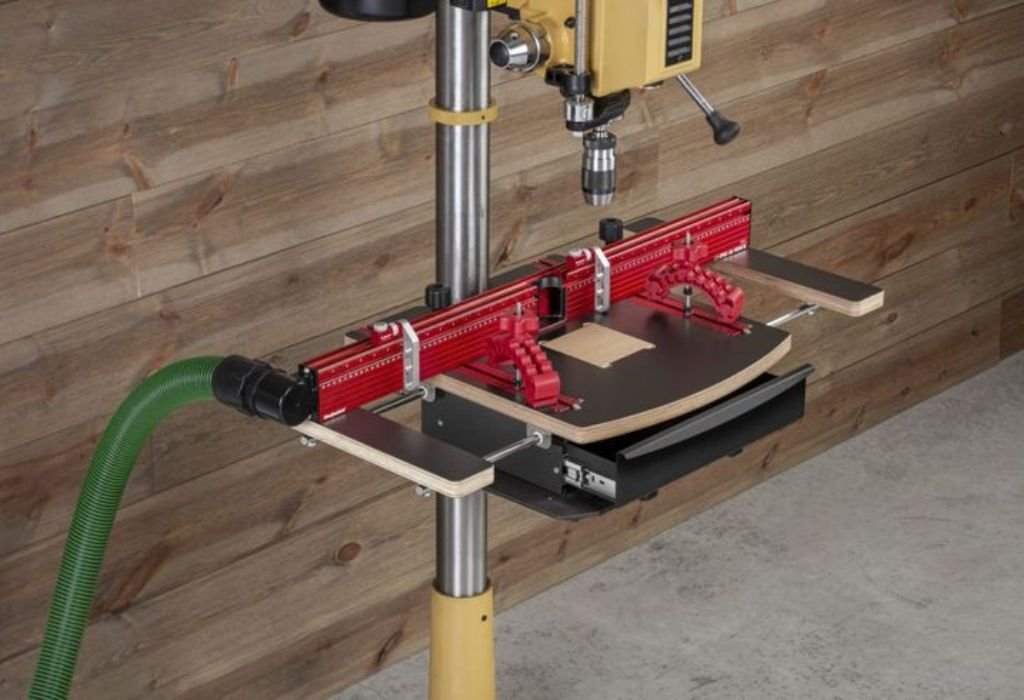
Many woodworkers start with basic setups and later enhance their drill press for specialized tasks.
Accessories can dramatically improve precision and usability.
Which accessories improve accuracy?
Drill press fences, laser guides, and cross-slide vises help align and center holes perfectly.
Do dust collection attachments help?
Yes — they keep the workspace clean and reduce heat buildup from fine wood dust.
Can a drill press be used for sanding?
Yes — with a spindle-sanding drum attachment, it doubles as a vertical sanding station.
Is a mortising attachment worth it?
For traditional joinery, yes — it allows square mortises without switching to a dedicated mortising machine.
How important is maintenance?
Lubricating the quill, keeping belts tensioned, and cleaning sawdust buildup prevent wear and extend lifespan.
Safety Tips for Using a Drill Press in Woodworking
Even though it feels safer than handheld drilling, the drill press still demands caution.
Proper setup and attention protect both user and workpiece.
Should the workpiece always be clamped?
Yes — never hold material by hand; spinning bits can catch and throw it unexpectedly.
Is eye protection necessary?
Absolutely — fine chips and dust can easily cause injury during deep drilling.
What about loose clothing or gloves?
Avoid them — rotating parts can catch fabric and pull hands dangerously close to the bit.
When should speed adjustments be made?
Only when the drill is completely off and stopped to prevent belt damage or slipping.
Is lubrication needed for wood?
Not usually, but when drilling resinous or dense hardwoods, wax or light oil can reduce friction.
Conclusion
So, do you really need a drill press for woodworking?
The answer depends on how precise, repetitive, and large-scale your projects are.
For most serious woodworkers, the benefits are undeniable.
A drill press brings accuracy, control, and repeatability that handheld drills cannot match.
However, beginners or casual DIYers can still create great projects using guides and portable drills.
If space or budget is limited, investing in a high-quality jig may be enough.
Ultimately, a drill press is not mandatory — but once you use one, it becomes clear why many call it the heart of a well-equipped woodshop.
Evaluate your project needs, consider your precision requirements, and decide whether the investment fits your workflow.
A drill press may not be the flashiest tool, but for anyone serious about woodworking accuracy, it’s the quiet difference between “good enough” and “professional-grade.

I’m John F. Nicholas, the founder, lead writer, and drill enthusiast behind 101drill.com. With years of hands-on experience in power tools and DIY projects, I created this platform to share practical knowledge, expert tips, and real-world insights to help others master the art of drilling.