
You’re sitting outside on a sunny afternoon when you notice small round holes in your deck railing or wooden fence. A large fuzzy bee hovers nearby, buzzing lazily but confidently. Your first thought — Are bumble bees drilling holes in the wood?
It’s a common question, especially during spring and summer when bee activity peaks. The sight of holes and sawdust might make anyone assume bumble bees are the culprits. But the truth is, they’re not the ones doing the drilling.
Bumble bees are gentle pollinators that live in colonies underground or in grassy areas, not inside wooden structures. The real “wood drillers” are their close relatives — carpenter bees.
In this guide, you’ll learn the difference between these two species, why carpenter bees drill holes in wood, and what you can do to prevent damage without harming the pollinators.
Understanding Bumble Bees and Their Behavior
Bumble bees are social insects that live in colonies, usually containing a queen, workers, and drones. Unlike solitary bees, they prefer sheltered nests on the ground, in compost piles, or under thick grass.
Their fuzzy black-and-yellow bodies make them easy to identify. They’re excellent pollinators and rarely aggressive unless directly threatened.
Bumble bees do not chew or drill into wood. Their mandibles (mouthparts) are designed for collecting pollen, shaping wax, and feeding — not for boring holes.
During spring and summer, they collect nectar and pollen from flowers, returning it to their nests to feed their developing larvae.
If you see a large fuzzy bee hovering around wood, it’s easy to mistake it for a bumble bee. But true bumble bees have rounded, furry bodies and tend to stay close to flowering plants, not lumber or furniture.
In short, bumble bees don’t damage wood at all — they’re nature’s gentle workers, not home destroyers.
Meet the Real Culprit: Carpenter Bees
Carpenter bees are the actual insects responsible for drilling holes in wood. Though they look similar to bumble bees, their behavior and nesting habits are completely different.
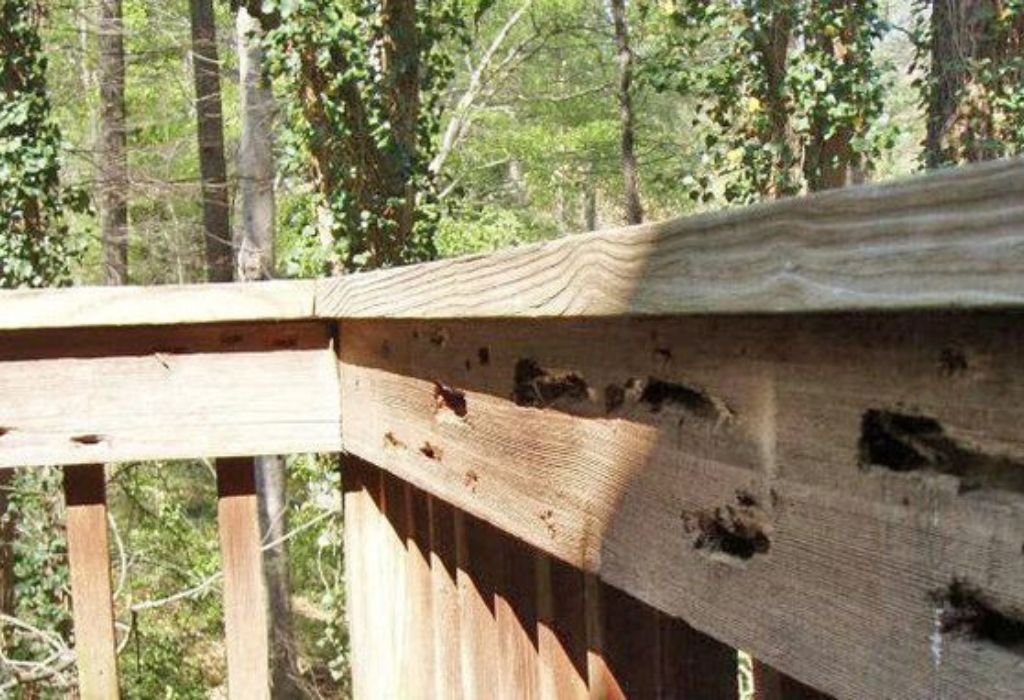
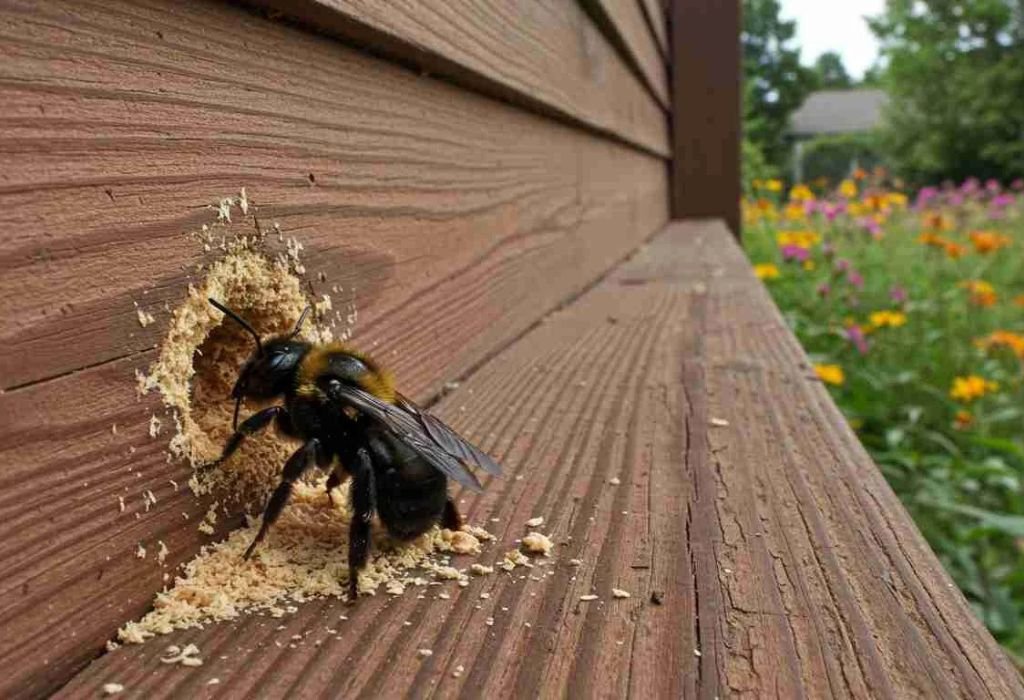
Carpenter bees are solitary and prefer to nest inside wood, not underground. They use their strong mandibles to chew perfectly round holes, about half an inch in diameter, into untreated or unpainted wood surfaces.
The female does all the drilling work. Once inside, she creates tunnels where she lays eggs, each sealed with pollen and wood dust. Over time, multiple generations can reuse and expand these tunnels, causing significant damage.
Unlike termites, carpenter bees don’t eat the wood. They simply excavate it to create nests.
You’ll often find them around decks, eaves, fences, wooden furniture, and sheds — anywhere the wood is bare and weathered.
So if you’re seeing holes in your wood, the carpenter bee is the one to blame — not the friendly bumble bee buzzing around your flowers.
How to Tell the Difference Between Bumble Bees and Carpenter Bees
At first glance, both look similar, but there are clear physical and behavioral differences once you know what to look for.
Bumble bees have fuzzy, hairy abdomens that appear round and soft. Their bodies are covered in dense fur, giving them a velvety look.
Carpenter bees, on the other hand, have shiny, hairless abdomens that appear smooth and glossy black. They’re slightly larger and often hover motionless near wooden surfaces.
Behavior also tells them apart. Bumble bees tend to fly from flower to flower and rarely hover near wood. Carpenter bees often circle around decks, beams, or fences, guarding their nesting territory.
If you notice piles of sawdust beneath wooden beams or small circular holes, you’re definitely dealing with carpenter bees.
Listening closely helps too — carpenter bees make a faint grinding or buzzing noise when drilling, something bumble bees never do.
Learning these small distinctions makes it easy to identify the right species and take proper action without harming helpful pollinators.
Why Carpenter Bees Drill Holes in Wood
Carpenter bees don’t drill for food — they drill for shelter. The female uses her mandibles to carve a nest tunnel where she can safely lay her eggs.
They prefer untreated, soft woods like pine, cedar, fir, or redwood. Painted or sealed wood is much less attractive to them.
Each hole leads to a tunnel that can extend several inches deep. Over the years, females may reuse the same site, expanding tunnels and causing more damage.
They often return to the same wooden areas every spring to breed and nest. Males hover around these spots to guard them while females do the drilling.
Although they don’t consume the wood, the tunnels can weaken structures over time, especially in decks, fascia boards, or beams.
Their activity also leaves behind sawdust piles, yellowish stains, and visible round holes that reduce the wood’s appearance and integrity.
Understanding their purpose — nesting, not destruction — is key to managing them effectively.
How to Stop Carpenter Bees from Drilling Into Wood
Prevention starts with protecting the wood. Carpenter bees prefer untreated lumber, so painting or sealing all exposed wood surfaces is the best deterrent.
Fill any existing holes with wood putty or dowels and seal them tightly to prevent reuse.
Applying a citrus or almond oil spray can discourage bees naturally. They dislike the scent and will avoid treated areas.
For severe infestations, use carpenter bee traps or hang decoy nests nearby. These attract bees away from real wooden structures.
Avoid using pesticides unless absolutely necessary. Bees are vital pollinators, and safer natural methods are often just as effective.
Regular maintenance — sanding, staining, and sealing — also prevents bees from finding soft entry points.
By making the surface unappealing and closing existing tunnels, you’ll protect your home while keeping the bee population safe and healthy.
Eco-Friendly Ways to Handle Carpenter Bees
If you prefer to avoid chemicals, there are several natural and safe solutions.
Citrus oil spray is highly effective. Boil citrus peels in water, strain the liquid, and spray it on affected wood. Bees dislike the strong scent and stay away.
You can also mix vinegar and almond oil for a quick deterrent. Spray it around entry holes or areas where bees hover.
Hang decoy nests near the affected area. Carpenter bees are territorial and avoid nesting where other bees seem to live.
Plug old holes at night when bees are inactive, then paint over them the next day.
For long-term prevention, install wood alternatives like composite materials for decks or fascia boards. Bees won’t drill into these surfaces.
These eco-friendly methods protect both your property and the environment — a win for you and for nature.
Frequently Asked Questions
Do bumble bees drill holes in wood?
No. Bumble bees don’t drill holes in wood — carpenter bees do.
How can I tell if it’s a carpenter bee or a bumble bee?
Carpenter bees have shiny, black abdomens while bumble bees are fuzzy and rounded.
Do carpenter bees eat the wood they drill?
No. They chew through wood only to create nests, not for food.
Why do carpenter bees prefer untreated wood?
It’s softer and easier for them to excavate compared to painted or sealed surfaces.
Can carpenter bees damage my home?
Yes, over time multiple tunnels can weaken beams, decks, or siding.
Are carpenter bees dangerous to humans?
Females rarely sting unless provoked, and males can’t sting at all.
Do bumble bees ever live in wood?
No. Bumble bees nest underground or in thick vegetation, not inside wooden structures.
What time of year do carpenter bees drill holes?
Spring and early summer, when they breed and build nests.
How do I stop carpenter bees from returning?
Fill old holes, paint or seal wood, and use natural deterrent sprays.
Can I relocate carpenter bees safely?
Yes. Call a professional bee removal expert to move them humanely.
Do carpenter bees make honey like bumble bees?
No. They store small amounts of pollen for larvae, but not honey.
Why do I see sawdust near wooden beams?
It’s a clear sign of carpenter bee drilling activity.
Can I plug carpenter bee holes during the day?
No. Wait until night when bees are inside, then plug and seal the holes.
Do carpenter bees come back every year?
Yes, they often return to the same area or even the same hole to nest.
Are carpenter bees beneficial despite the damage?
Yes. They’re important pollinators — control them gently, not destructively.
Conclusion
If you’ve been wondering whether bumble bees drill holes in wood, now you know the answer: they don’t. These fuzzy pollinators prefer flowers and soft nesting grounds, not lumber.
The real culprit is the carpenter bee — a solitary, hardworking insect that drills wood only to protect its offspring.
Understanding the difference helps you protect your home without harming nature. With proper prevention like sealing, painting, and using natural repellents, you can keep your wood safe while letting bees thrive elsewhere.
Coexistence is possible when you know who’s really behind the damage. Keep your deck sealed, your home protected, and your garden buzzing with the right kind of bees.
The next time you spot a hole in wood, remember — the bumble bee isn’t your problem. It’s just the carpenter bee borrowing a little space for its next generation.

I’m John F. Nicholas, the founder, lead writer, and drill enthusiast behind 101drill.com. With years of hands-on experience in power tools and DIY projects, I created this platform to share practical knowledge, expert tips, and real-world insights to help others master the art of drilling.