
You step onto your porch on a warm spring morning and hear a deep, rhythmic buzzing. At first, you think it’s a fly, but then you notice a large black-and-yellow bee hovering near your wooden railing.
Days later, you find small, perfectly round holes in the wood, smooth-edged and just big enough for a pencil. That’s when you realize you have carpenter bees.
Unlike termites, carpenter bees don’t eat wood for food. They drill into it to create tunnels where they lay eggs and protect their young. These bees are fascinating engineers but can be surprisingly destructive when left unchecked.
Over time, multiple generations may reuse the same area, expanding tunnels and weakening beams, decks, or siding.
The process of how carpenter bees drill holes is both simple and highly precise. Their jaws are designed for scraping and tunneling through wood grain without splintering it.
This guide explains the exact process step-by-step, how to identify their activity, and what you can do to prevent or safely remove them without harming the environment.
By understanding how carpenter bees operate, you can protect your wood structures while maintaining balance with nature’s pollinators.
Understanding Carpenter Bees and Their Behavior
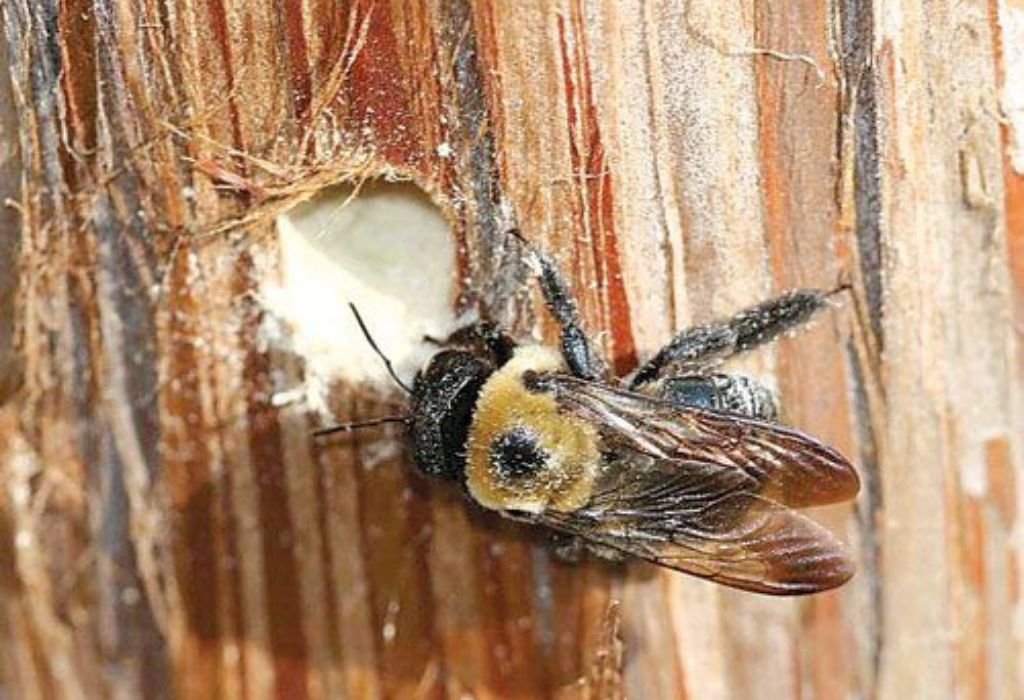
Carpenter bees belong to the Xylocopa genus — the same group as bumblebees, but larger and less social. They’re often mistaken for bumblebees, but carpenter bees have shiny black abdomens instead of fuzzy ones.
Unlike colony-dwelling bees, carpenter bees are solitary nesters. Each female creates her own tunnel where she lays eggs and stores pollen for her larvae. Males don’t drill; instead, they hover near the nest to guard it, often intimidating homeowners but rarely stinging.
These bees prefer untreated, unpainted, or weathered wood because it’s easier to bore into. Softwoods like cedar, pine, and redwood are their favorites. They’re most active during spring and early summer, when females search for suitable nesting sites.
Once they find a spot, they may return year after year, expanding old tunnels or creating new ones nearby. This repetitive nesting leads to noticeable damage over time, even though one bee drills only a few inches per tunnel.
Carpenter bees play a valuable role in pollination, but when they choose your home’s wood as nesting material, intervention becomes necessary to prevent further damage.
How Carpenter Bees Drill Holes in Wood
Carpenter bees are nature’s woodworkers, using precision and patience to carve out nesting tunnels. The process begins when a female bee locates a suitable wooden surface — usually one that’s bare, sun-exposed, and protected from rain.
Using her strong mandibles, she bites into the surface, scraping away small wood fibers until she forms a perfectly round entry hole about half an inch wide. The sound of drilling is faint but can be heard in quiet areas.
Once the hole reaches about one inch deep, the bee makes a sharp right-angle turn, continuing along the wood grain to create a tunnel several inches long. Inside, she deposits pollen and nectar to feed her developing larvae. Each egg is laid in its own chamber, separated by walls of chewed wood pulp.
The process can take several days to complete, but once finished, the bee has a safe nest for her offspring. Over time, other females may reuse or expand the same tunnels, leading to longer galleries and greater damage.
Do carpenter bees eat the wood?
No, they only chew through it to create nesting tunnels.
How deep are their tunnels?
Usually 4–6 inches, but older tunnels can reach up to 10 inches.
Can carpenter bees drill through painted wood?
They prefer bare wood, but weak paint or cracks can still attract them.
Why are the holes perfectly round?
Their mandibles rotate slightly as they chew, creating a smooth circular entry.
Do carpenter bees make noise while drilling?
Yes, a faint grinding or buzzing sound may be heard inside the wood.
What Type of Wood Carpenter Bees Prefer
Carpenter bees don’t choose wood randomly. They look for soft, unpainted, and dry surfaces that are easier to tunnel through. Weathered or untreated wood provides less resistance to their mandibles.
Common targets include decks, railings, eaves, fascia boards, pergolas, and outdoor furniture. They also prefer wood that faces the morning sun — warm surfaces help them drill faster and stay active longer.
Cedar, pine, fir, and redwood are top choices. Hardwood species like oak or maple are less appealing because they’re too dense for comfortable tunneling.
To reduce attraction, sealing or painting wood is highly effective. Bees rarely bore into glossy, finished surfaces. If your structures are made from softwood, applying a stain or oil every couple of years keeps them protected and less appealing to nesting females.
Keeping wood dry and free from cracks also helps, since moisture softens the fibers, making it easier for bees to dig.
Signs of Carpenter Bee Activity
Recognizing the signs early helps you prevent serious damage. The first clue is the presence of perfectly round holes, usually on the underside of beams, railings, or deck boards. Beneath these holes, you may find coarse sawdust, a sign of fresh drilling.
You might also notice bee activity nearby, especially during sunny hours. Males hover aggressively near entry holes, guarding them from other insects and potential threats. Females, on the other hand, enter and exit repeatedly as they build or expand tunnels.
Another clear indicator is yellow-brown stains running down from the holes. These streaks come from pollen or waste left behind by nesting bees.
In severe infestations, you might hear faint scratching inside the wood or notice woodpecker damage. Woodpeckers often peck at carpenter bee tunnels to eat the larvae, worsening the structural harm.
Inspect your wooden structures every spring, especially if you’ve had bee activity before. Early detection makes treatment much easier and prevents generations of reuse.
Damage Caused by Carpenter Bees
While a single bee’s tunnel might not seem dangerous, the problem grows over time as multiple females reuse old galleries. Each new generation lengthens tunnels and adds side chambers, gradually hollowing out the interior of beams and supports.
Repeated nesting weakens structural integrity, especially in decks, fences, and trim boards. Vibrations from drilling can loosen joints or cause cracks in painted surfaces. When woodpeckers attack these tunnels to eat larvae, damage doubles — often leading to splintered or broken boards.
Besides structural harm, carpenter bee droppings can stain wood and siding, leaving unsightly marks that are hard to remove.
Although carpenter bees rarely infest treated or painted wood, ignoring early signs allows them to spread across multiple surfaces. Regular maintenance and prompt action are key to stopping further destruction.
How to Stop Carpenter Bees from Drilling Holes
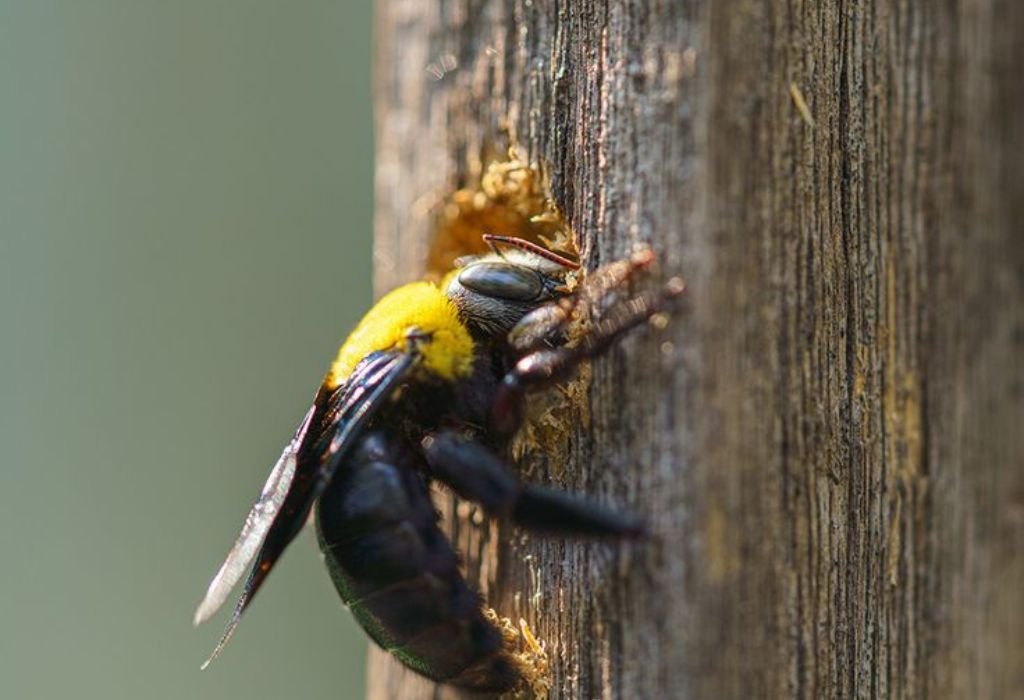
The safest way to stop carpenter bees is to make your wood uninviting to them. Painting, sealing, or staining exposed surfaces creates a barrier they can’t easily chew through. Bees almost never drill into glossy or well-coated finishes.
If you already have holes, wait until late summer when the bees have left, then inject an insecticidal dust or natural repellent like citrus oil. After a few days, seal the holes with wooden dowels and exterior-grade filler.
Avoid plugging holes immediately after spotting activity — doing so can trap live bees inside, causing them to burrow deeper.
You can also install bee traps near problem areas. These mimic nesting sites and attract females away from your structures. Once caught, they can’t escape.
Finally, inspect your property each spring for new holes or buzzing activity. Prevention is easier than repairing wood damage later.
Can carpenter bees damage homes quickly?
No, but damage accumulates over several seasons of reuse.
Are bee traps safe for pets?
Yes, most commercial traps use non-toxic materials.
Can I relocate carpenter bees?
Yes, using gentle traps or professional removal during inactive periods.
Do female bees sting when disturbed?
Only if handled directly; they’re generally calm.
How often should I seal wood?
Every two to three years for outdoor structures is ideal.
Natural Remedies and Preventive Measures
If you prefer non-chemical methods, there are several natural ways to repel carpenter bees. Citrus oil spray is one of the most effective. Boil citrus peels in water, cool the mixture, and spray it into existing holes or on vulnerable wood areas. The scent drives bees away naturally.
Almond oil and tea tree oil work similarly, masking the wood’s natural aroma that attracts bees. Apply once a week during spring to keep bees from returning.
For preventive care, hang decoy carpenter bee nests nearby. Female bees avoid nesting where other bees already appear to live.
You can also play low-frequency vibration sounds near nesting zones — bees dislike constant vibration and will relocate elsewhere.
Combining natural deterrents with regular wood sealing gives long-term protection without harming beneficial pollinators.
Conclusion
Carpenter bees are incredible creatures — precise, persistent, and essential to pollination — but their nesting habits can wreak havoc on your wooden structures. Understanding how they drill, where they nest, and how to discourage them gives you full control over the problem.
They drill by scraping soft, untreated wood with their strong jaws, creating perfect tunnels for laying eggs. Over time, these holes multiply, causing internal weakening. Regular inspection, sealing, and use of natural repellents keep your property protected year after year.
The key is balance: deter bees from your home while appreciating their role in nature. Treating and maintaining wood prevents damage without harming the ecosystem. With a little awareness and upkeep, you can enjoy both a sturdy home and a buzzing garden in harmony.

I’m John F. Nicholas, the founder, lead writer, and drill enthusiast behind 101drill.com. With years of hands-on experience in power tools and DIY projects, I created this platform to share practical knowledge, expert tips, and real-world insights to help others master the art of drilling.