
Every DIY enthusiast or machinist has faced that tempting moment when a drill press seems capable of doing more than just drilling straight holes.
The thought of using an end mill to shape metal or cut slots can feel like a clever shortcut, but what starts as a small experiment often leads to vibration, tool chatter, or even a damaged spindle.
That’s when the real question arises: can you use an end mill in a drill press without risking your machine or safety?
Most drill presses are designed for vertical drilling only, not for the side loads that milling operations generate.
Studies show that improper tool use accounts for nearly 38% of workshop equipment failures (OSHA).
Another report by MachineDesign highlights that lateral stress can reduce a drill press bearing life by up to 70% when used for milling purposes (MachineDesign).
These numbers make it clear that what seems like a simple swap of tools can quickly become a costly mistake.
Yet, curiosity continues to drive people to test the limits of their machines. Is there a safe method to do it? Could light plunge milling or specific materials make the process safer?
The answers depend on understanding the mechanical differences between a drill press and a milling machine, the types of loads each can handle, and how to minimize the risks involved.
Understanding the Tools – Drill Press vs End Mill
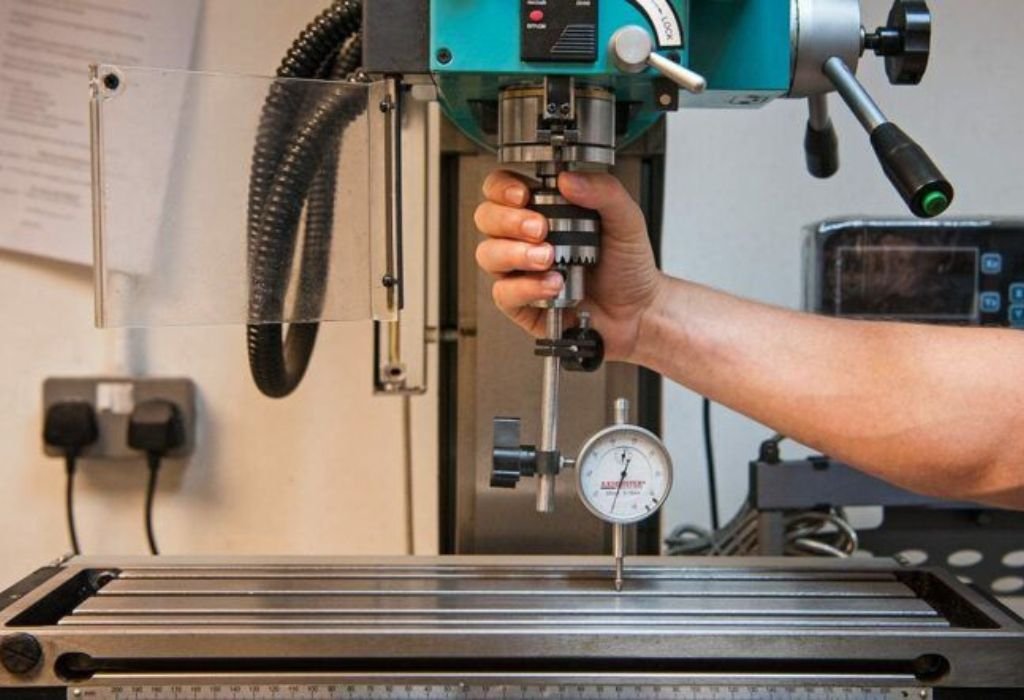
Before deciding whether you can use an end mill in a drill press, it’s important to understand what each tool is designed to do.
A drill press is engineered to move a bit vertically, cutting material through axial pressure only. Its spindle, bearings, and chuck are built to handle straight downward force, not sideways stress.
An end mill, on the other hand, is a precision tool made for milling machines, capable of cutting both axially and radially with incredible accuracy.
The key difference lies in how each machine manages load direction. A milling machine is designed with rigid spindles, high-precision bearings, and locking tables to withstand lateral forces during cutting.
A drill press, however, lacks that structural support and flexibility, making it unsuitable for the same type of load. This distinction determines why using an end mill in a drill press often leads to vibration, poor accuracy, or even mechanical damage.
Many machinists attempt this combination out of necessity or curiosity, often to create flat-bottom holes or slots. While it might seem possible at first glance, the mechanical mismatch quickly shows.
The moment the end mill bites into the workpiece from the side, the drill press bearings can shift, the chuck may loosen, and the tool can deflect, leaving rough surfaces and bent shafts.
Understanding these fundamental differences helps explain why drill presses and milling machines are not interchangeable.
Knowing how they handle torque, precision, and stress is the first step to avoiding accidents or damaged equipment when experimenting with an end mill in a drill press.
What is a drill press designed for?
A drill press is made to drill holes vertically under axial load, not to endure side-cutting forces.
What is an end mill designed for?
An end mill cuts both vertically and horizontally, removing material from the side and bottom with precision.
Why might someone try to use an end mill in a drill press?
It’s often done to achieve a flat bottom or slot when a milling machine isn’t available.
What are the main structural differences between them?
Drill presses have lighter spindles and bearings, while milling machines feature reinforced spindles, rigid tables, and precision slides for accuracy.
Can an end mill be used safely for simple plunge cuts?
Only in very light operations where no side load occurs, and even then, the setup must be extremely stable and well-clamped.
Risks and Limitations When You Use an End Mill in a Drill Press
Using an end mill in a drill press might sound like a clever shortcut, but it introduces serious risks that can damage both your machine and your safety.
Drill presses are designed for downward pressure only, and their bearings, spindles, and chucks are not built to handle side loads.
When a cutting tool like an end mill applies lateral force, the components can flex or fail, causing vibration, misalignment, or complete loss of control.
The biggest danger comes from side loading. Even a small lateral force can cause the chuck to slip, the taper to loosen, or the tool to pull out. Once this happens, the spinning end mill can wobble uncontrollably, leading to poor surface finish and potential injury.
Experts warn that using the wrong tool for the wrong job can shorten a machine’s lifespan dramatically, and in severe cases, result in permanent damage to the spindle or bearings.
Another major concern is workpiece security. Drill press tables are not designed for the heavy clamping and torque resistance required during milling.
Without proper fixturing, a workpiece can shift or get caught by the tool, turning into a dangerous projectile.
Add to that the lack of fine feed control and depth precision, and it becomes clear why this method is discouraged in most professional workshops.
While it might seem tempting to test the limits of your equipment, the mechanical and safety trade-offs are not worth the risk. Recognizing these limitations is essential before experimenting with an end mill in a drill press.
What happens when an end mill generates side loads in a drill press?
Side forces cause spindle deflection, loosening of the chuck, and increased vibration that can damage the tool and bearings.
Why is spindle rigidity important?
Because end milling exerts radial stress, a rigid spindle prevents wobble, maintains precision, and avoids bearing fatigue.
What are the clamping and workholding concerns?
Weak table clamps can’t resist sideways movement, leading to tool grabbing or workpiece displacement during cutting.
What toolholding issues arise with an end mill in a drill press?
Drill chucks are not designed for radial stress; they can release the end mill under side load, causing serious hazards.
Are there any documented failures or accidents?
Yes, machinists have reported bearing failure, chuck ejection, and severe vibration after using end mills in drill presses.
When, If Ever, Can You Use an End Mill in a Drill Press?
The question of whether you can use an end mill in a drill press doesn’t have a simple yes or no answer. While most experts strongly advise against it, there are very limited circumstances where it can be done with extreme caution.
These situations depend heavily on the rigidity of the drill press, the type of end mill, the material being cut, and the precision of the setup.
If the goal is to make a light plunge cut or flatten the bottom of a shallow hole, it may be possible under tightly controlled conditions. The drill press must be heavy-duty, with minimal spindle play and secure workholding.
The end mill should be center-cutting, sharp, and used for very light vertical operations only. Even then, the cut must be shallow and slow to minimize side loading and vibration.
For materials like soft wood, plastic, or aluminum, the chances of success are slightly higher since they produce less resistance.
However, using an end mill for steel or hard alloys is never recommended. The radial forces are too high for the bearings and spindle structure of a standard drill press.
Ultimately, while the question “can you use an end mill in a drill press” can technically be answered “yes” in rare cases, the real answer is “only if you’re fully aware of the risks.” It’s a short-term workaround, not a long-term solution for milling operations.
What criteria must be met to attempt this safely?
The drill press must be rigid, the end mill center-cutting, and the workpiece tightly clamped with no lateral movement allowed.
What operations are acceptable?
Light plunge milling or shallow surface flattening in soft materials where no significant side load occurs.
What material types make this feasible?
Soft metals like aluminum, as well as plastics and wood, are more forgiving under light pressure.
What speed adjustments are needed?
Use lower RPMs than drilling operations, avoid aggressive feeds, and let the tool cut slowly and evenly.
Is special workholding required?
Yes, use a precision vise or secure clamps bolted to the table to prevent movement during operation.
Best Practices and Safety Checklist
If a situation absolutely demands using an end mill in a drill press, the only safe approach is to minimize every possible risk. This means treating the process as an exception, not a regular machining method.
Proper preparation, setup, and awareness can reduce the chance of damage or injury, but the limitations of a drill press must always be respected.
The first step is to inspect the machine. Check the spindle for play, ensure the bearings are in good condition, and tighten every part of the setup. A weak or wobbly spindle will not withstand the side pressure even from light milling.
Also, make sure the drill press table is locked securely and reinforced if necessary. Any vibration will be amplified the moment the cutter engages the material.
Next, focus on toolholding and workholding. A standard drill chuck is not suitable for end mills. Instead, use a proper collet chuck or end mill holder that locks the shank more securely.
Always clamp the workpiece in a vise that’s bolted to the table, not held by hand or simple C-clamps. This ensures stability and prevents the workpiece from spinning or being thrown off during cutting.
Feed rate and cutting depth also matter. Use shallow passes—just enough to clean the surface—and never try to remove large amounts of material at once. Slow speeds, controlled feed, and proper lubrication can reduce stress on both the tool and the machine.
Finally, prioritize safety above convenience. Always wear protective goggles, avoid loose clothing, and keep guards in place. Make sure an emergency stop is within reach before starting.
The goal isn’t just to get the job done—it’s to finish without damaging your equipment or putting yourself at risk.
How to verify machine rigidity and condition?
Ensure there’s no spindle wobble, the column is solid, and the table is firmly locked in position.
What toolholding should you use with an end mill in a drill press?
A dedicated collet chuck or end mill holder provides better grip than a standard drill chuck.
How should the workpiece be secured?
Clamp it tightly in a vise that’s bolted to the table to prevent movement or rotation.
What cutting parameters should be followed?
Keep speeds low, cuts shallow, and feeds light to minimize vibration and tool stress.
What safety precautions are essential?
Use eye protection, remove distractions, and never attempt side milling or heavy passes.
Alternatives and Better Options
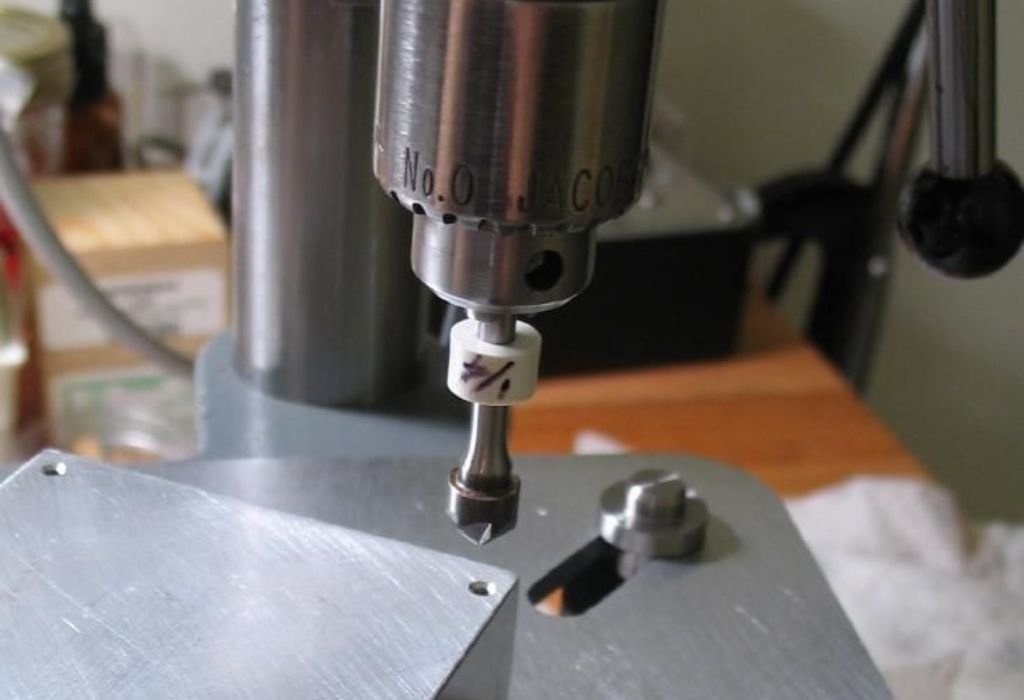
Even though it’s technically possible to use an end mill in a drill press for very light tasks, it’s rarely the best choice.
In most cases, there are safer and more efficient alternatives that produce better results without compromising your equipment.
Understanding these options can save you from machine damage, poor finishes, and dangerous accidents.
The most reliable alternative is a proper milling machine. A benchtop or mini mill, even a compact one, is designed to handle side loads, precise depth control, and higher cutting forces.
These machines feature rigid spindles, heavy bases, and adjustable tables that ensure stability and precision during milling operations. They are built for end mills, meaning both tool life and surface quality are far superior to what a drill press can deliver.
If a milling machine isn’t available, there are safer cutting tools that can mimic some end mill functions.
For instance, a counterbore bit or flat-bottom drill can create smooth, flat holes without side-loading the spindle.
Similarly, a rotary tool or router equipped with the right bit can perform light shaping or slotting in wood and plastic with better control.
For hobbyists who only occasionally need to perform milling operations, outsourcing the task to a local machine shop can also be a cost-effective solution. Professional machinists have the right tools, machines, and expertise to handle precision work safely and efficiently.
Ultimately, choosing the right equipment saves time, reduces wear on tools, and ensures safety. A drill press should be reserved for drilling, reaming, and light countersinking, while an end mill belongs in a machine designed for milling.
Why invest in a benchtop milling machine instead?
It’s built for side loads, offers precise control, and ensures accurate, high-quality cuts safely.
When is outsourcing a better option?
If milling is occasional, hiring a shop saves money and prevents damage to your equipment.
Can you modify a drill press for end milling?
Even with stronger clamps and collets, it still lacks the rigidity of a true milling machine.
What tool alternatives can you use?
Flat-bottom drills, counterbores, and rotary tools can perform similar tasks without the same risk.
How to choose between a drill press and a milling machine?
If the operation involves side loads, fine tolerances, or complex shaping, always use a milling machine.
Summary
After exploring every angle of this topic, the answer to “can you use an end mill in a drill press” becomes clear. While it might seem like a convenient shortcut, it’s one that carries significant mechanical and safety risks.
A drill press is designed purely for vertical drilling, while an end mill exerts strong lateral forces that most drill presses simply cannot handle. Using them together often leads to vibration, poor precision, or permanent machine damage.
In rare situations, such as light plunge cutting on soft materials, a skilled user might get acceptable results—but this doesn’t make it safe or practical.
Every factor, from spindle rigidity to workholding strength, must be perfect to minimize risk. Even then, the outcome is unpredictable and the machine’s lifespan may be shortened. What looks like a time-saving trick can quickly turn into a costly repair or accident.
The smarter, long-term approach is to invest in the proper equipment. A benchtop milling machine, even a small one, provides the rigidity, precision, and safety required for using end mills effectively.
If you only need occasional milling, outsourcing the work to a professional shop is both safer and more economical.
Ultimately, the goal of every machinist—professional or hobbyist—should be to match the right tool with the right machine. Respecting these boundaries leads to better results, longer equipment life, and a safer workspace.
What should every machinist remember?
A drill press is for drilling; an end mill belongs in a milling machine.
When is it acceptable to attempt it?
Only during light plunge cuts on soft materials with rigid clamping and proper setup.
What happens if the risks are ignored?
It can cause tool ejection, spindle damage, and serious injury.
What’s the best long-term solution?
Use a milling machine or professional service for any operation involving side loads.

I’m John F. Nicholas, the founder, lead writer, and drill enthusiast behind 101drill.com. With years of hands-on experience in power tools and DIY projects, I created this platform to share practical knowledge, expert tips, and real-world insights to help others master the art of drilling.