
You are halfway through a home project, balancing a screw on the end of your drill. Just as you aim, the screw drops and rolls under the workbench. You sigh and wonder, “Why will this drill bit not hold the screw?” That single moment sparks a question most DIYers overlook: Are drill bits magnetic?
At first, the idea seems simple. Magnets make life easier by holding screws steady, preventing drops, and speeding up assembly. But not every tool behaves as you might expect. Drill bits have their own story that mixes steel composition, magnetism, and manufacturing processes.
In this guide, you will discover whether drill bits are magnetic, how magnetism really works in tools, and when it helps or does not in your workshop. You will also learn how to magnetize a bit yourself, which types of bits respond best, and what to avoid when working near electronics. Let us uncover the magnetic truth behind your drill bits once and for all.
What Does “Magnetic” Really Mean in Drill Bits?
The Basics of Magnetism
Magnetism is a property found in materials that have unpaired electrons, allowing their atomic spins to align. In simple terms, metals like iron, nickel, and cobalt can become magnetic because their internal structure allows them to retain a magnetic field.
Steel, which is made from iron and carbon, is ferromagnetic, meaning it can be magnetized. When the tiny magnetic domains inside align in one direction after exposure to a magnet, the material gains magnetic strength. Once that alignment breaks through heat, vibration, or time, it loses magnetism.
How Magnetism Appears in Tools
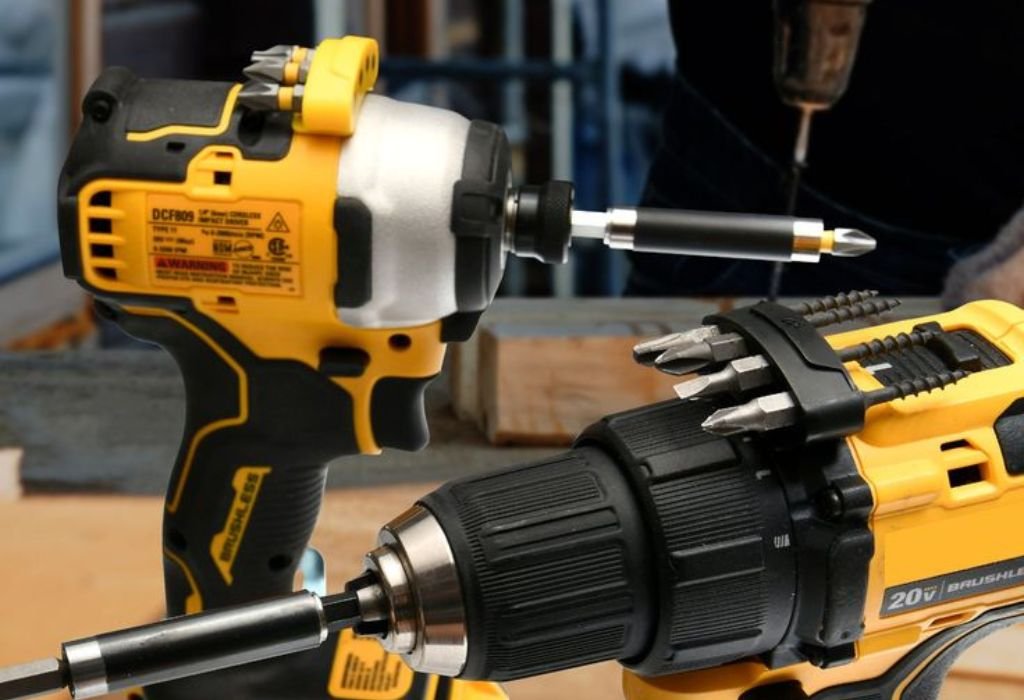
Many screwdriver bits, socket adapters, and bit holders use small neodymium magnets to keep screws or bits attached. However, drill bits themselves are not strongly magnetic because they are made for cutting, not holding.
Magnetism in a tool comes from either permanent magnetization, where the tool itself holds a magnetic charge, or external magnets such as a magnetic bit holder. When you see a “magnetic bit,” it usually refers to the holder, not the actual cutting bit.
Are Drill Bits Magnetic by Default?
Material Composition
Common drill bits are made from materials like:
- High-Speed Steel (HSS) – Iron-based and moderately magnetic.
- Cobalt Alloy (M42, M35) – Still magnetic but slightly weaker than pure steel.
- Carbide-Tipped Bits – Not magnetic since carbide is a ceramic-metal mix.
- Titanium-Coated Bits – The coating itself is not magnetic, but the steel base beneath can be.
So yes, most drill bits can be magnetized to some degree because they contain iron. But that does not mean they will naturally hold screws.
Effect of Heat Treatment
During manufacturing, drill bits are heat-treated to increase hardness. High temperatures can reduce the ability of magnetic domains to stay aligned. As a result, even though the material is magnetic in theory, the bit’s structure does not hold strong magnetism after production.
In short, drill bits are technically magnetic, but only weakly so, and they do not come magnetized from the factory.
When and Why Magnetism Matters
Where Magnetism Helps
If you are working in tight spaces, overhead areas, or assembling small parts, a magnetic bit can save time and frustration. It holds screws in place and reduces the risk of drops.
For professionals who build furniture, cabinets, or electronics, magnetic tips improve workflow, especially when driving hundreds of screws per day.
Another benefit is that magnetic bits make one-handed operation easier, leaving your other hand free for positioning or holding materials.
Where It Does Not Help or Can Hurt
When drilling into wood, metal, or masonry, magnetism does almost nothing. The bit’s performance depends on sharpness, speed, and material, not magnetic attraction.
In metal drilling, magnetism can cause small filings to cling to the bit, increasing friction and possibly scratching the surface.
Magnetized tools can also attract unwanted debris such as tiny nails or filings, which may interfere with precision work or damage delicate materials.
How to Know If Your Drill Bit Is Magnetic
Quick Tests
You can test magnetism easily in a few seconds:
- The Screw Test: Touch a steel screw to the bit tip. If it sticks, the bit is magnetic.
- The Filings Test: Run the bit through some iron filings. If they cling, magnetism is present.
- The Compass Test: Bring a compass close to the bit. If the needle moves, it is magnetic.
If nothing happens, you can magnetize it yourself in less than a minute.
How to Magnetize or Demagnetize a Drill Bit
Magnetizing a Drill Bit
If you want your bit to hold screws:
- Get a strong magnet such as a neodymium magnet.
- Stroke it along the bit in one direction only from the shank to the tip about 30 to 40 times.
- Test it with a screw. It should now hold lightly.
You have aligned the magnetic domains inside the steel, giving it temporary magnetism.
Tip: Do not move the magnet back and forth, or it will cancel the effect.
Demagnetizing When Needed
To remove magnetism, which is useful in electronics work:
- Pass the bit through a demagnetizer tool, or
- Tap it gently while applying a bit of heat to randomize the magnetic domains.
This eliminates any residual field that could interfere with sensitive components.
Understanding Magnetic Bit Holders
A magnetic bit holder is often more effective than magnetizing the bit itself. It contains a built-in neodymium magnet inside a sleeve that creates strong attraction to both the bit and the screw.
Benefits include stronger hold than a magnetized bit alone, easier interchange between bit types, and longer magnet life over time.
If you often drive screws, investing in a magnetic holder or extension is a smarter choice than magnetizing bits one by one.
Types of Magnetic Bits and Holders
- Magnetic Screwdriver Bits: Standard bits that are pre-magnetized for convenience.
- Magnetic Bit Holders: Metal sleeves with internal magnets that hold non-magnetic bits securely.
- Magnetic Rings or Collars: Slip-on attachments that temporarily magnetize any bit.
- Magnetic Socket Adapters: Ideal for hex and impact drivers, especially for large screws or bolts.
Each option offers different strength levels, so choose based on your screw size and work environment.
Pros and Cons of Magnetic Drill Bits
| Pros | Cons |
| Keeps screws attached and reduces drops | Can attract metal shavings |
| Saves time in assembly tasks | Loses strength over time |
| Allows one-handed control | Not useful for drilling holes |
| Easy to magnetize or demagnetize | May interfere with electronics |
| Affordable and reusable | Magnetism weakens with heat or vibration |
Best Practices for Using Magnetized Bits
- Clean regularly: Remove filings and dust to maintain accuracy.
- Avoid extreme heat: High temperatures can destroy magnetism.
- Use the right bit type: Magnetic bits are for screw-driving, not drilling.
- Pair with a magnetic holder: It improves grip and screw control.
- Store properly: Keep bits dry and separate from strong magnets that could reverse polarity.
Common Myths About Magnetic Drill Bits
Myth 1: All drill bits are magnetic.
Truth: Most bits are made of ferrous metal and can be magnetized, but they are not magnetic when new.
Myth 2: Magnetism makes drilling faster.
Truth: Magnetism affects screw-holding, not cutting speed or torque.
Myth 3: Magnetized tools are unsafe near computers.
Truth: The magnetic strength is too low to affect modern electronics in most cases.
Myth 4: Once magnetized, a bit stays that way forever.
Truth: Magnetism fades over time due to heat, vibration, or physical impact.
FAQs About Magnetic Drill Bits
Q: Can any drill bit be made magnetic?
A: Yes, but the result depends on the bit’s material and how strongly it can hold magnetism.
Q: Is a magnetic drill bit the same as a magnetic holder?
A: No, the holder usually contains the magnet while the bit remains standard.
Q: Does magnetism affect performance when drilling metal or wood?
A: Not much. Sharpness and speed matter far more.
Q: Is it safe to use magnetized bits near electronics?
A: Usually yes, but keep a small distance from delicate sensors or storage drives.
Q: Can magnetism damage the bit?
A: No. Magnetizing or demagnetizing does not affect hardness or cutting ability.
Conclusion
Most drill bits are made from ferrous metals and can hold some magnetism, but they are not strongly magnetic by default. If you want to keep screws in place, using a magnetic bit holder or magnetic sleeve gives the best results. Magnetizing your bit works too, but the effect fades with time and heavy use.
For drilling holes, magnetism adds no performance benefit. But for driving screws or working in tight spots, it can make your work smoother and more efficient.
If you want the perfect balance of convenience and control, choose a quality magnetic bit holder and pair it with high-speed steel bits for reliable performance.

I’m John F. Nicholas, the founder, lead writer, and drill enthusiast behind 101drill.com. With years of hands-on experience in power tools and DIY projects, I created this platform to share practical knowledge, expert tips, and real-world insights to help others master the art of drilling.