
Before exploring specifications and setup, it’s important to clearly understand what the throat capacity of a drill press actually means. This single dimension determines how large a workpiece can be positioned without hitting the machine’s column.
In technical terms, the throat capacity of a drill press is the horizontal distance between the center of the drill spindle (or chuck) and the nearest edge of the column. This distance represents the maximum reach of the bit toward the center of the workpiece before contact occurs with the machine frame.
Manufacturers often use a related specification called the “swing.” The swing is simply twice the throat capacity, indicating the largest circular workpiece that can be drilled through its center. For example, a 16-inch drill press has an 8-inch throat, meaning it can drill to the center of a workpiece up to 16 inches wide.
Understanding this distinction between throat capacity and swing helps users compare different models accurately. It ensures that when choosing a drill press, the physical limitations of the column spacing are properly accounted for.
What exactly is throat capacity?
It’s the horizontal distance from the drill bit’s centerline to the supporting column, defining the maximum width a workpiece can fit.
How is throat capacity different from drilling depth?
Drilling depth (quill travel) measures how deep the bit moves vertically, while throat capacity measures horizontal clearance.
Why is the term “swing” often used in specifications?
Swing equals twice the throat capacity and shows the largest diameter that can be drilled through the center.
Does throat capacity vary among drill presses?
Yes, benchtop models usually have smaller throats, while floor and radial drill presses offer significantly larger capacities.
Can throat capacity affect accuracy?
Yes, greater throat capacity can introduce more flex or vibration if the machine frame isn’t rigid enough.
Why Throat Capacity Matters
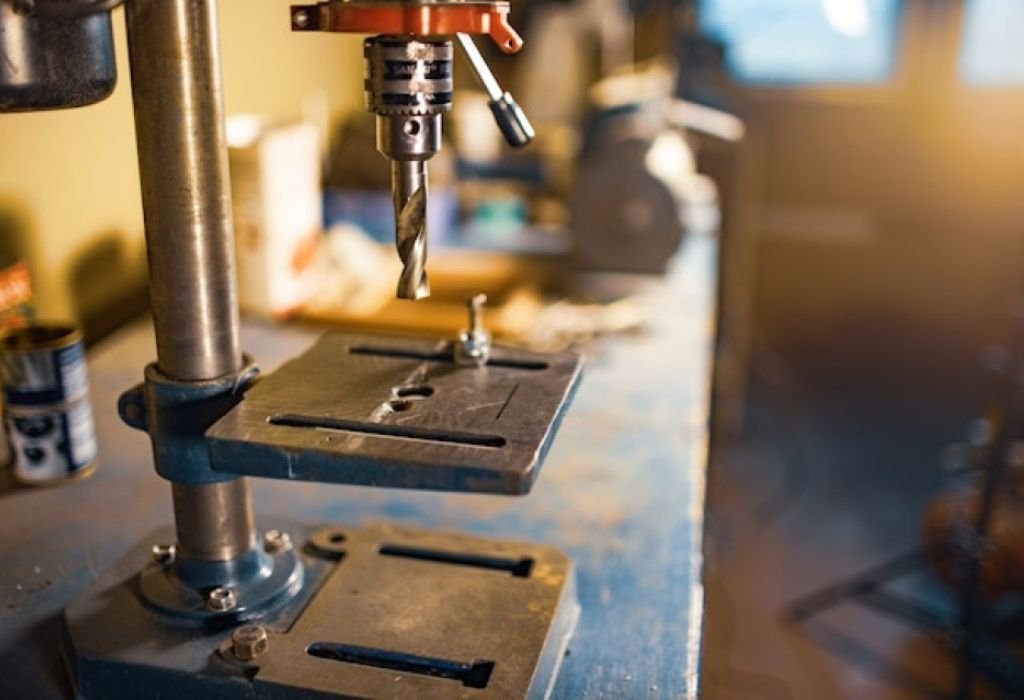
Throat capacity determines the maximum size of a workpiece you can drill without interference. A machine with too small a throat makes it impossible to reach the center of larger materials.
This specification directly influences versatility, convenience, and safety. It defines how effectively you can position workpieces for precise drilling, especially in metalworking or large-panel woodworking projects.
What happens if the throat capacity is too small?
The workpiece may hit the column, preventing proper hole alignment.
Is bigger always better for throat capacity?
Not always — larger throat capacity may reduce stiffness and introduce vibration.
How does throat capacity affect versatility?
A larger throat allows drilling farther from the edge, giving more flexibility for complex layouts.
Can small throat presses handle big workpieces?
Only with repositioning or jigs, which often reduce precision.
Why do professionals value this measurement?
Because it defines the limits of what the machine can realistically handle.
Standard Ranges and Typical Values
Drill press throat capacity varies across designs, from small benchtop units to industrial machines. Understanding typical ranges helps you select the right press for your tasks.
Benchtop drill presses usually feature throats between 3 to 8 inches, ideal for light-duty or compact setups. Floor models often range between 10 to 20 inches, while radial drill presses can exceed 30 inches for heavy industrial use. (source)
What is a common throat size for hobby drill presses?
Around 5 to 8 inches, offering enough clearance for small panels and frames.
What throat range suits professional workshops?
Typically 10 to 16 inches for better reach and flexibility.
What about heavy-duty applications?
Industrial machines may feature 20–30 inches of throat capacity or more.
How is throat capacity related to swing size?
Swing equals double the throat measurement, often used in product names.
Do compact presses sacrifice performance?
Not necessarily — small presses can maintain excellent precision for fine work.
How to Measure Throat Capacity
Measuring the throat capacity of a drill press is straightforward. All you need is a ruler or caliper and an understanding of where to measure.
Measure the horizontal distance from the centerline of the spindle or chuck to the inner edge of the column. This represents the true throat capacity of your machine.
Do manufacturers include this value in specifications?
Yes, usually under the “swing” or “capacity” section of the product sheet.
Can you measure it yourself?
Yes, by aligning a ruler between the spindle’s center and the nearest column point.
Should accessories affect the measurement?
No, remove bits or add-ons before taking readings for accuracy.
What if the head or column is adjustable?
Recheck throat distance after repositioning to ensure accuracy.
Is recalibration needed over time?
Yes, especially after maintenance, cleaning, or heavy vibration use.
Relationship with Other Specifications
Throat capacity interacts closely with other specifications such as quill travel, table size, and motor power. Each factor contributes to how effectively the drill press performs.
A press with deep quill travel but a small throat might handle thick materials but not wide ones. Balance among specifications ensures both reach and stability.
How does throat capacity complement quill travel?
Together they determine maximum hole size and position flexibility.
Does table size matter equally?
Yes, larger tables support bigger workpieces safely under wide throats.
Does more throat capacity reduce rigidity?
Sometimes — increased reach can cause flex without strong design.
How does power rating fit in?
More throat capacity often pairs with higher horsepower to handle heavier loads.
Can a balanced setup improve accuracy?
Yes, matching throat, depth, and rigidity ensures precise drilling every time.
Choosing the Right Throat for Your Projects
Selecting the correct throat capacity depends on project size and material type. The goal is to match your largest expected workpiece while maintaining rigidity.
If your project involves drilling large panels or furniture components, opt for greater throat clearance. Compact setups can rely on smaller, more rigid designs.
How do you calculate ideal throat capacity?
Measure half the width of your largest workpiece, then add an inch or two for clearance.
Is it better to oversize or undersize?
Slightly oversizing is better to ensure flexibility for future tasks.
When is a radial drill preferable?
When projects exceed the limits of fixed-column presses.
Can you extend throat capacity manually?
Adapters or movable tables help but may reduce accuracy.
Does price increase with throat size?
Yes, larger presses cost more due to structural requirements.
Trade-offs and Limitations
Every added inch of throat capacity brings trade-offs in weight, cost, and rigidity. Bigger isn’t always better if it reduces precision or consumes too much workspace.
A common misconception is assuming a “16-inch drill press” can drill a 16-inch deep hole. In reality, that number only represents swing, not drilling depth or reach.
What is the biggest misunderstanding among buyers?
Confusing swing with depth or throat measurements.
Does large throat capacity affect alignment?
It can, especially if the frame or table flexes under heavy pressure.
Can vibration increase at greater reaches?
Yes, long overhangs often lead to resonance and chatter.
How can you maintain stability?
Secure the base properly and ensure even weight distribution.
Is throat capacity adjustable?
Only in radial or sliding-head designs that allow column repositioning.
Practical Examples and Use Cases
Real-world examples show how important throat capacity is in everyday operations. From furniture making to metal fabrication, the right spacing defines success.
A 7-inch throat can easily handle drilling to the center of a 14-inch board, perfect for shelves or panels. Industrial shops, on the other hand, use 20-inch throats for large steel plates or mechanical housings.
Can a small throat press build cabinets?
Yes, if components fit within reach, though re-clamping may be required.
What throat suits metalworking?
At least 10 inches to handle medium-to-large plates.
How do furniture makers choose?
They prefer wider throats for large tabletops and leg assemblies.
Can jigs help extend capacity?
They can reposition workpieces, but accuracy can drop.
Are radial drills common in factories?
Yes, they provide unmatched reach for large-scale industrial drilling.
Installation, Adjustment, and Calibration
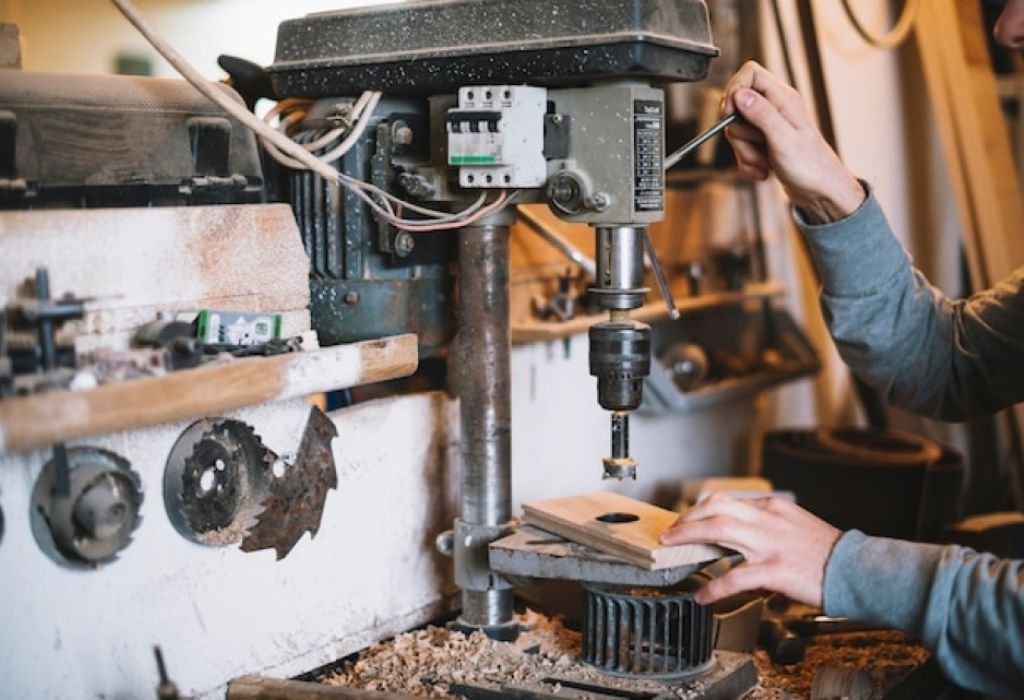
Proper installation ensures full use of the machine’s throat capacity. Even minor misalignment can reduce usable clearance and accuracy.
Check the distance between the chuck center and column edge during setup. Periodic recalibration maintains true throat spacing for precision drilling.
What tools are needed for setup?
A machinist’s square, dial indicator, and feeler gauge for alignment.
How often should calibration occur?
Every few months or after heavy use.
Does table tilt affect throat measurement?
Slightly — recheck after adjusting angles.
Should column mounts be inspected?
Yes, loose mounts cause vibration and accuracy loss.
Can throat alignment improve safety?
Absolutely — it prevents collisions and ensures consistent results.
Future Trends and Innovations
Modern drill press design continues to evolve toward more flexible throat systems. Variable throat and adjustable column models are becoming increasingly common.
Automation and smart calibration may soon optimize throat utilization by adapting the spindle position dynamically. Industrial CNC presses already integrate sensors to monitor rigidity and precision in real time.
Are variable-throat presses available today?
Some CNC and hybrid models already offer adjustable columns.
Will sensors improve throat accuracy?
Yes, they detect flex and automatically compensate for deflection.
Are compact designs becoming smarter?
Manufacturers now create benchtop presses with high accuracy and digital readouts.
Could additive manufacturing affect design?
Custom lightweight structures may soon balance rigidity with reach.
Will radial systems remain popular?
Yes, they offer unmatched versatility for industrial applications.
Conclusion
The throat capacity of a drill press defines more than just machine size — it defines the boundaries of what you can create. It determines how far you can drill from the edge, how large a workpiece you can handle, and how efficient your workflow becomes.
By understanding this specification, you make smarter choices when selecting or upgrading your equipment. Always check swing, throat, and stability before purchase, ensuring your next project fits perfectly within your machine’s limits.

I’m John F. Nicholas, the founder, lead writer, and drill enthusiast behind 101drill.com. With years of hands-on experience in power tools and DIY projects, I created this platform to share practical knowledge, expert tips, and real-world insights to help others master the art of drilling.