
The first time someone picks up a manual drill, there is a quiet moment of curiosity before the tool even touches the wood. No motor sound, no vibration from electricity, only the steady resistance of solid material waiting to be shaped.
For generations, craftsmen relied entirely on hand-powered drilling tools to build furniture, homes, and everyday objects with remarkable precision. Even today, these tools continue to earn respect for their control, simplicity, and reliability.
Among manual drilling tools, the hand drill and the brace drill stand as two timeless classics. At a quick glance, both appear to serve the same purpose, drilling holes without electricity.
Yet in actual use, they feel completely different in the hand, behave differently under pressure, and excel at very different types of work.
Many beginners assume one is just an older version of the other, but that assumption leads to poor tool choice and frustrating results.
This deep comparison explains how hand drills and brace drills truly differ in power, control, material handling, speed, comfort, safety, and real-world applications.
By the end, you will clearly know which tool fits your personal projects, whether you are working on light DIY repairs or heavy woodworking tasks.
What Is a Hand Drill and How It Works
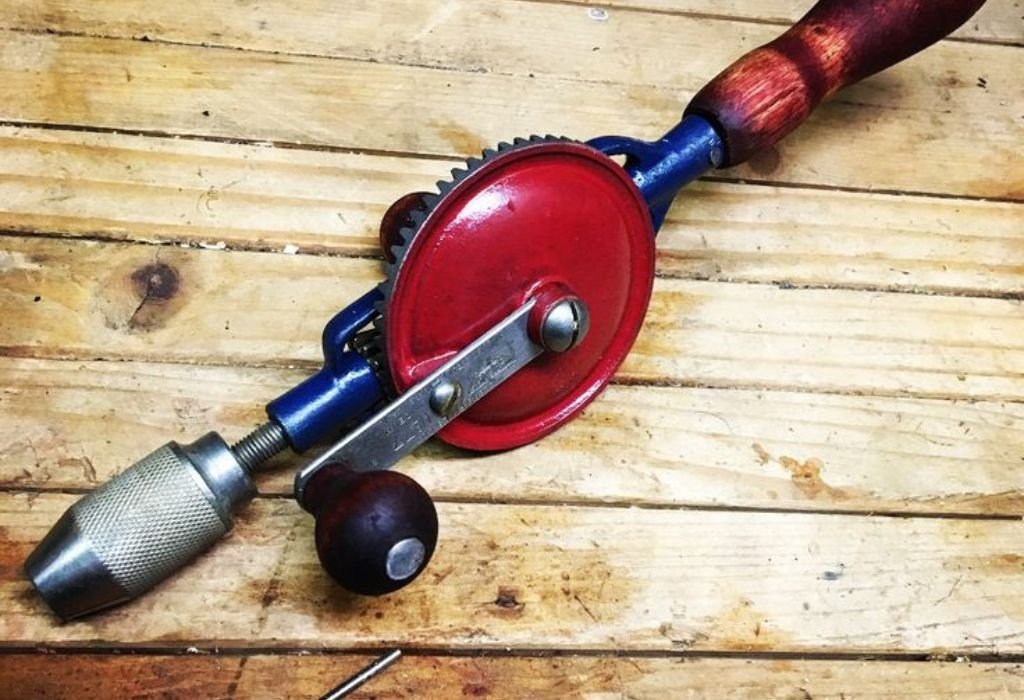
A hand drill is a lightweight, manual drilling tool that uses a rotating gear system controlled by a side crank handle. As the user turns the crank, gears inside the drill translate that motion into continuous rotation at the chuck.
The chuck holds the drill bit securely and spins at a faster speed than the handle itself. This speed multiplication allows the tool to drill efficiently with relatively low physical effort.
Most hand drills are designed for light to medium-duty work. They excel at drilling small holes in wood, plastic, thin metal, and soft composite materials.
Because the rotation is smooth and continuous, hand drills produce clean entry holes with less splintering than many power tools. This makes them excellent for precision work.
One of the biggest strengths of a hand drill is control. Since the user directly controls rotational speed using their hand, the drill responds instantly to pressure changes.
This prevents overheating of small bits and reduces the chance of bit breakage. Beginners also appreciate how predictable the tool feels.
Hand drills are lightweight and compact. They fit easily into small toolboxes and can be used in tight spaces where large tools struggle. Because they rely only on hand power, they work anywhere without electricity.
Despite their simplicity, hand drills remain extremely useful for fine woodworking, model making, furniture repair, and careful drilling where accuracy matters more than brute force.
What Is a Brace Drill and How It Works
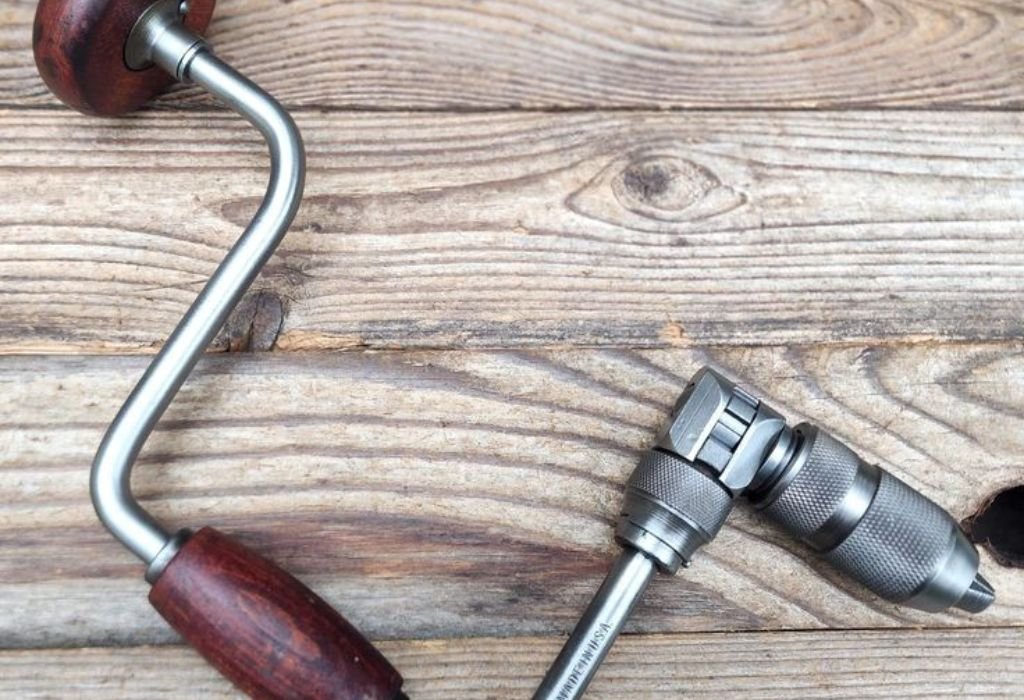
A brace drill, often simply called a brace, is a heavy-duty manual drilling tool built for maximum torque rather than speed. It consists of a large U-shaped or crank-shaped frame with a rotating handle on one side and a pressure pad or head on top.
The user applies downward pressure through the top while rotating the tool with the side handle. This design creates enormous mechanical leverage.
Unlike a hand drill, the brace drill does not use internal gear multiplication for speed. Instead, it relies on leverage and body weight to generate cutting force.
This allows it to drive very large drill bits through thick lumber with surprisingly little strain on the arms. The slower rotation also gives the user excellent control over cutting depth.
Brace drills are most commonly paired with auger bits. These bits have screw tips that pull themselves into the wood as the brace turns.
This combination allows for deep, wide holes that would overwhelm most small hand drills. Woodworkers often use brace drills for timber framing, log construction, and heavy structural work.
One defining feature of a brace is the top pressure pad. This allows the user to lean their body weight directly into the drilling process. This makes it possible to cut through dense hardwood without excessive arm fatigue.
Brace drills are slower than hand drills, but their power is unmatched among purely manual drilling tools. They are built for strength, not speed.
Power and Torque Differences Between Hand Drill and Brace Drill
The most important mechanical difference between a hand drill and a brace drill is how they generate cutting force.
A hand drill produces moderate torque through gear multiplication and faster rotational speed. This makes it ideal for light drilling where speed helps slice cleanly through thin materials.
A brace drill, on the other hand, generates extremely high torque through body leverage. Instead of relying on speed, it relies on rotational force.
This allows it to turn very large bits slowly but with tremendous cutting strength. Thick hardwood that would stall a hand drill can often be drilled smoothly with a brace.
In practical terms, torque determines how large a hole the tool can drill. Hand drills perform best with small to medium bits.
Once bit diameter increases significantly, resistance also increases, and the hand drill quickly reaches its physical limit. The user must work much harder to keep the bit turning.
Brace drills thrive under heavy resistance. The longer crank arm gives the user mechanical advantage. Even when the bit bites aggressively into dense wood, the brace continues turning smoothly without sudden stops.
This torque advantage makes brace drills ideal for large-diameter holes, while hand drills remain better suited for precision drilling and lighter materials.
Speed and Drilling Efficiency Comparison
Hand drills are significantly faster than brace drills in terms of rotational speed. The internal gear system allows the chuck to spin several times for each full turn of the handle.
This means material is removed quickly, and holes are formed at a faster pace, especially in softwood and thin materials.
This speed makes hand drills efficient for tasks that require many small holes. Furniture assembly, pilot holes, and hardware installation benefit greatly from faster rotation. Drilling dozens of small holes with a brace would be unnecessarily slow and physically tiring.
Brace drills work at a much slower pace. Because they rely on leverage instead of speed, each full rotation removes a controlled amount of material. This slower pace is actually beneficial for large holes, as it prevents overheating and gives greater control over cutting depth.
When drilling very deep holes, the slower rotation of a brace helps clear wood chips more consistently. The auger bit pulls debris upward as it turns, keeping the hole clean without clogging.
In short, hand drills win on speed for small jobs, while brace drills trade speed for controlled power and deep cutting capability.
Accuracy and Control in Real Drilling Work
Accuracy depends on how well the user can regulate speed, pressure, and direction during drilling. Hand drills offer exceptional control for small, precise holes.
Since the bit rotates smoothly and quickly, the user can start holes gently and stabilize alignment almost immediately.
The compact size of a hand drill also helps with visual alignment. The user can easily see the drilling point and keep the bit perpendicular to the surface. This makes hand drills very popular for cabinetry, light metalwork, and hardware installation where exact positioning matters.
Brace drills offer a different form of control. Because they rotate slowly, the user can feel every fiber of the wood as the bit cuts. This tactile feedback makes it easier to adjust pressure instantly if the bit starts to wander. The top pressure pad also helps maintain vertical alignment.
However, brace drills are physically larger and harder to maneuver in tight areas. Maintaining perfect alignment in confined spaces is more difficult compared to compact hand drills.
For fine accuracy on small holes, hand drills usually perform better. For precise control of deep, large holes, brace drills provide unmatched feedback and stability.
Comfort and User Fatigue Comparison
Comfort plays a major role when working with manual drilling tools for extended periods. Hand drills are lightweight and require less upper-body strength to operate.
Because the cranking motion is small and controlled, hand fatigue builds slowly, making them ideal for repetitive light drilling tasks. Users can comfortably drill many small holes without excessive strain.
Brace drills place more physical demand on the body because they rely on leverage and body pressure. The user must apply steady downward force while rotating the crank.
This requires engagement from the shoulders, arms, and upper back. While this effort produces powerful results, it becomes tiring during long sessions.
However, brace drills distribute force more evenly across the body. Instead of relying only on wrist motion, the user uses full arm rotation and upper-body weight. This can actually reduce wrist strain compared to a hand drill when drilling large holes.
In tight workspaces, hand drills offer greater comfort because they require less clearance to operate. Brace drills need wide rotational space for the crank sweep.
For light repeated drilling, hand drills are more comfortable. For heavy drilling where power is required, brace drills offer better force distribution but with higher overall fatigue.
Safety Differences Between Hand Drill and Brace Drill
Manual drills are generally safer than power drills, but both hand drills and brace drills still carry risks. Hand drills rotate faster, which increases the risk of small-bit breakage. If a bit snaps, sharp fragments can fly unexpectedly. However, because torque is limited, kickback is minimal.
Brace drills generate large amounts of torque. If a large auger bit binds suddenly in dense wood, the entire tool can jerk violently. This can cause wrist, shoulder, or arm injuries if the user is not positioned correctly.
Hand drill injuries usually involve pinched fingers near the chuck or slippage on metal surfaces. These injuries are typically minor when proper grip is used.
Brace drill injuries tend to be more serious due to torque force. If the user’s hand is caught in the crank path during a bind, it can lead to sprains or fractures.
Eye protection is important with both tools, especially when drilling hardwood or metal where debris can eject.
For beginners, hand drills are safer and easier to control. Brace drills demand respect for torque and proper stance to avoid injury.
Material Compatibility and Versatility
Hand drills work best on softwood, plywood, plastic, aluminum, brass, and thin steel sheets. Their faster speed allows clean cuts with small-diameter bits. They are also excellent for pilot holes and precision drilling tasks.
Brace drills excel in solid hardwood, thick lumber, logs, and timber framing. Their torque allows them to power large auger bits through material that would stop most hand drills instantly.
Hand drills struggle in large diameters because of resistance. As bit size increases, friction quickly exceeds comfortable human output.
Brace drills are not suitable for thin metal drilling because their slow speed and aggressive torque can distort soft metal. They are built for wood, not metal fabrication.
For mixed-material work, hand drills are more versatile. For serious woodworking involving thick stock, brace drills are unmatched.
Skill Level and Learning Curve
Hand drills are easy to learn. Most beginners can operate one smoothly within minutes. The motion feels natural, similar to turning a screwdriver. Speed control is intuitive because it directly follows hand movement.
Brace drills require more practice. Coordinating downward pressure with smooth rotation takes time to master. Beginners often apply uneven pressure, causing bit wander or sudden binding.
Auger bits used with brace drills also behave differently than twist bits. The self-feeding screw tip pulls aggressively into the wood, which surprises many first-time users.
Hand drill users develop fine motor control skills. Brace drill users develop leverage control and body positioning skills.
For beginners and casual DIY users, hand drills are far easier to pick up. Brace drills reward experience with tremendous cutting power.
Professional vs DIY Use Cases
Hand drills are common in hobby workshops, home repair kits, carpentry benches, and fine woodworking shops. They serve tasks where precision matters more than brute force. Many professionals still keep a hand drill for delicate work even when surrounded by power tools.
Brace drills are more commonly seen in traditional woodworking, timber framing, log construction, and historical restoration. Professionals working with heavy wood stock favor brace drills for deep, wide holes.
For average DIY users, hand drills are far more practical. They require little space, minimal physical strength, and work well on common household materials.
Brace drills are specialist tools. They shine in specific environments but are not everyday tools for most homeowners.
Maintenance and Longevity
Hand drills require minimal maintenance. Occasional lubrication of gears and cleaning of the chuck keeps them operating smoothly for decades. Because they contain few moving parts, failure rates are low.
Brace drills are even simpler mechanically. They consist mainly of rotating joints and a pressure head. As long as rust is prevented and the bearings are lightly lubricated, a brace can last a lifetime.
Auger bits used with brace drills require periodic sharpening. Hand drill bits also require sharpening but are easier to replace cheaply.
Both tools outperform power drills in one area: long-term durability without dependence on electricity, batteries, or motors.
Hand Drill and Brace Drill Common Questions
What is the main difference between a hand drill and a brace drill?
The main difference is that hand drills focus on speed and precision, while brace drills focus on torque and power.
Which is better for woodworking, hand drill or brace drill?
Both are good for woodworking, but brace drills are better for large holes in thick wood, and hand drills are better for small precise holes.
Can a brace drill be used on metal?
Brace drills are not ideal for metal because they rotate slowly and produce too much torque for thin metal sheets.
Is a hand drill easier for beginners?
Yes, hand drills are easier to learn and safer for most beginners.
Which tool produces more torque?
The brace drill produces significantly more torque than a hand drill.
Are hand drills accurate?
Yes, hand drills offer excellent control and accuracy for small drilling tasks.
Do brace drills require special bits?
Yes, brace drills commonly use auger bits designed for deep wood drilling.
Which tool is safer to use?
Hand drills are generally safer due to lower torque and less kickback.
Can I replace my power drill with a hand drill?
For light tasks, yes. For heavy drilling, no.
Which lasts longer, hand drill or brace drill?
Both can last decades with proper maintenance because they have no motors or batteries.
Conclusion
The hand drill and the brace drill represent two very different approaches to manual drilling. The hand drill focuses on speed, finesse, and compact control, making it ideal for precision woodworking, light metal tasks, and everyday DIY projects. Its smooth gear-driven rotation offers excellent accuracy with minimal physical effort.
The brace drill, in contrast, is built for raw mechanical power. Through leverage and body pressure, it delivers enormous torque capable of driving large auger bits through dense hardwood and heavy structural timber. It sacrifices speed for unmatched cutting strength and tactile feedback.
Neither tool is better in all situations. The correct choice depends purely on the type of work being performed. For small, frequent, precision holes, the hand drill is superior. For large, deep, high-resistance holes in wood, the brace drill reigns supreme.
Understanding these differences allows woodworkers and DIY users to select the right tool with confidence. When matched correctly to the job, both tools remain timeless, powerful, and deeply satisfying to use.

I’m John F. Nicholas, the founder, lead writer, and drill enthusiast behind 101drill.com. With years of hands-on experience in power tools and DIY projects, I created this platform to share practical knowledge, expert tips, and real-world insights to help others master the art of drilling.