
Every craftsman—from the hobbyist in a small garage to the machinist in a busy workshop—eventually realizes one truth: precision begins with the right tool size. A drill press may look simple, but its size determines more than just how large it appears on your bench. It decides how deep, how far, and how accurately you can drill into any material.
Most people believe “bigger means stronger,” yet when it comes to drill presses, the measurement system tells a deeper story. The size doesn’t describe the height or weight—it measures capacity, or how far the bit can reach toward the center of your workpiece.
Imagine trying to drill a hole in the middle of a 12-inch board using a 10-inch drill press. You’d quickly discover the bit can’t reach the center, no matter how hard you try. That’s why understanding how is drill press size determined is so critical before buying or using one.
According to Wood Magazine, nearly 60% of users select the wrong drill press size for their projects, leading to misaligned holes, vibration, or even tool damage. Likewise, Machinery Lubrication notes that incorrect spindle or swing selection increases bearing wear by up to 40%.
What Does Drill Press Size Mean?
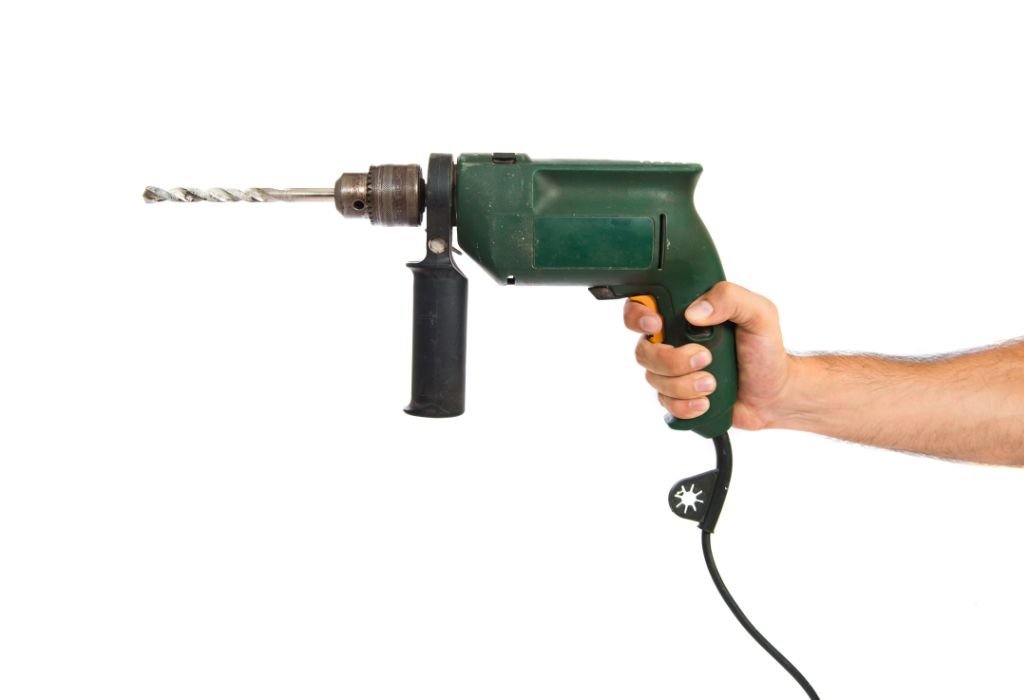
Drill press size refers to the maximum distance from the spindle’s center to the column, multiplied by two. This measurement determines how far the bit can reach the center of a workpiece before the column blocks it.
For example, if the distance from the spindle to the column is 7.5 inches, it’s called a 15-inch drill press. That doesn’t mean the machine stands 15 inches tall—it describes the “swing”, or total drilling reach.
In other words, the size tells you the largest circle of drilling capacity the machine can handle. Larger drill presses can drill deeper into the center of wide boards or metal sheets, while smaller benchtop models are ideal for compact spaces and lighter tasks.
What does the “inch size” really mean?
It’s double the distance from the spindle’s center to the supporting column—called the swing.
Why do drill presses use swing size instead of height?
Because the swing directly determines how far into a workpiece you can drill from the edge.
Does a 15-inch press mean it drills 15 inches deep?
No, it refers to the diameter capacity, not drilling depth.
What’s a good example?
A 10-inch press has 5 inches of space between spindle and column—meaning you can drill to the center of a 10-inch board.
Why is this important?
Knowing this prevents buying a drill press too small for your workpieces.
How Is Drill Press Size Determined?
The size of a drill press is determined by measuring the distance from the spindle center to the column and then doubling that measurement. This gives the swing, or the maximum diameter of material the drill can reach the center of.
For example, if that spindle-to-column distance is 8 inches, the press is rated as a 16-inch model. It’s a universal sizing system across brands like Jet, WEN, and Delta.
This measurement helps users understand the machine’s working envelope—how much horizontal space it provides under the spindle. The larger the swing, the larger the boards, plates, or parts you can handle without repositioning.
How is drill press size measured accurately?
Measure from the spindle’s center line to the nearest point on the column and double it.
Why is it doubled?
Because it represents the total distance across the full width of a potential workpiece.
Who standardized this system?
It’s an industry-wide convention used by all major drill press manufacturers.
Can two presses with the same size have different capacities?
Yes, because table height, motor power, and throat clearance also matter.
Does size affect precision?
Larger presses generally have heavier frames and less vibration, leading to more accuracy.
Understanding Swing, Throat Depth, and Drilling Capacity
To truly grasp how drill press size is determined, you must understand related measurements like swing, throat depth, and drilling depth capacity. These three terms define how the drill press performs.
Swing = the maximum diameter of work the drill can handle.
Throat depth = the horizontal distance from the spindle to the column.
Drilling depth = how far the quill can move downward in one stroke.
While swing determines the maximum size of your workpiece, throat depth influences accessibility, and drilling depth defines how deep a hole you can make in one motion.
What is throat depth?
It’s the same as half the swing—the space between spindle and column.
How is drilling depth related?
It depends on the quill travel distance, not the machine’s swing.
Why do these measurements matter together?
They determine both the size and depth capacity of your drill press.
Is swing the only factor to compare machines?
No, spindle travel and table adjustment are equally important.
Can small models have good depth capacity?
Yes, some benchtop presses offer up to 3–4 inches of spindle travel.
Benchtop vs Floor Drill Press: Does Size Affect Power?
Drill press size isn’t just about how far it can reach—it also impacts power and stability. Benchtop drill presses are compact, ideal for small workshops and light tasks. They typically range from 8 to 12 inches in size.
Floor-standing models range from 14 to 20 inches or more and are built for heavy-duty drilling in thick materials. Their larger swing allows wider workpieces and higher torque motors for deeper, smoother cuts.
However, bigger isn’t always better. A 20-inch drill press is powerful but may be overkill for small woodworking or DIY projects. Matching size to your needs ensures efficiency and safety.
What’s the smallest drill press size available?
Most start at around 8 inches for hobby use.
What size do professionals use?
Commercial shops often use 15–17 inch models for versatility.
Do larger presses always have more power?
Generally yes, though motor efficiency also plays a role.
Is a benchtop press accurate?
Yes, as long as it’s well-built and properly aligned.
Which is better for beginners?
A 10 or 12-inch benchtop drill press offers the best balance of control and capacity.
Why Drill Press Size Affects Accuracy and Performance
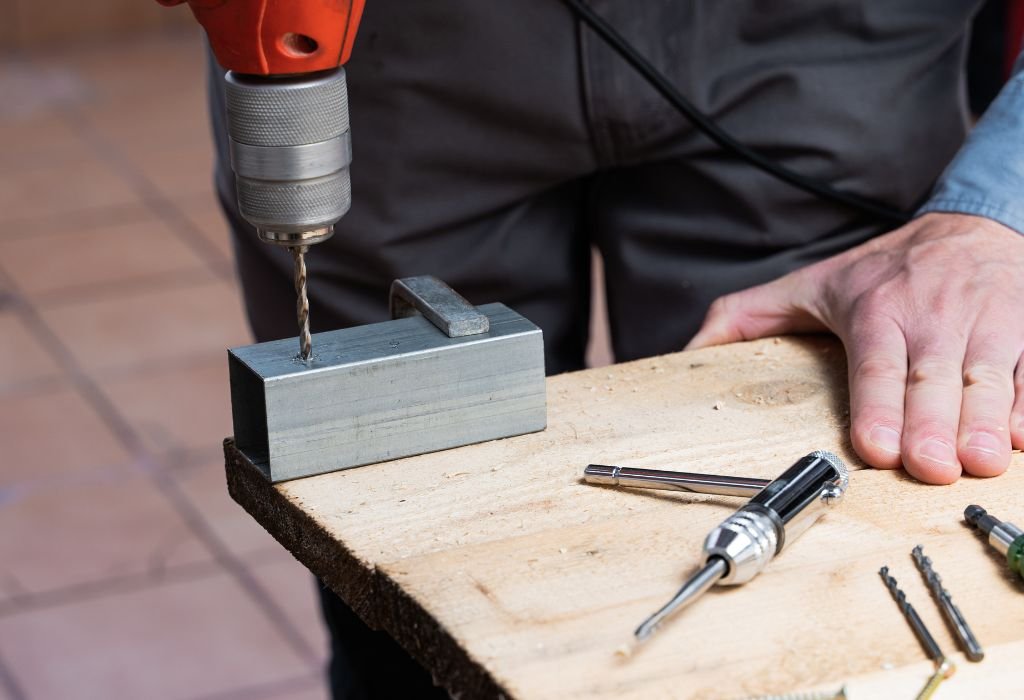
The size of a drill press directly influences how stable and accurate it can be. Larger machines have heavier bases, longer columns, and wider tables, reducing vibration and deflection. This is crucial for metalworking or repetitive drilling.
Smaller presses, while more portable, can flex slightly under load. For precision work—like drilling deep holes in steel or repetitive dowel joints—a heavier, larger swing machine maintains perfect alignment between the spindle and table.
Does weight improve accuracy?
Yes, heavier frames reduce vibration and improve hole alignment.
Does size affect torque?
Larger presses can accommodate stronger motors, increasing torque output.
What about spindle run-out?
Bigger, well-supported spindles experience less run-out, improving consistency.
Can smaller models still be accurate?
Yes, if maintained well and operated at proper speeds.
Why do industrial models weigh so much?
Weight adds rigidity, which directly improves drilling precision.
Choosing the Right Drill Press Size for Your Projects
Selecting the right drill press size depends on what materials and projects you typically handle. A 10-inch drill press is ideal for most home workshops, while 14–17 inch presses are perfect for professional furniture or metal fabrication.
If you often drill through large panels or wide metal plates, consider a 15-inch or larger floor model. But if your space is limited, a 10–12 inch benchtop press can handle most tasks efficiently.
How to decide the right size?
Measure your largest workpieces—your press swing should exceed half their width.
Is bigger always better?
No, too large a press wastes space and power for small jobs.
Can I upgrade later?
Yes, start small and upgrade as your project demands grow.
What’s the most common size?
The 15-inch model is the standard choice for balanced capacity and stability.
Does motor HP matter with size?
Yes, choose at least ½ HP for 10–12 inch presses, and ¾ HP or more for larger ones.
Other Factors That Influence Drill Press Capacity
Beyond swing size, several features affect how much your drill press can handle: spindle travel, table adjustability, motor power, and column diameter.
A larger column offers better rigidity. Adjustable tables allow precise height positioning. More spindle travel means you can drill deeper without resetting your piece. Together, these determine the machine’s real-world usability.
Why is spindle travel important?
It defines how deep a hole you can drill in one stroke.
How does column diameter affect stability?
Thicker columns reduce deflection and vibration.
What’s the ideal spindle travel range?
At least 3 inches for woodworking and 4–5 inches for metalwork.
Does the table size matter?
Yes, a larger table provides better support for big workpieces.
How do motor specs affect performance?
Higher horsepower handles tougher materials with ease and maintains speed under load.
Maintenance and Longevity: Keeping Your Drill Accurate
Proper maintenance ensures that your drill press maintains its accuracy and capacity over time. Dust, vibration, and misalignment can degrade even the most precise machines.
Clean the column and table regularly, lubricate moving parts, and check for play in the spindle bearings. If you notice wobble during drilling, inspect for loosened bolts or worn pulleys.
How often should maintenance be done?
A light cleaning after every session and deep service every 6 months.
Do bearings need lubrication?
Yes, using light machine oil extends their lifespan and prevents heat buildup.
Why does table alignment matter?
A tilted table causes angled holes and uneven drilling.
What’s a sign your press needs service?
Unusual noise, vibration, or inconsistent hole depth.
Can proper care improve accuracy?
Absolutely—routine maintenance keeps alignment true and performance consistent.
Practical Tips to Get the Most from Your Drill Press
Maximizing performance starts with using your drill press correctly and understanding how size interacts with project types.
Use sharp bits and appropriate speeds for every material. Keep the table square and clamp workpieces securely. For wide panels, use auxiliary supports to prevent sagging. For metal, always apply cutting oil to reduce friction and heat.
What’s the best way to check alignment?
Use a square or dial indicator between the spindle and table surface.
Should you bolt the press to the floor or bench?
Yes, securing it reduces vibration and improves accuracy.
How to avoid overheating the motor?
Use appropriate feed rates and let the motor rest after long sessions.
Can lighting improve drilling accuracy?
Yes, proper illumination helps align holes and maintain focus on markings.
What’s a common beginner mistake?
Using too high RPMs on thick materials, which dulls bits quickly.
Future Trends in Drill Press Design and Sizing
Modern drill presses are becoming more versatile with smart controls and compact engineering. Some models now feature digital RPM displays, laser alignment, and brushless motors that automatically adjust torque.
Manufacturers are also designing smaller presses with the power of traditional floor models, optimizing performance for small workshops without sacrificing strength.
Are digital speed controls reliable?
Yes, they provide precise and repeatable speed adjustments for various materials.
Will drill press sizes get smaller in the future?
Possibly—compact, high-torque systems are improving each year.
Are brushless motors better?
They run cooler, quieter, and last longer than brushed motors.
Do lasers improve accuracy?
Laser guides mark drilling points clearly for quick, mistake-free alignment.
Will automation play a role?
Yes, industrial presses already use sensors to maintain perfect spindle depth and speed.
Conclusion
Understanding how is drill press size determined transforms how you approach drilling, design, and precision work. Size defines more than aesthetics—it defines capacity, reach, and control.
The distance from the spindle to the column (doubled as swing) tells you exactly how wide your material can be before the machine limits access to the center.
Choosing the right size isn’t about guessing; it’s about balancing reach, power, and workspace. A 10-inch press suits everyday tasks, a 15-inch offers professional balance, and a 17-inch or larger model powers through industrial jobs.
Beyond swing size, remember that stability, spindle travel, and maintenance all affect performance. Clean, lubricate, and calibrate regularly to preserve accuracy for years.
As drilling technology advances, variable speeds, brushless motors, and smart diagnostics make precision easier than ever—but the fundamental rule remains the same: know your drill press size before you drill.

I’m John F. Nicholas, the founder, lead writer, and drill enthusiast behind 101drill.com. With years of hands-on experience in power tools and DIY projects, I created this platform to share practical knowledge, expert tips, and real-world insights to help others master the art of drilling.