
Many buyers are surprised to find that the machine doesn’t handle a 12-inch-tall workpiece at all.
The size of a drill press isn’t about height or bit length. It’s about swing, the term manufacturers use to define how wide a piece of material the drill can reach. According to Zoro Tools, fewer than half of first-time users understand this specification correctly.
That confusion leads to wasted money and poor workspace planning. A drill press that’s too small can’t reach the center of your workpiece, while one that’s too large wastes valuable bench space.
Knowing how to measure a drill press ensures you select the right model for your needs. The key measurements — swing, throat capacity, spindle travel, and table clearance — determine how efficiently you can work.
This guide explains each measurement in detail, shows how to measure your own machine, and reveals the common mistakes that cause sizing problems. By the end, you’ll understand exactly what those “12-inch” or “16-inch” labels mean and how to read them like a pro.
What Does Size Mean for a Drill Press?
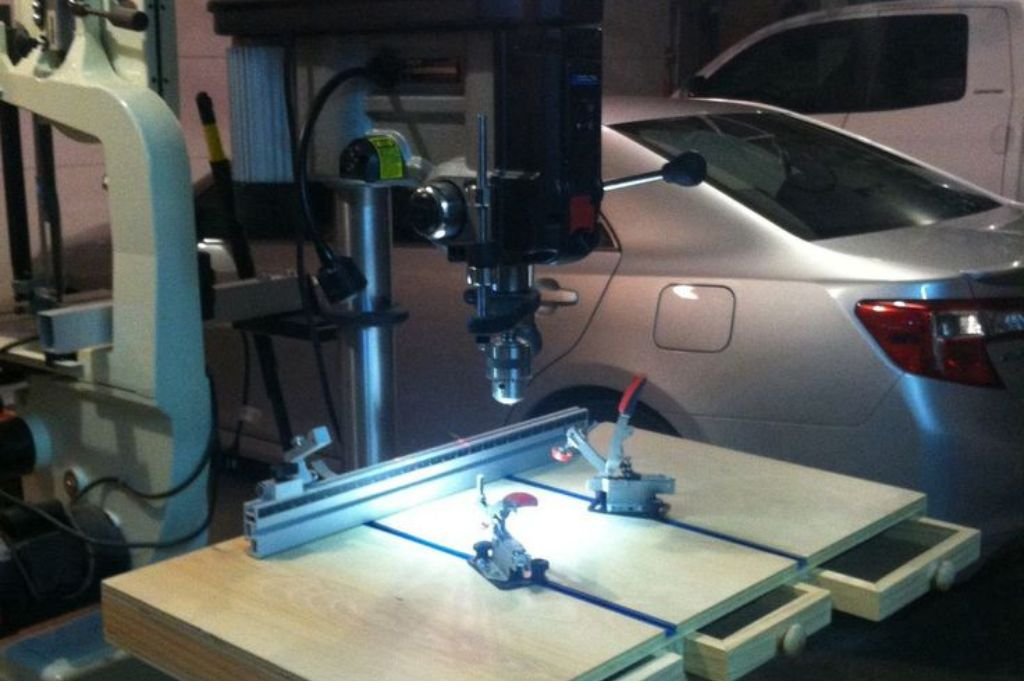
Most tool shoppers assume “size” means overall height, but that’s not how drill presses are classified. The true measurement is the swing, which determines the diameter of the largest circle the drill can reach.
The swing is twice the distance from the center of the spindle to the nearest column. For example, a 12-inch drill press can reach the center of a 12-inch-wide board — not a 12-inch-tall one. This measurement is sometimes called the throat capacity, a term often used interchangeably in technical manuals.
The swing defines your workpiece limit, while the table size, spindle travel, and column height define comfort and precision. Understanding how these dimensions work together helps you avoid misjudging your machine’s capability.
How is swing defined on a drill press?
It’s the distance from the spindle center to the column multiplied by two, representing the maximum diameter the machine can drill.
What does throat capacity mean?
It’s the space between the drill bit and the column — a critical factor for fitting wide materials.
Does a “12-inch drill press” refer to height?
No, it indicates the maximum diameter of the circle that can be drilled to its center, not the height of the tool.
Why does swing matter more than height?
Because it determines whether the bit can reach the center of your workpiece without hitting the column.
What other measurements define a drill press?
Spindle travel, table clearance, and base size all affect real-world usability and comfort.
How to Measure Your Drill Press Step-by-Step
Measuring a drill press is simple once you know what to look for. You’ll need a tape measure, a square, and a straight edge for accurate readings.
Start with swing. Measure the distance from the spindle’s center to the column, then multiply that number by two. The result is your machine’s swing, or its advertised “size.”
Next, check spindle travel, sometimes called quill depth. Lower the quill until the drill bit tip touches the table, zero your measurement, then raise it fully — the distance between start and stop is the quill’s travel.
Then, measure table clearance. Lower or raise the table to the maximum and record the vertical distance from the table surface to the chuck’s bottom. This reveals how tall a workpiece the machine can accommodate.
Finally, note the base footprint — the space the machine occupies — and total height to ensure it fits your workshop setup.
How do you measure swing accurately?
Measure from the spindle center to the column, then double that number for total swing capacity.
How do you find spindle travel?
Lower the quill until the bit touches the table, note the range of movement, and record the vertical distance traveled.
Why measure table clearance?
It determines the maximum height of a workpiece the drill can handle without adjustment.
Should you include the chuck in the measurement?
Yes — include the chuck because it affects both clearance and total drilling depth.
How do you measure overall height?
Measure from the floor (or base) to the highest point when the drill head is fully raised.
Common Mistakes and Why They Matter
Many users misinterpret specifications and end up with a machine that doesn’t fit their work needs. The most common error is assuming that the “size” refers to overall machine height.
Another frequent mistake is ignoring spindle travel, which determines how deep the bit can penetrate. Shallow quill depth limits drilling through thick materials and can force multiple repositionings.
Some users forget to measure table clearance while factoring in clamps or vices. Once accessories are mounted, the available space can drop significantly.
Incorrect measurement can lead to wasted workspace or unsafe setups where large materials don’t fit properly. Knowing these pitfalls helps you avoid them.
What is the biggest measurement mistake?
Assuming the listed “inch” rating represents the total height instead of swing diameter.
Why does ignoring spindle travel cause issues?
Because it restricts drilling depth and can prevent full penetration through thick materials.
How does table clearance affect performance?
Too little clearance means you can’t fit tall workpieces or secure clamps safely.
Why measure the base footprint?
A small base can wobble or tip when drilling large materials, affecting accuracy and safety.
What happens if you buy the wrong size?
You’ll either outgrow the tool quickly or waste space and money on unused capacity.
Matching Drill Press Size to Your Projects
Choosing the right size depends on what you plan to drill. Hobby woodworkers can manage with compact 10- or 12-inch models, while metalworkers or furniture builders often need 15-inch or larger.
For example, a 12-inch swing drill press can reach the center of a 12-inch-wide board. That means you can drill up to 6 inches from the edge of any workpiece. A 16-inch press, by contrast, allows drilling up to 8 inches from the edge — perfect for larger panels.
According to Practical Machinist, understanding this ratio ensures your machine matches the intended job without over-spending.
What size is ideal for most woodworkers?
A 10- to 12-inch swing provides ample reach for small to medium woodworking tasks.
When should you consider a 15-inch or larger model?
When drilling larger panels, metal sheets, or heavy production pieces requiring deep reach.
Does material type influence measurement?
Yes — metal often needs deeper spindle travel and more table clearance than wood.
Can a small drill press handle precise work?
Yes, smaller presses often provide tighter control for small projects and detail drilling.
When is a floor-standing model necessary?
For heavy, wide, or tall workpieces where benchtop models lack clearance.
Future Trends and Buying Considerations
Modern drill presses are evolving beyond simple mechanical setups. Many now include laser alignment, depth-stop readouts, and digital speed indicators.
Knowing how to measure a drill press accurately allows you to evaluate these features with confidence. Manufacturers increasingly publish swing, throat, and quill depth figures — but users still need to verify them physically.
Technology trends also show compact models gaining features once found only in industrial tools. Measuring remains fundamental, because even digital aids can’t compensate for physical clearance errors.
Are digital depth gauges worth it?
Yes, they make repeat drilling consistent, especially when paired with accurate spindle travel measurement.
Does variable speed affect measurement?
Not directly, but it improves drilling efficiency and reduces wear on bits during deep cuts.
Are larger swing models becoming cheaper?
Yes — new benchtop units now offer 15-inch swing at moderate prices.
What specs should buyers always check?
Swing, spindle travel, table clearance, and overall machine height.
Why does measurement knowledge matter long-term?
It ensures your tool supports both current and future projects without replacement.
Practical Example: Measuring a Drill Press in Your Workshop
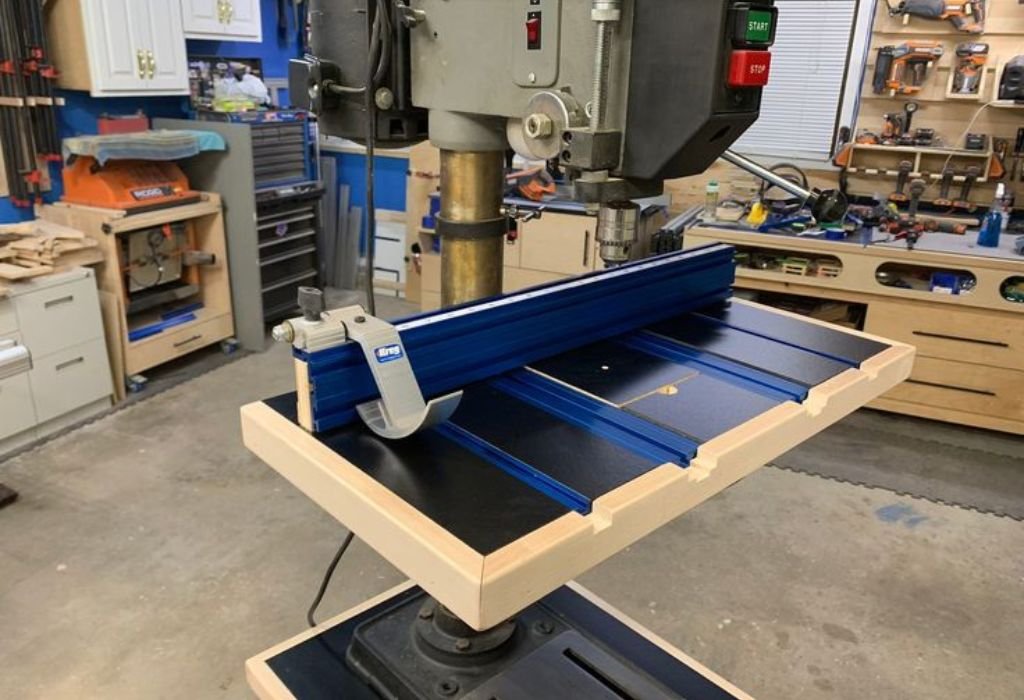
Let’s apply the process with a real-world example. Imagine your bench model is labeled as a “12-inch drill press.”
Measure swing: Measure from the spindle center to the column — suppose it’s 6 inches. Doubling it confirms the swing: 12 inches.
Measure spindle travel: Lower the quill fully and note a 3-inch travel. That’s the maximum drilling depth.
Measure table clearance: From table surface to chuck bottom, record 9 inches at the lowest table setting.
Measure total height: From base to top, note 38 inches — essential for planning shop layout.
Those numbers now describe your machine’s true working limits. If your project needs more clearance or deeper drilling, a 15-inch or floor-standing model may be the better option.
What’s the easiest measurement to overlook?
Spindle travel — it’s critical but often buried in spec sheets.
Can you increase table clearance manually?
Yes, by lowering the table or repositioning the workpiece, though that reduces accuracy.
What does quill depth tell you?
How deep the bit can drill in one continuous pass.
How do you know if your drill press fits your work?
Test the maximum throat reach with a sample workpiece before final setup.
Why is physical measurement better than spec sheet reading?
Because small manufacturing variations or accessories can change usable dimensions.
Conclusion
So, how do you measure a drill press? By understanding the swing, throat capacity, spindle travel, and table clearance — the four key specs that define capability.
A 12-inch drill press doesn’t mean 12 inches of height; it means the spindle can reach the center of a 12-inch-wide workpiece. Knowing that difference saves frustration and money.
Before buying or setting up your machine, grab a tape measure and confirm these dimensions yourself. Accurate measurements ensure your drill press suits your projects perfectly — whether crafting fine furniture or fabricating metal parts.
Smart measurement means smart workshop planning, smoother drilling, and safer operation every time.

I’m John F. Nicholas, the founder, lead writer, and drill enthusiast behind 101drill.com. With years of hands-on experience in power tools and DIY projects, I created this platform to share practical knowledge, expert tips, and real-world insights to help others master the art of drilling.