
Every craftsman knows that precision is the difference between a clean, professional-looking hole and a ruined piece of work. Yet few realize that the secret to such accuracy lies in the spindle — the silent powerhouse hidden inside the drill press head.
When holes come out crooked or bits chatter against metal, it’s often the spindle assembly that’s out of tune. Understanding how it works unlocks smoother drilling, longer bit life, and fewer alignment issues in every project.
According to Machinery Lubrication, nearly 40% of all machine tool breakdowns are caused by bearing failure — a critical spindle component. Similarly, American Machine Tools notes that a properly aligned spindle can reduce drilling deviation by over 30%.
By learning how a drill press spindle works, you gain more than knowledge; you gain control over your tool’s precision. Whether for woodworking, metalwork, or industrial fabrication, mastering this mechanism ensures consistent accuracy for years to come.
What Is the Spindle in a Drill Press?
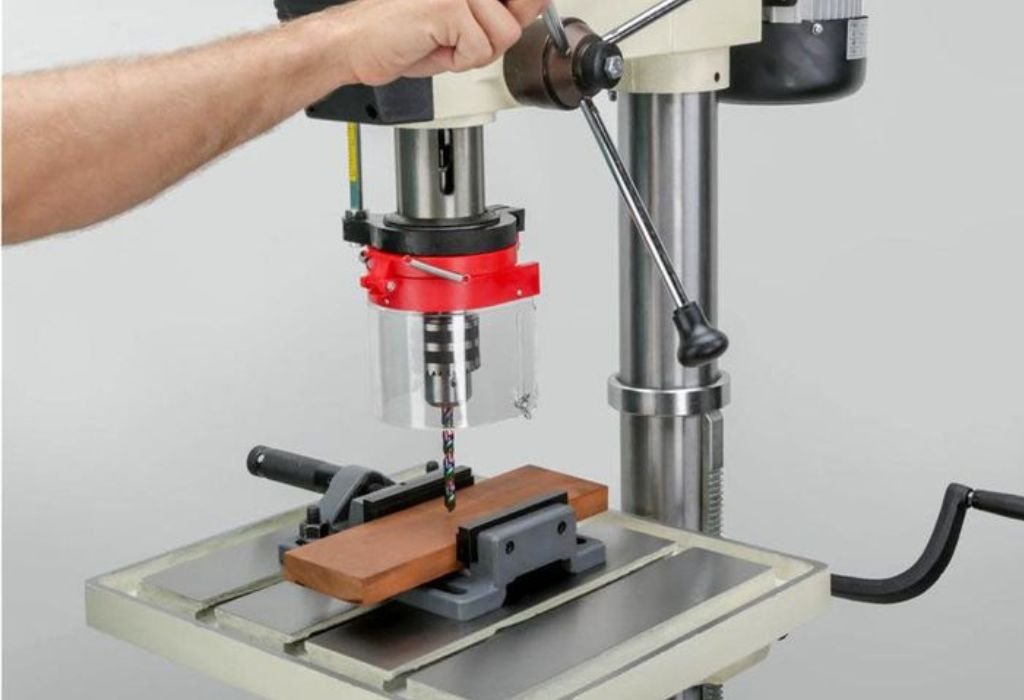
The spindle is the heart of every drill press, responsible for transmitting the motor’s rotational energy directly to the drill bit. It’s a cylindrical steel shaft, housed within a sleeve called the quill, and supported by precision bearings that allow smooth, vibration-free movement.
As the motor turns, the spindle spins inside the quill, transferring torque through the chuck — the component that holds the drill bit. A perfectly balanced spindle keeps the bit steady, preventing wobbles that lead to inaccurate holes.
This combination of stability and rotation makes the spindle one of the most crucial parts of a drill press. Without it, the machine would lose alignment, speed, and power, rendering even high-end equipment useless for precise drilling.
What is a drill press spindle?
It’s the rotating steel shaft that connects the motor to the chuck, converting power into cutting motion.
How is the spindle mounted inside the drill press?
It’s enclosed in the quill sleeve and rides on high-precision bearings that maintain rotational alignment.
Why is the spindle essential for drilling accuracy?
Because even slight misalignment or wobble in the spindle directly affects the straightness and diameter of every hole.
Does the spindle move up and down?
Yes, it moves vertically through the quill when you pull the feed lever, allowing the bit to penetrate the material.
What materials are used to make spindles?
They’re usually made from hardened alloy steel for strength and heat resistance during drilling.
How Does a Drill Press Spindle Work?
A drill press spindle functions as a bridge between the motor and the drill bit, transforming raw motor power into precise rotational motion. When the motor turns, its energy is transmitted through a system of belts, pulleys, or gears to the spindle shaft inside the drill head.
As the user engages the feed lever, the quill — which holds the spindle — slides downward, allowing the bit to cut into the workpiece while maintaining perfect alignment. The bearings surrounding the spindle minimize friction and prevent lateral movement, ensuring each rotation remains true.
This harmony between vertical motion and smooth rotation defines the efficiency of a drill press. Every accurate hole, from delicate wood drilling to dense steel boring, depends on the spindle’s ability to spin consistently without wobble or deflection.
How is power transmitted to the spindle?
The motor drives a pulley or gear system that transfers torque to the spindle shaft (Daily DIY Gadgets).
What is the role of the quill?
It serves as the guide sleeve that allows the spindle to move vertically while keeping its rotation stable (Pressbooks BC Campus).
How does the feed lever move the spindle?
It engages a rack-and-pinion mechanism that translates lever motion into controlled vertical feed (American Machine Tools).
What ensures the spindle’s smooth motion?
High-quality bearings and a rigid spindle shaft prevent vibration and maintain concentricity (OTBOK Info).
Why is spindle speed critical?
Because each material and drill bit size requires a specific RPM to avoid overheating, chatter, and poor surface finish (Testbook).
Key Components of the Drill Press Spindle System
A spindle system works flawlessly only when all its components operate in sync. Each part has a unique role that contributes to stability, rotation, and precision.
The spindle shaft acts as the core power carrier. Bearings mounted around it reduce friction, while the quill sleeve keeps the spindle traveling in a perfectly vertical path. The chuck grips the bit firmly, and the drive mechanism — either belt-driven or gear-driven — controls speed and torque.
Together, these components form the foundation of the drill press’s accuracy. A failure in one part can quickly cause misalignment or vibration in the entire system.
What kind of bearings support the spindle?
Sealed ball or roller bearings that resist wear and maintain smooth rotation (Sharpening Handbook).
What is the spindle nose or taper?
It’s the end of the spindle where the chuck attaches, often featuring a Morse or Jacobs taper for tight fit (Reddit Tools Forum).
How does the drive system affect spindle performance?
Belt drives reduce vibration and are easier to maintain, while gear drives provide superior torque for heavy-duty work (Berkness Company).
What impact does the quill have on spindle accuracy?
A smooth, well-lubricated quill ensures stable vertical motion, preventing side play or chatter (Woodwork Career).
Why is the chuck part of this system?
Because it mounts directly on the spindle and transfers motion to the drill bit — any misalignment here will amplify at the drilling point (LeBlond USA).
Common Problems and How to Diagnose Them
Even the best drill presses can suffer spindle-related issues over time. Recognizing early symptoms helps prevent costly repairs and maintain drilling precision.
Common issues include run-out, where the bit wobbles as it spins; vibration, often caused by imbalance or loose pulleys; and overheating, resulting from friction or over-tight belts. Dust, rust, or debris can also cause the quill to bind, affecting feed smoothness.
If ignored, these small issues can lead to severe misalignment or permanent bearing damage. Proper inspection ensures your spindle remains true and efficient.
What causes spindle run-out?
Bent shafts, worn bearings, or poorly seated tapers are common reasons (Hobby-Machinist Forum).
Why does the spindle vibrate?
Uneven belts, unbalanced bits, or loose components create lateral vibration during rotation.
How can overheating be detected?
By touch or smell — if the head becomes hot or emits a burning odor, friction is too high.
What happens if the quill binds?
Feed becomes jerky, drilling depth inconsistent, and hole quality suffers.
How does spindle misalignment show up in results?
Holes may appear angled, oversized, or rough-edged, indicating run-out or bearing wear.
Studies from Plant Engineering reveal that lubrication problems cause over half of spindle-related failures — highlighting how basic maintenance prevents serious downtime.
How to Maintain and Optimize the Drill Press Spindle
Regular maintenance not only preserves performance but also boosts drilling safety. The spindle system, with its high-speed components, benefits from consistent care and inspection.
Keep the spindle clean from dust, chips, and oil residue. Lubricate the bearings and quill periodically using manufacturer-recommended oil or grease.
Check the belt tension to ensure torque transfer without slippage or strain. Periodically verify run-out using a dial indicator to detect wear early.
Following a preventive routine extends the spindle’s service life, minimizes vibration, and maintains professional-grade accuracy for every project.
How often should spindle bearings be serviced?
Inspect every 300–400 operating hours and re-lubricate as required.
How to check spindle run-out?
Place a dial indicator near the chuck and slowly rotate the spindle by hand to measure deviation.
What belt care is essential?
Ensure proper tension, clean pulleys regularly, and replace cracked or frayed belts.
Why is correct bit installation vital?
Properly seated bits prevent imbalance, reducing side load and bearing wear.
When should the spindle or bearings be replaced?
If noise, heat, or vibration persist despite lubrication, it’s time to install new components.
A Metalworking Insider survey found that proactive spindle maintenance can cut unplanned downtime by 25%, proving that simple care leads to lasting precision.
Future Trends and Upgrades in Spindle Technology
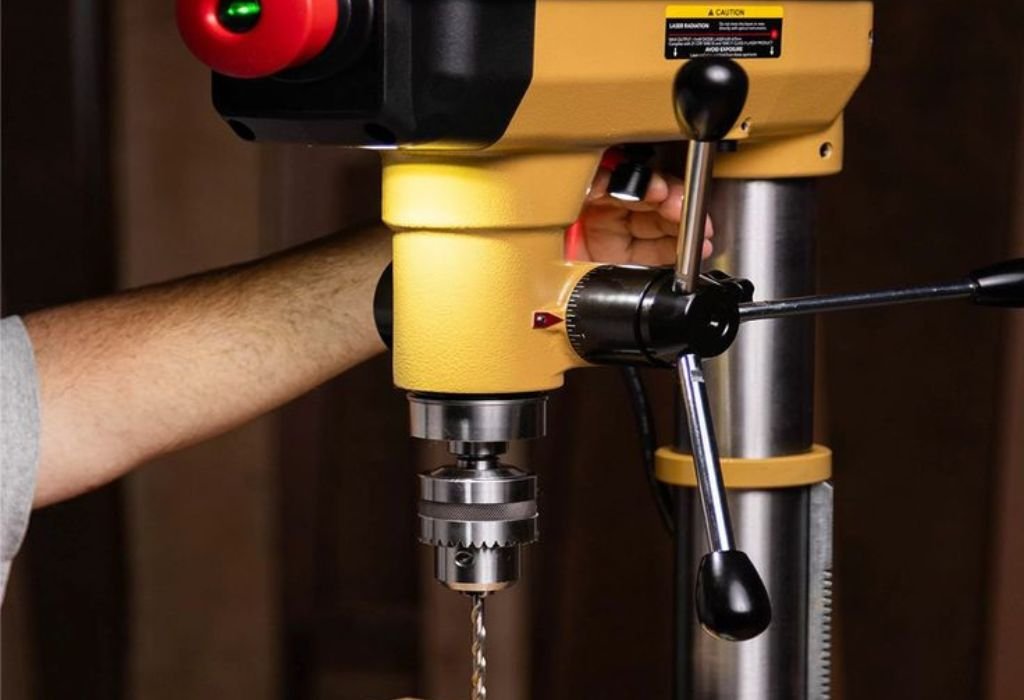
The modern workshop is entering an era where even basic tools like drill presses benefit from smart technology. New spindle designs focus on efficiency, automation, and durability.
Variable-speed motors now allow smoother torque control without changing belts. Some machines feature digital RPM displays for precise speed tracking.
Manufacturers are also introducing hybrid ceramic bearings, which can withstand higher loads and temperatures while reducing noise.
Advanced models integrate sensors that detect imbalance or overheating, giving early warnings to avoid failure. Even small benchtop drill presses now adopt features once reserved for industrial systems, such as vibration damping and sealed lubrication.
How are variable-speed motors improving spindle operation?
They allow seamless adjustment of RPMs for different materials, preventing overheating and extending tool life.
What do sensors add to the system?
They monitor vibration and temperature in real time, alerting users before a breakdown occurs.
Why are ceramic bearings gaining popularity?
They operate cooler, resist corrosion, and offer longer service life than standard steel bearings (Berkness Company).
What should users check when upgrading drill presses?
Look for sealed bearings, low run-out tolerance (<0.002”), and digital speed control.
Will future spindles become smarter?
Yes — AI-based diagnostics and self-balancing spindles are already being developed for precision machining tools.
Safety and Efficiency Tips for Every User
A well-maintained spindle ensures not only precision but also safety. Improper use or neglect can quickly turn a reliable tool into a hazard.
Always wear eye protection and avoid loose clothing when using a drill press. Never apply side pressure, as spindles are designed for vertical loads only. Adjust spindle speed according to the bit and material type, and secure your workpiece firmly before drilling.
Coolant or cutting fluid is also vital during metal drilling to prevent spindle overheating.
Why avoid side pressure during drilling?
Because it can bend the spindle shaft and damage internal bearings.
How does improper speed affect performance?
Excessive RPM causes overheating, while too low speeds lead to binding and rough cuts.
Why is clamping the workpiece essential?
A slipping workpiece creates sudden shock loads that can misalign the spindle.
How does coolant protect the spindle?
It reduces heat buildup and provides lubrication for smoother, safer drilling.
When should you turn off the drill press?
Always before changing bits, cleaning, or checking alignment to avoid accidental rotation.
These practices maintain not only tool precision but also operator safety, ensuring years of reliable use.
Conclusion
The drill press spindle might be hidden, but it’s the soul of precise drilling. It converts motor energy into perfectly vertical motion, ensuring every hole you make is clean, centered, and repeatable.
Throughout this guide, you learned how a drill press spindle works, how its components cooperate, what problems to watch for, and how maintenance can dramatically extend performance. The data proves it — bearing care alone prevents nearly half of machine failures.
Before your next project, take a moment to check your spindle alignment, lubricate the quill, and test for run-out. Small adjustments today can save hundreds in repairs tomorrow.
If you’re considering upgrading, look for machines with advanced spindles, sealed bearings, and smart vibration control. With the right setup, your drill press can deliver years of flawless accuracy.

I’m John F. Nicholas, the founder, lead writer, and drill enthusiast behind 101drill.com. With years of hands-on experience in power tools and DIY projects, I created this platform to share practical knowledge, expert tips, and real-world insights to help others master the art of drilling.