
So, you want to learn how to use a circular saw for beginners? It’s a common desire! Circular saws are powerful tools, perfect for many DIY projects. However, they can seem a little scary at first. Don’t worry, everyone starts somewhere. This guide will help you understand the basics in a friendly, easy-to-follow way. We’ll break down everything step by step, so you can confidently start your woodworking projects. Keep reading, and we’ll get you started!
Key Takeaways
- Learn the essential safety gear and how it protects you.
- Discover how to choose the right circular saw for your needs.
- Understand the different parts of a circular saw and their functions.
- Practice basic cutting techniques to achieve clean and accurate cuts.
- Find out how to measure and mark wood for perfect cuts every time.
- Learn how to maintain your circular saw for longer life and better performance.
Choosing the Right Circular Saw for Your Needs
Picking the correct circular saw is the first step toward successful woodworking. You have several options, each with its own benefits. Choosing the right saw is about matching the tool to your projects and your experience level. Factors such as the type of projects you’ll undertake, your budget, and the features you need will all affect your decision. Explore the different types of circular saws to make sure you select the one best suited for your requirements.
Types of Circular Saws
There are a few main types of circular saws you’ll find at the hardware store. Each type has specific uses, so knowing the differences will help you choose the best one. Remember, the right saw makes any project easier and safer. Here’s what you should know to get started.
-
- Worm Drive Saws: These saws have the motor and blade set up in a line, which provides more torque. This extra power is good for ripping through thick lumber. They are a little heavier and typically used by professionals.
Worm drive saws offer increased torque due to their unique motor configuration. This feature allows for superior cutting power, especially in dense materials, and provides a significant advantage for users working with thicker lumber. The design places the motor inline with the blade, boosting the leverage that results in cleaner cuts.
-
- Hypoid Saws: Hypoid saws are similar to worm drive saws but often have a sealed oil bath for lubrication, which extends the life of the saw. They are known for their durability and power.
Hypoid saws also operate with high torque like worm drive saws but often include a sealed oil bath for smoother operation and longer tool life. The sealed mechanism reduces the need for maintenance. These saws are ideal for consistent, heavy-duty use.
-
- Sidewinder Saws: These are the most common type for DIYers. The motor is positioned to the side of the blade, which makes them lighter and easier to handle. They’re great for general-purpose cutting.
Sidewinder saws are popular because they are easy to control and good for beginners. They typically offer less torque than worm drives, but they are also lighter, which makes them easier to maneuver for a variety of tasks.
-
- Battery-Powered Saws: These saws run on batteries, offering the advantage of cordless use. They are convenient for jobs where you don’t have access to a power outlet. The power and battery life of these saws have greatly improved in recent years.
Battery-powered saws offer cordless convenience. The freedom from cords is great for working at any location, and modern battery technology means longer run times. While they can sometimes lack the power of corded saws, they’re perfect for projects where portability and ease of use are a must.
Key Features to Consider
Once you understand the basic saw types, it’s time to explore the features. These will affect the saw’s performance and your safety. Consider the features that fit your expected uses. Remember, a good saw is an investment in both your time and the quality of your work. Explore the features, and compare them against your needs.
-
- Blade Size: The blade size impacts the depth of your cuts. Smaller blades are good for thinner materials, while larger blades can cut through thicker wood in one pass.
The blade size, measured by its diameter, directly affects the cutting depth. Larger blades enable cutting through thicker materials in a single pass, whereas smaller blades are better suited for thinner materials. A saw blade’s size is a key consideration when selecting a saw for your projects.
-
- Motor Power: Look for a saw with enough power to handle the materials you plan to cut. More powerful motors mean easier cutting, especially through hardwoods.
The motor power, measured in amps or watts, dictates how easily the saw cuts through different materials. A higher-powered motor provides more force, allowing it to cut through hardwoods and thicker materials without strain. Match motor power to the types of projects.
-
- Blade Brake: A blade brake quickly stops the blade after you release the trigger, improving safety. This reduces the risk of accidents.
The blade brake is an essential safety feature. The mechanism rapidly stops the blade once the trigger is released. This feature quickly decreases the chance of injury from accidental contact with a spinning blade.
-
- Bevel Adjustment: This feature allows you to angle the blade for angled cuts. Make sure the adjustment is easy to use and locks securely.
Bevel adjustment enables angular cuts. It allows you to tilt the blade to a specified angle, allowing cuts at precise angles. A solid bevel adjustment that locks securely will boost your project’s accuracy.
-
- Dust Collection: Some saws have a dust collection port to attach to a vacuum. This can help to keep your work area cleaner and your cuts more accurate.
Dust collection systems are important for maintaining a clean work environment. Many circular saws come with a port to connect to a vacuum. This feature removes sawdust during the cutting process, improving visibility and creating a cleaner workspace.
Essential Safety Gear and Practices
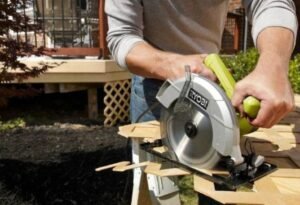
Safety should be your top priority. Using a circular saw comes with potential hazards, so you need the right gear and know the proper practices. Never start a project without ensuring you’re safe. Learning how to stay safe allows you to enjoy working with the saw.
Personal Protective Equipment (PPE)
Before you start, make sure you have the right PPE. This gear will protect you from potential injuries. Never skip any of these items, even for small jobs.
-
- Safety Glasses: These are crucial to protect your eyes from flying debris. Always wear safety glasses or goggles whenever you use the saw.
Safety glasses shield your eyes from debris, such as wood chips and dust, that can be ejected during cutting. Wear them whenever the saw is in use. They’re a fundamental part of protective gear.
-
- Hearing Protection: Circular saws can be loud. Wear earplugs or earmuffs to prevent hearing damage.
Hearing protection is a must because circular saws produce significant noise levels. Earplugs or earmuffs protect your ears from exposure to loud sounds, lowering the risk of damage. Protect your hearing.
-
- Dust Mask or Respirator: Sawing wood creates dust particles. A dust mask or respirator will help you avoid breathing in this dust, which can cause respiratory problems.
Wood dust can be harmful to your lungs. Wearing a dust mask or respirator protects you from breathing in harmful particles. This is particularly important when working with treated wood.
-
- Gloves: Gloves can improve your grip and protect your hands. Choose gloves that fit well and don’t reduce your dexterity.
Gloves improve your grip on the saw and protect your hands from scrapes and abrasions. Select a pair that allows you to handle the saw comfortably and without hindering your dexterity.
-
- Closed-Toe Shoes: Protect your feet from falling objects and accidental contact with the blade. Avoid wearing open-toed shoes or sandals.
Closed-toe shoes shield your feet from potential hazards such as dropped materials and the saw blade. This simple measure significantly reduces the risk of injury while working with the saw.
Safe Operating Procedures
Besides having the right gear, you need to follow safe operating procedures. Make sure you know these steps before you cut anything. Proper technique is just as important as the right gear when using a circular saw.
-
- Read the Manual: Before you use any new tool, read the manual. Get to know your saw and its specific safety features.
The manual contains essential information regarding the saw’s operation, safety precautions, and maintenance procedures. Reading it before first use ensures you’re aware of any specific safety features and operating instructions.
-
- Inspect the Saw: Before each use, inspect the saw. Check the blade for any damage. Make sure the power cord is in good condition.
Always inspect the saw before you use it to ensure everything is functioning correctly. Check the blade for damage like cracks or missing teeth. Also, confirm the power cord is in good shape. These steps help prevent accidents.
-
- Secure Your Workpiece: Always secure the wood you are cutting. Use clamps to hold the wood steady on a workbench or sawhorse.
Securing your workpiece is vital for maintaining control during cutting. Use clamps to hold the material firmly. This minimizes movement and increases the chance for accurate cuts.
-
- Position Yourself Correctly: Stand to the side of the saw blade, not directly in line with it. This keeps you safe if the blade binds or kicks back.
Position yourself to the side of the blade to stay clear of the cutting path. In case of kickback, this placement reduces the possibility of getting hit directly by the saw or the workpiece.
-
- Start and Stop the Saw Safely: Make sure the blade is up to full speed before you start cutting. When you are done cutting, let the blade come to a complete stop before removing the saw.
Allow the blade to reach full speed before engaging with the material. After completing the cut, let the blade come to a complete stop. These practices ensure the safest operation and decrease the risk of accidents.
-
- Use a Guide: For straight cuts, use a guide. A straight edge can help you achieve accurate and consistent results.
Using a guide, such as a straight edge or a fence, is a great way to improve accuracy, especially for beginners. The guide ensures the blade follows a straight line, leading to clean and accurate cuts.
Understanding the Parts of a Circular Saw
To use a circular saw safely and effectively, you need to understand its parts. Knowing what each part does will make you more confident. This section breaks down the key components of a circular saw.
Key Components
Every circular saw has core components that work together to make cuts. Familiarize yourself with these parts.
-
- Blade: This is the part that does the cutting. The type of blade will affect the type of cuts you can make. The teeth on the blade do the cutting.
The blade is the central component of the saw. It rotates at high speed, and the sharp teeth slice through the material. Different blade types, such as those designed for wood, metal, or plastic, will affect the types of cuts you can achieve.
-
- Motor: This provides the power to spin the blade. The motor’s power rating tells you how well it will cut through different materials.
The motor is the heart of the circular saw, producing the rotational power that drives the blade. The motor’s power, usually measured in amps or watts, tells you how effectively the saw will handle various cutting tasks.
-
- Base Plate (Shoe): This flat surface rests on the material you are cutting. It helps to keep the saw stable and the cut straight.
The base plate is the flat metal or plastic surface that rests on the material being cut. It provides stability and guidance during the cut, helping to ensure accuracy.
-
- Blade Guard: This covers the blade, protecting you from accidental contact. The guard retracts when you start the cut and covers the blade when you’re finished.
The blade guard is a key safety feature that covers the rotating blade. It retracts as you begin a cut and returns to its position once you’re finished, preventing accidental contact with the blade.
-
- Trigger: This turns the saw on and off. Most saws have a safety button that you must press before you can engage the trigger.
The trigger is the on/off switch for the saw. Many saws have a safety mechanism that prevents accidental starts. You typically have to press a safety button before you can activate the trigger.
-
- Depth Adjustment Lever: This lets you set the depth of your cut. Setting the depth properly will improve safety and cut quality.
The depth adjustment lever allows you to control the depth of the blade’s penetration into the material. Setting the depth correctly ensures you cut through the material without exposing too much of the blade below.
-
- Bevel Adjustment Lever: This lets you tilt the blade for angled cuts. This is great for making bevel cuts.
The bevel adjustment lever lets you tilt the blade relative to the base plate, enabling angled cuts. This is handy for achieving beveled edges or cutting at precise angles for various projects.
Maintenance and Inspection
Regular maintenance ensures your saw runs smoothly. Check these parts before each use.
-
- Blade Inspection: Before each use, inspect the blade for damage like chips, cracks, or dull teeth. Replace damaged blades immediately.
The blade’s condition is directly related to cutting performance and safety. Regularly inspect it for damage, such as chips, cracks, or dull teeth. Replace worn or damaged blades promptly to maintain safety and ensure clean cuts.
-
- Base Plate Cleaning: Keep the base plate clean to ensure smooth movement across the material. Remove any buildup of sawdust or debris.
A clean base plate is essential for consistent and precise cuts. Remove any buildup of sawdust or debris to allow the saw to glide smoothly across the material. This will give you much more accurate cuts.
-
- Cord and Plug Check: Inspect the power cord for damage or wear. Ensure the plug is in good condition and fits securely in the outlet.
The power cord and plug must be in good condition to guarantee your safety. Look for any signs of damage or wear on the cord and ensure the plug fits securely into the outlet. Replace any damaged parts immediately.
-
- Blade Guard Operation: Make sure the blade guard moves freely and retracts and returns smoothly. If it’s sticky, clean and lubricate it.
A functional blade guard is crucial for safety. Ensure it moves freely and retracts completely during cutting and returns to cover the blade when finished. Clean and lubricate the guard to maintain proper operation.
Mastering Basic Cutting Techniques
Once you understand the saw’s parts and safety, you’re ready to start cutting. Basic cutting techniques are the foundation. Practicing these techniques will help you become comfortable with the saw. Remember to take it slow at first. With practice, you will become a pro.
Straight Cuts
Straight cuts are the most fundamental technique. These are cuts made along a straight line. Achieving straight cuts is essential for many projects. Here’s how to do it safely and accurately.
-
- Measure and Mark: Use a pencil and ruler or a speed square to mark your cut line on the wood. Make sure your mark is clear and easy to see.
Precisely mark the cut line on your wood before cutting. Use a pencil and a ruler or a speed square to get it right. Make sure the mark is easy to see to ensure you cut along the intended path.
-
- Position the Saw: Place the base plate of the saw on the wood, aligning the blade with your cut line. Make sure the blade guard is in place.
Align the saw blade with the marked line. Ensure the base plate rests firmly on the wood, and that the blade guard is in its place. This step will enable a clean, accurate cut.
-
- Start the Cut: Turn on the saw and let the blade reach full speed. Slowly lower the blade into the wood, following your marked line.
Activate the saw and allow the blade to reach its maximum speed. Carefully lower the blade into the wood along the marked line, maintaining a consistent pace to achieve a clean cut.
-
- Guide the Saw: Keep the base plate flat against the wood and follow your cut line. Keep your hands clear of the blade.
Keep the base plate flat against the wood to maintain stability. Stay on your marked line while guiding the saw. Make sure your hands stay clear of the blade’s path, and maintain a safe distance.
-
- Complete the Cut: Continue cutting until the saw passes through the wood completely. Turn off the saw and wait for the blade to stop before removing it from the cut.
Keep cutting until the blade passes through the entire thickness of the wood. Switch the saw off and allow the blade to come to a full stop before removing it from the cut. This will increase the safety of the process.
Crosscuts vs. Rip Cuts
Understanding the difference between crosscuts and rip cuts is important. The direction you cut in affects the technique you use. Each type of cut has its own challenges and advantages.
-
- Crosscuts: These are cuts made across the grain of the wood. The goal is to cut the wood perpendicular to the grain. These are used to shorten a board or cut it to a specific length.
Crosscuts, performed across the wood grain, are a common technique used for shortening boards or cutting them to desired lengths. Cutting across the grain can sometimes cause splintering. Keep the saw moving steadily and avoid pushing too hard to get the best results.
-
- Rip Cuts: These are cuts made along the grain of the wood. These are used to make the board narrower. Ripping can be trickier because the blade might bind in the wood.
Rip cuts are made along the wood grain, and they are usually done to reduce the width of a board. This technique can be tricky because the blade can potentially bind or stick. Use a straight edge or a ripping guide to ensure your cut is straight and consistent.
Bevel and Miter Cuts
Bevel and miter cuts add angle to your cuts. They are important for more complex projects. These cuts can create decorative edges and join pieces at angles. These are a little more advanced, but with practice, you’ll be able to do them.
-
- Bevel Cuts: A bevel cut involves tilting the blade at an angle to the base plate. These are used to create angled edges. They are used for decorative trim and making angled joints.
Bevel cuts are created by tilting the saw blade at an angle relative to the base plate. They are great for creating angled edges. Used to make trim or form angled joints, bevel cuts add visual appeal and increase the usefulness of a project.
-
- Miter Cuts: A miter cut combines a crosscut with an angle. You are cutting across the grain at an angle. These are often used for framing and creating corners.
Miter cuts combine a crosscut with an angle. They involve cutting across the grain at an angle. Used extensively in framing and constructing corners, miter cuts help join pieces at precise angles, creating neat, stable connections.
Measuring and Marking for Perfect Cuts
Precise measurement and marking are just as essential as the cutting technique. It doesn’t matter how good you are with the saw if your measurements are incorrect. These skills are key to getting clean cuts. Measure twice, cut once!
Accurate Measurement
Accurate measurement is critical for getting the right cut. Proper measurement practices reduce mistakes. This includes using the right tools and getting accurate results.
-
- Use a Quality Measuring Tape: Choose a tape measure with clear markings and a sturdy hook. Ensure the hook doesn’t slip when you’re measuring.
Choose a measuring tape with clear, easy-to-read markings and a robust hook. Make sure the hook doesn’t slide, allowing for accuracy. This is a fundamental step to precise cutting.
-
- Read the Measurement Correctly: Read the tape measure from eye level to avoid parallax error. Make sure you are reading the correct measurement.
To avoid measurement errors, read the tape measure from eye level. This method eliminates parallax error. Ensure your measurements are precise and reliable.
-
- Account for the Blade Kerf: The kerf is the width of the cut. When measuring, account for the blade kerf to make sure your pieces fit together correctly.
The kerf is the width of the blade’s cut, and it’s essential to consider it when measuring. Adjust your measurements to account for the blade kerf to make certain your pieces fit precisely, eliminating errors.
Marking Your Cuts
Once you have measured correctly, you need to mark the wood. Sharp, clear marks are essential for making a great cut. Following these simple steps will improve your success.
-
- Use a Sharp Pencil: Use a sharp pencil or a fine-tip marker to mark your cut lines. A sharp point provides more accuracy.
Employ a sharp pencil or fine-tip marker to mark the cut lines. The sharpness of the tool is key to marking the wood clearly and with high precision.
-
- Mark Clearly: Make sure your cut lines are easy to see. If needed, darken the lines for better visibility.
Ensure the cut lines are easy to see by marking them clearly and, if necessary, darkening them. This ensures you follow your marked lines accurately, which gives you better cuts.
-
- Use a Square: Use a speed square or a combination square to draw straight lines. This will help make sure your lines are 90 degrees or other precise angles.
Use a speed square or a combination square to draw straight lines. These tools guarantee the lines are at precise 90-degree or custom angles. This level of accuracy is important in getting exact cuts.
Common Measurement Mistakes
Even experienced woodworkers make mistakes. Know some common measurement mistakes and learn how to avoid them. Improving these skills will help you reduce waste and improve your results.
-
- Incorrect Reading of the Tape Measure: Double-check your measurements to avoid errors caused by misreading the tape measure. Take your time.
Misreading a tape measure is a common mistake. Double-check your measurements before cutting. By taking extra care, you avoid errors and get precise results.
-
- Not Accounting for Kerf: Remember to account for the blade’s kerf, especially when making joints where pieces need to fit perfectly together.
When working on projects with tight joins, you have to account for the blade’s kerf. Consider this small amount of material removed by the blade. This will help avoid issues.
-
- Using a Dull Pencil: A dull pencil can create thick, unclear lines. Always use a sharp pencil to get more accurate marks.
A dull pencil produces thick, imprecise lines, which can lead to measurement errors. Using a sharp pencil is important for accuracy. The sharper the pencil, the better the marks.
Maintaining Your Circular Saw for Longevity
Like any tool, your circular saw needs regular care. Proper maintenance will ensure that it lasts for years. By following a maintenance schedule, you’ll ensure that the saw performs well and stays safe.
Cleaning and Lubrication
Cleaning and lubricating your saw helps it run smoothly. Regular cleaning removes dust and debris. Lubrication will keep the parts moving freely.
-
- Cleaning the Saw: After each use, clean the saw. Use compressed air or a brush to remove sawdust and debris from the motor and blade guard.
Clean the saw after each project to keep it running well. Use compressed air or a brush to remove sawdust from the motor and blade guard. This cleaning boosts the saw’s performance.
-
- Lubricating Moving Parts: Periodically lubricate the moving parts of your saw, such as the blade guard and bevel adjustment. Use a dry lubricant, following the manufacturer’s instructions.
Lubricate the moving components of your saw, such as the blade guard and bevel adjustment mechanism, periodically. A dry lubricant will decrease friction. This maintenance will increase your saw’s life.
-
- Checking the Cord: Check the power cord regularly for damage. Replace any cord that is frayed or damaged.
Inspect the power cord for damage frequently. Replace any cord that shows wear and tear. This helps to prevent electrical hazards and makes sure you’re working safely.
Blade Care
The blade is a key part of your saw. Keeping your blade in good shape is necessary for getting clean cuts and for your safety. Regular maintenance extends the life of your blades.
-
- Blade Sharpening: Sharpen or replace the blade when it becomes dull. A dull blade is less safe and can lead to inaccurate cuts.
When the blade gets dull, sharpen or replace it. A sharp blade is essential for safety and accuracy. A dull blade can lead to poor cuts. Sharpening can boost the life of your blade.
-
- Proper Storage: Store your saw and blades in a dry place. Protect the blades from damage.
Store your saw and its blades in a dry environment. Keep the blades protected from potential damage. Proper storage will keep the saw safe and in good condition for many years.
-
- Blade Replacement: Replace blades regularly. Blade replacement is key for both safety and cutting performance.
Replace blades on a regular schedule. A fresh blade will give you the best performance and reduce safety risks. Always make sure you’re using the right blade for your material.
General Maintenance Tips
More general maintenance practices also affect the saw’s performance and longevity. These simple steps will help keep your saw in good working order.
-
- Regular Inspection: Inspect your saw regularly for any signs of wear or damage. Address any issues immediately.
Inspect the saw frequently for any signs of wear. Address any problems that you find right away. Doing this will keep your saw in peak performance condition.
-
- Follow Manufacturer’s Guidelines: Always follow the manufacturer’s recommendations for maintenance and use. Refer to the manual for specific instructions.
Follow the manufacturer’s maintenance and use guidelines. The manual offers specific instructions for your model of saw. Doing so helps maximize the life of the saw.
-
- Professional Servicing: Consider professional servicing. For more complex issues, consider having the saw serviced by a professional.
For more complicated issues, seek professional servicing. A trained technician can perform checks and maintenance to keep the saw working correctly and safely.
Frequently Asked Questions
Question: What’s the most common mistake beginners make?
Answer: A common mistake is not securing the wood properly. Always use clamps to hold your material steady while cutting.
Question: What do I do if the blade gets stuck in the wood?
Answer: Turn off the saw and let the blade stop completely. Then, carefully try to remove the saw, or if needed, use wedges to open the cut.
Question: How often should I change the blade?
Answer: Replace the blade when it becomes dull or damaged. The frequency depends on how much you use the saw and the type of material you’re cutting.
Question: Can I cut metal with a circular saw?
Answer: Yes, you can cut metal, but you’ll need a blade specifically designed for metal cutting. Always wear appropriate safety gear.
Question: What is kickback, and how can I avoid it?
Answer: Kickback happens when the blade snags and throws the saw back at you. Avoid it by always securing your material, using the correct blade, and feeding the saw at a steady pace.
Final Thoughts
So, you’ve now explored how to use a circular saw for beginners. You’ve learned how to choose the right saw, understand its key parts, and use it safely. You also know how to measure, mark, and make basic cuts. Remember, practice is essential. Start with simple projects. Don’t be afraid to experiment. Each cut you make will increase your skill. Now, armed with this knowledge, you are ready to begin. The projects you’ll create are only limited by your imagination. Go ahead, get started, and enjoy the satisfaction of building something yourself!

I’m John F. Nicholas, the founder, lead writer, and drill enthusiast behind 101drill.com. With years of hands-on experience in power tools and DIY projects, I created this platform to share practical knowledge, expert tips, and real-world insights to help others master the art of drilling.