
Every DIY enthusiast and workshop owner eventually wonders — how deep can a drill press actually go? The answer depends on a mix of mechanical design, spindle travel, and how you set up your machine.
A drill press is valued for its precision and control. But when you need to drill through thick stock or dense metal, the depth limit suddenly becomes an important factor.
Research shows that most benchtop drill presses have a quill travel between 2 and 4 inches, while larger floor models extend up to 6 inches or more . That difference directly impacts what materials you can handle and how deep you can drill in one pass.
Machine rigidity, bit length, and table adjustment also play critical roles. Exceeding the designed stroke can cause deflection, chatter, or inaccurate holes.
Understanding your drill press’s depth capacity helps you plan better, protect your equipment, and improve accuracy on every project. This guide explores the technical factors behind drill press depth, real-world limitations, and proven methods to get the most from your machine.
Defining Depth in a Drill Press Context
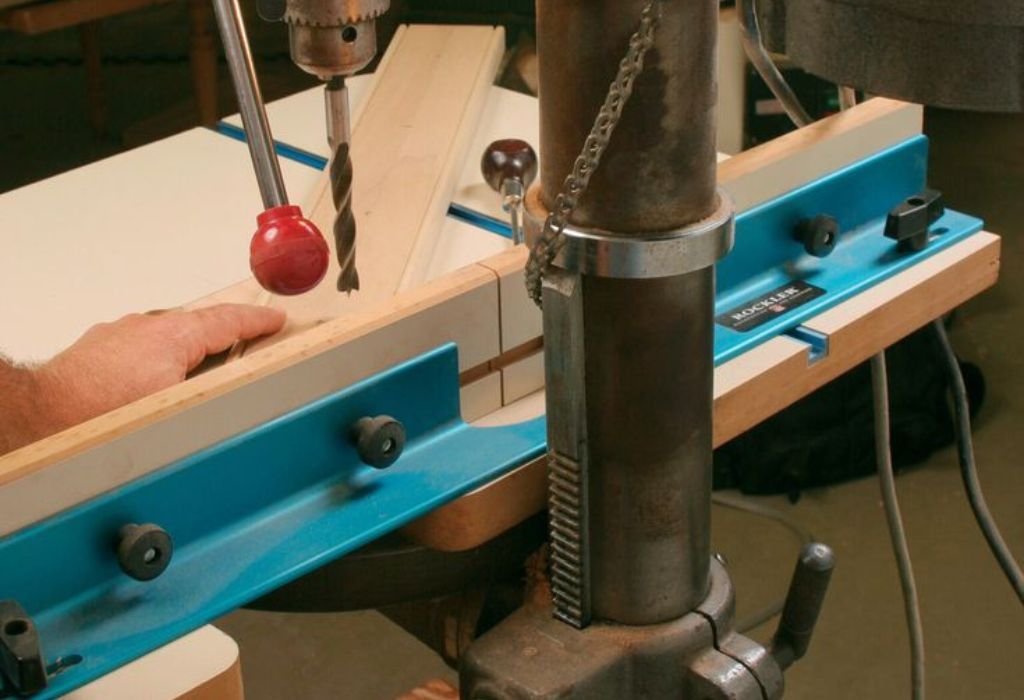
Before determining how deep a drill press can go, it’s important to understand the terms that define its range. Depth capacity is not just about how long the bit is — it’s about how far the quill and spindle can travel in relation to the work surface.
The quill travel (or spindle travel) is the maximum downward movement of the chuck and bit. Most machines list this in their specifications. The throat depth or swing describes how far the bit is from the column, which defines the maximum width of the workpiece.
Bench models usually have shorter travel and less swing, while floor models are taller and can drill deeper without repositioning the material. Even if you have a long bit, limited clearance between the table, chuck, and base can restrict usable depth.
What is quill travel?
It’s the total vertical movement of the spindle or chuck — the true limit of drilling depth.
What is throat depth or swing?
It measures the distance from the bit center to the column, showing how wide a piece the press can handle.
How does material thickness factor in?
The thicker the stock, the more clearance you need between table and chuck to fit the workpiece.
What is the difference between benchtop and floor models?
Floor presses provide more travel, greater swing, and higher power, ideal for deep holes.
Does bit length alone determine depth?
No — the drill press design, quill travel, and table adjustment all limit real depth.
Typical Depth Capabilities and Limits
Depth varies by size and model. Benchtop drill presses generally allow 2–4 inches of plunge, while floor models average 3–6 inches, depending on their quill stroke and table clearance (Obsessed Woodworking).
The difference may not sound large, but in woodworking or metal fabrication, an extra inch can determine whether a hole can be finished in one pass or must be extended manually.
Trying to exceed a drill press’s quill travel can cause the bit to bottom out or scrape the base, potentially damaging both the tool and workpiece.
How deep can a benchtop drill press go?
Most manage between 2 and 4 inches of controlled spindle travel.
Can a floor drill press go deeper?
Yes — their longer columns and stronger quills allow 3–6 inches of effective depth.
What happens if you exceed the quill travel?
You risk hitting the base or flexing the bit, which ruins accuracy and damages bearings.
Does bit length solve the problem?
Not always; long bits can flex, vibrate, or wander without proper support.
Are there workarounds for deeper holes?
Yes — staged drilling, raising the table, or drilling from both sides extends reach safely.
Factors That Affect Drill Press Depth
Several machine elements determine how deep a drill press can go. Quill travel, bit length, table height, and clearance all combine to create your real-world limit.
The spindle or quill travel is the core measurement; it’s the distance the bit can move vertically before hitting its stop. Many 10-inch models offer about 2½ inches of travel, while larger 15-inch presses exceed 4 inches.
Table positioning also plays a major role. If the table doesn’t adjust high enough or the base gets in the way, you lose usable depth.
Bit length helps, but longer bits increase run-out and vibration, especially at higher RPMs. Always balance reach with stability.
How does spindle travel affect drilling depth?
It defines exactly how far the chuck can lower, setting the mechanical limit.
How does table height influence reach?
Raising or lowering the table controls how much clearance you have under the bit.
Does bit length really matter?
Yes, but too long a bit may flex and reduce accuracy.
What about chip removal?
Deeper holes trap chips easily, causing heat and binding; clear them often.
How does rigidity help with depth?
A solid, well-aligned machine allows smooth feed and consistent vertical drilling.
Best Practices to Maximise Depth Safely
Maximizing depth on a drill press is about technique, not just machine size. A few setup habits can safely stretch your drilling limits.
First, drill in stages. Start shallow, then raise or reposition the table after each pass. This staged method maintains control while reaching greater overall depth.
Use a depth stop to ensure each hole stays consistent. This is especially useful when drilling multiple holes in identical parts.
For tall or thick materials, secure the workpiece with strong clamps or a vise. Support both sides to prevent rocking or twisting during deep cuts.
Always clear chips frequently — at least every half inch — to prevent overheating. Add a few drops of cutting oil when drilling metal.
How does step drilling help?
It lets you go beyond the quill limit by changing the workpiece height between passes.
What is a depth stop used for?
It limits downward travel for uniform hole depth and protects the bit tip.
How should tall workpieces be supported?
Clamp them tightly against the fence or vise to maintain stability.
How often should chips be cleared?
Every few seconds during deep drilling to reduce friction and clogging.
When should you pause?
Stop whenever the feed feels tight or the motor slows — then retract to cool the bit.
When Your Drill Press Cannot Reach – Alternatives and Upgrades
Sometimes even the best setup cannot overcome the machine’s physical limits. If you frequently work with deep materials, exploring alternatives may save time and improve precision.
Upgrading to a floor drill press is the most direct solution. These models have longer columns, larger tables, and increased quill travel.
If an upgrade isn’t possible, a router jig or milling machine can substitute for deep drilling. Both provide better vertical travel and smoother feed control.
For extremely deep holes in wood, metal, or composite, handheld drills with extended bits sometimes outperform a fixed press — though they require a steady hand.
What if the drill press travel is too short?
Consider a floor press or industrial model with 5-6 inch spindle travel.
Can a router or milling machine replace it?
Yes — routers with spiral bits or mills handle deep vertical cuts more efficiently.
When does a handheld drill make sense?
When portability or extra-long reach is needed more than high precision.
Should you upgrade your drill press?
If deep holes are routine, upgrading is a smart investment for accuracy and durability.
Are modifications available?
Yes — extension columns, riser blocks, or custom jigs can increase clearance safely.
Measuring and Adjusting Drill Press Depth
Understanding your press’s limit begins with measuring quill travel and setup clearance.
To measure spindle travel, lower the feed handle until the chuck reaches its lowest point. Measure the vertical distance from that position back to the top of its travel. That measurement is your drill press’s maximum stroke.
Next, test your usable depth by placing a sample workpiece on the table and inserting your longest bit. Lower the bit fully — the clearance between the tip and table shows the maximum material thickness you can drill in one pass.
For precise work, add a depth gauge or digital stop. These tools help repeat exact depths, essential for dowel or mortise drilling.
How do you measure quill travel?
Lower the quill fully and measure the total downward stroke with a ruler or gauge.
What defines usable drilling depth?
It’s the combined space from chuck to table, minus the bit and workpiece thickness.
What’s the benefit of a depth gauge?
It ensures uniform hole depth when producing multiple parts.
Can clearance be increased temporarily?
Yes — by lowering the table or raising the head assembly if your model allows.
How do you maintain calibration?
Periodically check for wobble or misalignment to keep readings accurate.
Common Depth-Related Problems and Fixes
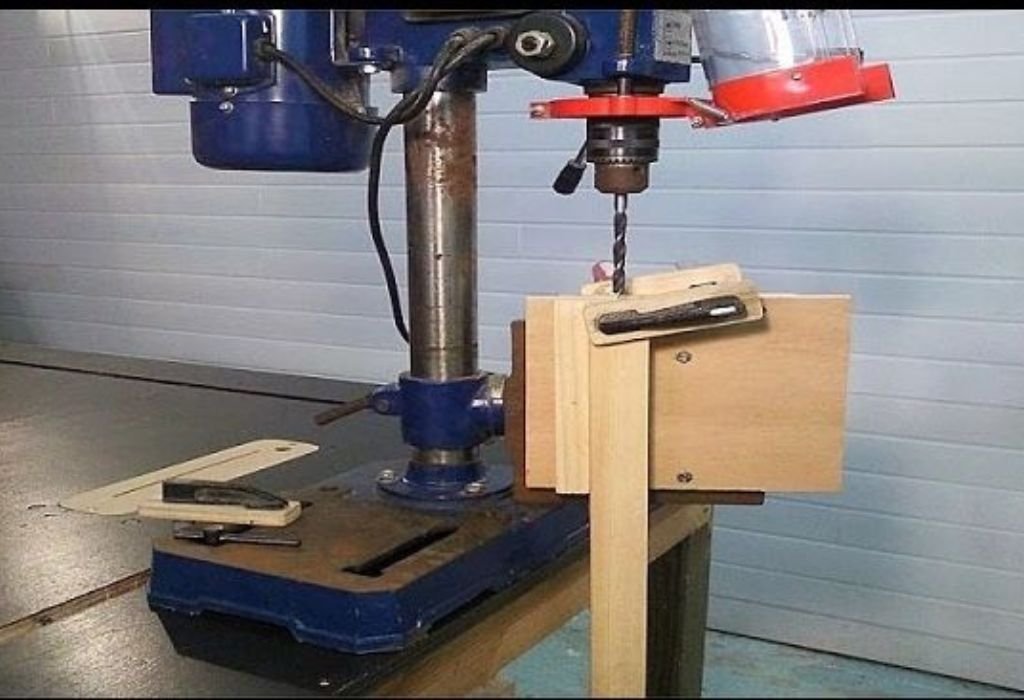
Deep drilling can reveal hidden challenges in a drill press setup. Recognizing and correcting them ensures accuracy and prevents tool damage.
One common problem is bit wandering — when the drill drifts off center as depth increases. This usually stems from misalignment or dull bits.
Another issue is heat buildup in deep holes. Without regular chip clearing, friction rises, dulling the bit and damaging the workpiece.
Vibration also increases with depth, especially when the table isn’t locked tightly or the bit is long and flexible.
What causes bit wandering?
Poor alignment, dull tips, or excessive feed pressure.
How do you prevent overheating?
Drill slowly, clear chips, and apply cutting lubricant as needed.
Why does vibration increase with depth?
Because longer leverage magnifies any machine flex or imbalance.
Can spindle play affect depth accuracy?
Yes — even minor play causes tapered or off-angle holes.
What’s the easiest fix for chatter?
Tighten all clamps, use shorter bits where possible, and reduce feed rate.
Extending Drill Depth Beyond Machine Limits
If you occasionally need more depth, certain tricks can stretch your drill press’s capabilities safely.
You can drill from both sides of a workpiece to double your effective depth. This works best with careful alignment and pilot holes.
Another method is table repositioning — lowering the table mid-project or stacking blocks under the workpiece to re-center your drilling point.
Specialty extra-long drill bits also help but should be used with slower speeds and light feed to avoid flexing.
Can drilling from both sides maintain accuracy?
Yes, if alignment marks are used on both faces before drilling.
How do table adjustments help?
They extend your reach by re-positioning the material within the quill’s travel range.
Are long bits reliable?
Yes, but they require steady feed and lower RPMs for safety.
What materials work best for deep drilling?
Softwoods and plastics allow longer passes, while metals require frequent chip clearing.
When should you stop extending depth?
Whenever stability or accuracy begins to suffer — safety always comes first.
Conclusion
So, how deep can a drill press go? On average, 2–4 inches for benchtop models and 3–6 inches for floor models. Beyond that, results depend on your setup, bit choice, and machine condition.
Depth capacity is ultimately a balance between mechanical design and operator technique. Using the right adjustments, support, and staged drilling, you can reach greater depths without sacrificing precision.
If your projects consistently require deeper holes, upgrading to a larger model or adding a riser kit can make your workflow smoother. And remember — a careful setup always outperforms brute force when it comes to drilling depth.
A well-tuned drill press can achieve impressive accuracy and surprising reach. Understand its limits, respect its design, and you’ll get the best possible performance from your machine.

I’m John F. Nicholas, the founder, lead writer, and drill enthusiast behind 101drill.com. With years of hands-on experience in power tools and DIY projects, I created this platform to share practical knowledge, expert tips, and real-world insights to help others master the art of drilling.