
You stand with a heavy rotary hammer drill in hand, staring at a wooden board, wondering if this powerful concrete-drilling beast can handle something softer. The question arises naturally — can a rotary hammer drill wood without tearing it apart?
Rotary hammer drills are built for masonry, concrete, and stone. They rely on aggressive hammering power and rotational force to break tough materials quickly. Wood, however, behaves very differently. It’s softer, fibrous, and prone to splintering when struck with impact force.
The good news is that a rotary hammer drill can drill through wood — but only when used correctly. You must disable the hammering function, choose the right bit, and control the speed carefully.
This guide explains exactly how a rotary hammer interacts with wood, what settings to use, and how to avoid common mistakes so you can achieve clean, precise holes safely and efficiently.
How a Rotary Hammer Drill Differs from a Hammer Drill
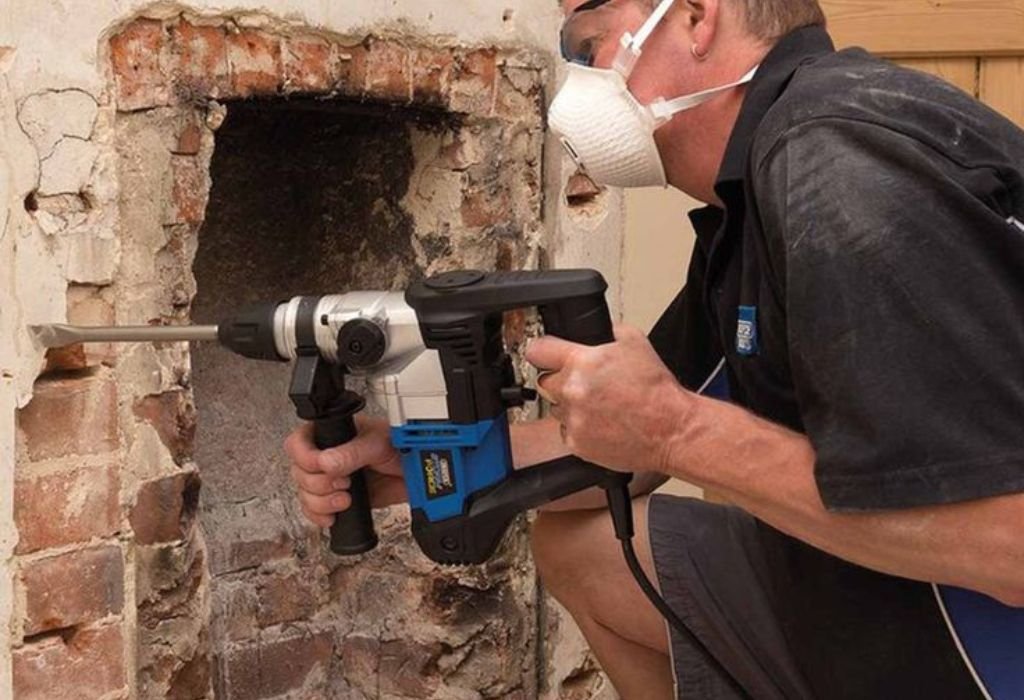
At first glance, a rotary hammer and a standard hammer drill look similar, but they operate very differently.
A hammer drill uses a mechanical cam system to generate light tapping as it spins, perfect for small masonry tasks. A rotary hammer, on the other hand, uses a pneumatic piston mechanism that delivers powerful, continuous blows with far greater impact energy.
This makes rotary hammers excellent for concrete demolition, tile removal, and heavy-duty anchor holes. However, that same force can destroy softer materials like wood in seconds.
Where a hammer drill “taps,” a rotary hammer “pounds.” That’s why disabling the hammer mode and switching to rotation-only mode is essential when working with wood.
Once you make that switch, the rotary hammer behaves more like a slow-speed, high-torque drill — heavy but manageable for certain woodworking applications.
When You Can Use a Rotary Hammer on Wood
You can safely use a rotary hammer on wood if your tool includes a rotation-only setting. This mode disables the impact mechanism, allowing it to spin like a standard drill.
This feature is common in combination rotary hammers (often labeled “rotary hammer + drill + chisel”). Simply turn the mode selector to the drill-only icon, usually represented by a small twisting drill bit symbol.
In this configuration, the tool works effectively on wooden beams, posts, or thick planks where you need extra torque or must drill large holes.
However, keep in mind that rotary hammers are bulkier than normal drills, so they are best suited for tasks where precision is less critical — like rough carpentry or outdoor framing, not delicate cabinetry.
For smaller holes or fine woodworking, a regular power drill or impact driver remains the better choice.
Selecting the Right Drill Bits for Wood
The right bit determines the quality of your results. Rotary hammers typically use SDS or SDS-Plus shank bits, designed for concrete. These should not be used on wood — they tear fibers rather than cutting them cleanly.
Instead, insert a standard wood bit adapter or chuck converter that fits your SDS chuck. This allows you to use normal wood-cutting bits like:
- Brad-point bits for clean, accurate holes
- Spade bits for fast, large openings
- Forstner bits for flat-bottom holes
Always make sure your adapter is secure. A loose bit can vibrate excessively due to the tool’s heavy rotation power.
Using the correct bit and adapter transforms your rotary hammer into a powerful, wood-friendly drill that delivers clean holes without splintering.
Step-by-Step: How to Drill Wood Using a Rotary Hammer
- Switch to drill-only mode. Confirm that the hammer function is fully disabled before you start.
- Select and attach the right bit. Use a chuck adapter with a brad-point or spade bit suited to your hole size.
- Secure the wood. Clamp it tightly to prevent movement and reduce vibration.
- Start slow. Begin drilling at low RPM to let the bit bite cleanly into the surface.
- Increase speed gradually. Once centered, apply steady, moderate speed and light pressure.
- Pause occasionally. Remove the bit to clear chips and avoid heat buildup.
- Finish smoothly. As the bit exits, reduce speed to prevent tear-out on the back side.
Following these steps ensures accurate holes, cleaner finishes, and longer tool life.
Ideal Speed and Pressure for Drilling Wood
Rotary hammers deliver high torque, so you don’t need much pressure. Let the bit do the cutting.
Use low to medium speed — around 800–1,200 RPM — depending on wood type. Softer woods can handle faster speeds, while dense hardwoods require slower rotation to prevent burning.
Avoid leaning on the drill or forcing it downward. Excess pressure can widen the hole and overheat the bit.
If you smell burning or see smoke, stop immediately and allow cooling. Clean the bit tip with a dry cloth before continuing.
Proper control over speed and pressure keeps the hole edges clean and extends both bit and motor life significantly.
Advantages of Using a Rotary Hammer on Wood
Although it’s not a common practice, using a rotary hammer on wood can have benefits.
The tool’s high torque makes drilling through thick beams or hardwoods easier than with a standard drill. It’s especially handy when installing bolts, anchors, or metal fasteners into large timber.
Its durability and power mean less strain on your wrist, as the motor handles the heavy work.
Another advantage is versatility. With a quick switch, the same tool can handle concrete, brick, or wood — perfect for construction sites where multiple materials are present.
When handled properly, a rotary hammer can be a time-saving, multi-purpose solution for demanding woodworking tasks.
Common Mistakes to Avoid
The biggest mistake is forgetting to disable hammer mode. Using impact mode on wood causes severe splintering and can destroy the bit.
Another common issue is using masonry bits on wood. Their blunt tips scrape rather than cut, producing rough holes and friction burns.
Drilling too fast without clearing chips leads to clogging, smoke, and uneven edges.
Avoid drilling without clamping the wood — vibration from the heavy tool easily shifts the material.
Lastly, many users ignore maintenance. Dirty vents or dull bits reduce performance and can overheat your tool.
Avoiding these mistakes ensures safer operation and professional-grade results every time.
Safety Precautions You Should Follow
Using a rotary hammer drill on wood is safe when you follow proper precautions. Always wear safety goggles to protect your eyes from flying sawdust and chips.
Gloves can improve grip but should fit snugly to prevent catching in moving parts. Tie back long hair and avoid loose sleeves that might get pulled into the chuck.
Before drilling, switch off hammer mode and double-check that the bit or chuck adapter is locked securely. A loose attachment can cause wobbling or sudden ejection. Clamp your wood piece firmly to prevent shifting and keep both hands on the drill for maximum control.
Work at a stable height and maintain a balanced stance to counter torque twist. If you feel heat buildup, stop and let the bit cool. Never touch the metal tip immediately after drilling.
Unplug or remove the battery before changing bits, and always drill in a clean, well-lit, ventilated area. Clear the workbench of debris and cords to avoid tripping hazards.
Following these safety rules keeps your drilling precise, your workspace secure, and your rotary hammer in excellent condition for years.
Helpful Answers About Drilling Wood Using a Rotary Hammer
Can a rotary hammer drill wood?
Yes, but only in rotation-only mode with hammering disabled.
Will hammer mode damage wood?
Yes, it crushes fibers and causes deep splinters instantly.
Can I use SDS bits on wood?
No, SDS bits are for masonry. Use a chuck adapter with wood bits.
What type of bit should I use?
Brad-point, spade, or Forstner bits are ideal for clean holes.
Is it safe to drill hardwood with a rotary hammer?
Yes, at low speed and with proper clamping.
Can I use it to drive screws?
Only if the drill has torque control and drill mode enabled.
Why is smoke coming from the hole?
Speed or pressure is too high — slow down and clear chips.
How deep can I drill into wood?
As deep as your bit length allows, but clear chips frequently.
Do I need lubrication when drilling wood?
Usually no, but candle wax helps reduce friction on hardwoods.
Can I make pilot holes for bolts?
Yes, rotary hammers work well for larger pilot holes in beams.
What happens if I forget to disable hammer mode?
You’ll likely splinter the surface and ruin both bit and wood.
Is a rotary hammer better than a hammer drill for wood?
Not necessarily; it’s heavier and designed mainly for masonry.
Can I use a rotary hammer on plywood?
Yes, but use low speed and sharp bits to avoid tear-out.
Can I sand or grind wood with it?
No, rotary hammers are too aggressive for sanding attachments.
What maintenance should I perform after drilling wood?
Clean the vents, remove sawdust, and oil the chuck lightly.
Conclusion
A rotary hammer drill can handle wood successfully when used the right way. The key is switching to rotation-only mode, selecting the proper bit, and controlling your speed and pressure.
With those adjustments, it functions much like a standard drill but with extra torque for tougher jobs. Avoid hammer mode entirely — it’s meant for concrete, not soft fibers.
When handled with care, your rotary hammer becomes a reliable, all-purpose tool suitable for both masonry and woodworking. Always prioritize safety, keep bits sharp, and clamp your work before drilling.
This approach ensures clean holes, smooth performance, and lasting durability from your tool.
Now you know exactly how — and when — to use a rotary hammer drill on wood safely and effectively.

I’m John F. Nicholas, the founder, lead writer, and drill enthusiast behind 101drill.com. With years of hands-on experience in power tools and DIY projects, I created this platform to share practical knowledge, expert tips, and real-world insights to help others master the art of drilling.