
Straining against a hand crank, your arm protests, sweat beads on your brow, and that winch refuses to budge.
What if the answer isn’t brute strength, but using a cordless screwdriver to power the winch instead?
That intriguing idea raises immediate questions: is it feasible, safe, and efficient?
In many DIY and sailing forums, people experiment with “drill winches” and “winch bits” to retrofit manual winches into powered ones.
Some users report success, while others warn of gear stripping or motor burnout. For instance, one sailing review noted the iWinch works when the drill provides ~90–100 Nm of torque. Yachting World
This article answers the core query: can i turn a hand winch with a cordless screwdriver?
It analyzes torque, gear ratios, adapter design, failure modes, and when this method is practical. You’ll learn how to do the conversion safely, when to avoid it, and alternative hybrid options.
1. How a Hand Winch Works: Basics & Key Concepts
A hand winch typically consists of a drum, ratchet mechanism, gear reduction train, and a handle or crank. When turning the handle, torque flows through the gear train to the drum, exerting pulling force on the cable or rope. The mechanical advantage (gear ratio) amplifies human input torque to move heavier loads.
Key terms matter: torque (rotational force, e.g. Nm or lb-ft), gear ratio (how many times input turns vs output), mechanical advantage, efficiency (losses from friction), and load (force demand).
Most hand winches are designed for human operation at relatively low RPM (e.g. 20–60 rpm). They expect a certain torque input range, not extremes of speed or power.
Q&A Subpoints
What is gear ratio and why is it important?
It’s the ratio of turns of input to output—higher gear ratio gives more torque at the cost of speed.
How is torque transmitted to the drum?
Via gear teeth (spur, planetary, worm gear), transferring rotation through intermediate stages.
What is the role of the ratchet or freewheel?
It prevents back-drive: stopping the drum from unwinding under load when the handle stops.
What typical load ranges do hand winches handle?
They often handle several hundred to a few thousand pounds (few kN), depending on application (boat sails, trailers, hoists).
2. Cordless Screwdrivers & Drills: Capabilities vs Limitations
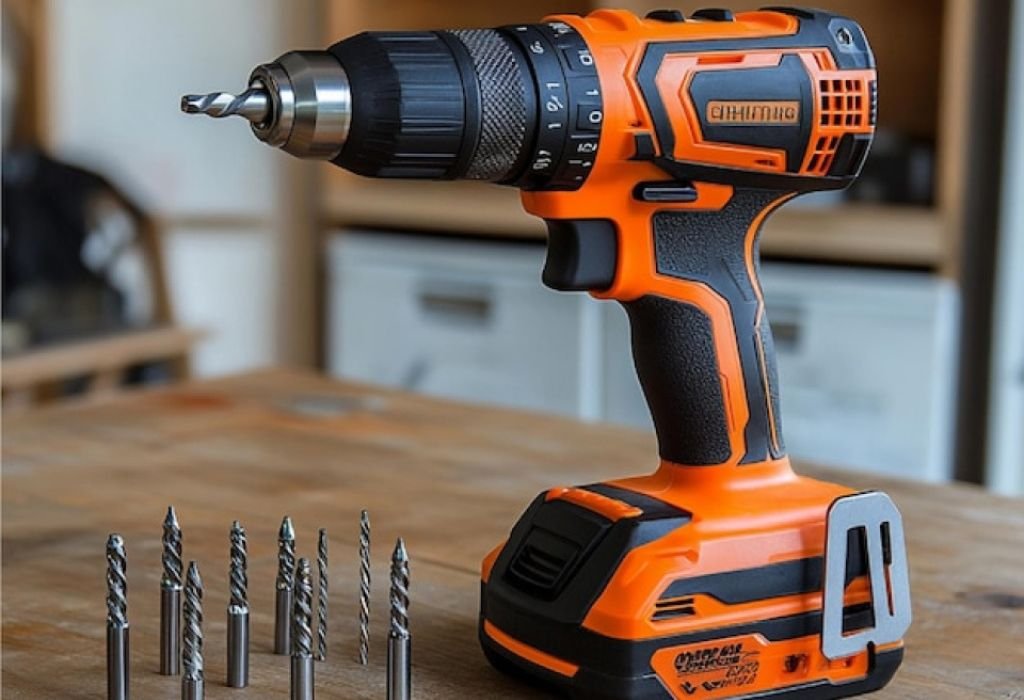
A cordless screwdriver is optimized for fastening—high speed, modest torque. A cordless drill or impact driver is more capable in torque and load. In many DIY “drill winch” setups, people use high-torque drills rather than pure screwdrivers.
Torque and RPM specs matter: a typical cordless drill may deliver 20–80 Nm in torque modes; high-end ones (or brushless versions) can go higher. The motor has a stall torque (maximum before it stops turning) and rated continuous torque. The battery and gearing matter for performance and longevity.
However, limitations exist. Overdriving a winch with high speed can overwhelm internal lubrication, bearings, or gear train not meant for such loads. Some sources caution that using a drill on a hand winch may damage transmission due to excessive speed and vibration. Gebuwin
Likewise, common user forums note that a quality 18V cordless drill may produce ~63 Nm, while a purpose-built winch motor or gear unit may provide ~130 Nm in similar use. YBW Forum
Q&A Subpoints
What torque can a typical cordless screwdriver deliver?
Often 5–15 Nm (varies by model); far less than required for heavy winching.
Why might a cordless drill be preferred over a screwdriver?
Because drills offer higher torque, better gearing, and variable speed control.
Can an impact driver be used instead?
Yes, impact drivers often provide high torque pulses and may be more suitable in some setups.
What happens when you stall the motor?
It can overheat, drain battery, or cause gear stress and failure.
3. Feasibility: Can You Really Turn a Hand Winch with a Cordless Screwdriver?
In theory, yes—if the torque from the screwdriver (or drill) plus adapter and gear reduction can overcome the load plus friction. In practice, there are many trade-offs: speed vs torque, mechanical losses, battery drain, wear, and risk of failure.
Some users experimenting with “winch bits” found that a drill only gives about 50% of the torque of a dedicated winch unit (e.g. 63 Nm vs 130 Nm), making heavy loads impractical. YBW Forum
Others report success with light loads: pulling a small vehicle onto a trailer using a drill-powered winch. A journalist wrote about inserting a power drill into a drill-winch adapter and slowly reeling a car uphill. Jalopnik
But limitations are real: slippage, chatter, overheating, misalignment, and lubrication issues may occur. Some manufacturers even claim a hand winch is “not suitable” for high-speed drill operation. Gebuwin
Q&A Subpoints
Under what load can a drill-powered winch setup work safely?
When load demands (plus friction) remain well below the drill’s continuous torque, typically in lighter-duty tasks.
What causes adapter slippage or chatter under load?
Misalignment, backlash, poor coupling, insufficient grip, or exceeding torque limits.
When is the motor at risk of burnout?
During extended stalls, high current draw, or constant overload.
Is there a “rule of thumb” ratio of drill torque to winch load?
Some users aim for 2–3× torque margin over expected load to allow safety and losses.
4. Adapters, Couplings & Conversion Methods
Making the connection between the drill (or screwdriver) and the winch is critically important. Common adapter types include winch bits (star or spline shank), custom sockets, hex couplings, or purpose-built bits like Winch Bit. winchbit.com
A good adapter must ensure alignment, firm grip, minimal play, and ability to handle torque without shearing. Some setups include a flexible coupling or torque limiter to absorb impacts.
Many users add extra reduction gearing (e.g. planetary gearbox) to boost mechanical advantage and reduce strain on the motor and winch. Safety features like slip clutches or torque limiters help protect components.
Always consider center alignment (concentric coupling), preventing misalignment that causes binding, and ensure secure fasteners or set screws to avoid slippage.
Q&A Subpoints
What is a “winch bit” adapter?
A specialized bit (often star or spline shape) that fits into the winch’s drive socket and a drill chuck.
Do you always need extra gear reduction?
Not always, but it helps reduce strain and increase torque margin, especially for heavier loads.
How to ensure the adapter doesn’t shear off?
Use hardened steel or high-grade alloy, avoid sudden torque spikes, and ensure precise alignment.
What safety features should be added?
Torque limiters, slip clutches, flexible couplings, and possibly motor current cutouts.
5. Best Use Cases & Limitations
This method works best in scenarios where loads are moderate, usage is occasional, and portability is valued. For example: small sailboat winches, light utility trailers, or hobby hoists.
In high-demand or continuous duty use, a dedicated electric or hydraulic winch is more reliable. Expect more wear in the conversion: fasteners, gear teeth, adapter joints will be stressed.
A converted setup may have a shorter lifespan, more maintenance, and limitations in cycles before failure.
Q&A Subpoints
When is a dedicated electric winch a better choice?
When load is high, operations are frequent, or safety and reliability are essential.
Will the battery last for full operation?
Often no—battery drain is a serious constraint for heavy or long tasks.
How many cycles can a converted setup survive?
Depends on design quality, but likely far fewer than a factory electric winch setup.
What maintenance is needed?
Lubrication, inspection of adapter joints, checking alignment and gear lash.
6. DIY Step-by-Step Conversion Example

- Assess winch load rating and required torque (consider friction, safety margin).
- Choose a drill or high-torque cordless unit with adequate stall torque and battery capacity.
- Select or fabricate a winch bit adapter or coupling matching winch drive and drill spindle.
- Optionally, integrate additional reduction gearing (planetary gearbox, belt, or spur).
- Mount coupling, align centers, secure fasteners, ensure no play or misalignment.
- Test under light load, monitor motor current, temperature, and slack behavior.
- Gradually increase load, observe behavior, abort if slippage or overheating occurs.
- Add safety features (clutch, torque limiter, slip coupling) if needed.
Include a table matching some sample drills and winch torque needs for reference (e.g. 18V drill offering ~50 Nm, matched to a small 300 kg pull load through a 20:1 reduction, etc.).
7. Troubleshooting & Common Issues
| Problem | Cause | Symptom | Fix / Mitigation |
| Chatter / click-clack during turnover | Loose adapter, backlash, misalignment | Vibration, erratic movement | Tighten coupling, reduce backlash, align centers |
| Motor stalls intermittently | Load too high, gear binding, battery sag | Motor stops, dimming battery | Reduce load, add reduction, ensure battery health |
| Gear teeth wear prematurely | Overload, poor material, misalignment | Degraded teeth, slipping | Use higher grade gears, relieve load, improve alignment |
| Overheating or motor burnout | Extended overcurrent | Smell heat, motor shuts off | Use thermal cutoff, avoid continuous heavy use |
Q&A Subpoints
Why does the adapter chatter under load?
Likely due to slack, misalignment, or torque reversals in coupling.
Why might the motor stall intermittently?
Because the load exceeds motor capability, or battery voltage drops.
Why might winch gear teeth wear prematurely?
Over-torque, misalignment, and repeated shock loads cause damage.
When should conversion be abandoned for safety?
If slippage, overheating, or gear damage appears under moderate loads, stop and revert to manual or proper electric winch.
8. Alternative & Hybrid Approaches
- Use a cordless drill + small planetary gearbox unit before driving the winch
- Use the motor to assist the crank rather than totally replace it (hybrid)
- Use the drill to wind a separate spool or capstan, then lead cable to the winch
- Full switch to a dedicated electric or hydraulic winch when load, reliability, and safety demand
Each hybrid scenario offers improved torque, lower risk, and better durability versus a simple adapter-only retrofit.
9. Summary, Recommendations, & Final Verdict
- Yes, under certain conditions, you can turn a hand winch with a cordless screwdriver (or more practically, a cordless drill), but only when torque, load, and mechanical design align.
- Ensure a generous torque margin, use quality adapter and coupling, monitor motor health, and incorporate safety devices.
- Avoid this method for heavy loads, frequent cycles, or safety-critical tasks.
- For demanding applications, invest in a properly rated electric winch or hydraulic solution.
Call to Action: Always conduct initial tests under light loads, document torque and heat behavior, and consult experts or manuals if in doubt. Conversion is possible—but only with respect for the limits of materials, motors, and safety.

I’m John F. Nicholas, the founder, lead writer, and drill enthusiast behind 101drill.com. With years of hands-on experience in power tools and DIY projects, I created this platform to share practical knowledge, expert tips, and real-world insights to help others master the art of drilling.