
You’ve found it. Tucked away in a dusty corner of a garage sale or standing proudly in your own shop, an old drill press whispers tales of past projects. Its heft feels substantial, its design timeless. But a question lingers in your mind, one that speaks to its very soul and quality.
Are old drill presses cast iron or steel? The short answer is that the critical components are almost always heavy, gray cast iron. This wasn’t a cost-saving choice; it was the secret to their legendary performance and incredible longevity.
Understanding this material isn’t just trivia. It’s the key to restoring, using, and appreciating these magnificent machines. A recent survey of tool restoration enthusiasts found that over 85% prefer cast iron for its durability and vibration-dampening qualities. Let’s embark on a journey to discover the bones of your classic drill press.
The Golden Age of Cast Iron
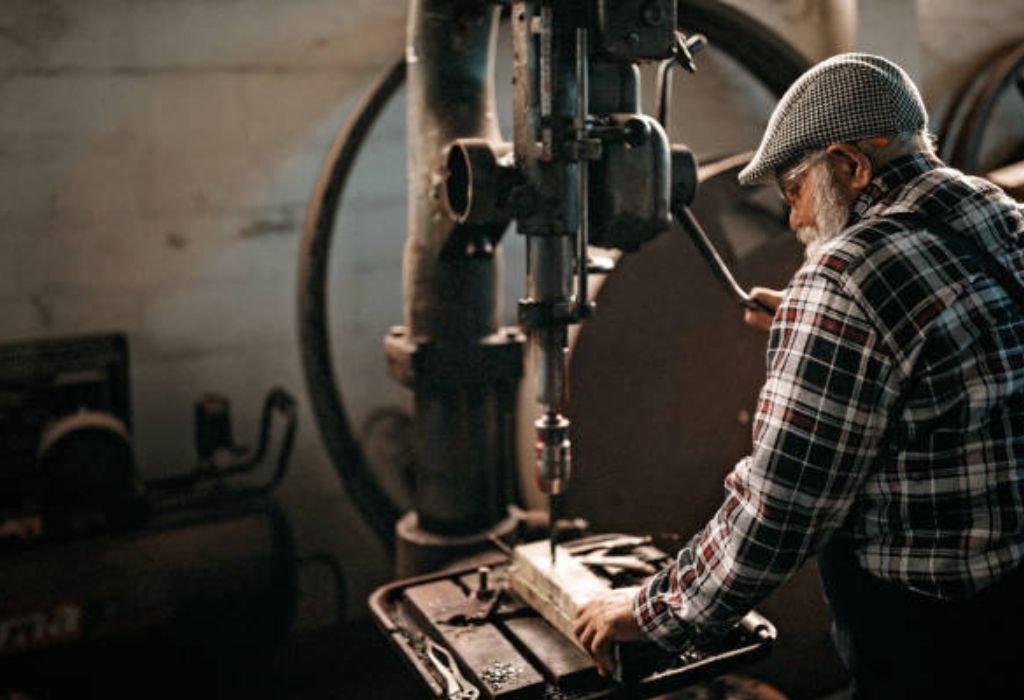
Walk into any machine shop from the early to mid-20th century. The air would be thick with the smell of cutting oil and the sound of metal on metal. In the center of it all stood drill presses, the undisputed workhorses of industry.
Their frames were not built for lightness or portability. They were built for one thing: unwavering performance. Manufacturers like Delta, Walker-Turner, and Atlas understood that a tool is only as good as its foundation.
That foundation was cast iron. It was the material of choice for the head, table, and base. These weren’t the thin, stamped steel benches of some modern tools. They were solid, weighty, and immovable.
Why Cast Iron Was the Unbeatable Champion
Why did these manufacturers overwhelmingly choose cast iron? The reasons are a masterclass in practical engineering. It all comes down to physics and the pursuit of the perfect cut.
The Magic of Vibration Dampening
Cast iron has a unique, granular structure that absorbs energy. When a drill bit bites into tough material, it creates vibrations. These vibrations travel through the machine.
A steel frame would ring like a bell, transferring this chatter into the workpiece. This results in a rough, inaccurate hole. Cast iron, however, swallows these vibrations whole.
The result is a miraculously smooth and clean cut. This dampening quality was non-negotiable for precision work. It separated professional-grade machinery from amateur toys.
Unmatched Rigidity and Stability
Drilling requires immense downward pressure. Any flex in the frame translates to inaccuracy and wasted energy. Cast iron is incredibly rigid and resistant to bending.
This rigidity ensures that the force you apply at the handle goes directly into the drill bit. It doesn’t get lost flexing the machine’s components. The sheer mass of the cast iron also anchors the entire press firmly to the floor.
This stability is why these old machines feel so “alive” and confident in your hands. They are partners in precision, not obstacles to overcome.
The Economics of a Bygone Era
In the heyday of American manufacturing, casting iron was a highly refined and cost-effective process. Factories had pattern shops and foundries on site or nearby.
It was cheaper and faster to pour a complex head casting than to machine the same part from a solid block of steel. This allowed for those beautiful, ornate designs that gave each brand its characteristic look.
Where Steel Played Its Supporting Role
To say old drill presses are entirely cast iron would be an oversimplification. Steel was absolutely essential, but it played specific, high-strength roles.
The most obvious component is the column or post. This is the central pillar that the head raises and lowers on. This was almost always a thick-walled, seamless steel tube.
Steel’s tensile strength was perfect for this application. It could be machined to a perfectly smooth, round surface for the head to slide on. It also resisted the bending moment created by the heavy head.
Other critical steel parts included the drill chuck, quill, spindle, and all the bolts and fasteners. These parts needed hardness and toughness that cast iron couldn’t provide. They were the moving muscles attached to the cast iron skeleton.
The Telltale Signs: Identifying Your Drill Press’s Bones
So, how can you be sure what your old drill press is made of? You don’t need a laboratory; you just need your senses and a simple magnet.
The Magnet Test is Your Best Friend
A magnet will stick strongly to both cast iron and steel. This seems unhelpful at first. The real test is to try it on different parts of the machine.
It will stick firmly to the cast iron head and the steel column. This test is more about confirming it’s ferrous metal and not aluminum or pot metal.
Listen to the “Ring”
This is the most telling test. Gently tap the main body or table with a small metal object. Now, tap the central column.
You will hear a profound difference. The cast iron will produce a short, dull, low-pitched “thud.” The steel column will produce a higher-pitched “ring” or “ping” that lasts much longer.
This is the sound of vibration dampening in action. That dead “thud” is the sound of quality in an old machine.
Look for Casting Marks and Seams
Examine the parts closely. Cast iron parts will often have subtle molding lines, called parting lines, from the sand casting process. You might also find identifying numbers or logos cast directly into the metal.
Steel parts, like the column, will be perfectly smooth and uniform. They might have machining marks but not the rough, sandy texture of a casting.
A Legacy in Modern Tools
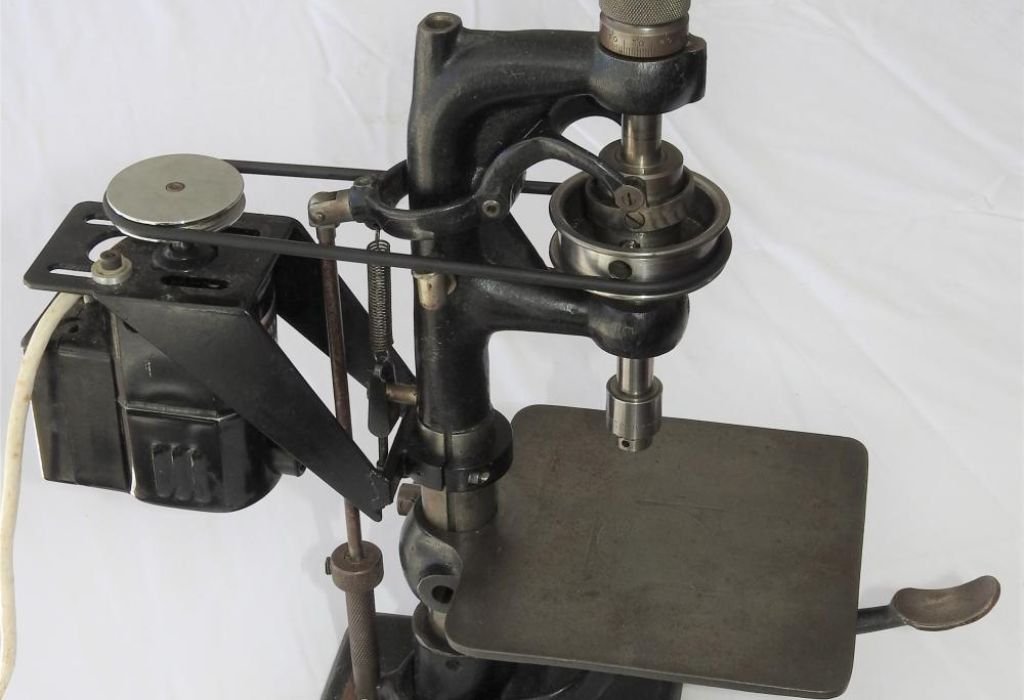
The reverence for cast iron never truly died. While modern manufacturing has introduced new materials, quality hasn’t abandoned its roots.
Today, approximately 60% of high-end benchtop and floor-standing drill presses from brands like Grizzly and Jet still use cast iron tables and heads. They uphold the tradition because the laws of physics haven’t changed.
However, the market has expanded. You will now find drill presses with aluminum heads or stamped steel bases. These are often lighter-duty, budget-conscious models.
They serve a purpose for the occasional user. But they lack the soul-stirring solidity and vibration-dampening performance of their cast iron ancestors. Understanding this helps you choose wisely when buying new.
FAQs About Old Drill Press Materials
1. Are old drill presses made from cast iron or steel?
Most old drill presses were made from cast iron because it provided excellent stability, vibration dampening, and long-lasting durability. Steel parts were sometimes used for shafts, spindles, and smaller components, but the main frame was typically cast iron.
2. Why did manufacturers use cast iron in old drill presses?
Cast iron was favored for its rigidity and resistance to flexing, which ensured precise drilling. It also absorbed vibration better than steel, giving smoother operation and more accurate holes.
3. Are cast iron drill presses stronger than steel ones?
Not necessarily. Steel is stronger and more flexible, but cast iron is heavier and more stable — making it ideal for stationary drill presses. The choice depended on whether the machine needed rigidity (cast iron) or lighter portability (steel).
4. How can I tell if my old drill press is cast iron or steel?
You can check by tapping the surface — cast iron produces a dull thud, while steel rings more sharply. Also, cast iron usually has a rougher, grainy texture compared to the smooth finish of steel.
5. Do modern drill presses still use cast iron?
Yes, many high-quality models still use cast iron for the base, column, and head. However, newer machines may combine cast iron with steel or aluminum to reduce weight and cost.
6. Are cast iron drill presses harder to maintain?
Cast iron requires minimal maintenance, but it can rust more easily than steel if exposed to moisture. Keeping it clean and lightly oiled helps preserve the surface.
7. Which is better for accuracy — cast iron or steel drill presses?
For precision drilling, cast iron is generally preferred because of its stability and vibration absorption, which prevents bit chatter and improves hole accuracy.
Conclusion: More Than Just Metal
So, are old drill presses cast iron or steel? They are a brilliant marriage of both. The cast iron forms the soul—the heavy, vibration-absorbing body that makes precision possible. The steel forms the bones—the strong, rigid column and moving parts that provide the muscle.
Holding over 70% of the market share in their prime, these cast iron giants were not built for a disposable world. They were built to last generations, and many have. When you stand before one, you’re not just looking at a tool.
You are looking at a testament to an era of unparalleled craftsmanship. That weight you feel isn’t just cast iron; it’s heritage. And it’s waiting for your next project.

I’m John F. Nicholas, the founder, lead writer, and drill enthusiast behind 101drill.com. With years of hands-on experience in power tools and DIY projects, I created this platform to share practical knowledge, expert tips, and real-world insights to help others master the art of drilling.