
In the world of metalworking, precision defines craftsmanship.
One small misalignment or off-center hole can ruin an entire structure, especially when working with steel or iron.
That’s where the magnetic drill press — often called a mag drill — changes the game completely.
It combines high power with an electromagnetic base that anchors firmly to metal surfaces, allowing flawless holes to be drilled vertically, horizontally, or even upside down.
So, what is a magnetic drill press used for in metalwork?
It’s the ultimate solution for drilling holes through thick steel beams, ship plates, and machinery frames where handheld drills lose accuracy.
According to Fabricating & Metalworking Magazine, more than 70% of modern industrial drilling tasks now rely on magnetic drills for their precision and speed.
From bridge construction and oil-rig maintenance to workshop fabrication, this compact powerhouse ensures stability, consistency, and professional-grade results wherever metal needs to be drilled accurately.
Understanding What a Magnetic Drill Press Is
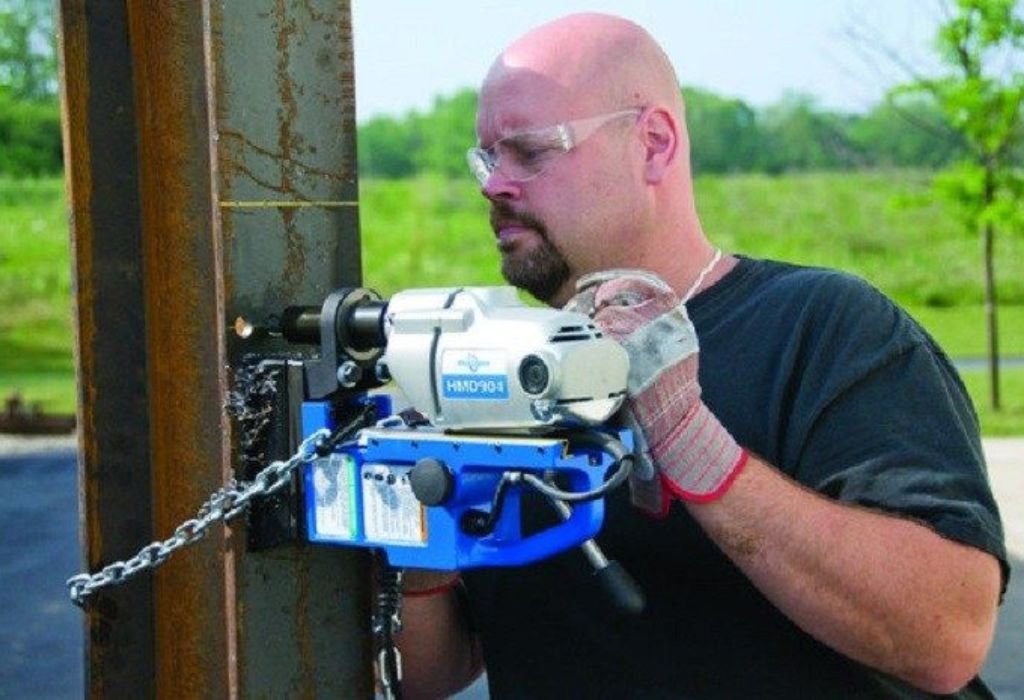
A magnetic drill press is a portable drilling machine designed specifically for metal surfaces.
Its most defining feature is the electromagnetic base, which generates a strong magnetic pull that locks the drill securely to the metal workpiece.
Unlike a traditional bench-mounted drill, this machine can work in multiple positions — horizontally, vertically, or overhead — without losing alignment or stability.
The magnetic base, combined with a high-torque motor, allows precise drilling even on thick or awkwardly placed steel structures.
The typical mag drill setup includes a motor, magnetic base, drill spindle, feed handles, and control switches.
Depending on the job, it can accept various cutting tools like annular cutters, twist bits, reamers, and countersinks, making it versatile for any metalworking task.
The electromagnetic base is powerful enough to produce 2,000–3,000 pounds of holding force, ensuring the tool doesn’t shift under vibration or drilling pressure.
This stability, along with its portability, makes the magnetic drill press a must-have for structural steelworkers, pipeline contractors, and heavy-equipment fabricators.
What makes a magnetic drill press unique?
It’s portable and uses a magnetic base to stick to metal surfaces rather than being bolted to a table.
Can it drill upside down?
Yes, the magnet keeps it stable even in vertical or overhead positions.
What bits does it support?
It can use annular cutters, twist drills, reamers, and countersinks.
How strong is the magnet?
Industrial models can exert over 3,000 pounds of holding power.
Can it work on non-metallic surfaces?
No, it requires ferrous metal to magnetize and hold properly.
Core Uses of a Magnetic Drill Press in Metalworking
The magnetic drill press is primarily used where standard drills cannot deliver stable or accurate results.
It thrives in environments where precision, power, and mobility are essential.
One of its main functions is drilling holes in heavy steel beams, girders, and plates — a common need in construction, shipbuilding, and fabrication plants.
Because the machine can mount directly to the work surface, workers can drill in any position without moving large metal pieces.
Another key application is annular cutting, where the drill removes only a circular rim of material instead of boring the entire hole.
This process is faster, cleaner, and produces burr-free edges ideal for bolt holes or rivets.
The magnetic drill press is also used for tapping, reaming, countersinking, and core cutting — making it a complete drilling solution for industrial projects.
Its ability to perform multiple precision operations with minimal setup time makes it one of the most efficient tools in any metal shop.
Where is a magnetic drill press most commonly used?
In bridge work, construction sites, shipyards, and maintenance workshops.
Can it replace a stationary press?
For fieldwork, yes — it delivers similar precision with greater flexibility.
What is annular cutting used for?
It drills holes faster by removing less material while maintaining a smooth edge.
How thick can it drill?
Most models can handle up to 2 inches deep and 2 inches wide.
Is it suitable for repetitive tasks?
Absolutely. With jigs or stops, it produces identical holes consistently.
Can it drill on curved surfaces?
Yes, with magnetic pads or flexible adapters to maintain surface contact.
Advantages of Using a Magnetic Drill Press
The advantages of a magnetic drill press go beyond portability — it’s about stability, safety, and precision.
Once the magnet is engaged, the drill locks firmly to the metal, creating an ultra-steady platform for exact drilling.
This prevents bit slippage, reduces vibration, and produces perfectly round, accurate holes even in thick or uneven steel.
Unlike handheld drills that depend on operator balance, the magnetic base eliminates fatigue while improving control and safety.
The mag drill also allows the use of larger annular cutters that remove less material than twist bits, cutting time and heat drastically.
Its variable speed control and coolant system keep bits cool, extending both tool and motor life.
In addition, cordless magnetic drills provide unmatched mobility in tight or elevated workspaces, especially for welders or rig builders.
For field metalworkers, it’s a combination of power, precision, and portability unmatched by any other drilling system.
Why does a magnetic drill press give cleaner results?
Because the magnet eliminates vibration and maintains constant downward pressure during drilling.
Is it safe to use on vertical steel beams?
Yes, provided the magnet is fully engaged and supported by a safety strap.
Does it require special training?
Basic instruction helps, but most modern mag drills are user-friendly and straightforward.
Can it handle stainless steel?
Yes, with the right cutters, slower speeds, and cutting fluid.
Why are annular cutters preferred?
They reduce resistance, produce cleaner holes, and work faster than twist bits.
How does portability help?
It lets operators drill directly on site without transporting heavy materials.
Essential Components and How They Work
A magnetic drill press might look compact, but each component is engineered for precision and reliability.
Understanding these parts helps users get the most from their equipment.
At its base lies the electromagnet, which activates when powered, holding the machine firmly in place.
The motor provides torque and rotational force to the drill bit, while the spindle and arbor ensure accurate bit alignment.
The feed handles allow smooth downward control, letting you guide the bit steadily through the metal.
Some models also feature a coolant system, which keeps temperatures low during long drilling operations.
A control panel houses switches for power, magnet activation, and motor speed adjustment.
High-end models may even include overload protection or an LED alignment guide for greater precision.
Together, these components turn a small portable drill into a powerhouse capable of tackling industrial steelwork with confidence.
Why is the magnetic base so critical?
It provides the holding force that stabilizes the drill against vibration.
What’s the purpose of the feed handle?
It controls drilling pressure and depth, improving finish quality.
Can the magnet weaken over time?
Only if damaged or overheated; regular cleaning maintains strength.
What does the coolant system do?
It lubricates the bit, reduces friction, and prevents overheating.
Are digital speed controls necessary?
Not mandatory, but variable speeds enhance accuracy and tool life.
Safety Precautions and Best Practices
While the magnetic drill press is generally safe, proper handling and awareness are crucial for preventing accidents.
The first rule is always to ensure the magnet is fully engaged before turning on the motor.
Even a slightly dirty or painted surface can weaken the magnetic hold.
Always clean the area before drilling and test the magnet’s grip by tugging gently before starting.
Use safety straps or chains when drilling overhead or vertically to prevent falls if power fails.
Wear safety goggles, gloves (only during setup), and snug-fitting clothing to avoid entanglement.
Maintain firm footing, avoid sudden force on the feed handle, and keep your workspace clean of metal chips.
Finally, apply cutting fluid generously to prevent overheating and improve finish quality.
What’s the most common beginner mistake?
Starting the motor before engaging the magnet. Always activate the base first.
Is cutting fluid mandatory?
Yes, it cools the cutter and prevents damage to both bit and motor.
Can a magnetic drill fall if power cuts off?
Yes, that’s why safety chains are essential for vertical work.
Should gloves be worn while drilling?
Only during setup. Remove them before drilling to prevent them from catching in moving parts.
Can it be used on rusted or painted surfaces?
Only after cleaning; smooth bare metal ensures full magnetic grip.
How should beginners practice?
Start on flat, horizontal steel plates before moving to complex positions.
Maintenance and Longevity Tips
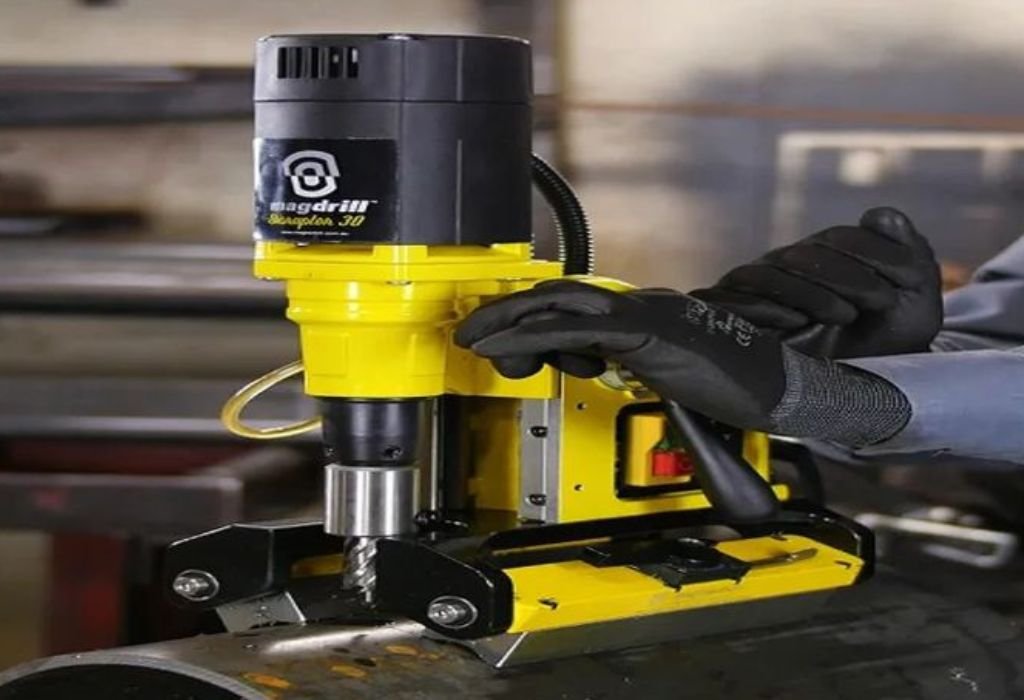
Regular maintenance ensures that your magnetic drill press performs with accuracy for years.
After each use, clean the magnetic base and remove metal shavings that could weaken contact.
Lubricate the feed handles, spindle, and rack to maintain smooth operation.
Inspect cords, switches, and coolant lines periodically for wear or damage.
Sharpen or replace annular cutters once they show dullness or excessive friction.
Dull cutters increase motor load and produce rougher holes, shortening tool life.
Store the drill in a dry area, covered to prevent dust accumulation.
For long-term use, periodically test the magnetic strength on a clean steel plate to ensure full holding power.
How often should maintenance be done?
Light cleaning after every use; deep checks monthly or after heavy projects.
Can cutting fluid go bad?
Yes, replace it if it smells sour or changes color — it’s less effective when old.
What shortens cutter life the most?
Drilling too fast without coolant or applying too much pressure.
Can the magnet lose power permanently?
Not if maintained; avoid dropping or overheating the base.
What’s the ideal storage environment?
Cool, dry, and away from moisture or metal debris.
Conclusion
Learning what is a magnetic drill press used for in metalwork reveals just how versatile and essential this tool truly is.
From drilling perfectly aligned bolt holes to cutting through thick steel plates with ease, the mag drill combines precision, safety, and portability in one compact package.
Its electromagnetic base ensures a rock-solid grip, while its motor and annular cutters deliver clean, accurate holes every time.
When properly maintained, it becomes one of the most reliable investments in any metalworker’s shop.
Whether you’re fabricating, repairing, or assembling steel structures, the magnetic drill press transforms difficult jobs into smooth, professional work — ensuring your craftsmanship reflects strength, accuracy, and confidence with every hole drilled.

I’m John F. Nicholas, the founder, lead writer, and drill enthusiast behind 101drill.com. With years of hands-on experience in power tools and DIY projects, I created this platform to share practical knowledge, expert tips, and real-world insights to help others master the art of drilling.