
Precision metal drilling demands power, alignment, and stability that handheld drills can’t always guarantee. This is where the magnetic drill press — or mag drill — becomes indispensable. Engineered for industrial fabrication, it combines portability with extraordinary cutting precision.
A magnetic drill press uses a powerful electromagnetic base to clamp itself securely onto a metal surface. Once activated, the magnet holds the drill steady, allowing operators to bore perfectly aligned holes even on vertical or overhead surfaces.
Understanding what is a magnetic drill press and how it works helps professionals harness its efficiency in structural steelwork, shipbuilding, and heavy machinery fabrication. With the right setup, it can achieve flawless results, reduce fatigue, and enhance safety.
Unlike traditional benchtop models, the mag drill’s portability allows precision drilling wherever steel structures exist. Whether fixing beams or building pipelines, its accuracy and strength make it a vital part of modern engineering workshops.
Understanding What a Magnetic Drill Press Is
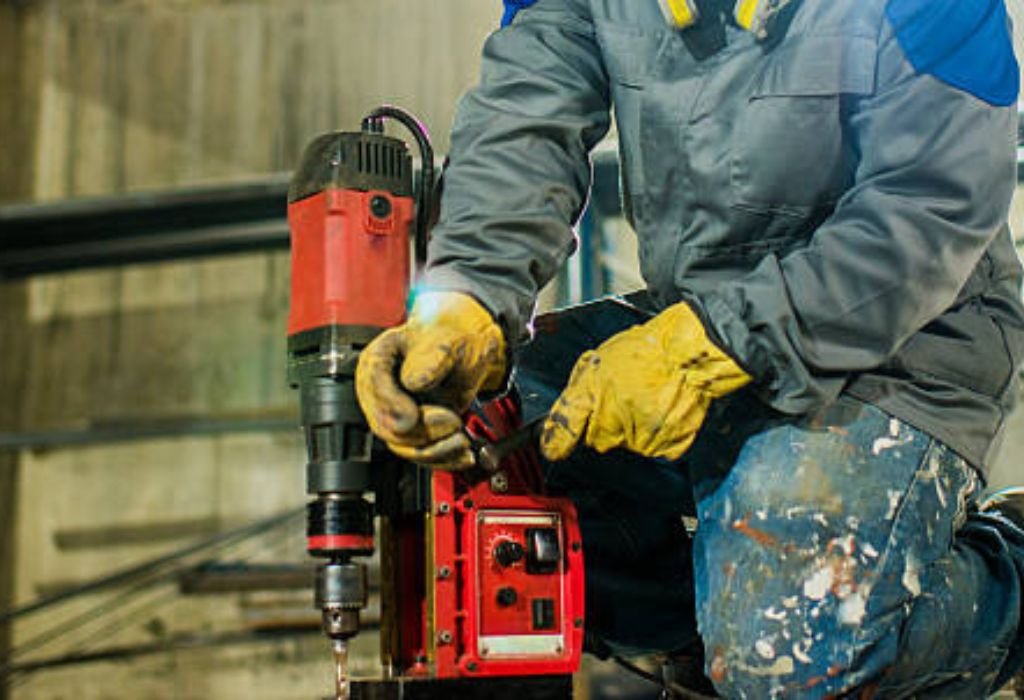
A magnetic drill press is a portable, electrically powered drilling machine designed to cut precise holes into ferrous metals. Its defining feature is the electromagnetic base that adheres firmly to steel surfaces when powered on, forming a temporary anchor point that resists movement during drilling.
The machine includes a motor-driven spindle, a feed handle for vertical motion, and an integrated control system for speed regulation. Many models also support automatic feed systems, allowing consistent drilling pressure across multiple holes.
What makes this tool unique is its stability on irregular surfaces. The magnet base generates thousands of pounds of holding force, transforming even vertical or overhead work positions into controlled environments for accurate drilling.
Magnetic drill presses typically range between 500 to 2000 RPM depending on their motor rating and are compatible with various cutting tools — twist drills, annular cutters, reamers, and countersinks. Annular cutters are particularly favored for efficiency, as they remove only a ring of metal rather than drilling the entire core.
Compact yet powerful, the mag drill is a mobile substitute for stationary presses in environments where moving large steel pieces is impractical. It’s a balance of power, precision, and portability that allows fabrication work to happen anywhere metal structures stand.
Key Components of a Magnetic Drill Press
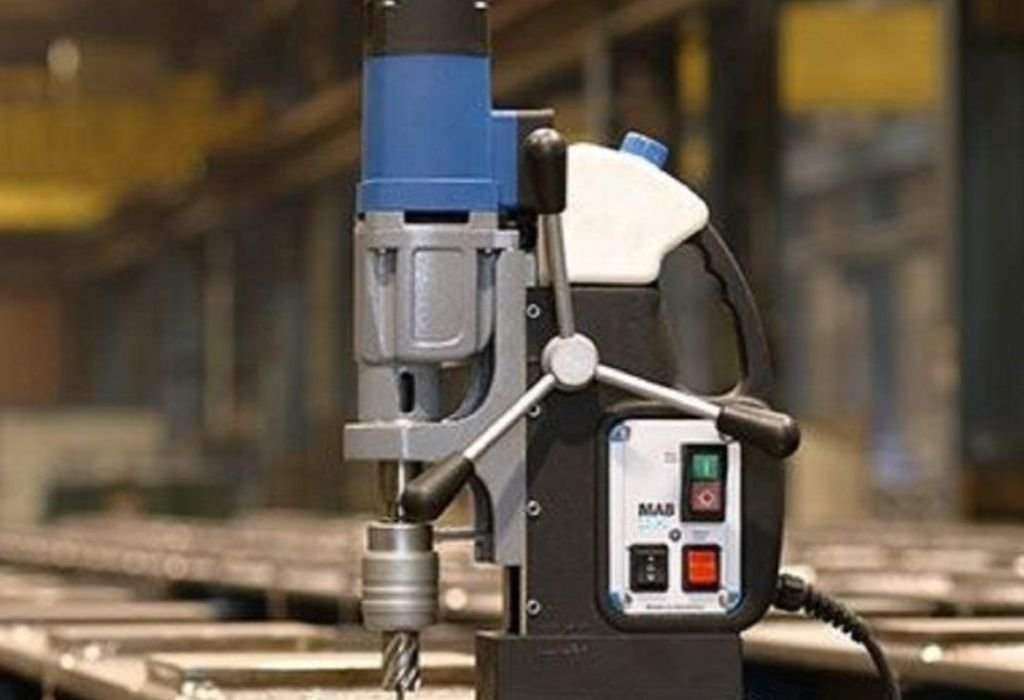
A magnetic drill press integrates multiple components engineered for precision and strength. Understanding these parts clarifies how the tool maintains stability and accuracy even in demanding conditions.
The electromagnetic base is the foundation of the machine. It contains a coil that, when energized, generates a magnetic field strong enough to secure the drill to ferrous metal. Some models use a permanent magnet that doesn’t require power to maintain adhesion, offering safety in power-loss scenarios.
The motor assembly powers the spindle and cutting tool. Depending on model design, it may be a single-speed, variable-speed, or geared motor system. Variable-speed models provide flexibility across materials of varying hardness.
The spindle transmits rotation from the motor to the cutting bit, while the feed handles control downward motion. A coolant system ensures temperature management during prolonged cutting, preventing tool wear and thermal deformation.
The control panel allows speed selection and magnet activation. Safety interlocks prevent the motor from running unless the magnet is securely engaged. Many industrial mag drills also include automatic feed control, reverse functions, and digital speed displays for high-precision operations.
Together, these components form a compact yet powerful drilling system that combines mechanical precision with electronic safety — a benchmark in portable machining tools.
How a Magnetic Drill Press Works
The working principle of a magnetic drill press revolves around electromagnetism and controlled mechanical feed. When connected to a power source, current flows through coils in the base, creating a strong magnetic field.
This magnetic attraction holds the machine firmly to the metal surface, effectively turning that surface into the machine’s base.
Once anchored, the operator starts the motor and selects the proper drilling speed for the material. The feed handle is then used to lower the rotating cutter into the work surface with steady pressure.
Because the magnetic base eliminates vibration and lateral movement, the bit maintains a true vertical path throughout the operation.
During drilling, lubricant or coolant is supplied through an integrated system to reduce heat buildup and extend the cutter’s life. The combination of firm magnetic grip, smooth vertical feed, and controlled RPM ensures maximum accuracy and minimal material distortion.
If power is lost, some advanced mag drills feature permanent magnet backup systems or mechanical locks to prevent the drill from detaching unexpectedly. This ensures both safety and stability even in hazardous work conditions.
Through this interplay of magnetic force, motorized torque, and mechanical feed, the mag drill delivers performance comparable to stationary presses — but with the mobility demanded by industrial fieldwork.
Applications of a Magnetic Drill Press
The versatility of a magnetic drill press makes it a key tool in industries where structural steel and heavy metal fabrication dominate. It’s commonly used in construction sites, shipyards, manufacturing plants, and maintenance workshops.
In construction, it drills precise bolt holes in steel beams, columns, and frames during assembly. Its magnetic base allows it to work on vertical or overhead surfaces without loss of accuracy, making it ideal for installing bridges, towers, and industrial frameworks.
In shipbuilding, where steel panels are pre-assembled before welding, mag drills enable accurate hole alignment for bolts and fasteners even on curved surfaces. Maintenance teams also rely on them for repairs in confined or elevated spaces.
In manufacturing, the tool aids in producing equipment frames, molds, and dies. The use of annular cutters increases efficiency by producing cleaner, burr-free holes with less effort. For pipeline fabrication, mag drills handle flange and coupling installations precisely, ensuring leak-proof assembly.
Because of their adaptability, mag drills serve as portable machining stations wherever stationary equipment cannot be transported. This ability to deliver workshop-level precision directly at the job site defines their unmatched value in modern engineering operations.
Advantages of Using a Magnetic Drill Press
The magnetic drill press combines strength, precision, and convenience, making it one of the most efficient tools for metalworking professionals.
Its portability is the foremost advantage. Operators can take the drill to the job rather than bringing large workpieces to a fixed press. This flexibility significantly reduces setup time and labor.
Accuracy is another major benefit. The magnetic base provides strong adhesion, virtually eliminating vibration and ensuring precise, round holes every time. This is particularly important in industrial applications where tolerances must remain tight.
Additionally, mag drills support various cutting tools — from twist drills to core cutters — making them adaptable for different operations. With the right attachments, they can also perform countersinking, tapping, and reaming.
Energy efficiency is another plus. Since the electromagnetic base consumes minimal current, the machine can be powered by portable generators, making it suitable for remote construction sites.
Finally, the operator’s safety is enhanced by built-in features like magnetic hold sensors, overload protection, and automatic shutdown mechanisms. These ensure the tool operates reliably even under harsh conditions.
For professionals handling heavy steelwork, no other portable tool combines precision, safety, and adaptability quite like the magnetic drill press.
How to Choose the Right Magnetic Drill Press
Selecting the correct mag drill depends on work requirements, material thickness, and drilling frequency. Several factors define performance and suitability.
Magnet strength is critical. The holding force must exceed the total drilling resistance to prevent movement. A general rule is at least 1,200 lbs of holding force for standard operations, increasing for larger hole diameters.
Motor power determines cutting capability. Light-duty models typically feature 6- to 8-amp motors, while heavy industrial units can reach 12 amps or higher. Higher wattage supports larger annular cutters and deeper cuts.
Speed control affects cutting quality. Variable-speed drills adapt better to different materials, preventing overheating and ensuring clean edges. Some advanced models offer programmable speed memory or feedback-controlled RPM systems.
Stroke length or quill travel defines maximum drilling depth. Common ranges are 2 to 4 inches, but heavy-duty machines may extend beyond 6 inches for thicker steel plates.
Weight and portability matter for field applications. Lightweight models under 30 lbs are ideal for elevated work, while heavier ones provide better stability for horizontal drilling.
By balancing these parameters — magnet strength, power, speed, and weight — users can select the mag drill best suited for their production environment.
Maintenance and Safety Practices
Proper maintenance ensures long-term precision and operational safety of a magnetic drill press. Because it relies on both mechanical and electrical systems, neglect can reduce magnet strength or introduce alignment errors.
After each use, clean the magnetic base and remove chips, oil, and debris. Metal shavings can weaken adhesion or scratch the magnet surface. Lightly oil exposed parts to prevent corrosion, especially in outdoor environments.
Inspect the power cord and plug regularly. Damaged insulation can interrupt the magnetic circuit, risking sudden loss of grip. Likewise, ensure the magnet face remains smooth and flat for consistent contact with metal surfaces.
Lubricate the spindle and feed mechanism monthly with manufacturer-recommended oil. For models with coolant systems, flush and replace coolant periodically to prevent clogging.
Safety-wise, always verify magnet activation before starting the motor. The drill should never be energized without full magnetic adhesion. Use safety harnesses or backup chains for overhead drilling to prevent falls if power fails.
Routine checks for loose bolts, worn bearings, and uneven feed motion keep the mag drill performing at factory-level accuracy. Consistent maintenance not only extends tool life but also ensures every drilled hole remains perfectly aligned.
Frequently Asked Questions About Magnetic Drill Press
What is a magnetic drill press?
A magnetic drill press is a portable, high-precision drilling machine with an electromagnetic base that anchors it to metal surfaces. It’s primarily used for drilling steel and other ferrous materials with maximum stability and accuracy.
How does a magnetic drill press work?
When the magnet is activated, it creates a strong electromagnetic force that holds the machine firmly to the metal surface. The motor drives the spindle, and the operator feeds the cutter downward for controlled, vibration-free drilling.
What materials can a magnetic drill press drill?
It is specifically designed for ferrous metals like structural steel, iron, and mild steel. However, when used with vacuum or clamping bases, it can also work on non-ferrous materials such as aluminum or stainless steel.
What types of drill bits can be used with it?
Common tools include annular cutters, twist drills, countersinks, and reamers. Annular cutters are preferred for speed and cleaner holes since they remove only the outer ring of material rather than the entire core.
Is a magnetic drill press safe to use overhead or vertically?
Yes, it can drill vertically, horizontally, or even upside down. However, safety chains or backup straps must be used to secure the drill in case of magnetic power loss.
What are the main advantages of using a magnetic drill press?
It offers high precision, portability, and stability. The magnetic base minimizes vibration, ensuring cleaner holes and longer tool life — ideal for fieldwork or large steel structures.
Can a magnetic drill press be used on-site?
Absolutely. It’s designed for portability and can be carried to construction sites, bridges, or shipyards where stationary drills aren’t practical.
How do you maintain a magnetic drill press?
Clean the magnet base after every use, inspect power cords, lubricate the spindle, and keep bearings in good condition. Regular maintenance preserves accuracy and magnet strength.
What is the difference between an electromagnetic and permanent magnet base?
Electromagnetic bases require electric power to generate holding force, while permanent magnet models retain grip even during power outages, offering extra safety in critical operations.
Why is a magnetic drill press essential for metal fabrication?
Because it combines portability with unmatched drilling accuracy. It allows workers to create perfect holes directly on large or immovable steel components without repositioning heavy materials.
Conclusion
The magnetic drill press stands as a cornerstone of modern metal fabrication, combining mechanical precision with field-ready versatility. It allows professionals to bring machining accuracy directly to the job site, saving both time and resources.
Understanding what is a magnetic drill press and how it works reveals the ingenuity behind its design — a fusion of magnetic science and mechanical engineering.
The electromagnetic base creates a secure anchor, while the motor and quill deliver smooth, perpendicular cutting motion even in challenging environments.
When properly used, the mag drill offers exceptional stability, minimal vibration, and consistent results that rival full-sized stationary presses. From heavy industrial construction to maintenance operations, it remains the preferred solution wherever precision drilling in metal is required.
Investing in a quality magnetic drill press means investing in accuracy, durability, and productivity.
With proper maintenance and correct handling, this compact powerhouse can transform any job site into a precision workshop, redefining how professionals approach metal drilling for years to come.

I’m John F. Nicholas, the founder, lead writer, and drill enthusiast behind 101drill.com. With years of hands-on experience in power tools and DIY projects, I created this platform to share practical knowledge, expert tips, and real-world insights to help others master the art of drilling.