
In a busy woodworking shop, the hum of routers, the screech of table saw blades, and the whirr of sanders are easily noticed.
Yet when it comes to speed, accuracy, and repeatable hole-drilling tasks, one machine often stands out: the drill press.
This guide explores what is a drill press used for in woodworking, revealing how it elevates precision, protects stock from tear-out, and enables consistent results across multiple pieces.
Many woodworkers start with a handheld drill and assume it will handle all drilling tasks. The truth is, a drill press offers superior control, especially when drilling dowels, shelf pin holes, or counter-sinks in bulk.
According to one expert article, “a drill press lets you precisely determine the placement and angle of the hole as well as its depth.” (FineWoodworking)
Core Uses of a Drill Press in Woodworking
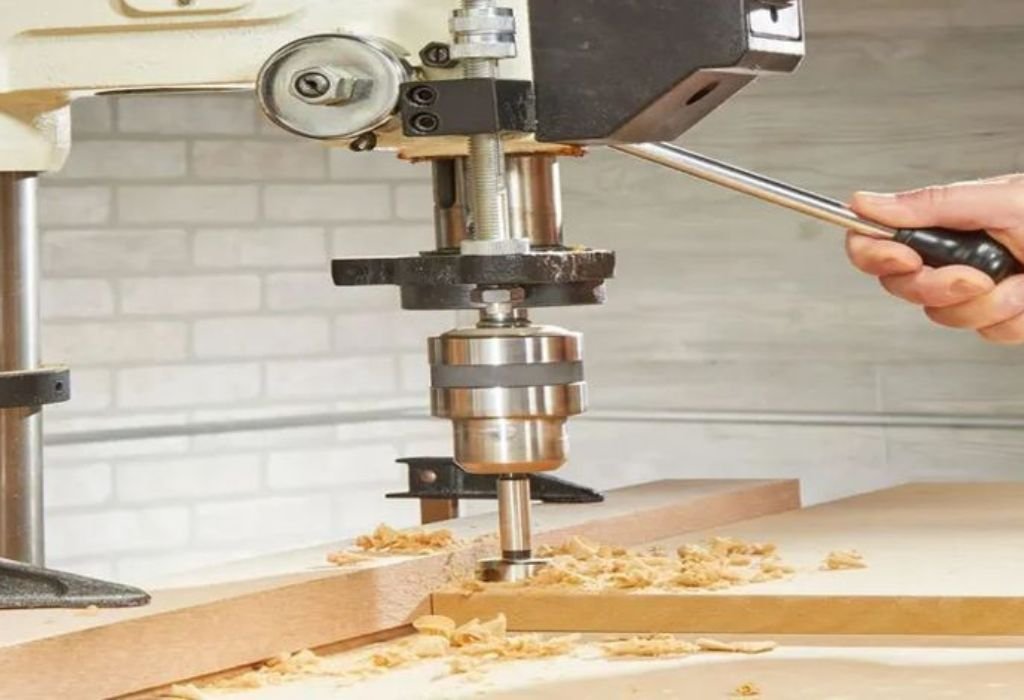
A drill press is more than just a machine to spin a bit into wood. It offers stability, repeatability, and accuracy that handheld drills cannot match. For many woodworkers, this machine becomes indispensable once properly understood.
From bored holes for joinery to countersinks for hardware, the drill press covers tasks from basic to advanced. It allows precise depth stops, perpendicular holes with minimal layout error, and the ability to mount jigs, fences, or zero-clearance inserts.
One woodworking magazine notes that many woodworkers “would wonder how they ever did without one.” (FineWoodworking)
Among the most frequent applications are: dowel holes, shelf pin holes, hardware mounting, repeat drilling of identical patterns, and angled or mortised holes with the appropriate jig or attachment.
Because the drill press table supports the workpiece firmly, tear-out is greatly reduced and bit deflection is minimized.
What kind of holes is a drill press best for in woodworking?
It excels at perpendicular, repeatable holes such as dowel holes, shelf pin holes, and hardware mount holes.
Can a handheld drill replace a drill press for most tasks?
For some basic drilling yes—but for precision, repeatability, and minimized tear-out, a drill press is vastly superior.
How does a drill press reduce tear-out in wood?
By allowing a backer board beneath the workpiece and securing the stock to the table, the exit fibers are supported and the hole edge stays clean.
Is a drill press useful for angled drilling?
Yes, with tilt tables or angled jigs attached, the same machine can create angled holes with far more accuracy than handheld attempts.
Why is repeatability important in drilling patterns?
When producing multiple identical pieces, having a fixed table, fence, or jig anchored to the drill press ensures consistent hole placement and speeds up production.
Benefits of Using a Drill Press Over Handheld Drilling
Upgrading from a handheld drill to a stationary drill press offers multiple benefits in woodworking. The increased control, depth accuracy, and efficient setup make complex tasks simpler and more reliable.
Because the drill press table is rigid and the spindle is fixed vertically, hole deviation and bit wander are minimized. This means furniture parts line up precisely, hardware installs flush, and mortises or plumbing holes are more predictable.
In addition, the machine’s lever feed offers mechanical advantage, reducing operator fatigue and improving consistency. The machine’s capability is discussed in an article stating it provides “power and leverage to drive bits easily, even in hard stock.” (FineWoodworking)
Another major benefit: mounting jigs, fences, and fixtures is easier on a drill press because of the flat table and fixed head. Whether using step clamps, T-slot bolts, or custom zero-clearance plates, the workholding options expand significantly compared to handheld setups.
Additionally, the ability to stop the spindle at a precise depth ensures identical drilling across multiple workpieces, which greatly improves efficiency.
How does depth stop improve woodworking drilling?
A depth stop ensures each hole is drilled to exactly the same depth, which is vital for shelf pins, hardware installation, or joinery.
What advantages are there for repeat drilling operations?
Fixed fences and jigs attached to the drill press table allow batch drilling with identical location and depth every time.
Why is bit deflection less likely on a drill press?
Because the stock is held firmly on a flat table and the bit is driven vertically within a rack/lever feed, sideways forces are minimized.
Is it easier to drill larger bits with a drill press than handheld?
Yes—the drill press’s stability, motor leverage, and table support handle larger bits with better accuracy and control.
Can a drill press increase the quality of joinery?
Absolutely. Accurate dowel holes, plug holes, or hardware mounts improve alignment, fit, and final appearance of assemblies.
Key Features to Look for in a Woodworking Drill Press
Selecting the right drill press for woodworking requires attention to specific features: table size, tilt functionality, speed range, and accessories matter greatly. These details determine how effectively the machine handles various tasks.
First, check the table size and surface. A larger table allows bigger stock support and clamping of fences or auxiliary boards. Many woodworking-oriented drill presses come with tilt tables, allowing angled drilling for joinery work.
Also, variable speeds or belt/pulley speed setting help adapt to different wood types and bit sizes—larger for softwoods, slower for hardwoods.
According to general machine tool info, “holes can be drilled quickly and easily with fixed table and spindle.” (Wikipedia)
Other important features: a quill lock to prevent spindle drop, a laser or LED for bit alignment, and zero-clearance inserts to avoid blowout on bottom side of stock. Also, check for table T-slots for mounting fences or jigs, and a quiet, smooth motor for minimal vibration.
Choosing the correct machine ensures the drill press becomes a reliable shop asset rather than a compromise.
What table size is sufficient for woodworking drill presses?
A table at least 12″ x 14″ is good for bench models; larger if you plan big stock or add fences and jigs.
Why is variable speed important?
Different wood types and bit diameters require different RPMs; variable speed allows optimal cutting conditions and reduced tear-out.
Does the table need T-slots?
Yes—the T-slots allow fences, zero-clearance inserts, and step clamps which all improve workholding and versatility.
What is a quill lock and why use it?
A quill lock secures the spindle at a set depth, reducing deflection and ensuring consistent depth for repetitive drilling.
Is tilt table functionality useful?
Absolutely—for joinery, angled shelf pins, or compound drilling, a tilt table adds major flexibility.
Setup and Best Practices for Safe, Accurate Drilling
Proper setup and safe operation are critical when using a drill press in woodworking. Attention to detail here prevents damage to both stock and machine, and ensures better results.
Start by cleaning and leveling the table. Support your stock with a backer board under through-holes to prevent tear-out. Use proper bit types for wood (brad-point or Forstner) and secure stock with clamps or a vise to prevent spinning.
Many woodworking forums report that once users switched from handheld to a proper drill press they gained “straight, repetitive depth, less sloppy” holes. (Sawmill Creek Woodworking Community)
Ensure you remove the chuck key before powering the machine, clamp the workpiece firmly, and wear eye protection and hearing protection.
Adjust the bit speed to suit the material and size, feed steadily (not too fast to avoid burning), and clean chips from the bit regularly. Use fences and stops for repeated holes. These practices maximize the benefits of the machine and reduce risk.
Why use a backer board under drilling wood?
It supports the wood fibers at the exit point and prevents blow-out or splintering of the underside.
What bit type is best for drilling wood on a press?
Brad-point bits and Forstner bits deliver cleaner holes with minimal wander and reduced tear.
How often should you clear chips when drilling?
For deep or large-diameter holes, clear chips periodically by withdrawing the bit slightly to avoid clogging and burning.
Why should you secure the workpiece?
Loose work can spin or catch on the bit, causing damage, inaccurate holes, or injury.
How should speed be adjusted for different woods?
Use slower speeds for hardwoods or large bits; higher RPM for softwood or thin stock for cleaner cuts.
Maintenance and Expanding the Drill Press’s Capabilities
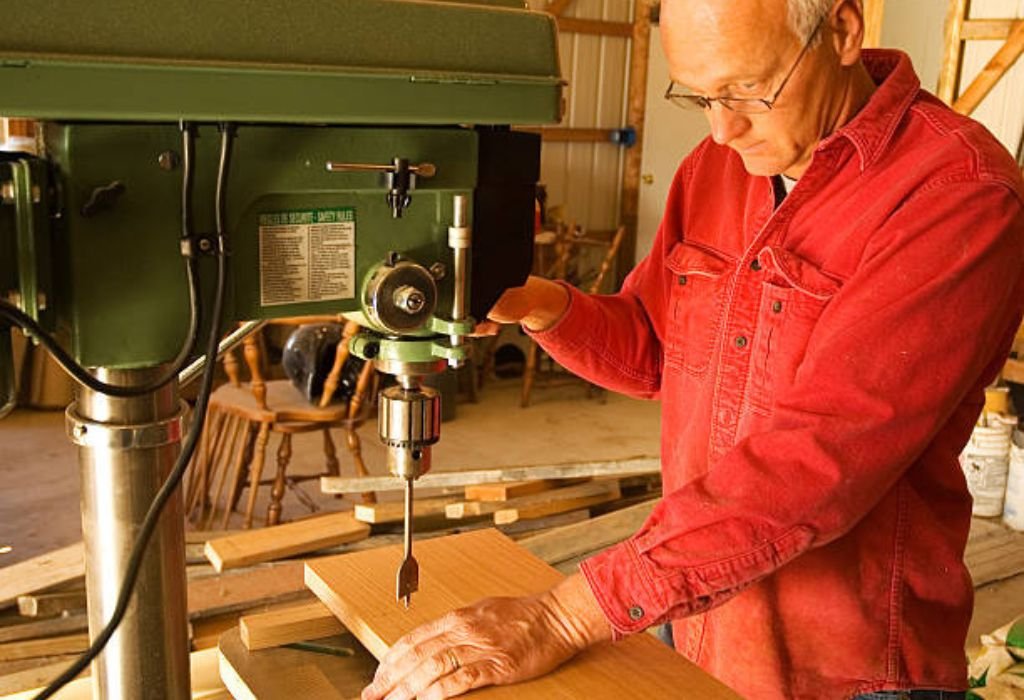
Maintaining the drill press and expanding its uses help keep it relevant and powerful in the woodworking shop. With the right attachments and upkeep, its role goes beyond just drilling holes.
Maintenance includes checking for spindle run-out, keeping the table clean, lubricating the feed mechanism, and ensuring the belts/pulleys (if applicable) are properly tensioned. Low vibration and smooth feed mean better accuracy and longer tool life.
Attachments like dowel jigs, indexing heads, tilting tables, or radial arms convert the machine into a versatile station for mortising, plug cutting, or even sanding drums.
As Wikipedia notes, drill presses may also be used for “sanding, honing, and polishing” when suitably configured. (Wikipedia)
When upgrading, consider adding fences for repeat drilling, zero-clearance inserts for clean exits, and step-clamp kits for custom workholding. Safety upgrades such as foot switches, laser pointers, or magnifiers also raise shop ergonomics.
With proper care and smart accessories, the drill press evolves from “what is a drill press used for in woodworking” to “what can this machine become in my workflow.”
How often should spindle run-out be checked?
Check at least every few months or after heavy use. Any wandering bit indicates misalignment and must be addressed.
Can a drill press be used for mortising wood?
Yes—with proper attachments such as a hollow-chisel mortising attachment, the drill press can perform square holes in timber efficiently.
What accessories improve repeatability?
Fences, indexing heads, zero-clearance inserts, and repeat-hole stops dramatically improve consistent results.
Is oiling or greasing necessary?
Yes—feed handles, quill rack, and table surfaces benefit from occasional lubrication to maintain smooth movement and prevent corrosion.
When should belts or pulleys be replaced?
When slipping occurs, noise increases, or speeds are inconsistent. Regular visual inspection and maintenance extend machine life.
Conclusion
Understanding what is a drill press used for in woodworking opens up a world of precision, efficiency, and professional-quality results.
By recognizing its core uses—including perpendicular drilling, depth-controlled holes, repeat patterns—and choosing the right features like a tilt table, T-slots for workholding, and variable speeds, woodworkers unlock major productivity gains.
The benefits of upgrading from a handheld drill to a drill press are clear: improved alignment, cleaner holes, better joinery, and increased repeatability. Proper setup, safe drilling practices, and regular maintenance keep the machine performing at its best.
With the right accessories—fences, zero-clearance inserts, jigs, and clamps—and a routine of checking run-out, cleaning chips, and verifying depth stops, your drill press becomes a true multi-functional station, not just a hole maker.
For any woodworking shop, from hobbyist to professional, mastering the drill press makes a tangible difference. Make precision your default, not your exception, and let every hole drilled be a mark of craftsmanship.

I’m John F. Nicholas, the founder, lead writer, and drill enthusiast behind 101drill.com. With years of hands-on experience in power tools and DIY projects, I created this platform to share practical knowledge, expert tips, and real-world insights to help others master the art of drilling.