
Many DIYers and machinists often wonder if a milling machine can double as a drill press. The thought comes naturally—both tools spin a bit, cut holes, and share similar structures. But beneath that surface similarity lies a deeper question of precision, safety, and practicality that every workshop owner should understand.
In small shops where space and budget are limited, combining tools can seem like a smart move. A milling machine is already capable of intricate cutting, shaping, and slotting, so using it for drilling might appear efficient. Yet the challenge lies in knowing whether this crossover use truly saves time or compromises the machine’s integrity.
Modern machining research shows that tool flexibility can reduce operating costs by up to 20%, especially in multi-purpose setups. Such data sparks curiosity—can a milling machine really replace a drill press without losing accuracy or safety?
This guide explores that very question in depth. From comparing machine design and spindle power to evaluating accuracy, tooling, and long-term maintenance, it reveals when using a milling machine for drilling is smart—and when it isn’t. By the end, readers will clearly understand whether the milling machine sitting in their workshop can safely and effectively handle the role of a drill press.
Understanding the Machines: Milling Machine vs Drill Press
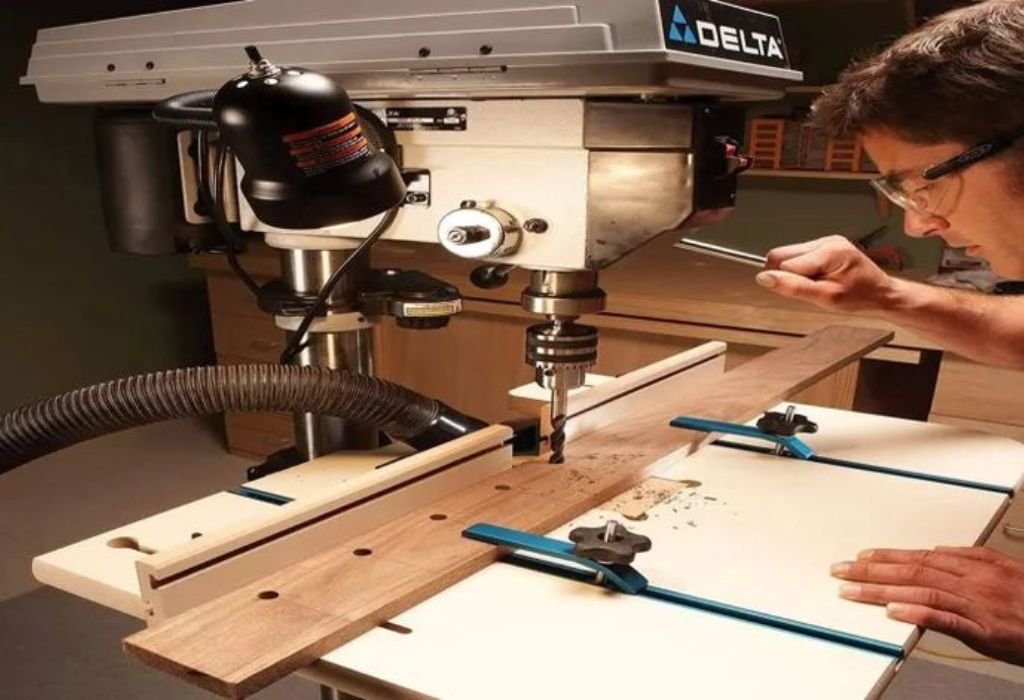
Both the milling machine and the drill press are designed to remove material, but their mechanisms, precision, and purpose are very different. A drill press primarily makes vertical holes, while a milling machine can cut, drill, and shape metal from multiple angles. Understanding these differences helps determine whether a milling machine can safely take on drilling duties.
The drill press relies on a simple up-and-down spindle movement, making it perfect for repetitive drilling tasks. A milling machine, however, has a more complex structure with adjustable axes that allow lateral movement, providing higher precision and versatility for complex cuts.
what is a drill press?
A drill press is a stationary tool designed specifically for vertical drilling. It uses a chuck to hold drill bits and provides consistent downward pressure for accurate holes.
what is a milling machine?
A milling machine is a versatile machine tool that not only drills but also cuts, slots, and shapes materials in multiple directions using various cutting tools.
how do their functions overlap?
Both machines can create holes, but the milling machine offers finer control and multi-directional movement, while the drill press focuses on speed and simplicity.
why does the difference matter when drilling holes?
The milling machine’s rigidity and precision allow it to produce cleaner, more accurate holes, but it may require longer setup and specific tooling.
are the safety and rigidity requirements the same?
No, the milling machine demands higher rigidity and careful clamping to handle side forces safely, whereas a drill press is designed for lighter vertical loads only.
Can a Milling Machine Be Used as a Drill Press?
Yes, a milling machine can be used as a drill press in many cases. Its vertical spindle and adjustable table make it suitable for drilling holes with excellent accuracy. However, the setup, rigidity, and tooling must be handled with care to prevent spindle or chuck damage.
Milling machines have tighter tolerances, allowing them to drill with less run-out and more control. But unlike a typical drill press, their spindle travel may be limited, and the quill feed may not feel as smooth for deep drilling operations.
is it mechanically possible to drill using a milling machine?
Yes, it is mechanically possible since the spindle can hold a drill chuck or bit, and the vertical feed allows precise downward movement.
what are the necessary modifications or setups to use a mill for drilling?
You’ll need a drill chuck with a suitable arbor, proper clamping of the workpiece, and the right feed and speed for the material.
what limitations exist when using a milling machine as a drill press?
Limited spindle travel and slower vertical feed can make deep hole drilling slower and less convenient.
what types of drilling jobs are suitable on a milling machine?
Precision drilling, small hole drilling, and tasks requiring exact alignment are ideal for milling machines.
what types of drilling jobs are not suitable and why?
High-volume repetitive drilling, large diameter holes, or deep wood drilling should stay on a dedicated drill press for efficiency and safety.
Benefits of Using a Milling Machine for Drilling
Using a milling machine for drilling offers advantages that go beyond versatility. The rigidity of the column and table ensures stable operation, while fine feed controls give superior precision compared to most drill presses.
A milling machine also allows operators to drill at exact coordinates without moving the workpiece. This makes it perfect for custom or complex parts that require hole positioning accuracy within thousandths of an inch.
does a milling machine offer better accuracy for drilling holes?
Yes, the tight spindle bearings and precision feed system allow far better accuracy and repeatability.
can using the milling machine save space and cost by avoiding a separate drill press?
Yes, combining functions into one tool saves valuable floor space and reduces equipment cost for small shops.
does the milling machine allow more flexible tooling for drilling operations?
Absolutely, you can use collets, chucks, end mills, or specialized drill bits for multiple cutting needs.
can a milling machine handle large diameter drills or tough materials better?
Yes, because its rigid column and adjustable speed control handle cutting forces more effectively than a light-duty drill press.
are there productivity benefits in using one machine instead of two?
Yes, fewer setups and the ability to switch between drilling and milling operations can significantly improve workflow efficiency.
Risks and Challenges When a Milling Machine Is Used as a Drill Press
Despite the advantages, there are risks when using a milling machine as a drill press. Milling spindles are designed for side cutting rather than high axial pressure. Continuous drilling can increase wear on bearings and reduce spindle life.
Improper clamping, excessive feed rate, or using a low-quality chuck can also lead to vibration, tool breakage, or surface inaccuracy. These issues may cost more in the long term than investing in a dedicated drill press.
what happens if the milling machine is not rigid enough when drilling?
The tool may chatter, producing oversized or inaccurate holes.
can using a milling machine as a drill press increase tool wear or damage the machine?
Yes, excessive downward force can harm the spindle bearings or lead to misalignment.
are there safety concerns when drilling on a milling machine?
Yes, poor clamping or excessive feed pressure can cause the workpiece to shift suddenly, posing injury risks.
does the milling machine table or vise clamping pose issues for drilling operations?
If not properly tightened, vibration can loosen the setup and reduce accuracy.
will setup time and complexity become a hidden cost?
Yes, preparing a milling machine for drilling takes longer, making it less ideal for fast, repetitive drilling jobs.
Best Practices & Setup Checklist for Using a Milling Machine as a Drill Press
When using a milling machine for drilling, correct setup is critical. Start by aligning the spindle and ensuring the chuck or collet fits securely. Check that the workpiece is firmly clamped on the table and verify the table’s flatness before drilling.
Choosing the right cutting speed, lubrication, and feed rate will also prevent overheating and maintain accuracy. Regular inspection of bearings, belts, and alignment extends the machine’s life and reduces error margins.
what spindle speed and feed recommendations apply when drilling on a milling machine?
Follow the drill bit manufacturer’s chart for RPM and feed per revolution based on material hardness.
how should the workpiece be clamped and supported?
Use a precision vise or T-slot clamps, ensuring full contact between the work and table.
what tooling considerations should be made (drill bits vs end mills vs drill chucks)?
Use high-speed steel or carbide drill bits with a proper drill chuck or collet to minimize run-out.
how to align the work and ensure hole accuracy when using a mill?
Use a center finder or edge finder to locate the exact drilling position before engaging the spindle.
what maintenance or inspection steps should be taken before using the mill for drilling?
Inspect for spindle play, lubricate moving parts, and ensure all locks and gibs are properly tightened.
When to Stick with a Dedicated Drill Press Instead
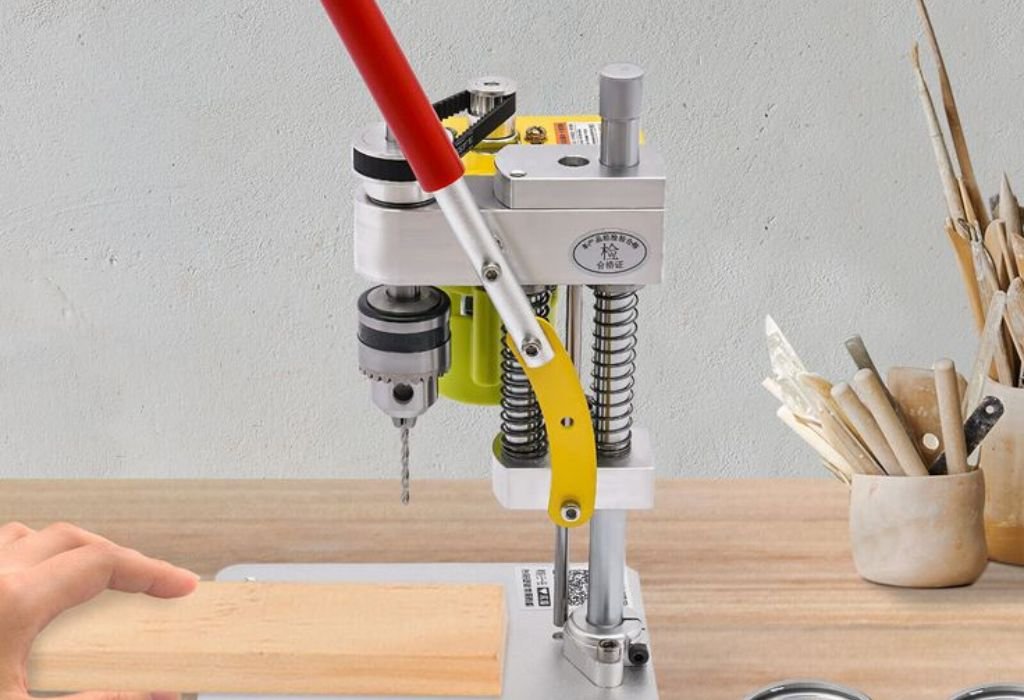
A milling machine might perform drilling tasks, but it doesn’t always make sense to replace a drill press entirely. If your workflow involves repetitive drilling of large holes in wood or metal, a drill press will be faster and easier to operate.
Drill presses are built for continuous vertical drilling with greater spindle travel, making them ideal for tasks that don’t demand micrometer-level accuracy.
when is a drill press more efficient than a milling machine for drilling?
For repetitive or deep drilling where quick feed and long spindle travel are necessary.
are there jobs where a milling machine cannot match the speed of a drill press?
Yes, especially in production environments where speed and simplicity matter more than extreme accuracy.
does the height or capacity of the work-piece matter when choosing a drill press?
Yes, drill presses usually have taller throats and deeper spindle reach for bulkier materials.
is tool change and setup simpler on a drill press?
Yes, changing bits or adjusting height is faster because of the simplified design.
should a budget-conscious workshop invest in a drill press first?
Yes, for general drilling and woodworking, a quality drill press is cheaper and easier to maintain.
Future Trends & Innovations: Combining Milling and Drilling Functions
The machining industry is evolving with hybrid solutions that merge the capabilities of both tools. Mill/drill combo machines are increasingly popular among hobbyists and small manufacturers for their versatility and compact design.
CNC technology has taken this further by automating drilling and milling sequences in one setup, reducing manual errors and improving speed. These advancements mean the line between the two machines is slowly fading.
what are mill/drill combo machines and how do they differ?
They are hybrid machines combining milling and drilling functions within a single frame for multipurpose use.
are CNC machines making separate drill presses obsolete?
In precision manufacturing, yes, because CNC systems handle drilling and milling automatically.
what tooling or fixturing innovations support drilling on a milling machine?
Quick-change chucks, vibration-damping vises, and digital depth gauges enhance accuracy and speed.
how do automation and digital controls change versatility of milling machines for drilling?
They allow pre-programmed hole patterns and depth control, minimizing setup time and human error.
what should workshop owners anticipate for the next 5–10 years?
A shift toward smart machines with integrated milling, drilling, and measuring functions in one setup.
Conclusion
So, can a milling machine be used as a drill press? The answer is yes—but with conditions. A milling machine can perform drilling operations with remarkable precision if properly set up, but it’s not a one-size-fits-all replacement.
For those handling complex, low-volume, or high-accuracy projects, the milling machine is an excellent dual-purpose tool. However, for high-speed repetitive drilling, a dedicated drill press remains the better choice. Assess your workflow, use the right tooling, and follow setup best practices to achieve safe, accurate, and efficient results in every operation.

I’m John F. Nicholas, the founder, lead writer, and drill enthusiast behind 101drill.com. With years of hands-on experience in power tools and DIY projects, I created this platform to share practical knowledge, expert tips, and real-world insights to help others master the art of drilling.