
Can a single machine handle both drilling and routing tasks? Many DIYers ask this when they already own a sturdy drill press but hesitate to buy a separate router. At first glance, both tools spin bits at high speeds to shape wood — yet the similarities end quickly.
The curiosity often begins in small workshops where every inch of bench space matters. A drill press offers accuracy and power, while a router excels at shaping, edging, and cutting grooves. According to a Fine Woodworking survey, over 60% of woodworkers say they’ve considered adapting one tool to perform another’s role to save cost and space. That temptation leads to one key question — can a drill press be used as a router?
Exploring that idea reveals a fascinating mix of mechanics and limitations. A drill press is built for vertical drilling with downward pressure, while a router thrives on sideways motion and speed. Understanding those differences helps prevent damaged bits, burned wood, or even safety hazards.
By the end of this guide, readers will learn exactly where a drill press can—and cannot—replace a router, how to stay safe, and what adjustments or alternatives might actually make sense for specific woodworking tasks.
What Is a Drill Press vs. What Is a Router?
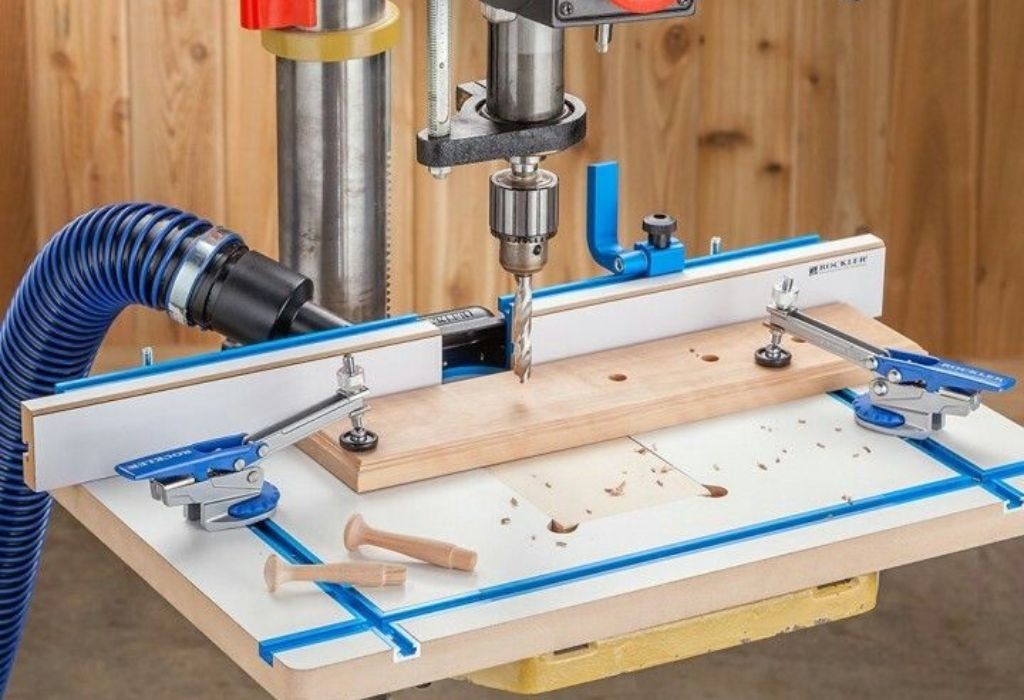
A drill press and a router may seem similar because both use a motor to spin a cutting bit, but their purposes and designs differ entirely. A drill press is built for making precise, straight vertical holes at controlled depths, while a router is designed for shaping, carving, and cutting materials laterally across the surface.
The key difference lies in speed and direction. Drill presses typically operate between 200 to 3,000 RPM, optimized for drilling into metal or wood. Routers, on the other hand, can reach 8,000 to 25,000 RPM, essential for creating clean edges and smooth cuts in wood. The higher speed helps the router bit slice, rather than tear, the material’s surface.
Another distinction is bearing design. Drill presses are made to handle vertical loads — the downward pressure of drilling — whereas routers are engineered to withstand side or lateral loads. That difference makes it risky to use a drill press for routing because it can stress the bearings or loosen the chuck.
What is a drill press used for?
A drill press is mainly used for drilling precise holes, tapping threads, and boring at consistent depths using various bit sizes.
What does a router tool do?
A router shapes wood edges, cuts grooves, hollows out areas, and creates decorative profiles — all requiring high speed and side movement.
Can you use a router bit in a drill press?
Physically, yes, it might fit. But it’s not recommended because drill presses lack the speed and lateral support needed for routing safely.
Why are RPM differences important?
Low RPM in a drill press can cause a router bit to chatter or burn the wood instead of cutting it smoothly.
Can a drill press match the precision of a router?
Not for routing tasks. While accurate in drilling, a drill press lacks the finesse, speed, and bearing design to match a router’s precision on surface work.
The Practical Challenges of Using a Drill Press as a Router
Using a drill press as a router seems clever until physics steps in. The most immediate problem is speed. Router bits need extremely high RPM to cut efficiently. A drill press simply can’t achieve the same velocity, which leads to rough edges and potential overheating of the workpiece.
The bearing design poses another challenge. Drill press bearings are meant to handle pressure from top to bottom, not sideways. When lateral forces are applied during routing, it can cause premature wear or even permanent bearing failure.
Additionally, chuck grip in a drill press isn’t built for heavy lateral torque. Router bits are designed to lock into collets, not chucks, which can cause bit slippage or damage. Safety is another major factor — if the bit slips during routing, it can become a serious hazard.
Why is spindle speed important when routing compared to drilling?
Routing requires high spindle speed to slice the wood fibers cleanly, while drilling only needs moderate speed for depth accuracy.
Can the bearings and chuck of a drill press handle side loads like a router?
No. Side loads strain the drill press bearings and may loosen the chuck, leading to unsafe operation.
What happens if you use a router bit at low RPM typical of a drill press?
It may burn the wood, tear the surface, or stall the bit mid-cut.
How does chip clearance differ between drilling and routing operations?
Routing requires efficient chip ejection, but drill presses aren’t designed with dust extraction or clearance for horizontal cuts.
Is safety a concern when using a drill press as a router substitute?
Absolutely. Low speed, side load, and poor bit retention combine to create significant safety risks.
When (and If) a Drill Press Can Be Used as a Router
There are rare circumstances where a drill press might act as a temporary router. Light routing on softwood, shallow grooves, or edge rounding with small bits can sometimes be done if handled carefully. However, these are exceptions — not everyday practice.
A drill press can occasionally be used for plunge-style cuts in soft materials if you’re making shallow depressions, mortises, or engraving patterns. The key is to minimize side load and depth, ensuring the bit doesn’t experience much resistance.
Still, even in these cases, the surface finish won’t compare to a true router’s result. The lower RPM often leaves tool marks or burn spots.
Under what circumstances might a drill press perform routing-type work?
Only for shallow routing on softwood, plastics, or when precise depth control is more important than finish.
What modifications or precautions are required to attempt that?
Use the highest drill press speed setting, clamp the material firmly, and move it slowly.
What are the types of bits that might work better in that scenario?
Straight bits or rotary rasps perform better since they tolerate slower speeds.
How does workpiece material affect the outcome?
Softwoods are forgiving, but hardwoods or composites may burn or tear at low RPM.
What alternative tools might provide better results?
Trim routers, rotary tools, or laminate trimmers are safer and produce cleaner finishes.
How to Adapt or Set Up Safely if Trying It
If you still decide to test this method, safety must come first. Always remember a drill press wasn’t engineered to handle side pressure. Use extreme caution, keep expectations realistic, and stop immediately if vibration or noise increases.
Start by setting the drill press to its maximum RPM. Choose a small, straight bit designed for low-speed cutting. Secure your workpiece tightly with clamps or a vise — never hold it by hand. Move the piece slowly under the bit, keeping cuts shallow and deliberate.
Avoid extended side-to-side movement. Shallow passes reduce stress on the bearings and produce smoother results. Inspect the chuck and bit after each pass for looseness or wobble. Always wear eye and ear protection, and ensure the machine is unplugged when changing bits.
What speed setting should you use on the drill press for routing-type work?
Set it to the highest available speed — ideally near 3,000 RPM — though still far below router speed.
How should the workpiece and bit be secured?
Use heavy-duty clamps or a vise; never rely on your hands for control.
What depth and feed strategy are recommended?
Make multiple shallow passes instead of one deep cut to reduce load.
When should you abandon the attempt and use a real router?
If vibration increases or the bit starts burning wood, switch to a proper router immediately.
What safety gear and checks are essential before starting?
Wear goggles, hearing protection, and confirm the bit is tightly secured before turning on the press.
Pros, Cons, and Cost-Benefit Comparison
Using a drill press as a router might sound like a clever hack, but it carries significant trade-offs. The main advantage is cost efficiency — you save space and money by using one machine. For light hobby work or single projects, this might be appealing.
However, the disadvantages outweigh the convenience. Poor finish quality, overheating bits, and bearing wear are common outcomes. More importantly, the setup poses safety risks that routers are designed to avoid. The time spent adjusting and troubleshooting usually cancels out any savings.
What are the advantages of using a drill press instead of a router?
It saves money and can manage small plunge tasks or engraving jobs.
What are the disadvantages and risks?
Rough finishes, damaged bearings, and safety hazards due to side load stress.
How does finish quality compare between a routing job on a drill press vs a router?
Router finishes are smooth and consistent; drill press routing leaves chatter marks and burns.
What effect does using a drill press as a router have on tool life and maintenance?
The bearings and chuck wear faster, leading to reduced precision even for drilling tasks.
Is the cost saving worth the trade-offs?
Not for frequent routing. The risks and results rarely justify the short-term savings.
Best Practice Alternatives: When to Use a Real Router, and When to Use Other Tools
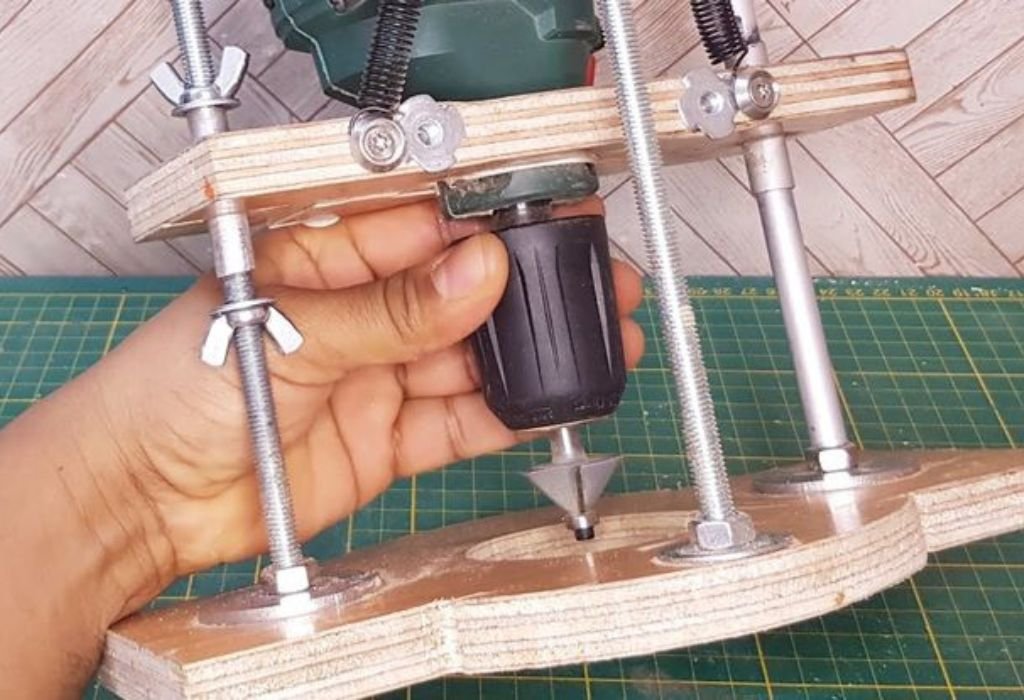
The best practice is simple — use a router for routing. Routers are built for high speed, precision, and lateral movement. If cost or space is a concern, compact trim routers or router tables provide safer and more efficient results.
For certain operations, other tools may work even better. Rotary tools, drum sanders, or CNC routers can perform delicate shaping jobs without stressing a drill press. For vertical cutting or mortising, use Forstner bits or mortising attachments specifically made for drill presses.
Professional shops prefer routers for edge profiling, dado cutting, and shaping, while keeping drill presses dedicated to drilling and boring. This division of labor ensures tool longevity and operator safety.
What tool should be used when full routing tasks are required?
A proper router or router table designed for lateral cuts and high RPM.
When might a drill press still be acceptable?
For shallow, low-speed work in soft materials or experimental projects.
What specialized bit or machine is ideal for routed profiles in wood?
A router fitted with carbide-tipped bits provides the cleanest, safest results.
How do professionals decide between drill press, router, or other machine?
They evaluate direction of force, material hardness, and desired finish quality before selecting the tool.
What future trends in shop tools apply to routing and drilling overlap?
Compact multi-function tools and CNC hybrids are emerging, offering precision without compromising safety.
Conclusion
So, can a drill press be used as a router? Technically, yes — but only under specific, limited conditions. In most cases, it’s neither efficient nor safe. The mechanical differences between a drill press and a router are too great to ignore.
A drill press excels at vertical accuracy, while a router is unmatched for shaping and edge work. Trying to make one perform the other’s job usually ends in frustration, rough cuts, and premature tool wear. If your goal is clean edges, consistent profiles, and safety, investing in a proper router is the smarter, longer-lasting decision.
For DIYers with creativity and caution, experimenting can be educational — but for professional or repeat tasks, let each tool do what it was built for. Precision and safety are never worth compromising.

I’m John F. Nicholas, the founder, lead writer, and drill enthusiast behind 101drill.com. With years of hands-on experience in power tools and DIY projects, I created this platform to share practical knowledge, expert tips, and real-world insights to help others master the art of drilling.