
Every woodworker faces the same question sooner or later: should they invest in a dedicated mortiser or make use of the drill press already sitting in the workshop? The idea sounds tempting — one machine doing two jobs with just a few attachments. But can a drill press truly deliver the clean, square mortises that joinery work demands?
In woodworking, mortise and tenon joints remain one of the oldest and strongest ways to connect two pieces of wood. According to a 2024 Woodworking Network survey, more than 68% of small shops rely on mortise-and-tenon joinery for furniture and cabinet construction (source). Yet, not every shop can justify spending hundreds of dollars on a standalone mortiser that may only be used occasionally.
That’s why many craftsmen look to their drill presses — a tool already prized for precision drilling. With a simple mortising attachment or hollow-chisel kit, the promise of cutting square mortises without buying new equipment is hard to ignore. The potential cost savings and space efficiency make this approach attractive for both hobbyists and small woodworking studios.
Still, there’s a catch. A drill press wasn’t originally designed for side pressure, chip ejection, or the downward force needed for clean mortises. Misalignment or vibration can quickly ruin both the chisel and the workpiece. The result often determines whether the experiment becomes a clever workaround or a frustrating mistake.
This guide explores how and when a drill press can be used as a mortiser — the benefits, limitations, and expert tips to help achieve professional results without damaging your equipment.
What Is a Mortiser vs. a Drill Press
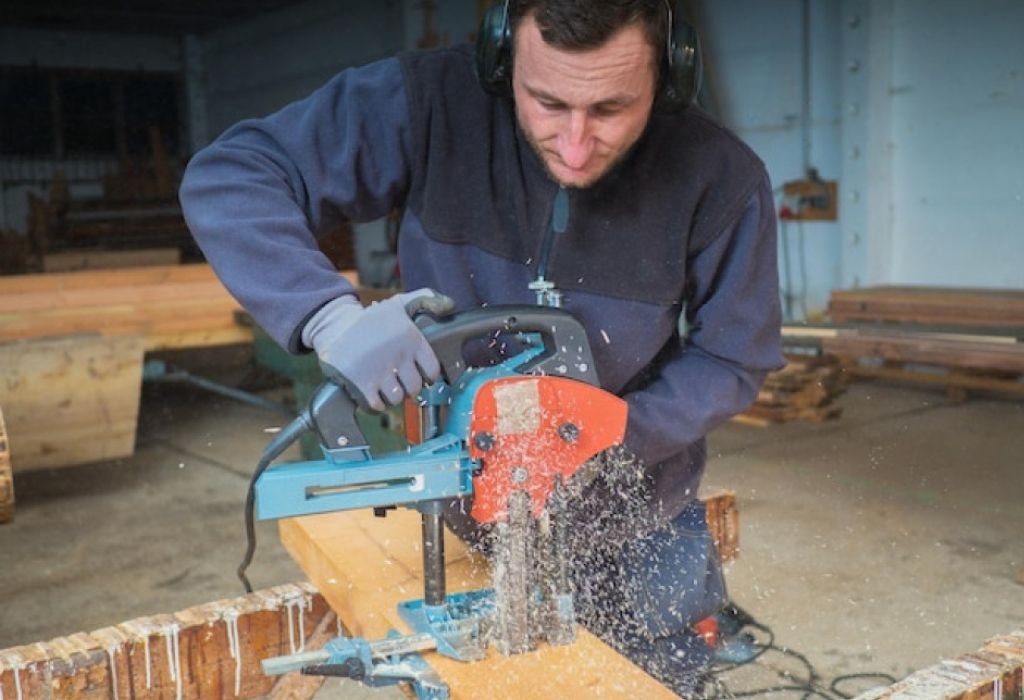
A mortiser is a specialized woodworking machine designed to cut square or rectangular holes, known as mortises, into a piece of wood. These holes form the foundation of mortise-and-tenon joints, a time-tested connection known for its strength and precision.
A drill press, on the other hand, is primarily built for round holes. It uses rotary motion and vertical pressure to create clean, circular cuts in wood, metal, or plastic. While highly accurate for drilling, it lacks the mechanical setup needed to produce square-sided holes without assistance.
The key difference lies in the cutting mechanism. A hollow chisel mortiser combines an auger bit inside a square chisel. The bit removes material while the chisel shapes the edges, leaving a perfectly square mortise. This dual-cutting action is what allows mortisers to achieve results that a drill press cannot replicate by default.
For those wondering can a drill press be used as a mortiser, the answer starts here — only when properly modified with a mortising attachment that mimics this dual action. Understanding how both machines work is essential before attempting any conversion.
What exactly does a mortiser do?
It cuts square or rectangular mortises for joints, combining drilling and chiseling actions in one motion.
How is a drill press different from a mortiser?
A drill press only drills round holes, while a mortiser uses a hollow chisel to cut square edges.
What is a hollow chisel mortiser?
It’s a machine that uses a square chisel with an auger bit inside to carve out square mortises cleanly.
Why can’t a drill press make square holes by itself?
Because its bit only rotates; it doesn’t have a chisel system to define the square edges.
Does this mean a drill press can never be used for mortising?
It can, but only with a mortising attachment and correct setup to imitate a true mortiser’s function.
Feasibility: Can a Drill Press Be Used as a Mortiser
Technically, yes — a drill press can function as a mortiser when paired with a mortising attachment or hollow chisel kit. These accessories allow the drill press to mimic the cutting mechanism of a real mortiser. The auger bit removes the core material while the square chisel defines the edges.
Many woodworking brands sell universal mortising attachments designed to fit standard drill presses. This makes it possible to cut square holes using the same machine used for drilling, saving money and workshop space.
However, the performance depends heavily on rigidity, precision, and setup. A drill press is not built to handle the same downward pressure or lateral stress as a dedicated mortiser.
What kind of attachment is needed?
A hollow chisel holder that clamps to the quill of the drill press and keeps the chisel and bit aligned.
Are these kits widely available?
Yes, they are sold by brands like Delta, Powermatic, and Jet as universal mortising kits.
Can this setup cause damage to the drill press?
Extended force or poor alignment can stress the quill and bearings over time.
When is this method practical?
It works well for short, shallow mortises or one-off woodworking projects.
What should be avoided?
Avoid deep or long mortises that require heavy pressure, as these can flex the quill and damage the chisel.
Practical Limitations and Challenges
Even though it’s possible, several mechanical limitations make this setup less than perfect. The biggest issue is rigidity. A drill press column is not as robust as a mortiser’s lever system, which is built for heavy downward force.
Another concern is chip removal. In a mortiser, chips exit through a slot designed for clearing debris efficiently. In a drill press, chips can jam inside the chisel, causing heat buildup and dulling the bit.
Workpiece stability also becomes a major factor. A mortiser has strong hold-down clamps and a solid fence. A drill press setup often needs custom jigs or external clamps to keep the work steady.
Why does rigidity matter so much?
A flexible quill or table can lead to uneven cuts and chipped chisels.
How can chip removal be improved?
Back the chisel off slightly from the work surface and clear chips between strokes.
Can a standard drill press table handle the pressure?
Light-duty tables may bend under heavy leverage, especially on budget models.
What’s the biggest risk of using this method?
Overheating, chisel damage, or poor accuracy from vibration and misalignment.
Does this method affect the finish of the mortise?
Yes, the surface may require hand-chiseling for clean corners and consistent depth.
How to Use a Drill Press as a Mortiser (Step-by-Step Guide)
1. Preparation and Setup
Start by selecting a compatible mortising attachment for your drill press. Ensure it fits the quill snugly and holds the chisel vertically. Install the matching hollow chisel and auger bit, keeping a small clearance between the bit’s tip and the chisel edge to prevent overheating.
Secure the workpiece using clamps or a fence. For added stability, reinforce the drill press table with a wooden brace or additional support.
How to ensure perfect alignment?
Align the chisel’s sides parallel to the fence so the mortise stays straight along the grain.
How much clearance is ideal between bit and chisel?
A gap of 1⁄16 inch is usually enough to let chips escape freely.
What type of wood is easiest for this method?
Softwoods and mid-density hardwoods are most forgiving for mortising on a drill press.
Should the drill press speed be adjusted?
Yes, set a lower speed between 1,000–1,500 rpm depending on bit size and wood hardness.
2. Drilling and Cutting Technique
Begin by plunging the bit slowly into the wood while keeping steady downward pressure. Allow the auger to cut the center before the chisel squares the sides. Work from one side of the mortise to the other, overlapping each cut slightly.
To prevent chip clogging, lift the bit periodically to clear waste. Maintain consistent spacing and depth across the entire mortise.
How to reduce chisel wear?
Keep the chisel sharp and lubricate the bit lightly before drilling.
How to avoid overheating?
Use shorter drilling cycles and clear chips frequently.
Should the mortise be cut in one pass?
No, it’s better to remove material gradually to maintain accuracy and prevent jamming.
What happens if the chisel binds?
Stop immediately, retract the bit, clear chips, and re-lubricate before continuing.
3. Finishing and Cleanup
After cutting the mortise, use a sharp hand chisel to clean any rough edges or corners. Check the depth and squareness with a combination square.
Apply light sanding or paring to achieve a smooth internal surface. Test fit the tenon to ensure proper clearance and alignment.
How to ensure perfect fit?
The tenon should slide snugly into the mortise with minimal play.
Is cleanup always necessary?
Yes, minor hand-finishing is common even with well-aligned drill press mortising.
How to prevent tear-out on the exit side?
Use a sacrificial backing board under the workpiece.
When It Works — and When It Doesn’t
A drill press setup can be surprisingly effective for small or occasional mortise work. It’s ideal for furniture repairs, cabinetry, or one-off hobby projects. With the right attachment and technique, it can achieve results close to a dedicated mortiser for light-duty applications.
However, professional workshops or production environments require speed, precision, and durability. For frequent mortising tasks, a dedicated machine outperforms every time.
When is the drill press method most efficient?
When cutting shallow mortises on small components or prototypes.
When does a real mortiser become necessary?
When cutting dozens of mortises daily or when working with dense hardwoods.
Can this setup handle repetitive work?
Not reliably — the drill press mechanism may wear out faster under repetitive mortising loads.
Is it cost-effective long term?
For occasional use, yes; for continuous workloads, investing in a mortiser pays off in efficiency and tool life.
Tips, Tricks, and Best Practices
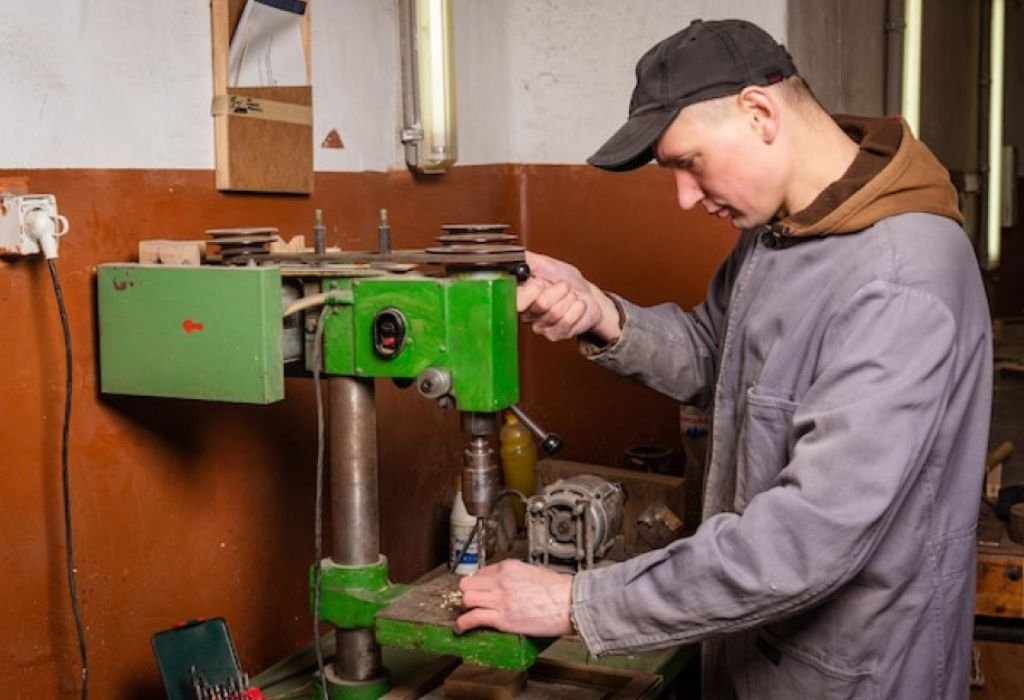
Always keep your hollow chisels razor-sharp. A dull edge increases friction, heat, and tear-out. Use a conical sharpening stone to maintain the internal bevel.
To enhance stability, brace the drill press table with wooden supports or a steel plate underneath. This reduces flex during heavy plunges.
Clamp the workpiece tightly with hold-down clamps or a custom jig. Any movement during the cut can misalign the mortise.
Use a sacrificial backing board to prevent exit tear-out, especially on through-mortises.
How to extend chisel life?
Clean pitch and resin buildup after every session and oil the bit lightly.
How to reduce vibration?
Keep the chisel short, align precisely, and support the table underneath.
Should dust collection be used?
Yes, or use compressed air to clear chips; heat buildup shortens chisel life.
Can digital depth stops help?
Absolutely — they ensure consistent mortise depth for multiple cuts.
Drill Press vs Mortiser — Comparison Summary
| Feature | Drill Press (with Attachment) | Dedicated Mortiser |
| Cost | Affordable, uses existing machine | More expensive |
| Precision | Moderate, requires setup | Very high |
| Speed | Slower | Fast and efficient |
| Durability | May stress quill bearings | Built for heavy use |
| Setup Time | Moderate | Minimal |
| Best For | Hobbyists, light work | Professionals, frequent mortising |
Commonly Asked Questions
Can any drill press be used for mortising?
Not all — look for models with rigid columns, adjustable speed, and sufficient quill travel.
What is the maximum mortise size recommended?
Usually between ¼ inch and ½ inch wide for best results.
Is this method safe?
Yes, as long as the workpiece is clamped firmly and the chisel is correctly aligned.
Can a router be a better option?
In some cases, yes. A plunge router with a straight bit can cut mortises quickly but leaves round ends that need chiseling.
Do all attachments fit every drill press?
No, always check compatibility with the manufacturer’s specifications.
Conclusion
So, can a drill press be used as a mortiser? The answer is yes — but with realistic expectations. A drill press equipped with a mortising attachment can handle occasional woodworking tasks efficiently, offering precision and versatility without extra cost.
However, it’s not a full substitute for a dedicated mortiser. Limitations in rigidity, speed, and waste removal mean it’s best for small-scale or hobby work. For professionals cutting mortises daily, investing in a true mortiser remains the smarter long-term choice.
Woodworkers who master this adaptation can get impressive results, provided they respect the limits of their machine. With patience, sharp tools, and careful setup, a drill press can indeed double as a mortiser — and open new possibilities for creative joinery in any workshop.

I’m John F. Nicholas, the founder, lead writer, and drill enthusiast behind 101drill.com. With years of hands-on experience in power tools and DIY projects, I created this platform to share practical knowledge, expert tips, and real-world insights to help others master the art of drilling.